Young Love
American Ballet Theatre
Metropolitan Opera House
Lincoln Center
New York, New York
July 16, 2022, matinee
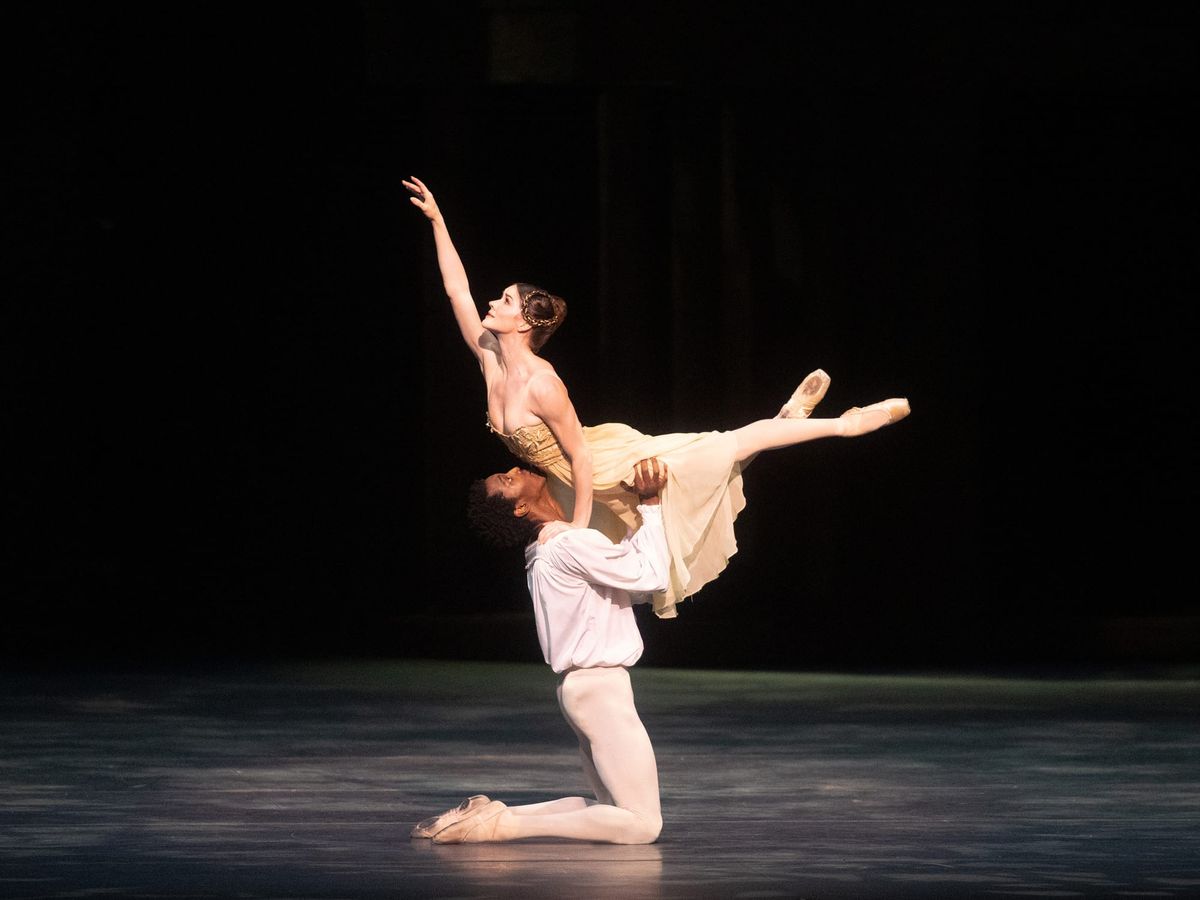
Kenneth MacMillan's "Romeo and Juliet" is an audience magnet and the Met was pointing straight north for Cassandra Trenary's debut as the doomed heroine. Though the work does have its dry patches--cue those frizzy haired harlots who help pad the second act (and who seem to have had a fresh perm for the occasion)--it is a true tear-jerker, as effective as any Puccini opera in getting the audience to cry on cue. Trenary certainly got those tears going; with her fresh, youthful face and elegant dancing, she was a natural and gave an extremely accomplished and detailed performance. She toned down the opening hijinks with that silly doll and made her Juliet youthful but shyly eager to grow up. She was intrigued and a bit flattered by Paris and very happy to be at the ball. This made her quietly passionate reaction to Romeo (Calvin Royal III) seem a natural development, and she seemed to dance the role in complete sentences, seamlessly merging the steps and the acting.
Royal was an equally natural Romeo, a high-spirited kid who tumbled into adulthood. He was less dreamy than some Romeos, flashing his infectious grin to endearing effect, and his opening pursuit of Rosalind seemed more like a young boy's curiosity than a poetic dream. This accent on youth made the ultimate, inevitable ending seem almost unbearably tragic. His dancing was crisp and clear, with controlled turns and spirited jumps. The balcony scene was danced with an innocent air, without the heavy breathing of the hormonal adolescent approach; it had a haunting radiance.
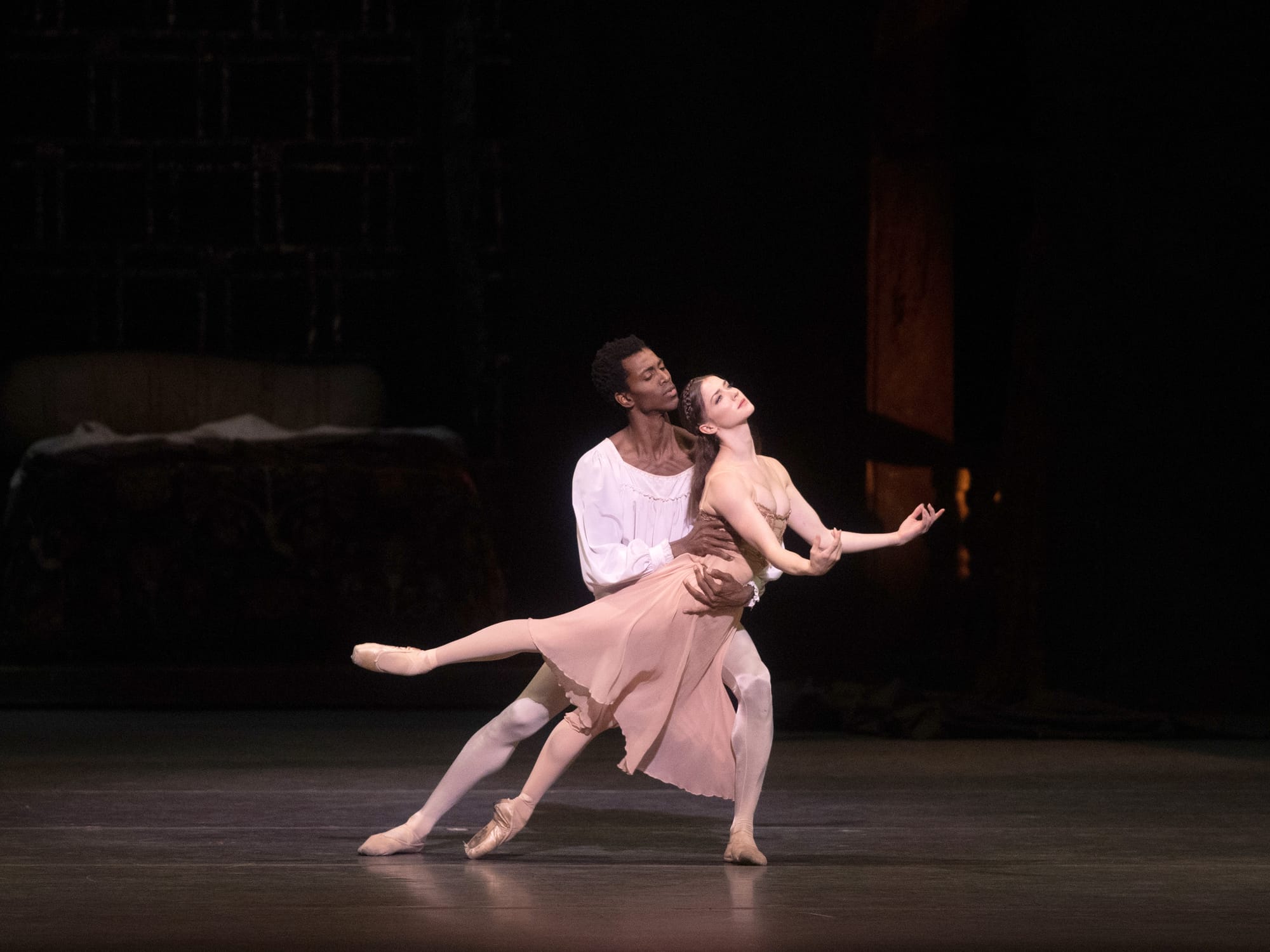
Juliet's big set scene, when she is abandoned by all the adults and, alone in her room, takes control of her life, was a bit less successful. In the R+Js I have seen at the Royal Ballet, each Juliet had a unique take on this moment, some kneeling, some sitting, some slumped over, and each using her body as well as her face to show Juliet's growing determination. ABT seems to coach each Juliet to perform this in the same way, and they tend to sit on the bed staring at the audience while the music swirls around them. The bed is far backstage and the Met is huge, so conveying emotions with the eyes is difficult. However, once Trenary realized she had a spine, her run around the stage was eager and determined (though I do wonder why a well-bred girl would meet a suitor in her nighty, much less run through the town wearing it).
The Tomb scene was heartbreaking in its simplicity. Royal just gulped down the poison with heedless despair and Trenary curled up like a wounded animal, without any melodrama; there was no exaggerated and gymnastic backbend off the bier to reach Romeo, just a tragic final squeeze of his hand. And then cheers and tears and flowers.
There were cheers for tragic couple, and also for the company. Carlos Lopez was both an understated but fervent Friar Laurence and a commanding Prince Escalus, almost shaking with righteous indignation at the needless slaughter. Jonathan Klein (Mercutio) and Luis Ribagorda (Benvolio) were Romeo's pals, and the three together had the high-spirited innocence of Robbins' three sailors. This light-hearted energy was a fine contrast to the later tragedy, though I do miss MacMillan's original, darker and more cynical Mercutio. ABT, though, has for a number of years, given Mercutio the bouncy mandolin dance, so full of happy spins and show-off jumps, which now seems to define his character. Klein tore into his dance with an impressive ease, throwing in some one-handed cartwheels and hopping turns a la second. His death scene, alternating between pain, anger, and bitter farewell, was riveting, though the music does go on a bit, allowing time to wonder why Verona, like Giselle's village, is so short of doctors.
Mercutio is not the only character to suffer a sea change; Lady Capulet (Zhong-Jing Fang) has become a sort of Renaissance Mrs. Robinson and Tybalt (a sneering Duncan Lyle) her boy toy. Instead of the concentrated sorrow and desperate plea for peace shown by kneeling at Tybalt's body, Fang rolled around on the ground in a demented breakdown, an unnecessary addition. Simulated passion is not called for, as Trenary and Royal, so appealingly natural, proved.
Copyright © 2022 by Mary Cargill