The House Balanchine Built, Redecorated
"Pulcinella Variations," "Auspicy," "Shared Rain," "Love Letters (On Shuffle)"
New York City Ballet
David H. Koch Theater
New York, NY
October 6, 2026
As New York City Ballet’s Contemporary Choreography program wore on, I kept wondering what Mr. B would say if he were watching. Two new works, Alysa Pires’s “Auspicy” and Jennifer Archibald’s “Shared Rain,” were sandwiched between two recent ones, Justin Peck’s “Pulcinella Variations” and Kyle Abraham’s “Love Letter (on shuffle).” All four departed sharply from the company’s native style, with explorations of modern frontiers that were at times bold and at times miscalculated.
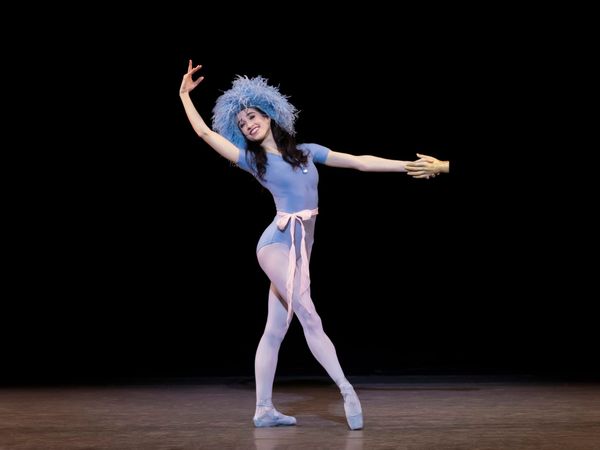
Peck’s ballet perhaps is closest to the company’s classical home, and if the program were a menu of possible futures, his would be the one undeniably appealing dish. The nine-part 2017 dance with quirky costumes and equally crafty moves can feel like Peck’s more classic work because of its Igor Stravinsky score, but the ballet grew with time, and nearly ten years later felt settled-in on this company. The dancing this time was invigorated, from the gentle falls and through-pulls of the opening scenes to lifts into entrechats that end in arabesques.
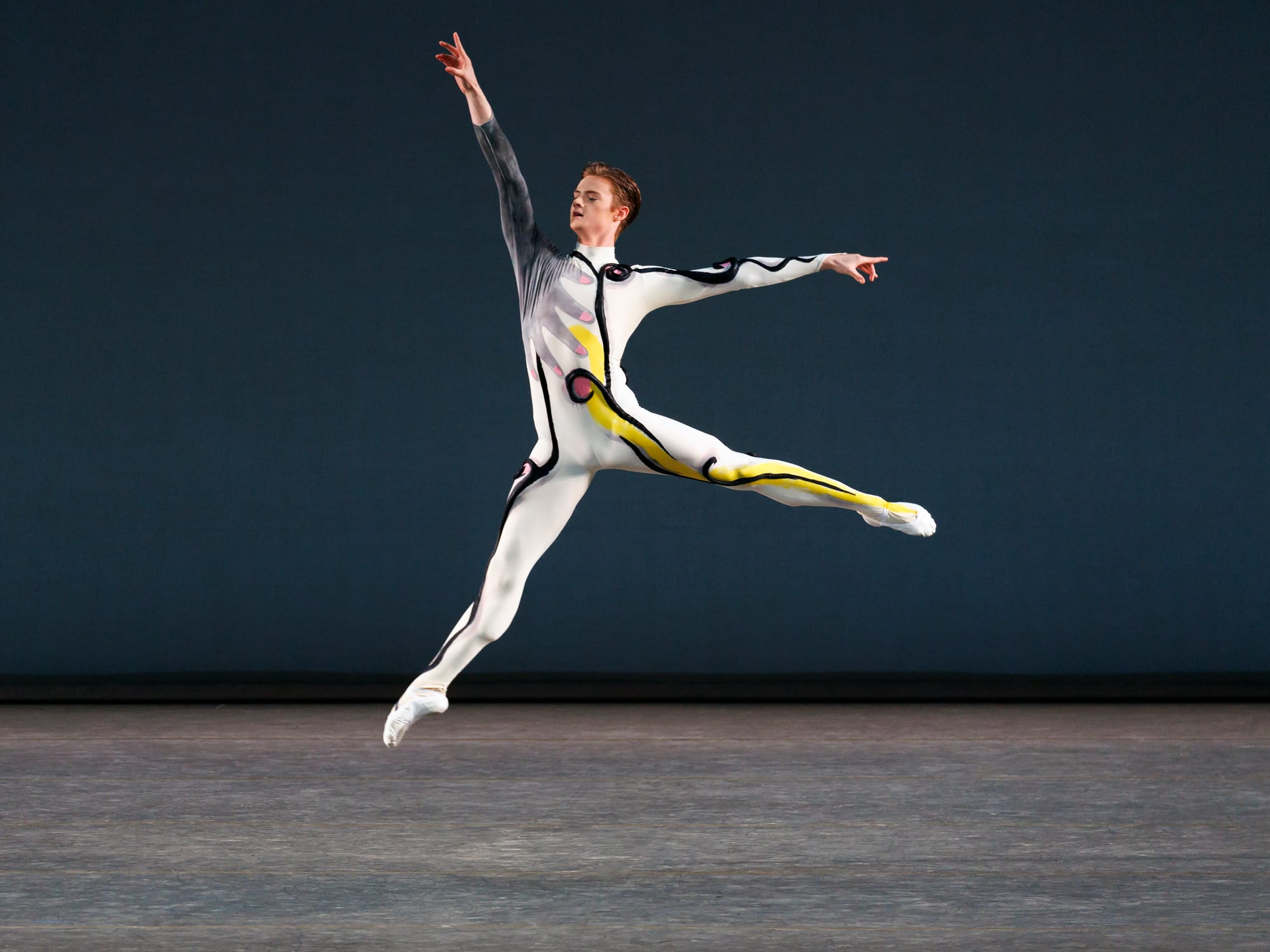
Emily Kikta and Gilbert Bolden III played off each other in the Serenata, followed by Sara Adams in a solo that sparkled, her face aglow. Tiler Peck and Roman Mejia gave the movement-thin final duet their trademark exuberance, and KJ Takahashi danced the Tarantella with freshness and aplomb. The weak links were India Bradley, who seemed disengaged from the group’s energy, and Jules Mabie, whose Toccata was clean but overly classical, as if he were somehow too tall, too elegant for the choreography. Still, the quickness and sheer joy of the dancing felt like a real attempt to take Balanchine’s musicality and extend it into this century. It was the only dance of the evening to have that quality.
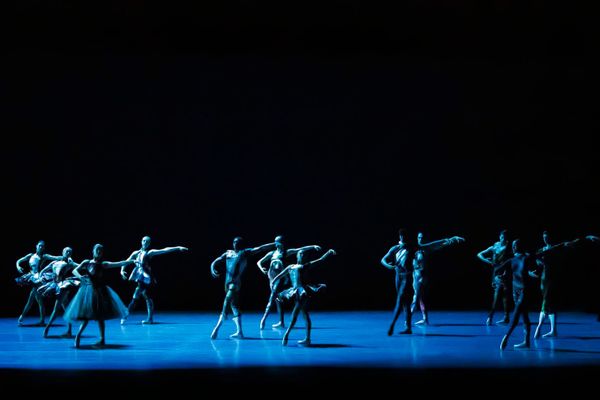
Pires’s second ballet for the company, the avian-themed “Auspicy,” is a departure from the regimented “Standard Deviation” she made earlier. She may have found something poetic in the geometric cadence of that work, but here that alchemy never materialized. It is hard to say what accounted for the failure: the odd, tall modern mother hen contraption that opened the ballet and released the dancers onto the stage, the overreliance on the bird motif in crafting steps, or simply the misuse of dancers.
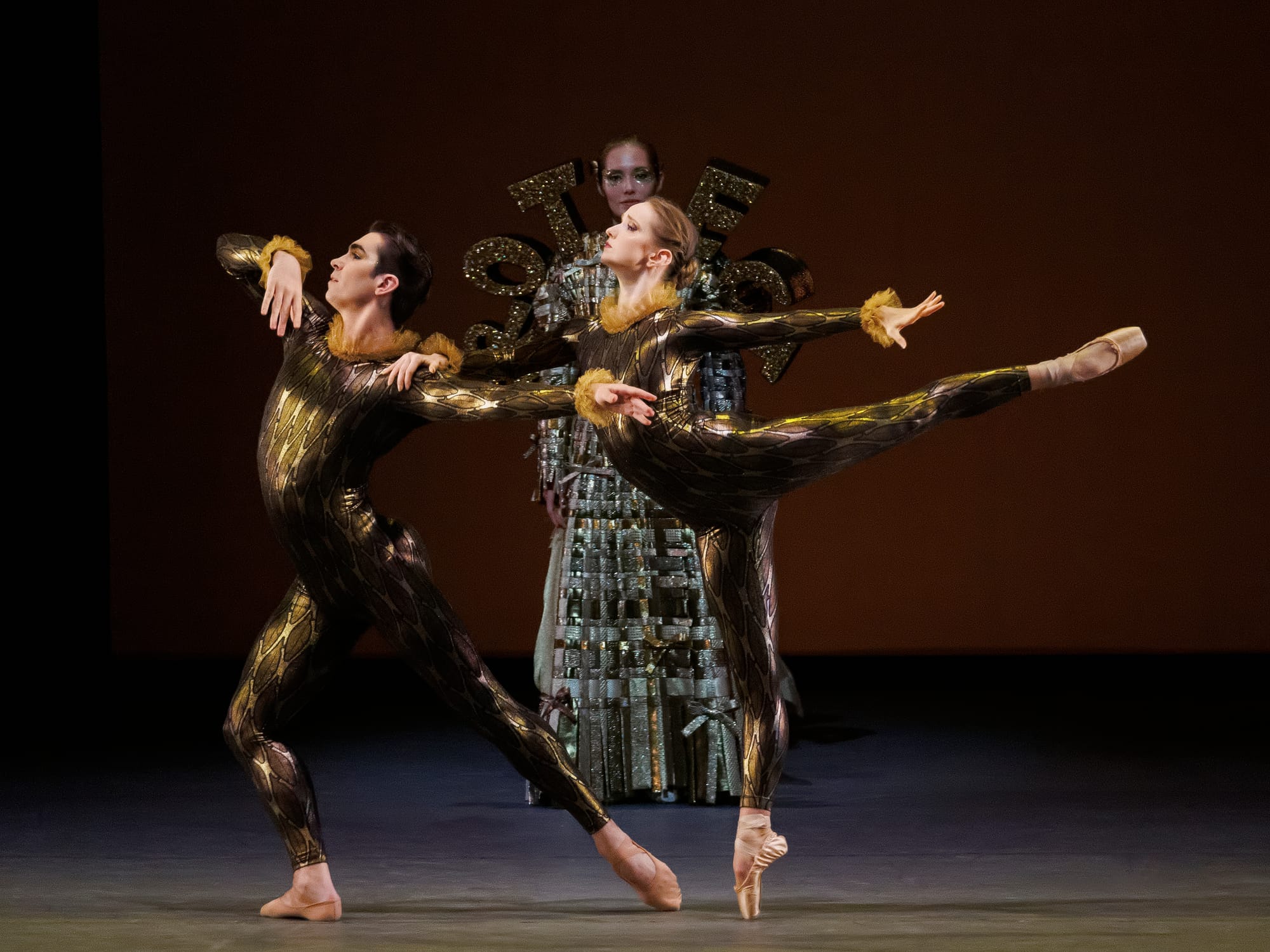
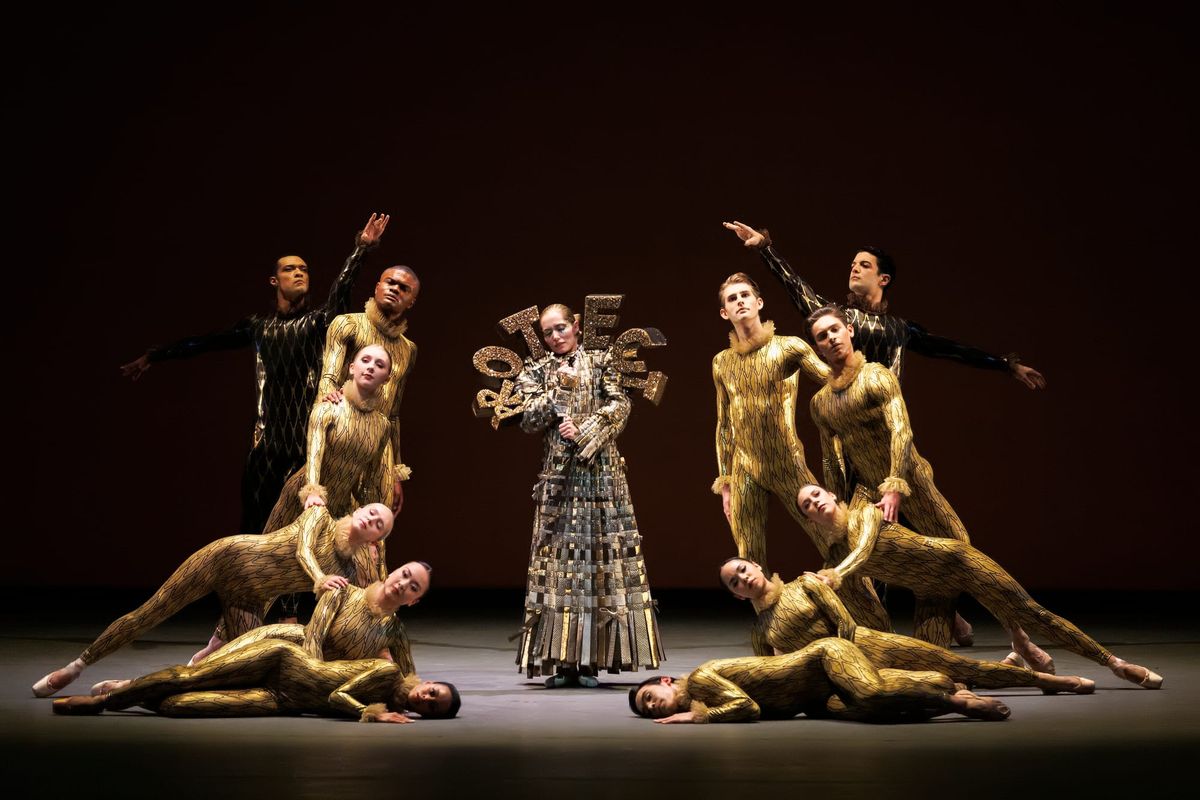
The latter may be the ballet’s biggest problem. Unity Phelan, the originating lead, was cast as the Mother and spent most of the dance standing and watching in a near-comical coat emblazoned with the word “protect.” She is a compelling dramatist and an eloquent dancer, with one of the best lines and feel for lyricism in the company. And so, here her walks and stops were a waste of talent, and at times she looked less protective than intrusive. When she finally shed the coat, after passing two feathers to her Offspring, David Gabriel and Emma Von Enck, the dancing that followed was too little, too late: a number of lifts with the Community danced by Bolden and Preston Chamblee, with the men manipulating her lovingly through many arabesque and split lifts, but not more. The Offspring got the more eloquent material and some classical arabesque partnering, but their dancing seemed reaching for a story to tell and never quite hit the thematic mark. A company like this, on this stage, shouldn’t be facing such challenges.
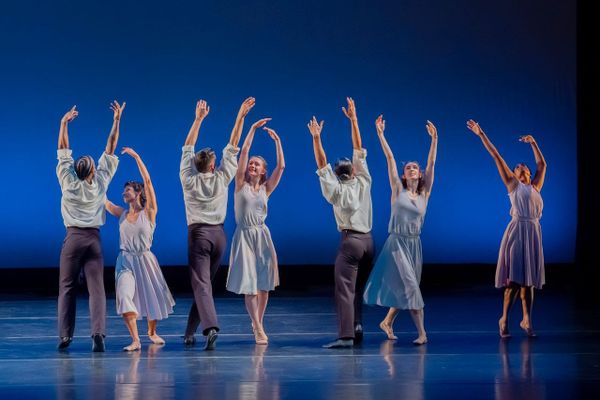
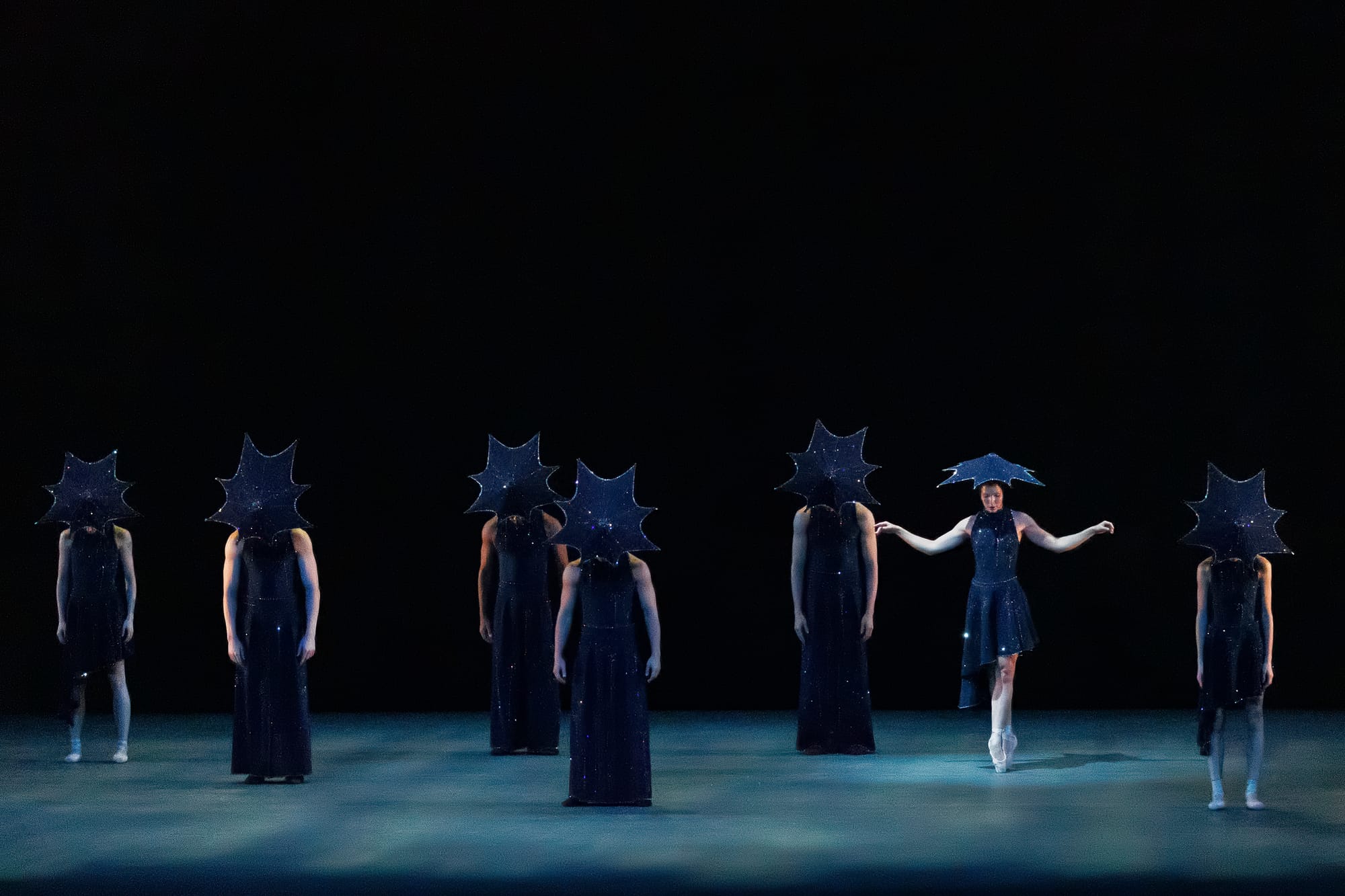
At least though, there was a theme. That wasn’t the case with “Shared Rain,” which started awkwardly with dancers in umbrella-hats accompanied by disconcerting grunting, and never advanced from there. The costumes, by Robert Wun, had their moments: sequins caught Mark Stanley’s lighting like real raindrops. So did some of the blocking, as when two couples danced echoing duets in different corners of the stage, like synchronized raindrops. Beyond that, the dancing was forgettable, and the ballet soon felt like a backup number in a pop singer’s show. It didn’t help that the music late in the piece recalled Taylor Swift’s “Don’t Blame Me.” Of the four women and four men, Lauren Collett stood out for her astute elegance, but the work itself had no meaning or message I could discern.
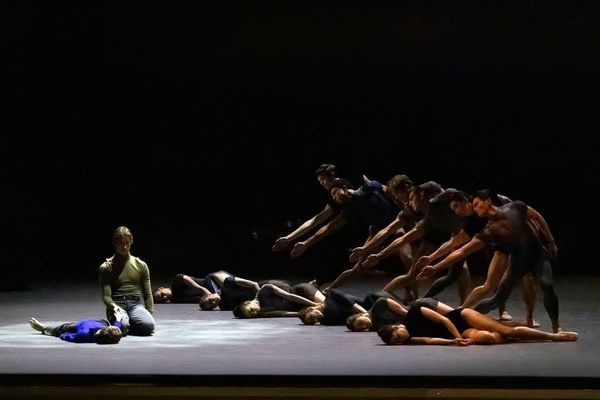
Kyle Abraham’s “Love Letter” closed the night, and at nearly 40 minutes, after an evening of endless modern steps with a limited vocabulary, it felt quite unrequited. The one exception was Taylor Stanley, whose plasticity and expressiveness of these specific steps always bring out something extra in both the dancer and the dance. He was so good this time that I wondered who could meaningfully replace him in the work. Come February and his retirement, will we see this ballet again, and will it be worth it? And how much of the rest of this thin offering, Peck’s contribution aside, is worth returning to while the company still dances the works of its founder?
copyright © 2026 by Marianne Adams