Community Relations
"Mazurkas", "Join"
Limón Dance Company
The Joyce Theater
New York, NY
October 6, 2025
The Limón Dance Company, like many other modern companies, is working its way through the issue of how to preserve its past while not being completely tied to it. This program tried to balance the past with the future, with one major revival, José Limón’s 1958 “Mazurkas” and one new work, Aszure Barton’s 2025 “Join”, which was inspired by “Orestes”, a lost work by Doris Humphrey who had, along with Limón, founded the original company. Perhaps coincidentally, both pieces revolved around communities. “Mazurkas”, danced to a selection of Chopin’s mazurkas, is Limón’s tribute to Poland, choreographed after the company’s 1957 tour to that nation, where the warm reception in spite of the country’s war time sufferings, still very visible, inspired him. Barton’s “Join” was, according to the program, inspired by Limón’s description of the Humphrey work, and, quoting the choreographer’s program notes, celebrates “our power as a collective”.
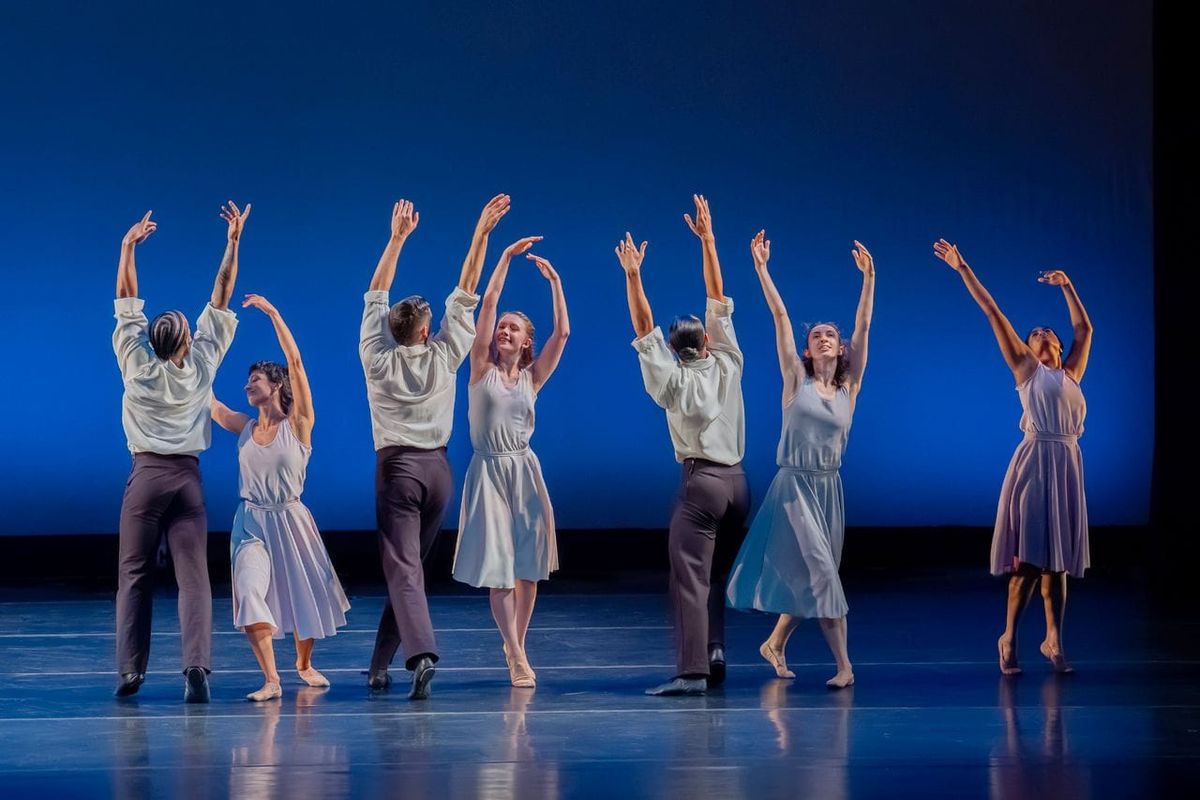
The program also describes this production of "Mazurkas" as the first complete performance since 1964, though there have been earlier revivals and the company performed a slightly shorter version in 2013; its cast included Dante Puleio, the current director. It was moving and lyrical then and it is moving and lyrical now. The seven dancers, four women and three men, open and close the work with group formations, sandwiching a number of solos and duets. The women wear soft pastel short dresses and the men simple black pants with white shirts—yes, very similar to “Dances at a Gathering”, which Robbins choreographed in 1969. There are other similarities; the solo piano, the man reverently touching the stage, the hints of folk dancing, the odd man out variations; ballet archaeology is interesting but fortunately it does not diminish the beauty of either work.
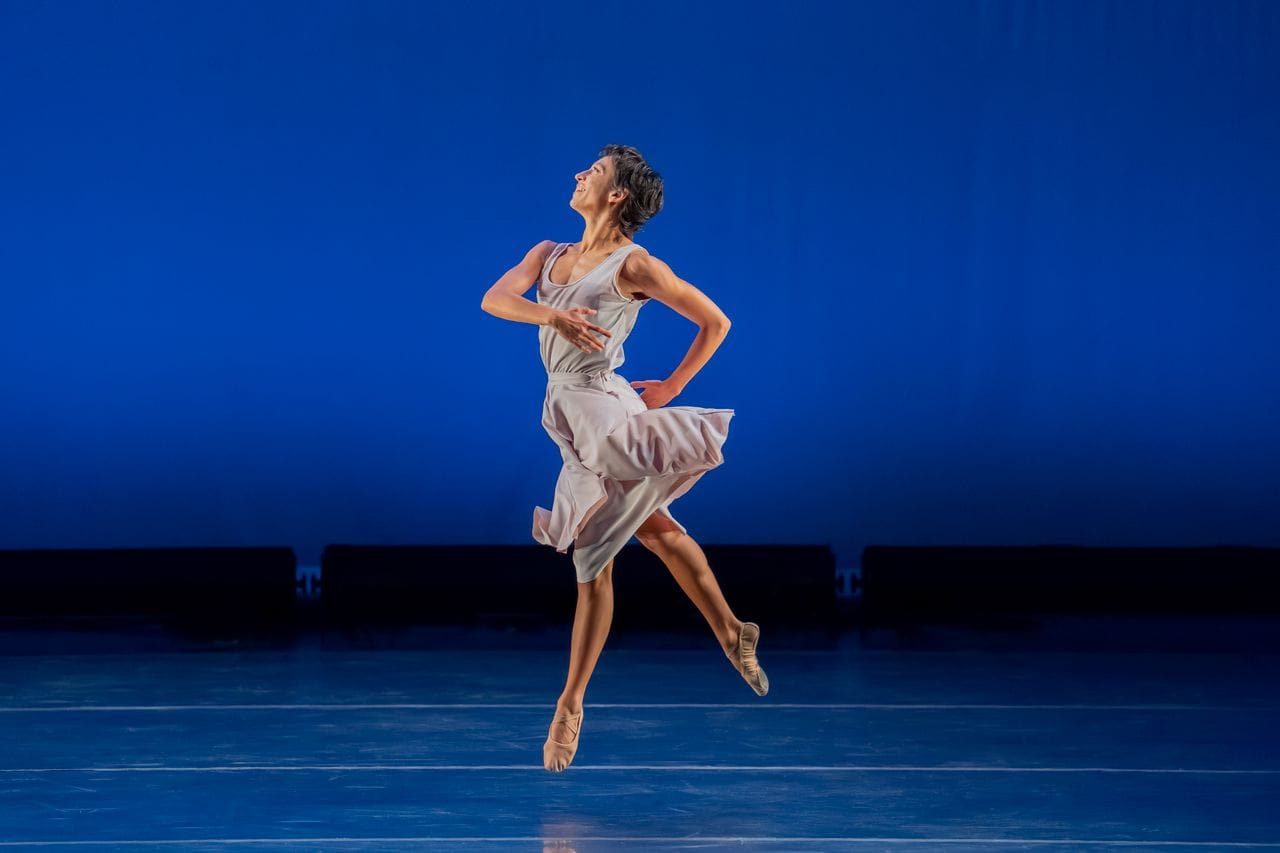
Limón’s choreography had a lyrical intensity, both in the upbeat moments and the more sombre ones. The first variation, a pas de deux danced by Olivia Mazie and Joey Columbus, was a lively haze of thigh slapping, dipping and swaying, as they seemed to be dancing for each other. Jessica Sgambelluri, a statuesque blonde powerhouse, was a ruefully elegant odd woman out. Limón even seemed to work in a ballet joke, as three men (the cheerfully exuberant Columbus, Ian Debono, and Stephen Haley) leapt jubilantly through Chopin's Opus 33, no. 2, the mazurka so familiar to dance audiences of the 1950’s as music from the female world of the then ubiquitous “Les Sylphides”.
One of the most powerful moments was Debono’s solo, as he walked on with thoughtful deliberation, pausing to touch the stage with an awed reverence. His dancing had a heavy, mournful, downward cast, with occasional struggles upwards as his jumps became more frantic; at the end, he seemed resigned, and looking up at the stage, simply walked off. The final scene, too, had a hushed feel, as all seven dancers, in silence, turned to the pianist (Michael Scales) and bowed as if saluting Chopin, Poland, and human resilience. It was a profoundly moving work, uplifting without sentimentality.
Barton’s “Join” was inspired by Limón’s profound admiration for Humphrey’s unperformed “Orestes”, which he saw in rehearsal; in the end it was too large and complicated to produce. The original story, though, of a father sacrificing his daughter to the gods to ensure fair winds to Troy, only to be slain by his wife and her lover, who in turn were killed by the wife’s son Orestes, does not appear to be the community Barton had in mind.
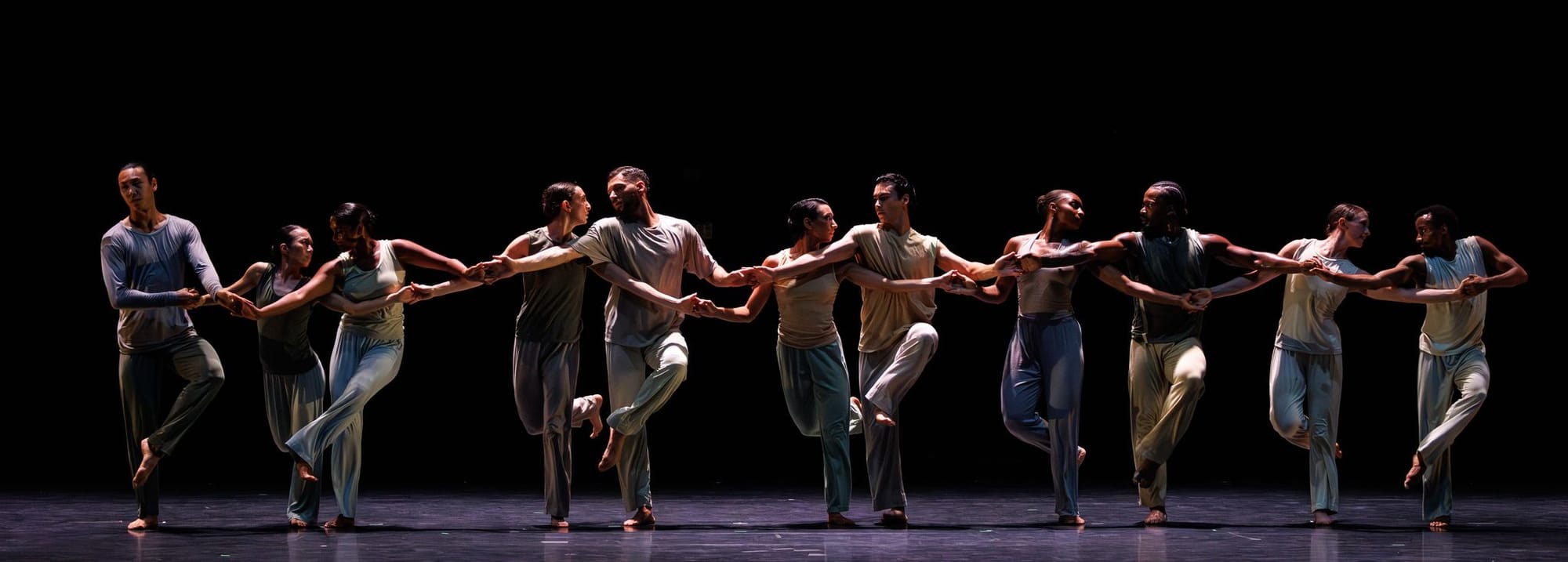
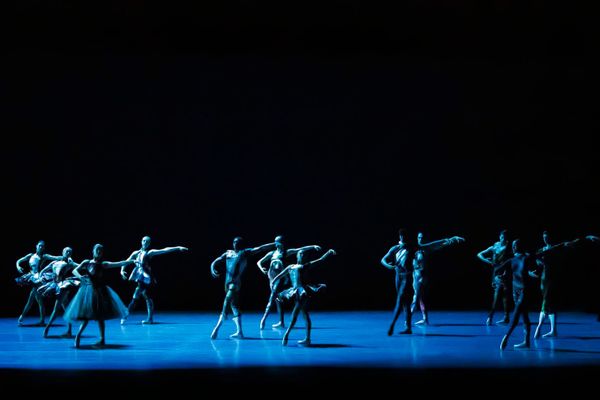
The commissioned score by Ambrose Akinmusire (performed on tape) was a moody collection of sounds, opening with buzzing insects and evolving into a minimalist drone. The costumes by Rémi van Bochove were neutral casual chic, which glowed bronze in the extraordinary lighting by Burke Brown.
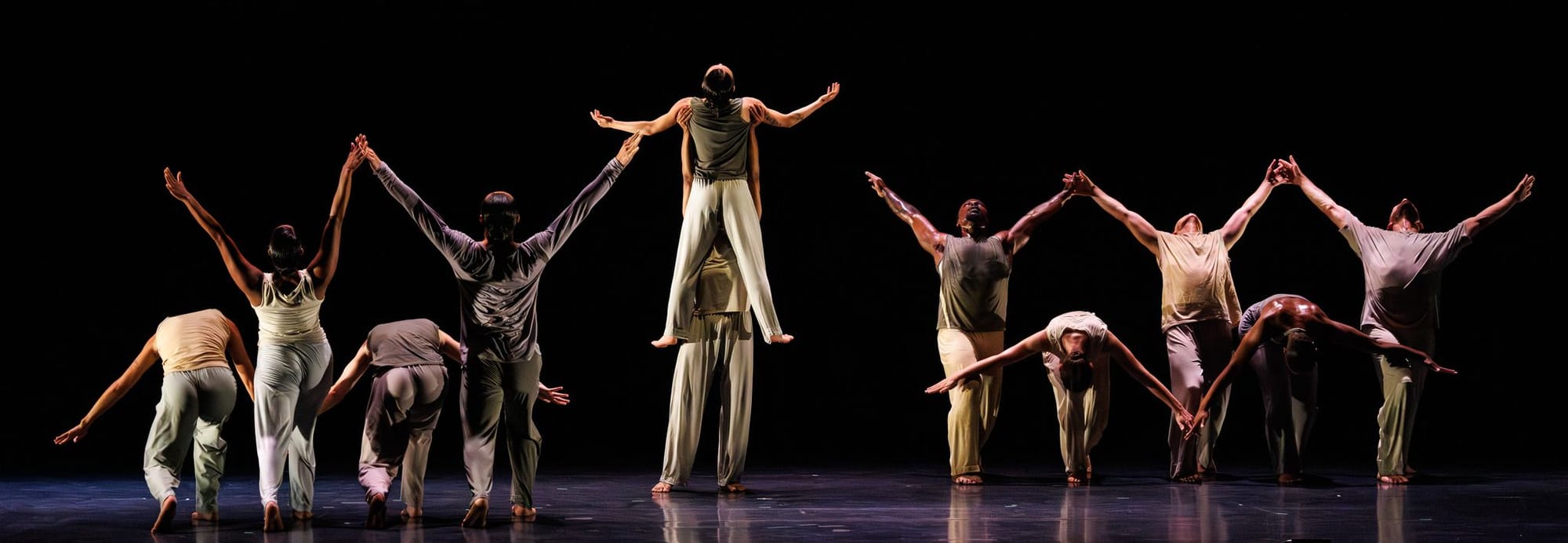
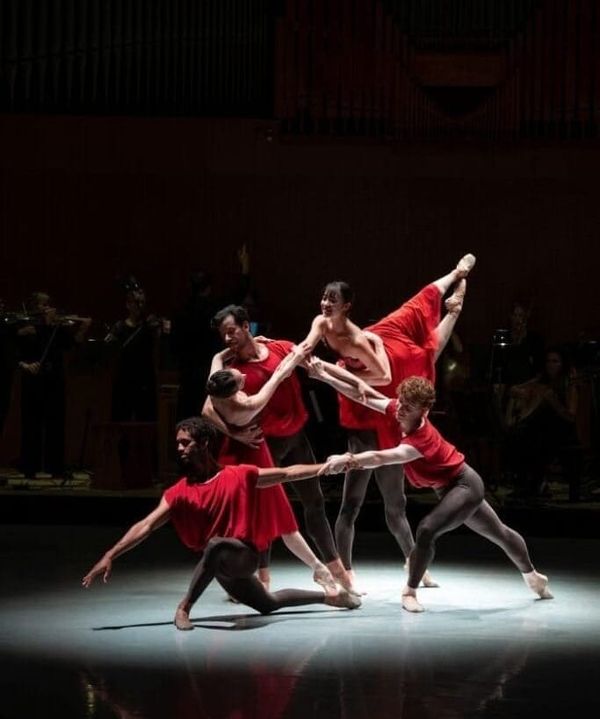
The eleven dancers spent a lot of time with linked arms and synchronized moves. Barton used geometry with ease, with the dancers forming and reforming lines and circles, their arms lifting and lowering in shifting triangles, like well oiled pistons. Often these shapes oozed frontwards and backwards in one unified breath, with occasional dancers breaking out. These dancers all returned to the comforting group—one stunning motif saw different dancers lifted up by the group and falling straight backwards or forwards into the mass, an exercise, perhaps in complete trust.
The dancers gave the sometimes repetitious choreography a sharp clarity and impeccable timing and the ever-shifting stage pictures had an oddly dynamic beauty. But with Barton’s program note celebrating the collective in mind, the message, it seemed, was that the individual needs the group, that breaking away is impossible, and that conformity is safety. That does seem a rather pessimistic view of freedom, so different from Limón’s vibrant individuals.
© 2026 Mary Cargill