Worth Its End
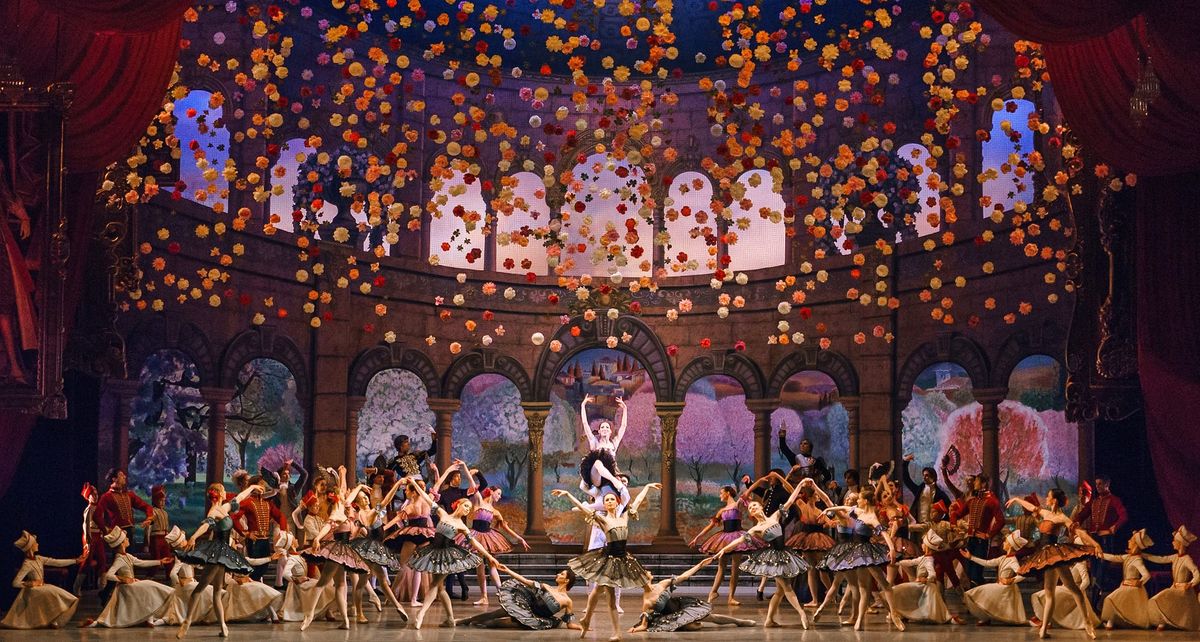
“Paquita”
The Mariinsky Ballet
Opera House
The John F. Kennedy Center for the Performing Arts
Washington, DC
October 8 and 10, 2019
The tastes and skills for this 2017 production of the ballet “Paquita” span several centuries. The story derives from the writings of Spain’s Miguel Cervantez (1547 – 1616). The first dance version premiered 1846 in Paris, choreographed by Joseph Mazilier to music by Edouard Deldevez. The work is named for its principal character: Paquita appears to be a beautiful, young, Spanish gypsy woman. Yet, unknown to everyone (but the audience) she is of noble birth, having been kidnapped as an infant by gypsies who raised her to be a dancer. The knotty plot reveals her true lineage so that she can wed the handsome Andres, an officer who deserts for her sake and is also her cousin. The first Russian production of “Paquita” in 1847, on the heels of the Paris staging, was by choreographers Marius Petipa and Pierre-Frederic Malevergne (the teacher of Lev Ivanov, Petipa’s later and better known collaborator). Petipa restaged “Paquita” several times, adding music by Drigo and Minkus to the Deldevez score, especially for the splurge of dancing at the ballet’s end. That splurge survived on its own. It is Act 3 of the current production, with Petipa’s steps restored by Yuri Burlaka from Stapanov notations now at Harvard University. Is seeing the ballet’s first two acts at all worthwhile?
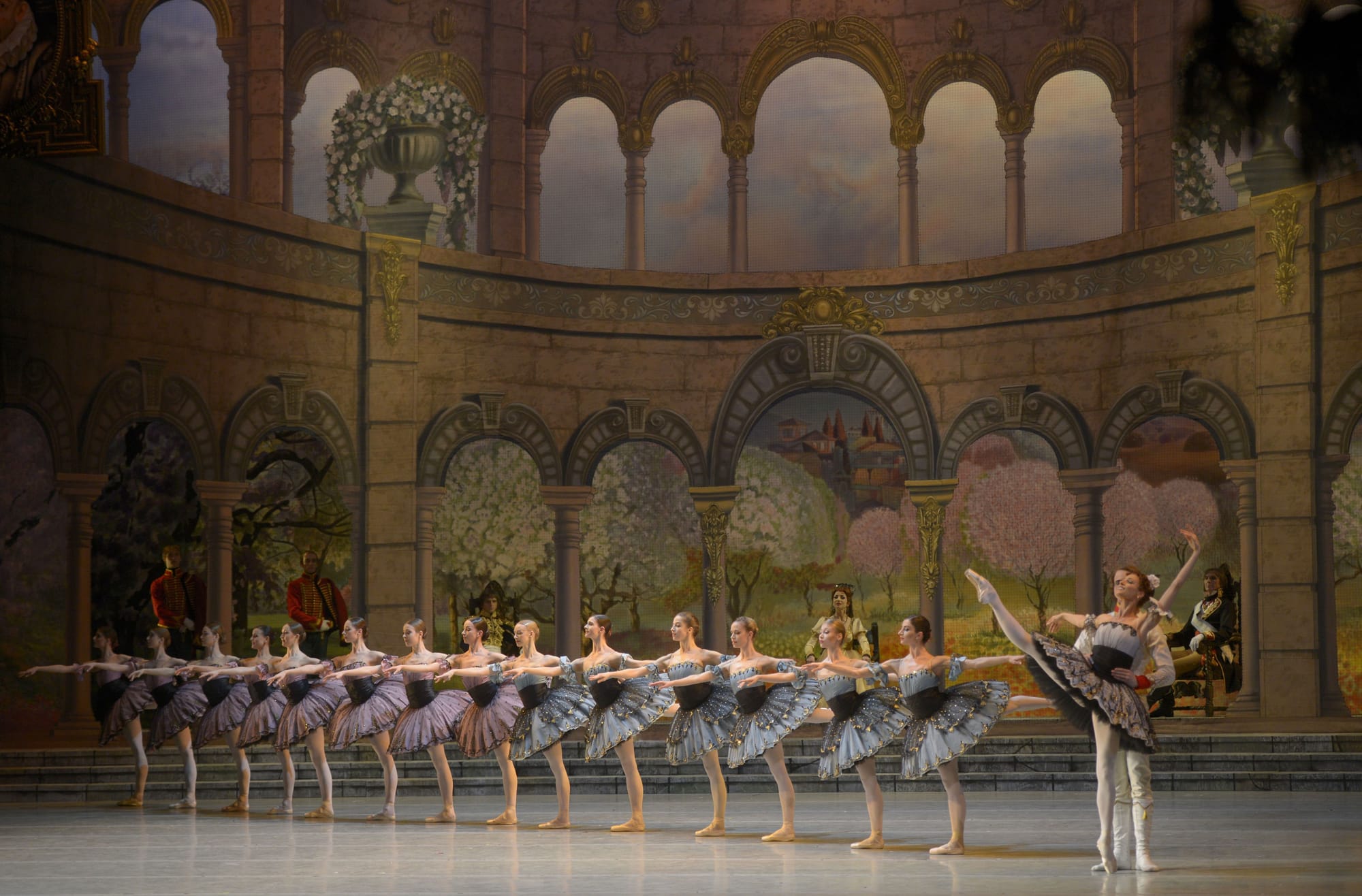
The story is barely of interest as re-invented and staged by Yuri Smekalov. Incidents and characterizations lack pungancy, poignancy, probability. The only bonbons are snatches of dance that give a foretaste of what’s to come. Choreography for the Act 3 grand divertissement features counterpoints of conversation between the corps parts and the soloists’ roles. The coordination of the corps was incredible, both for the women in rich yet restrained tutus and for the men in officers’ tight white with, sometimes, their red jackets worn as a short cape suspended from the left shoulder. Burlaka has taken half a dozen solos from other Petipa ballets and inserted them into the “Paquita” divertissement. Their moods are somewhat varied (lightly elegaic, slightly whimsical, etc.) and they fit smoothly with the movement intended by Petipa for the choreography’s climax.
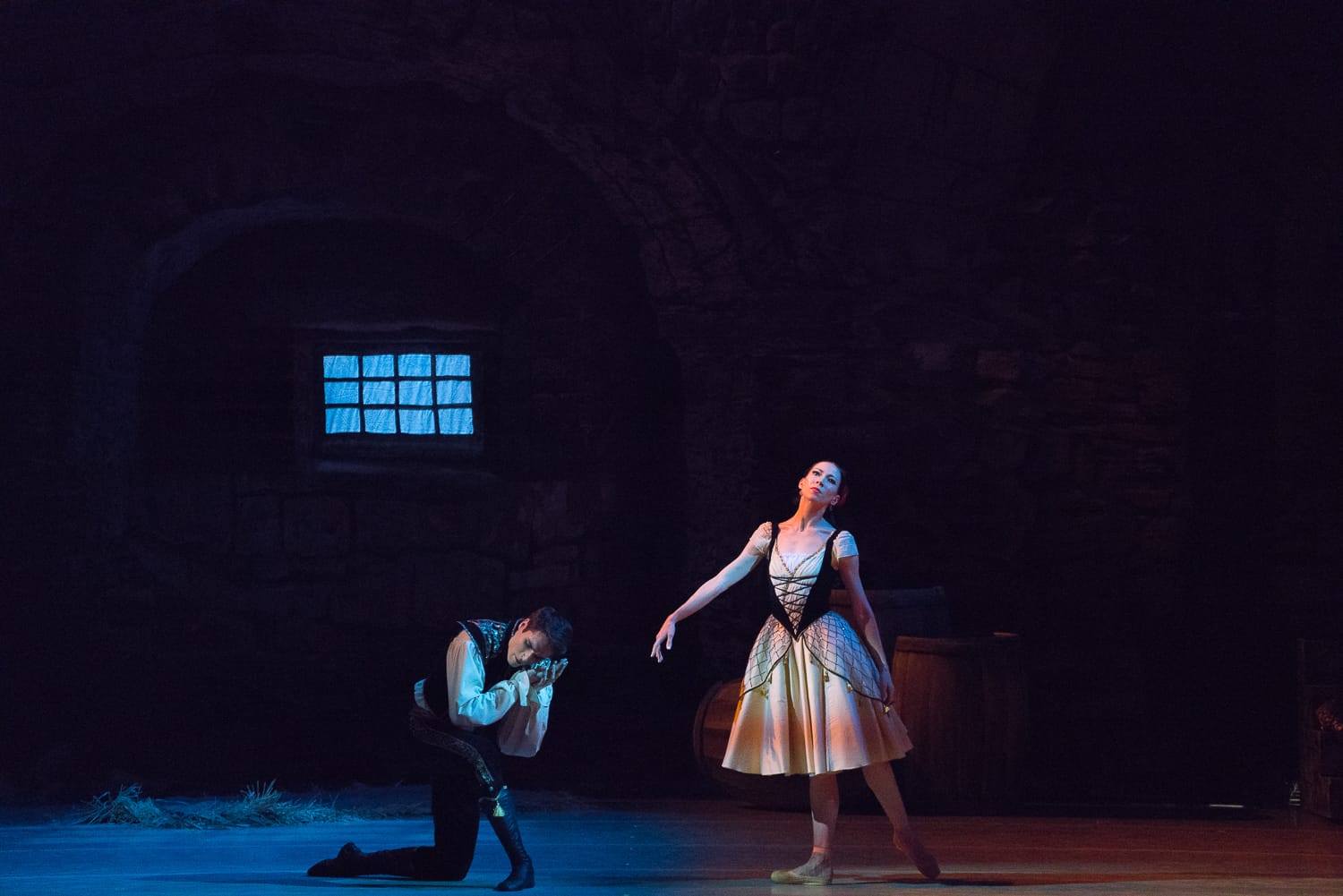
As the Paquita on opening night, Viktoria Tereshkina fused a fiery temperament with a flirtatiousness and firm resolve. She phrases the classical choreography clearly, with utter control and is never hard. Tereshkina’s fabulous whip turns (fouettes) could uncork a case of vintage wine! Timur Askerov was an obliging Andres in terms of acting, indicating the emotions called for but focusing on the dancing with buoyance, ease and multiple leg beats. In the October 10 cast, Nadezhda Batoeva was a lighter Paquita, yet also in total control of the pyrotechnics. The Andres part was taken by Xander Parish, from Britain but now a Mariinsky principal like Tereshkina and Askerov. Parish is of heroic proportions and he has learned to move with grandeur, both as an officer or as a would be gypsy. His leg beats flash like lightning yet are chisel clear. Among the soloists both nights, Renata Shakirova was a spunky Carducha, attempting to rival Paquita for Andres’ attention. Among the friends of Paquita, who danced the “added” solos, May Nagahisa led with a stretch that seemed to echo into the far away. I didn’t, alas, see the cast headed by “baby ballerina” Maria Khoreva and by Konstantin Zverev.
The productions’ costumes were designed by Elena Zaitseva. A hit with every cast were the 20 very young pupils of the Mariinsky’s affiliated Vaganova Academy, doing a military fling in the grand divertissement. Of the sets, by Andrei Sevbo, only the airy architectural décor for Act 3 was eye catching. The Kennedy Center’s synopsis of the story for its printed program avoided the word “gypsies” and used “travelers” instead but the cast list did have roles for “Gypsies”.
copyright 2019 by George Jackson



