Without Feathers
Without Feathers
"The Sleeping Beauty"
New York City Ballet
David H. Koch Theater
Lincoln Center
New York, New York
February 15, 2023
The New York City Ballet celebrated the day after Valentine’s with “The Sleeping Beauty”, the apotheosis of love, grandeur, and gorgeous music. Peter Martins’ version, first seen in 1991, remains somewhat of a mixed bag, but it has some stunningly beautiful scenes with magnificent choreography, and often, excellent performances. It was produced before the Mariinsky and ABT revivals, both based on the notated Petitpa choreography, now housed at Harvard University, and it lacks much of the moral seriousness of these versions. Those knitting ladies are not just dancing to bouncy music, they show the audience the importance of forgiveness, as the King wavers between justice and mercy. And Carabosse, the embodiment of petty vindictiveness (an all too human trait) is not Von Rothbart’s first cousin; she is not an irrational evil being who must be destroyed, as she too is forgiven and invited to the wedding. Martins’ version has changed very little over the years (though for some reason, in this performance the Prince entered the hunting scene hatless—his hat was stored in the wings and picked up later, worn for about a minute and then removed—which made the Lilac Fairy’s forecast that a prince with a feather in his hat would awaken Aurora a bit pointless).
The excess speed at which some of the dances are performed has not changed over the years, unfortunately, and each Prologue fairy still has to race through her variation before being hustled off by the next one; they could only concentrate on the steps and the gracious generosity and elegant final poses tended to be skimped; they should be godmothers giving gifts, not competitors in a speed competition. Nieve Corrigan in the second and Claire von Enck in the fourth variation did manage to inject some perfume. Mira Nadon made her debut as the Lilac Fairy, and, though she could have used a bit more power in her upper body, was the embodiment of grace, miming with a pristine clarity. Maria Kowroski guested as Carabosse, and underplayed the drama to great effect, smoldering with resentment rather than shrieking with anger, and was gleefully spiteful. It is a shame that they don’t get the complete mime scene and that the fairies don’t get to beg Carabosse to forgive the slight, which is such a lovely echo of the ballet's theme.
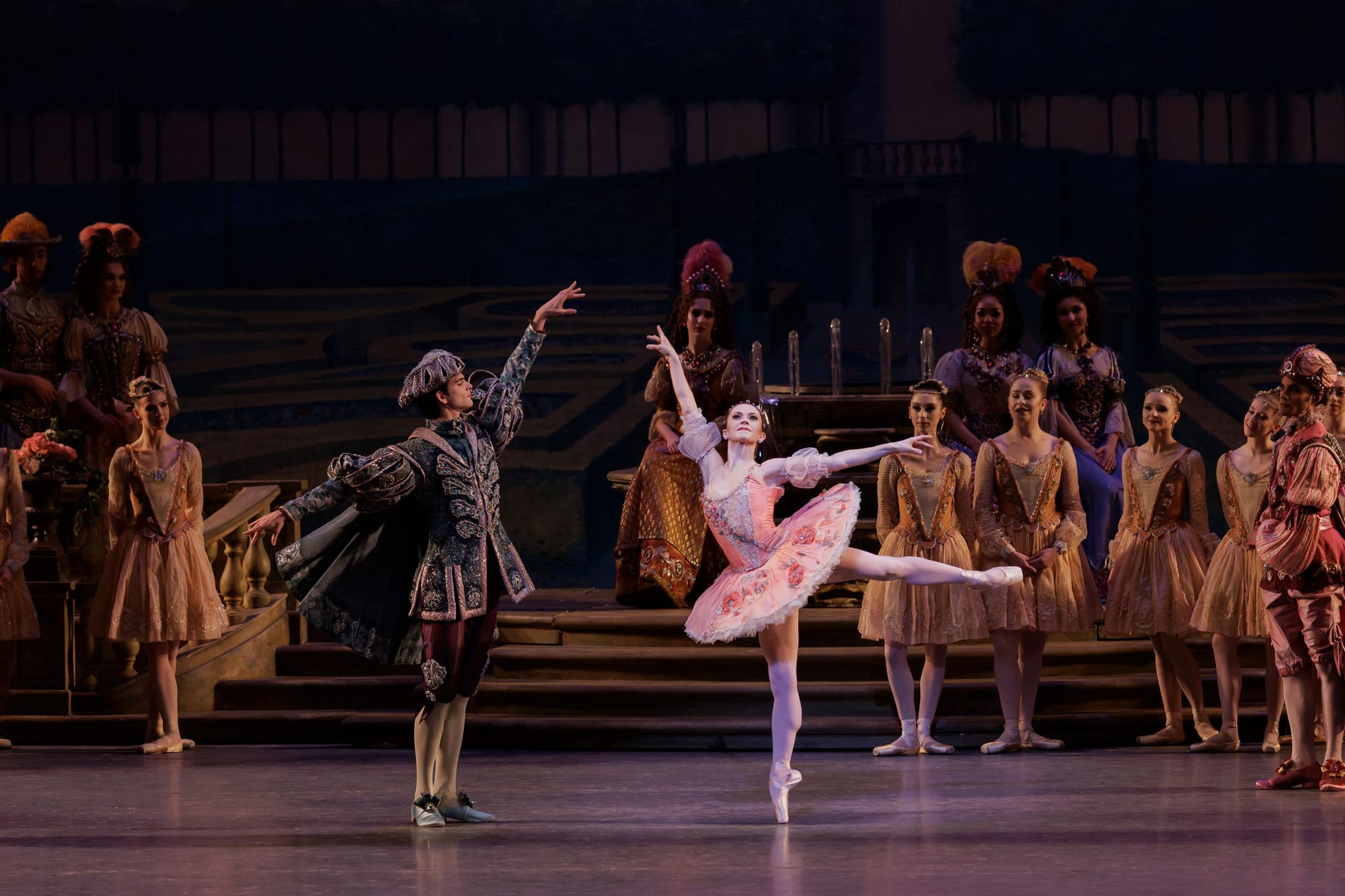
Fortunately, Martins did not cut any of Aurora’s traditional dances, nor did he take them at breakneck speed. Judith Fugate, one of Martins’ first Auroras, who had previously danced the Royal Ballet version as a guest with the Birmingham Royal Ballet, told me in an interview that during the rehearsals, Martins would sometimes check with her to confirm the details of the choreography, and the details are still there. Megan Fairchild danced Aurora with a dramatic arc; each solo was delicately shaded, and each act was emotionally distinct. She is a natural Act I Aurora, fleet and strong, youthful without coyness. Her Rose Adagio was secure, without any flashily held balances, concentrating on her princes rather than her audience. She seemed to relax into that gorgeous music letting it carry her, and making her dancing look impossibly easy.
After the disappointingly abrupt hunting scene (the poor Prince, Joseph Gordon, barely gets a chance to enter before the Countess, a slightly huffy and flouncy Mary Elizabeth Sell, stalks off, as if the story were being told on fast forward), Martins’ beautiful vision scene settles in, and we are off to Petipa land, with glorious patterns and unattainable women. Fairchild danced her solo with a quiet mystery, liquid reverse développés, and creamy control. Gordon was a gracious and unobtrusive partner, and quite moving when she vanished and he thought it had all been a dream.
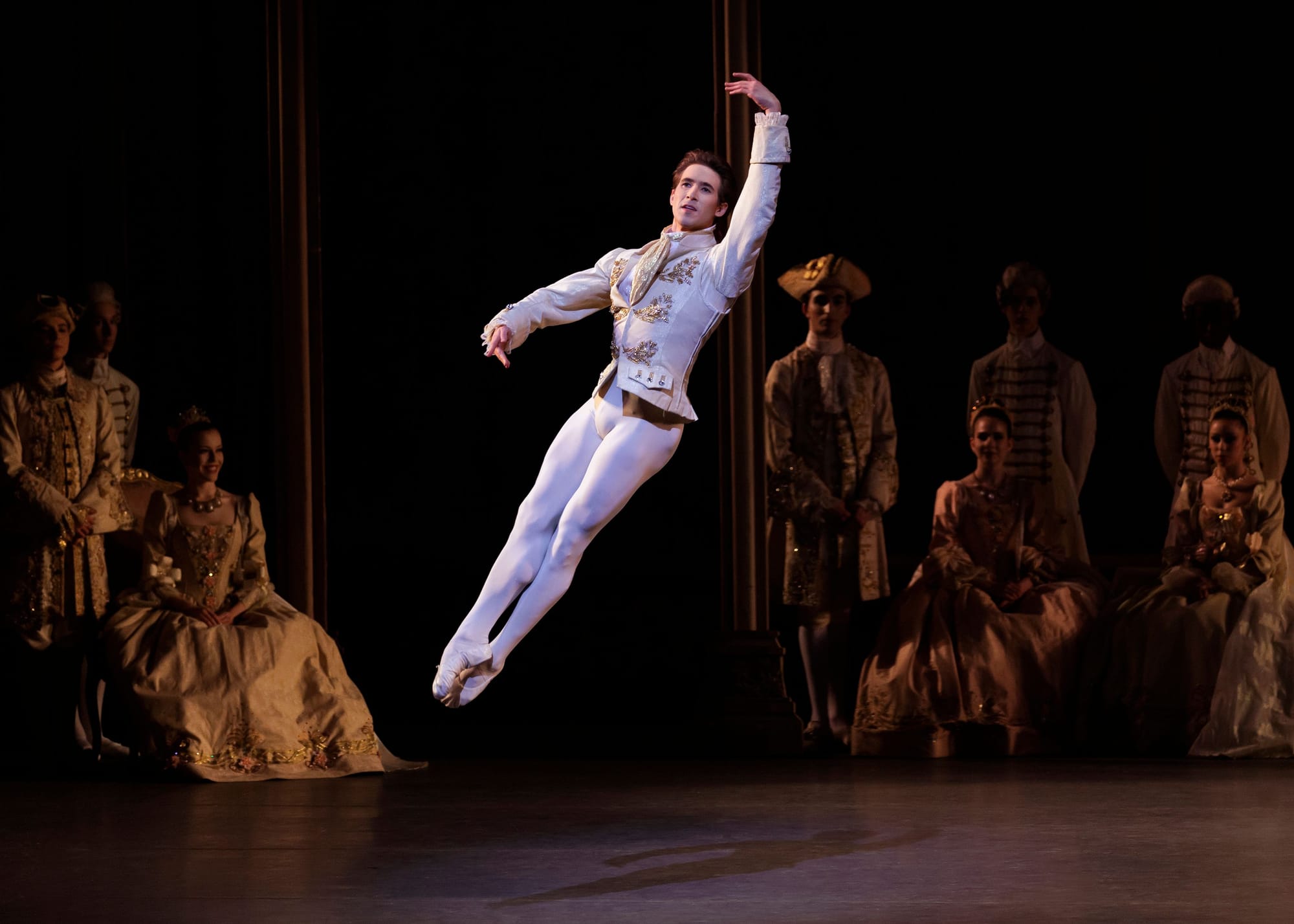
He finally got his chance to celebrate in Act III, and danced his solo with a classical restraint, lovely fifth positions, and pristine control. His double tours to arabesque were plush and solid. The pas de deux, a truly grand one, was both exalted and private, as the dancers seemed to share quiet moments, none more moving that the brief pose before they were crowned, when Aurora nestled in his arms with such love and confidence. Fairchild danced with a quiet power and confidence, making her backbends and balances seem like a declaration; Fairchild has always been a charming dancer but has been late to command and authority. This was a performance to cherish.
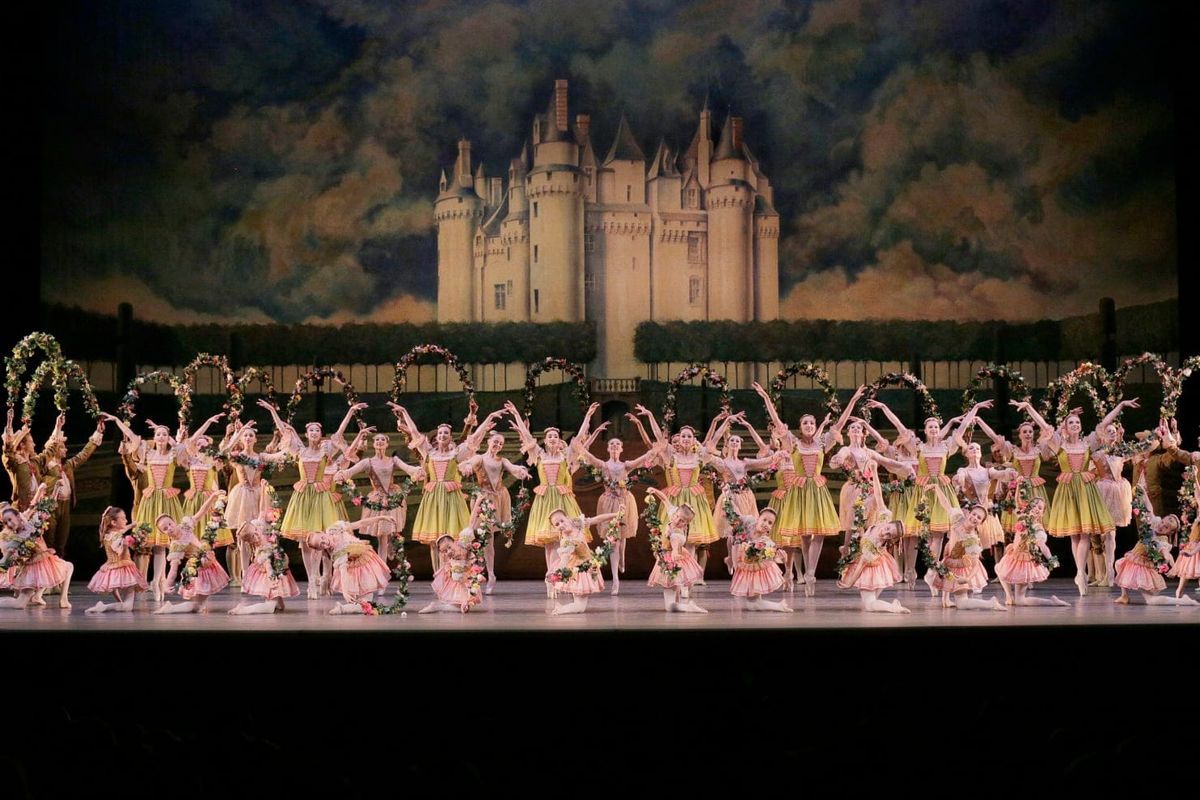
Of course “The Sleeping Beauty” is much more than its main couple, and there were other fine performances. The Garland dance, opening Act I, choreographed by Balanchine, filled the stage with shifting shapes, a colorful extravaganza that was exhilarating. Peter Walker’s Gold variation, part of the collection of jewels guesting at the wedding, showed off his powerful, long legs and plush plié —it was choreographed for a much more compact dancer, but he got around the steps with no problem, and looked impeccably elegant doing it. Daniel Ulbricht was a powerful Bluebird, and though he didn’t have the elevation of his younger days, his grounded strength gave his solo a rare excitement. Roman Mejia, supported by David Gabriel and Cainan Weber, danced the lead court jester with a dynamic clarity that seemed to etch each step in the air; he is a dancer that brings his own electricity to light up everything he does.
Emilie Gerrity as Emerald and Alexa Maxwell as Ruby sparkled through their after-Petipa variations. All story ballets are not alike, and “The Sleeping Beauty” is a stylized hybrid, something that not all the dancers seemed to understand, especially Marika Anderson as the Queen, who seemed to think that a Handel opera could use a bit of verismo, and ran after Carabosse while Aurora sunk to the ground, almost attacking her, and then rolling around with silent screams, a distracting and unnecessary bit of drama. As Noel Coward once said to a minor actor who got a bit carried away, “Don’t just act, stand there!” This carried over to the wedding celebration, as she whispered and gestured and seemed to comment on every dance, as if she were making sure everyone knew she had snagged a prince for a son-in-law. Balanchine was wrong, there are mothers-in-law in ballet, and they can be very irritating. A Queen without dignity and a Prince without a hat are minor issues, but they do affect the overall effect of this glorious work, and the dancers deserve better,
© 2023 Mary Cargill



