Wisps of Fortune
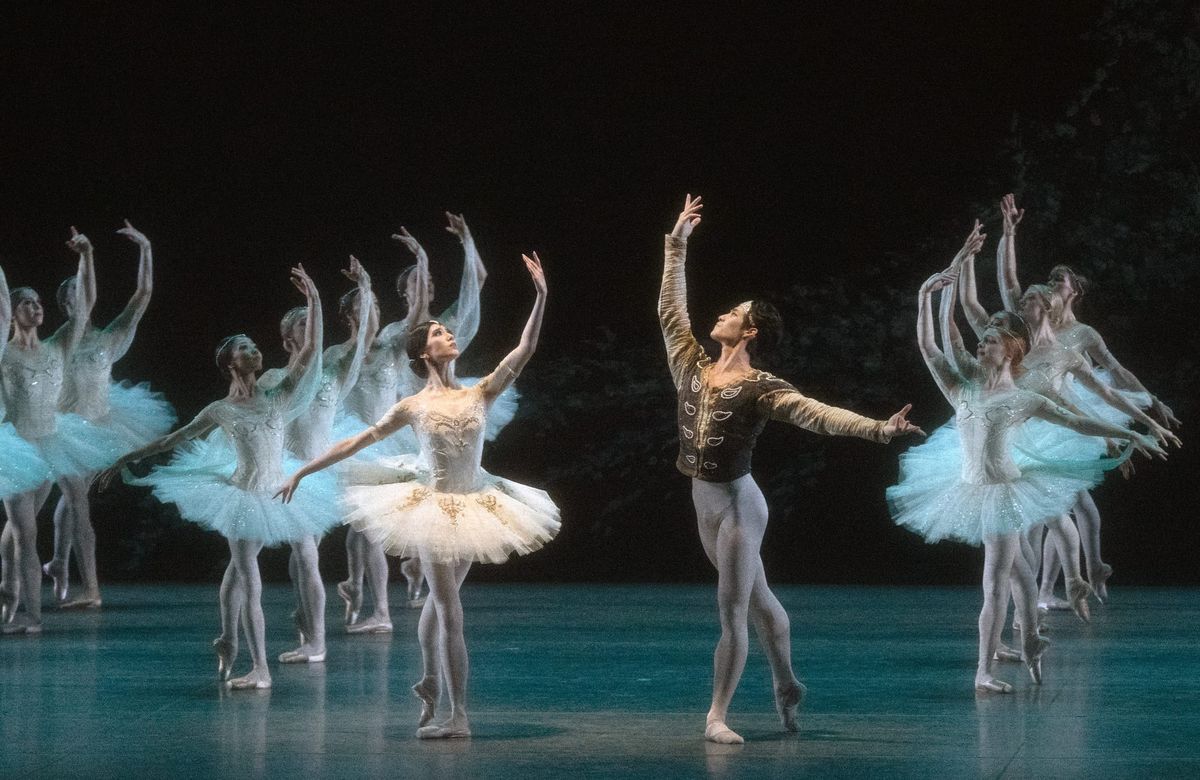
“The Kingdom of the Shades,” “Le Grand Pas de Deux,” “Rhapsody (Pas de Deux),” “The Sleeping Beauty, Act III”
American Ballet Theatre
David H. Koch Theater
New York, NY
October 28, 2025
Sometimes fortune smiles on an audience. The second version of ABT’s “Classics to the Contemporary” program, which replaced the middle act pieces with Christian Spuck’s “Le Grand Pas de Deux” and an excerpt from Frederick Ashton’s “Rhapsody,” had a last-minute replacement for the opening act’s “Shades.” Stepping in as same-day substitutes, Chloe Misseldine and Joo Won Ahn proved a welcome gift, delivering the kind of genuine emotional depth that lingered in memory long after the evening concluded.
Ahn's entrance carried palpable despair and intention. Dancing with remorseful urgency, his body breathed a sigh only when Misseldine floated onstage soft and light as an apparition and landed in the first arabesque with her hand on his shoulder. The dance that followed was transfixing. Her développés and jumps achieved that elusive otherworldly quality while retaining impeccable control, and the moment in the adagio when she turned to acknowledge Ahn before wrapping around his back and walking away had a quality of enveloping smoke.
This ethereal atmosphere extended into the pas de trois, where Léa Fleytoux, Fangqi Li and Elisabeth Beyer showed greater fluidity and cohesion than the other cast I saw. Fleytoux in particular was mesmerizing, dancing the first variation with a suspended quality about her control and slightly tilted forward presentation that echoed, in a different register, Misseldine’s apparition quality.
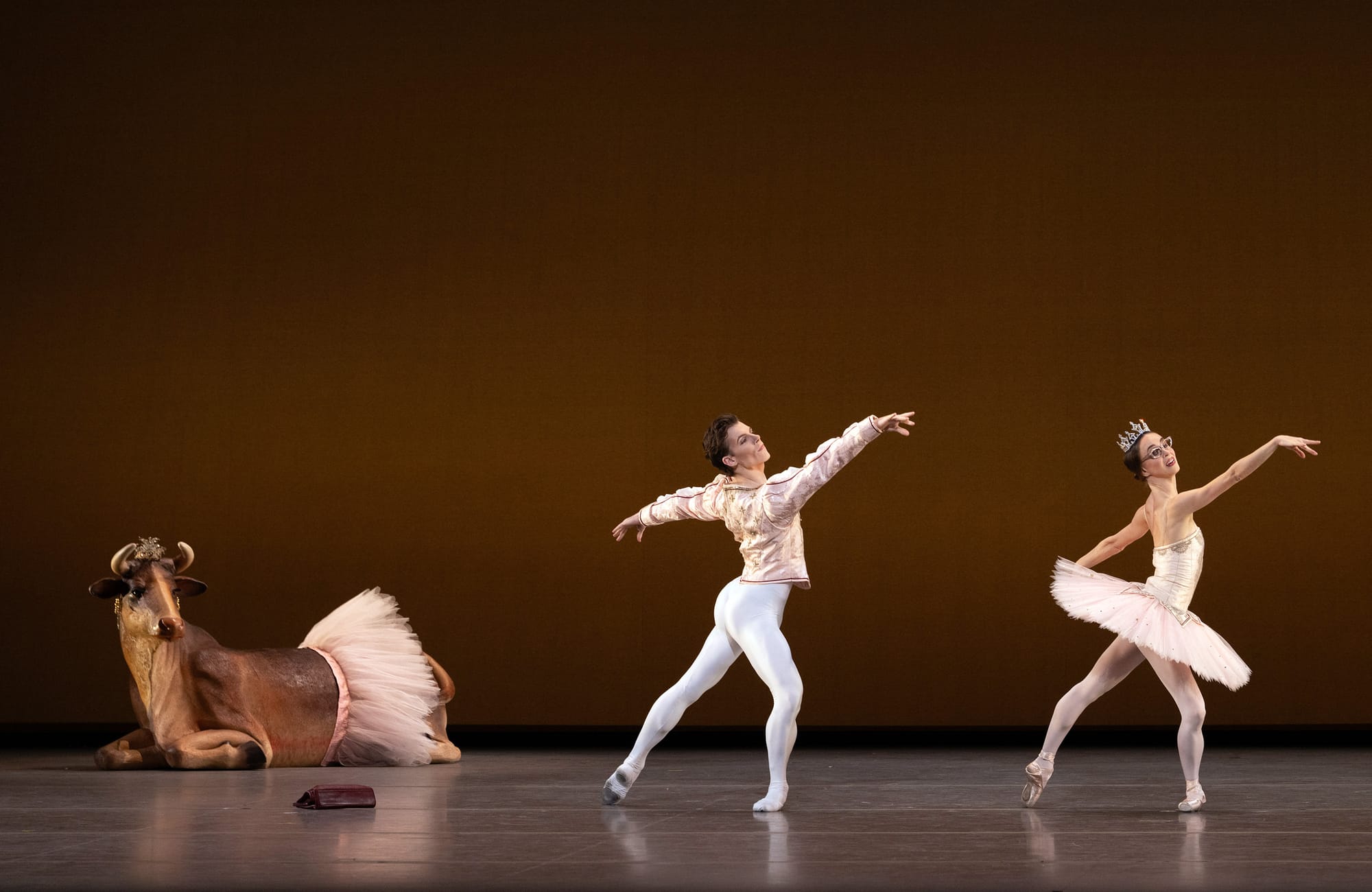
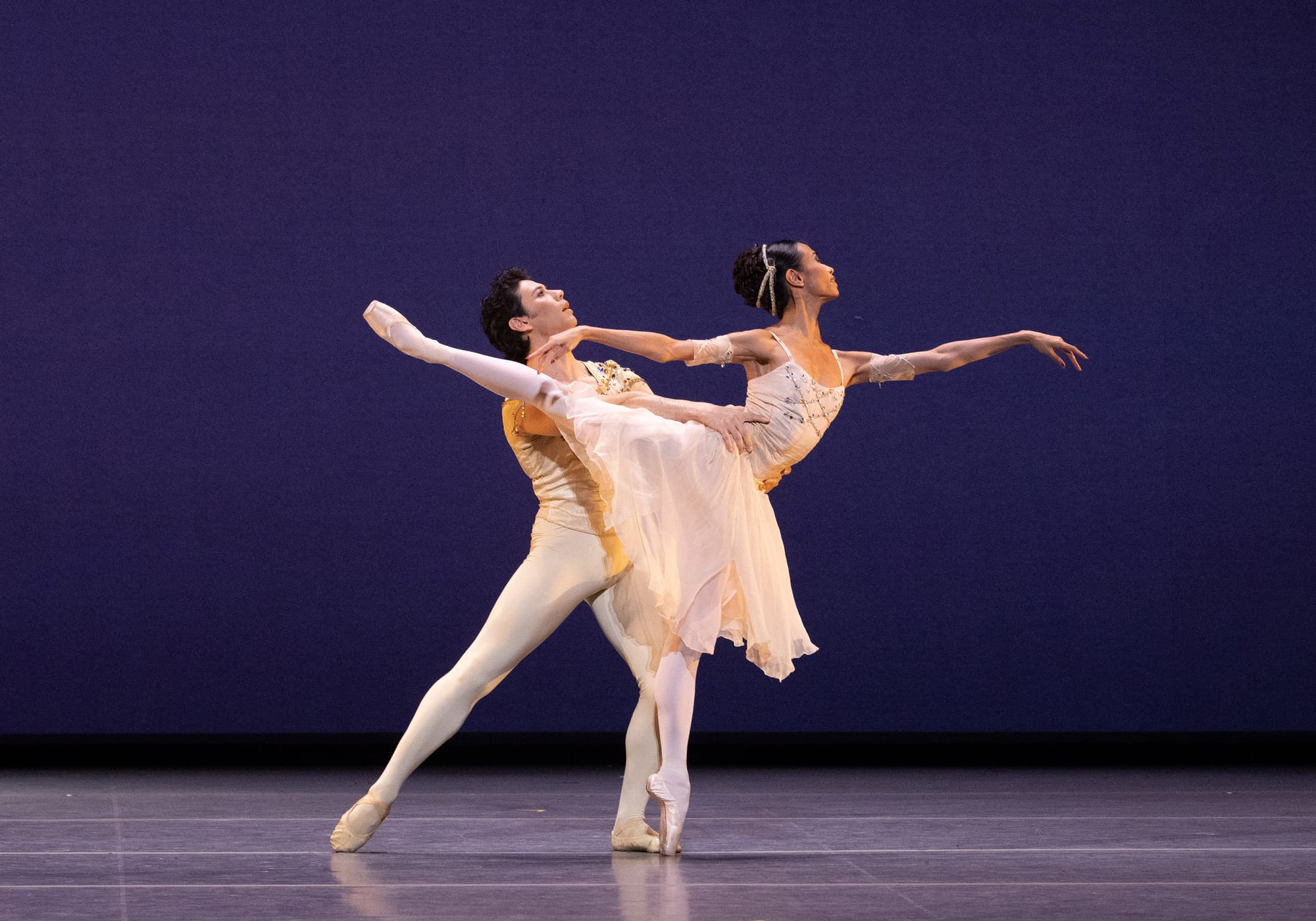
From this dreamlike opening, the program shifted gears dramatically. “Le Grand Pas De Deux” with Skylar Brandt and Jake Roxander dispelled some of the reverie with a hefty serving of humor – a comic jolt that proved welcome as it helped refocus attention on the performances to come. If Brandt can be said to have her bread and butter, balletic comedy is it. On cue, she came alive in the bespectacled ballerina role, clutching her emotional support purse and miming persuasively in between the technically demanding sections. Roxander had no trouble keeping up, and if anything was a worthy contrast as a somewhat more refined and mature partner. It helped the comedy that when they briefly ventured into the technical steps, those were executed cleanly. Then, “Rhapsody” went beyond clean. Fleytoux and Herman Cornejo brought elegantly classical execution to Ashton's choreography, though their pas de deux seemed to be over shortly after it started – having these dancers on stage longer would have been a delight.
Act 3 of “Sleeping Beauty” once again rounded out the program, with once again mixed results. Virginia Lensi delivered a lovely Lilac Fairy, setting a gracious tone with her solo. The Pas de Trois featured a standout performance by Camila Ferrera who danced with delightful playfulness and genuine acknowledgment of her partners alongside Sun Woo Han and Sierra Armstrong. Kanon Kimura impressed as the White Cat with powerful jumps that seemed to explode out of nowhere, though her partner Patrick Frenette seemed overly focused on the partnering task at the expense of really dancing. Hannah Marshall's Red Riding Hood was lovely, with innocent fear and confusion in this somewhat oddly meandering staging.
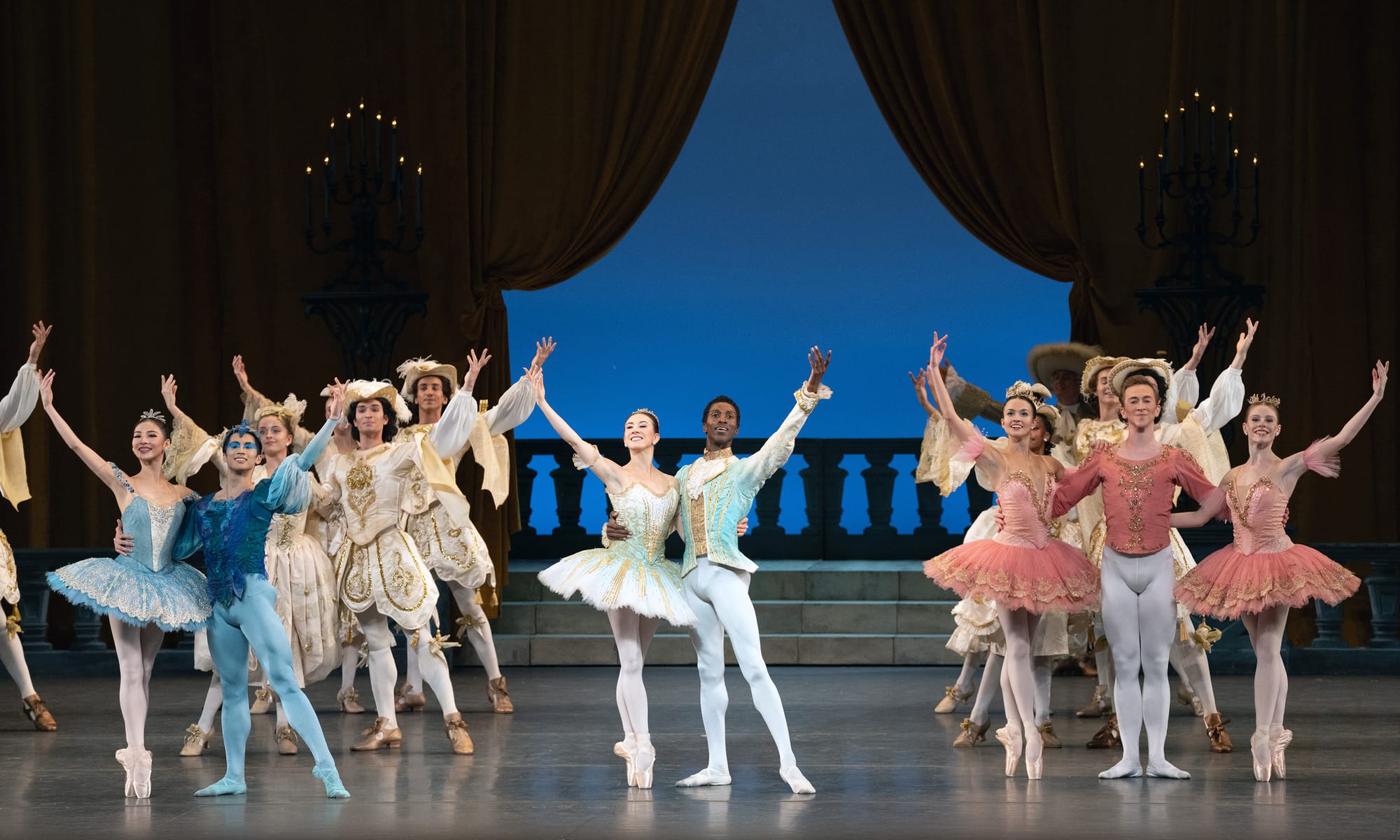
After these promising moments, the evening came upon its big stumble in the grand pas de deux. Isabella Boylston and Calvin Royal III seemed disconnected from Tchaikovsky's score, their fish dives feeling more like punishment than accents. Her variation dragged, and he failed to achieve proper lift in any of the jumps. Where the Shades excerpt had offered transcendence, this dancing was distinctly earthbound, not quite befitting a castle.
copyright © 2025 by Marianne Adams



