Wingspans
“In & Out,” “Gêmeos,” “Something Tangible,” “I Am The Road”
Ailey II
Ailey Citigroup Center
New York, NY
April 1, 2016
The “All New” program of four world premieres by Ailey II showed the company as an effectual incubator of impressive talent through its performers, if not the choreo- graphers. The new works, all choreographed in 2015, by and large attempted to show too much too quickly, and on their own looked best in their more toned down and simple sections. Their complexities and overlays, however, worked a favorable advantage for the dancers, who really excelled and enriched each and every different scene, showing the remarkable breadth of their abilities.
“In & Out,” created by the Ailey school alumnus Jean Emile to an assortment of different music which started the evening, was perhaps the night’s most ambition and complex piece, but also the weakest. The work moved through phases of different emotion and different scenes, as well as a whole range of different costumes, with drama coming mostly from the lighting effects and constant fades to black that accommodated the transitions. The composition ranged from very modern and athletic movement, to the more jazzy sequences, and even some ballet, and the costumes followed suit.
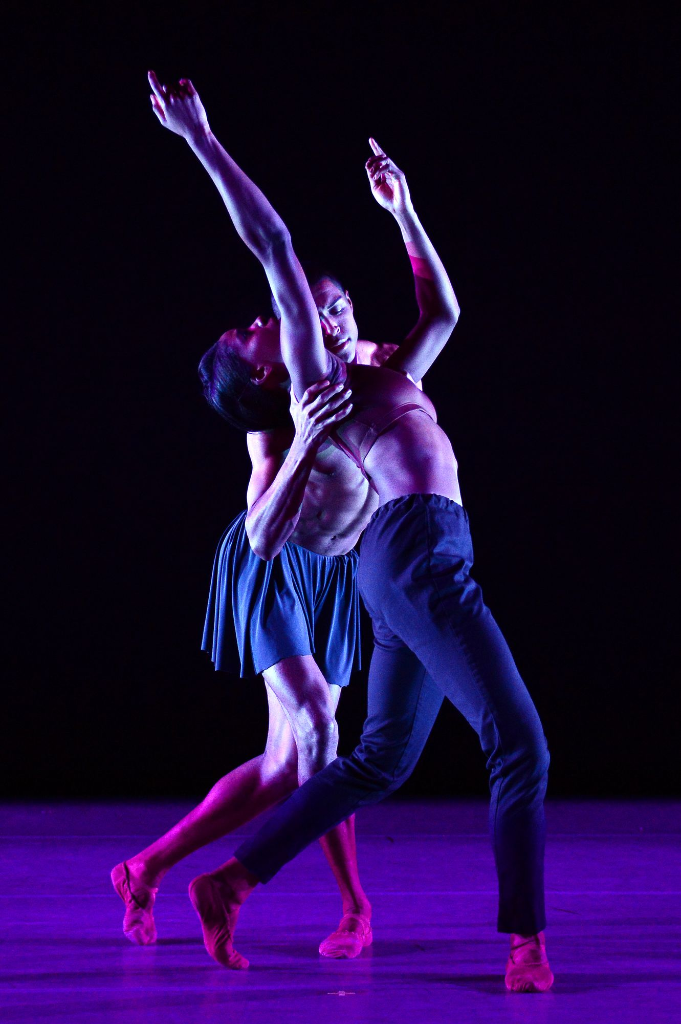
A scene of mostly floor-bound movement with a lot of spirals around the spinal axis was performed in simple athletic wear. The jazz-rich sequences of fast movement across the stage had the dancers appear in business suits. That dress was then replaced by classical ballet classwear – tights and skirts – on the dancers’ bodies, and grand jetes on the movement side. It was a good piece to showcase the dancers’ abilities and artistry, but its many thematic transitions inhibited individuality. The work’s one highlight, coming on the heels of a comical scene where in a move of gender role reversal four women dressed in pants were judging and objectifying four men in skirts, was the emotional duet “Desesperado,” in which Courtney Celeste Spears and Jacoby Pruitt showed acute vulnerability in the steps’ lyrical intimacy.
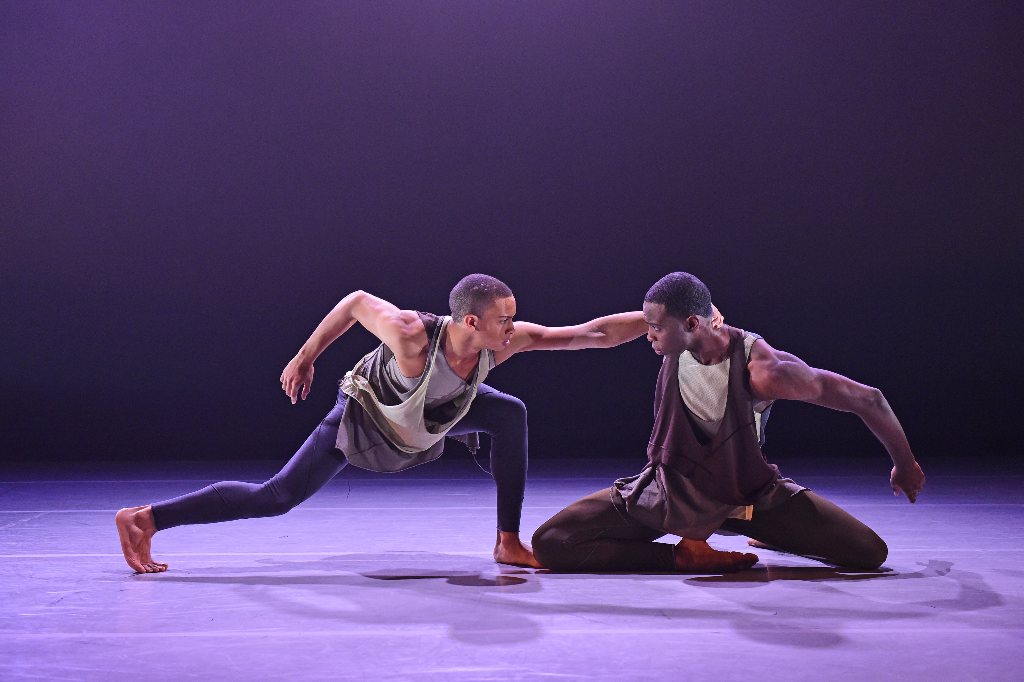
Jamar Roberts’ “Gêmeos,” a playful work for two men to music by Feia Kuti loosely based on Roberts’ interaction with his brother, was far simpler in design, but far more entertaining in execution. Lloyd A. Boyd III and Gabriel Hyman carried the piece with their masterful interplay and portrayal of two brothers – one more athletic and the other more into dance – and the challenges that such different interests, and different personalities, beget in their interactions. The dancers’ size difference only helped with the overall effect of the work, with the smaller-statured Hyman being the crafty and playful dancer who at one point even got “told” (through the voice-over accompaniment) by the nettled Boyd III “you dance too much!”
“Something Tangible,” a Ray Mercer work to music by diverse artists, was another richly packed piece, but less thematically varied than “In & Out.” Its costumes – gray-hued shorts and tops – stayed constant throughout the work, and the variations in music and expression felt calculated, if not always wholly thought through. The group dances were full of athletic and acrobatic suspensions of movement and turns, with dancers vaulting through space in assisted aerial somersaults, and descends into splits and their immediate reversals, and overall showed great skill, even if on occasion the steps lacked the necessary plasticity to really carry the repetitive heavy beats and percussions for some of the dancers.
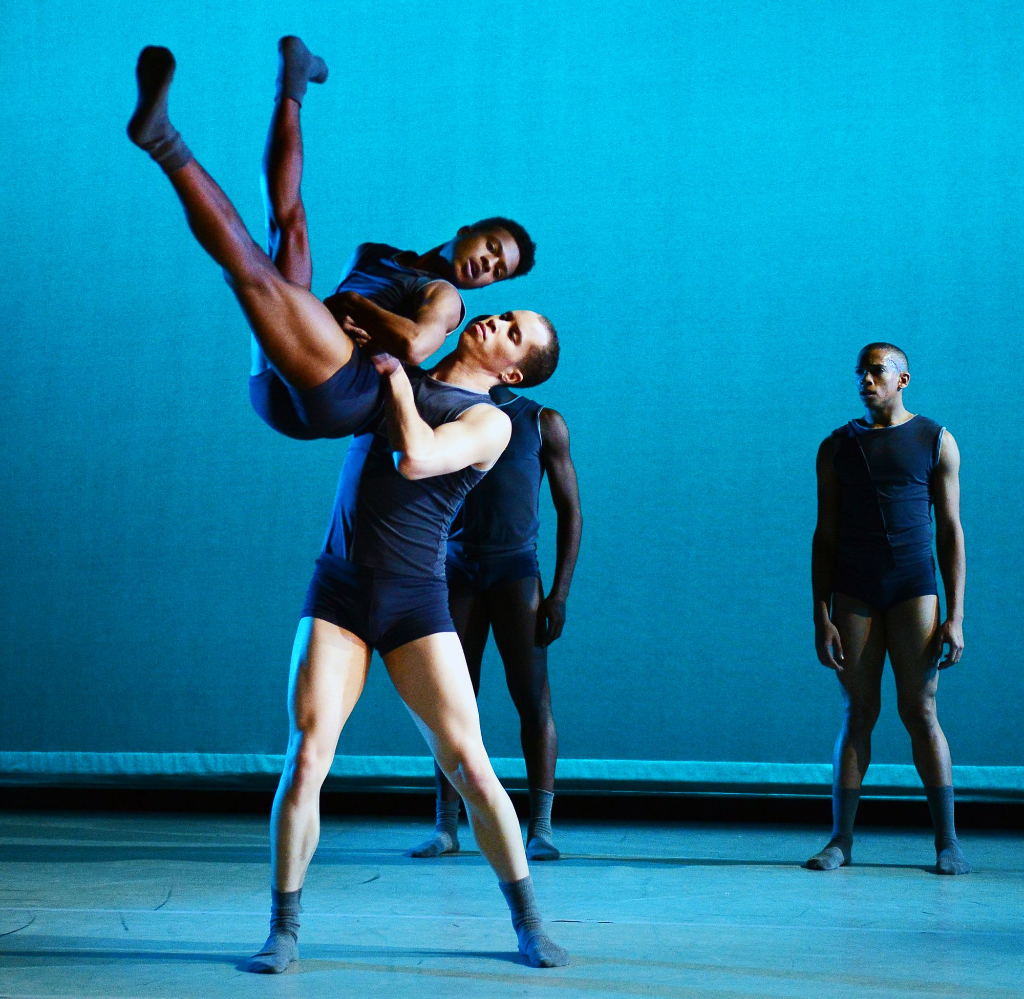
The work’s, and arguably the night’s, most memorable scenes were an inspired solo danced by Nathaniel Hunt, and then an even more emotional trio where Boyd III and Pruitt partnered Deidre Rogan. Hunt’s dancing showed a solitary figure amid the crowd of others whose slightest moves delivered an effect – they would breathe on him, and with that simple act have him move from person to person. As he moved around the stage, Hunt seemed to try to connect to these people, all unsuccessfully and all only to end up alone. The equally artistic trio was danced to a music piece by Max Richter, and consisted of many gentle interactions that transitioned Rogan from one partner to the other, and periodically had dancers pausing to look up and take in the moments they were creating. Of the emotional work, this was night’s best dancing, and the dancers’ delivery of these two sections showed that the real beauty of “Something Tangible” was in the intangibles of their execution.
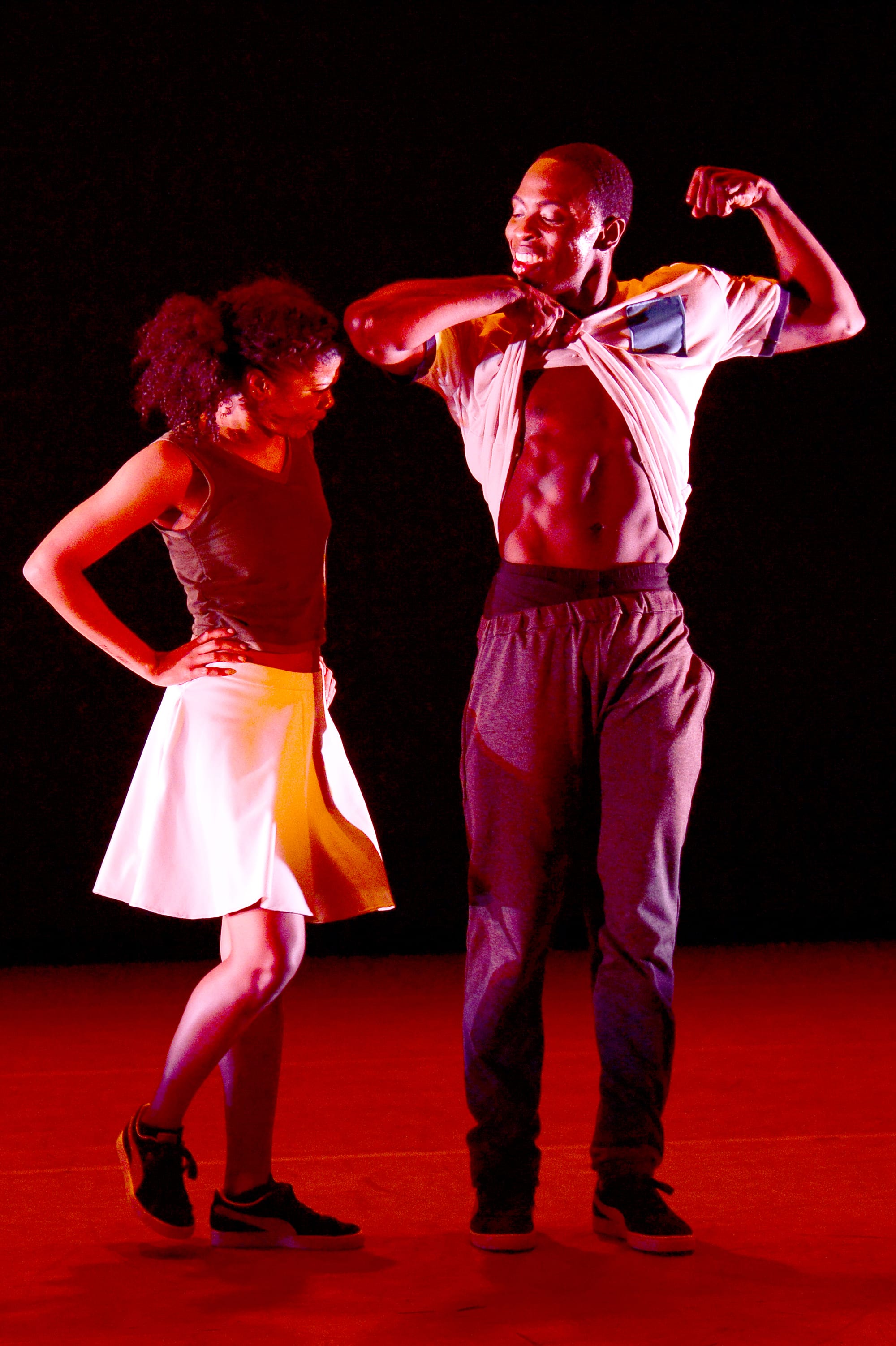
“I Am The Road,” Kyle “Justsole” Clark’s very honest and quasi-biographical work of a hip-hop artist growing up as a teenager, falling in love, and coming into his own, gave an upbeat and relaxed ending to the night. The music was filled with voice-over that allowed for “narration” by the protagonist of the piece danced by Boyd III, who used this feature of the work to forge a connection with the audience. The earnestness of his dancing helped tell a story of sorts through the piece, from feeling his way through the world, to the flirtatious-turned-romantic dancing with Courtney Ross in the “She’s the One” section. The steps were hip-hop flavored, but not overly so, and seemed to merge the hip-hop use of rhythm with the more jazz-inspired embellishments to the movement. The numerous running sequences of the worked may have seemed odd, but they gave the dance a relaxed feel and bring to the forefront these dancers' greatest attribute - the sense of their absolute belonging on stage. Surely this Ailey crop has impressive artistic wingspan, but what makes these dancers really worth watching is their love to dance.
copyright © 2016 by Marianne Adams