Winning Moves Only
“The Barre Project, Blake Works II,” “Thousandth Orange,” “Swift Arrow,” “Time Spell”
Turn It Out with Tiler Peck and Friends
New York City Center
New York, NY
October 16, 2025
Tiler Peck’s intimately curated show – Turn It Out with Tiler Peck and Friends – made a brief but powerful return at City Center with an assortment of four ballets that showcased every performer's strengths while cleverly avoiding their weaknesses. Above all else, the program was a celebration of musicality itself and the myriad ways dancers can embody sound, rhythm, and silence.
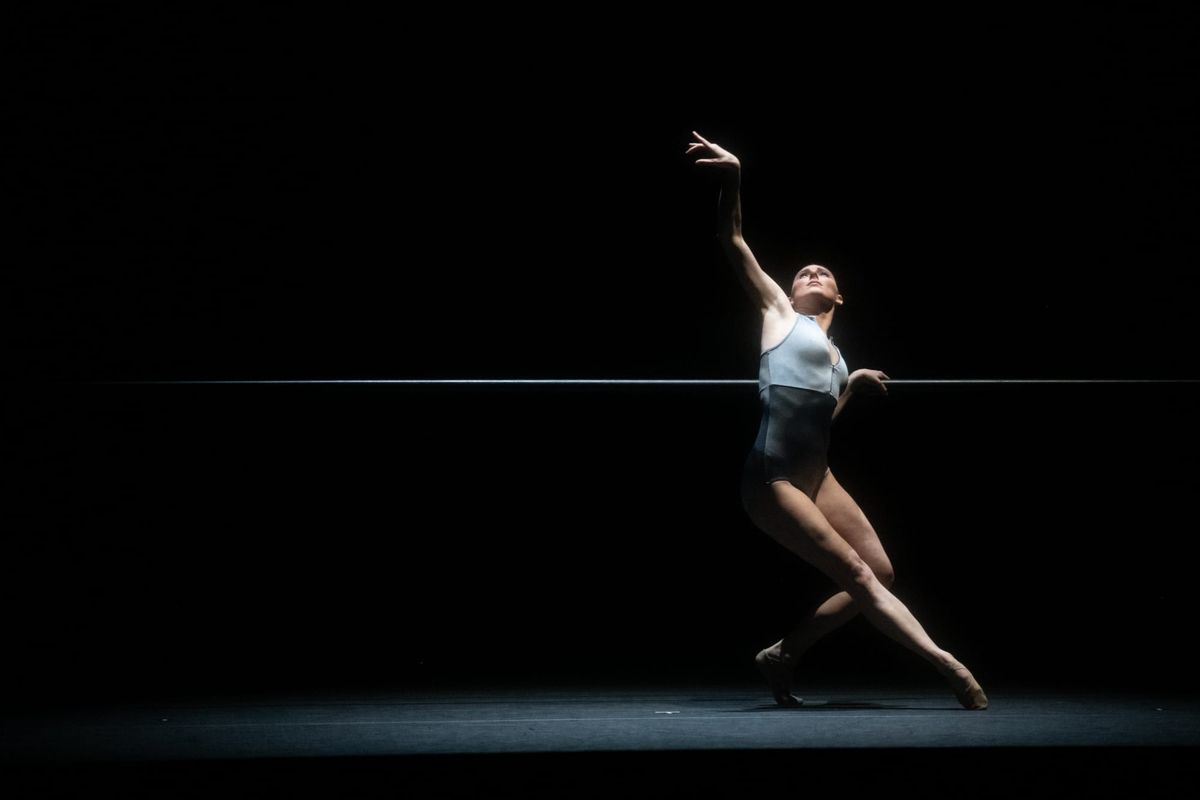
The evening opened with William Forsythe's "Barre Project," a work born from pandemic-era isolation and originally premiered in digital form. What began as choreography constrained by lockdown living rooms took on new life at City Center's broader stage. The barre, which dancers repeatedly returned to, no longer read as mere necessity but as deliberate constraint – a tease that revealed these artists' capabilities bit by bit. Peck opened the work, followed by Roman Mejia, Jeffrey Cirio and Lex Ishimoto in thematically similar scenes. The dancers would start at the barre, venture away with jumps or turns, then return. The rhythm contracted and expanded: a slow temps lié or tendu, then explosive departures.
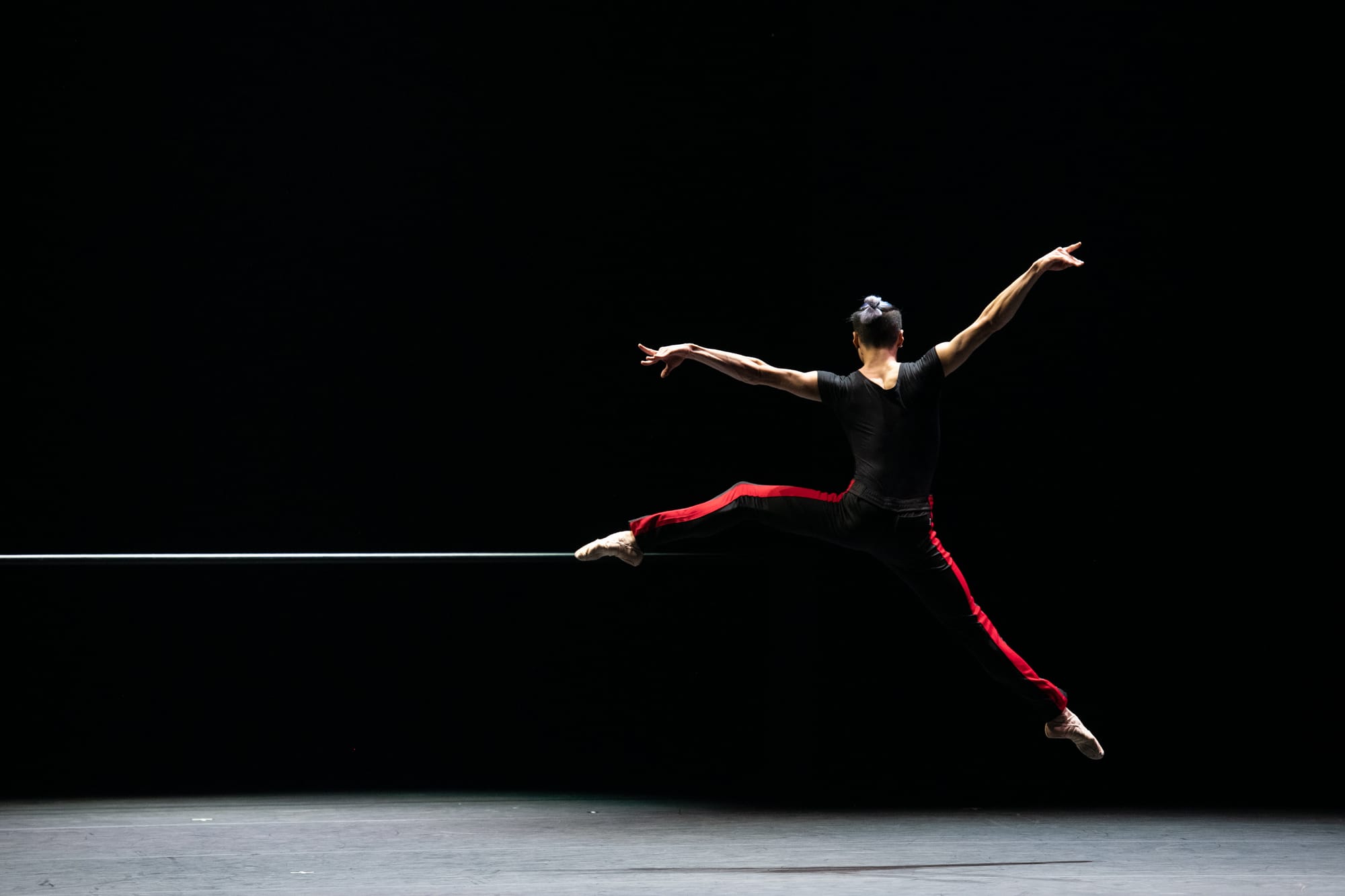
The choreography for Peck combined sharp footwork with eloquent upper body articulation – in one moment, she gently touched her neck, only to launch into a rapid-fire sequence of steps in a delightful contradiction of sweet and savory styles. The second movement offered a welcome interlude: a video sequence of hands at the barre, resembling a pianist's fingers, giving the dancers a breather before the next section's competitive exchanges between Mejia and Cirio. With frequent costume changes (mostly into rehearsal or athletic wear), stylistic shifts – including a duet for Peck and Mejia with distinct ballroom flair – and technically invocative moments, like Peck's series of chaînés executed en dedans, the work became a fireworks display of technical prowess.
“Thousands Orange,” the one ballet not featuring Peck, followed an intermission and fared the worst. Originally choreographed by Peck in 2019 for the Vail Dance Festival, the piece unfolded as a slow-moving meditation on Caroline Shaw's score, performed live by the Bergamot Quartet. While not wholly unremarkably – the ballet does consist of good blocking and some beautiful sequences in the partnered steps – it wasn’t quite as compelling or innovative as the rest of the programming. There were a lot of embraces for the six dancers of New York City Ballet, including a very riveting Mira Nadon who was all style in this work, and an interconnectedness among them as the embraces went on despite various partner swaps. No dancer ever left the stage – they would just move to the side to yield the center to whoever was to be the focal point. The work's symmetry intrigued: opening and closing with dancers in identical positions, suggesting a painting briefly animated or a story momentarily told. But the narrative never quite cohered, leaving the piece feeling more pleasant than profound.
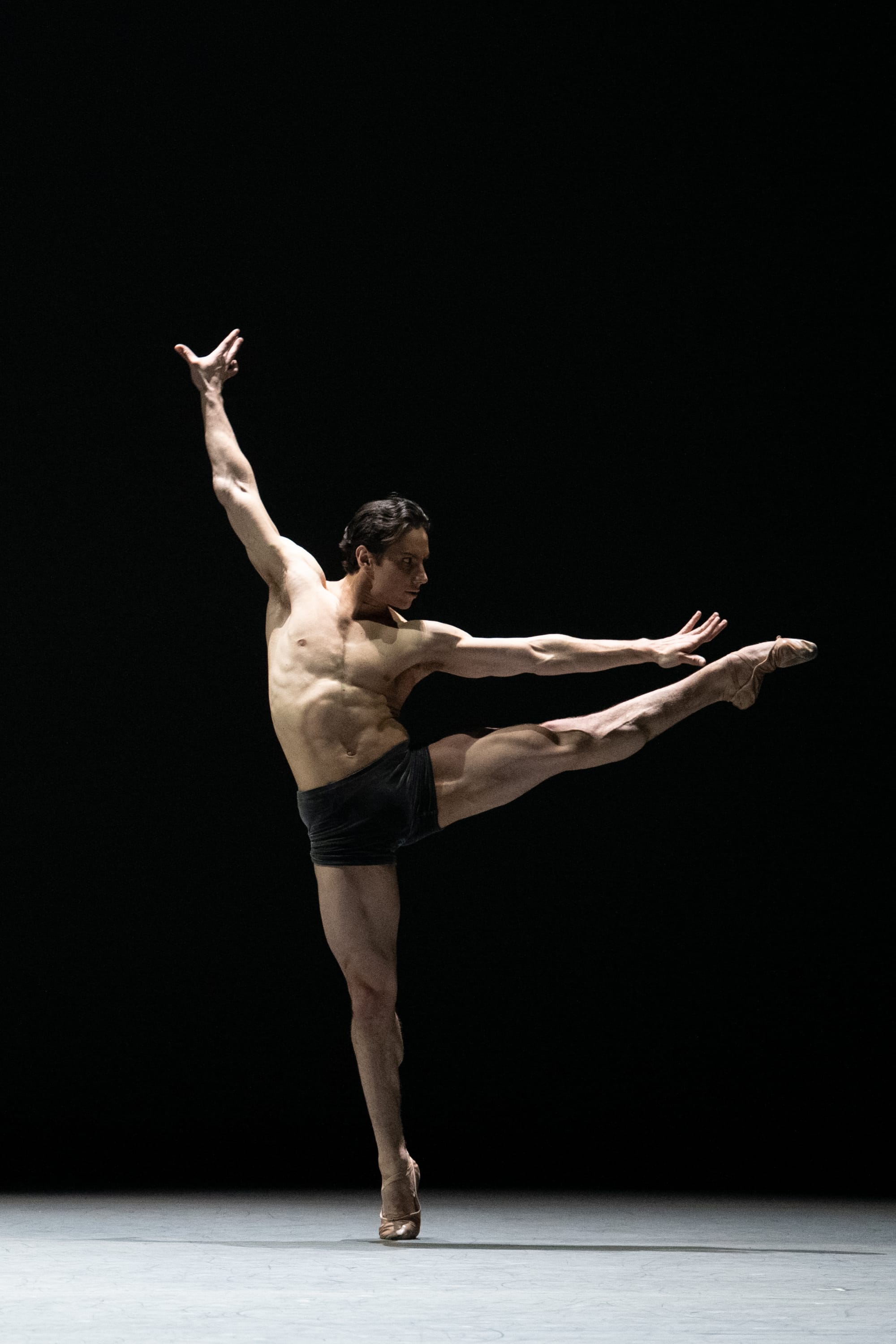
Far more compelling was Alonzo King's "Swift Arrow," created for Peck and Mejia in 2021. Peck has referenced the duet as a portrait of the couple's romance, yet curiously, no actual storytelling emerged here either. Instead, it was a showcase of their technical skills and musical connection. The solo sections cascaded with bravura, building toward a duet that exploited their musical intuition and seamless partnering. The absence of narrative wasn’t necessarily a flaw – these dancers aren't the great actors of the ballet world, but they are unquestionably great musicians and technicians. Perhaps the love story is simply this: two artists who understand each other's bodies and musicality so completely that there's no need for more.
The finale, "Time Spell," intricately crafted by Michelle Dorrance, Jillian Meyers and Peck herself for eleven dancers, unleashed the evening's full musical palette. Tap dancing collided with hip-hop vocabulary and neoclassical ballet’s minimalism, creating intersections where sounds and movements were tapped, sung, even sighed into being.
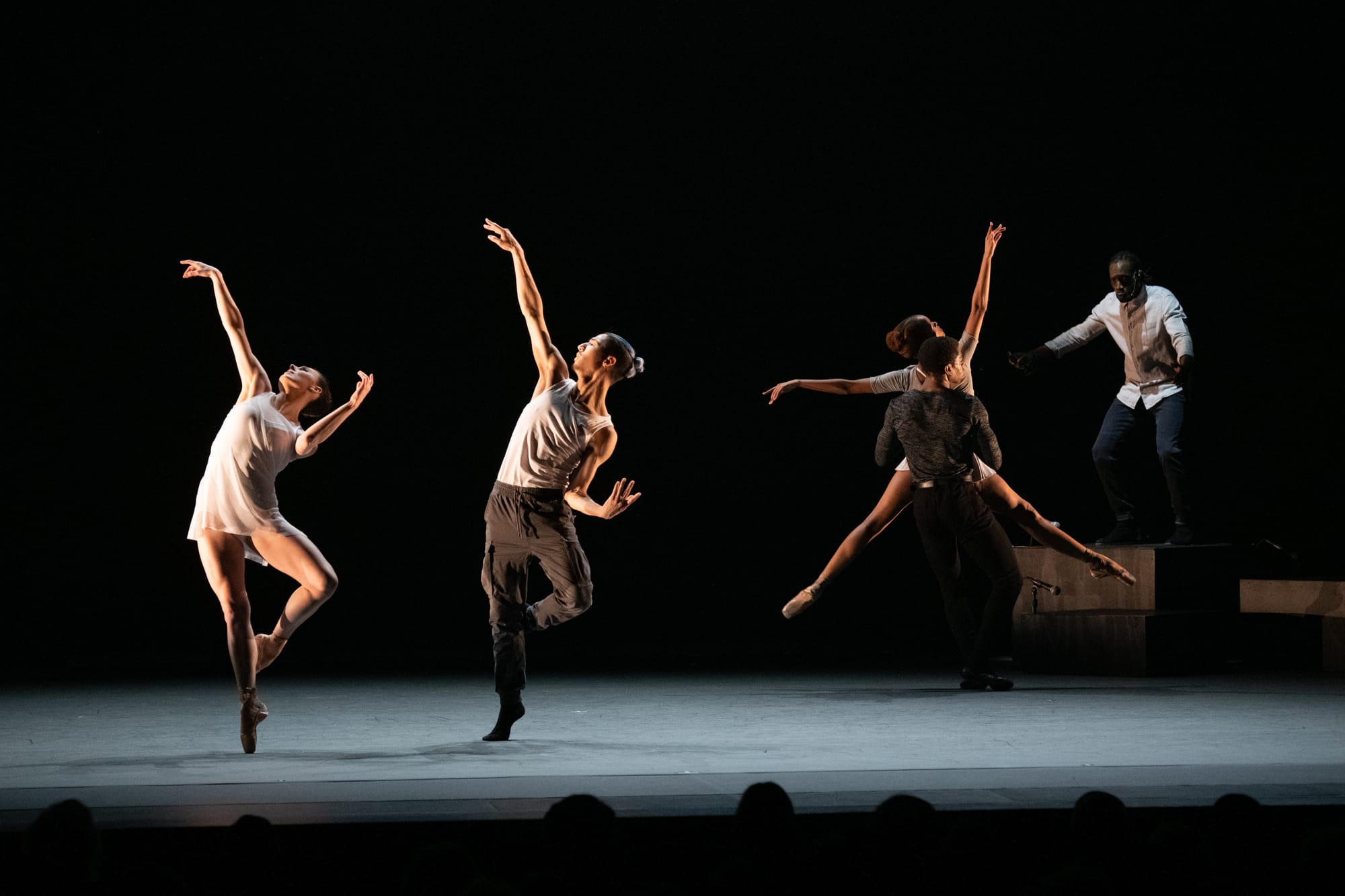
The choreography shape-shifted constantly. A section for the women, all in white, found them walking en pointe across the stage with sultry assurance, Nadon punctuating her strut with a knowing side-eye. Then Mejia and Chun Wai Chan danced to nothing but claps – a Michael Jackson-esque sequence that made movement itself the melody to rhythm's beat. India Bradley delivered a scintillating solo, dressed in a crisp white shirt over a leotard, moving to Aaron Marcellus's sighs with a quality both robotic and sensual, like a remote-controlled android discovering desire. And then then finale scene exploded into extravaganza: tap dancing in pointe shoes, a smoldering tango for Bradley and Peck, and every musical color imaginable bleeding together.
In all, it was a 2025 night at the ballet, as Peck's curation revealed an artist deeply invested in stripped down modern moves and musicality as the animating force of dance, with a heavy side serving of fun. When the program succeeded – which was most of the evening – it was because the relationship between sound and movement felt essential rather than decorative. These weren't dances accompanied by music; they were arguments about what music becomes when channeled through the body.
copyright © 2025 by Marianne Adams



