Chatting About Dance
"Otherwhere", "Leaven"
Tom Gold Dance
Marlene Meyerson JCC Manhattan
New York, NY
October 20, 2025
Tom Gold Dance was established in 2008 by the former New York City Ballet soloist, Tom Gold, and the revolving cast (made up of dancers with various backgrounds, including current and former NYCB dancers) has been performing Gold’s choreography in smaller venues with regular New York seasons. Keeping a small company going for so long can’t have been easy, but the dances and the dancers looked fresh and engaging. Gold also had an admirable dedication to live music; orchestral scores are of course off limits, but Gold has an eclectic taste and has worked with a wide range scores.
The two composers he used for this program, Fritz Kreisler and Erich Wolfgang Korngold, had, as Alexander Zaretsky in his introduction explained, many similarities; both had Austrian backgrounds, both emigrated to the United States in the late 1930’s, and both have written film scores. The selections Gold chose were played by Giancarlo Latta (violin) and León Bernsdorf, piano, and were melodic, atmospheric, and eminently danceable.
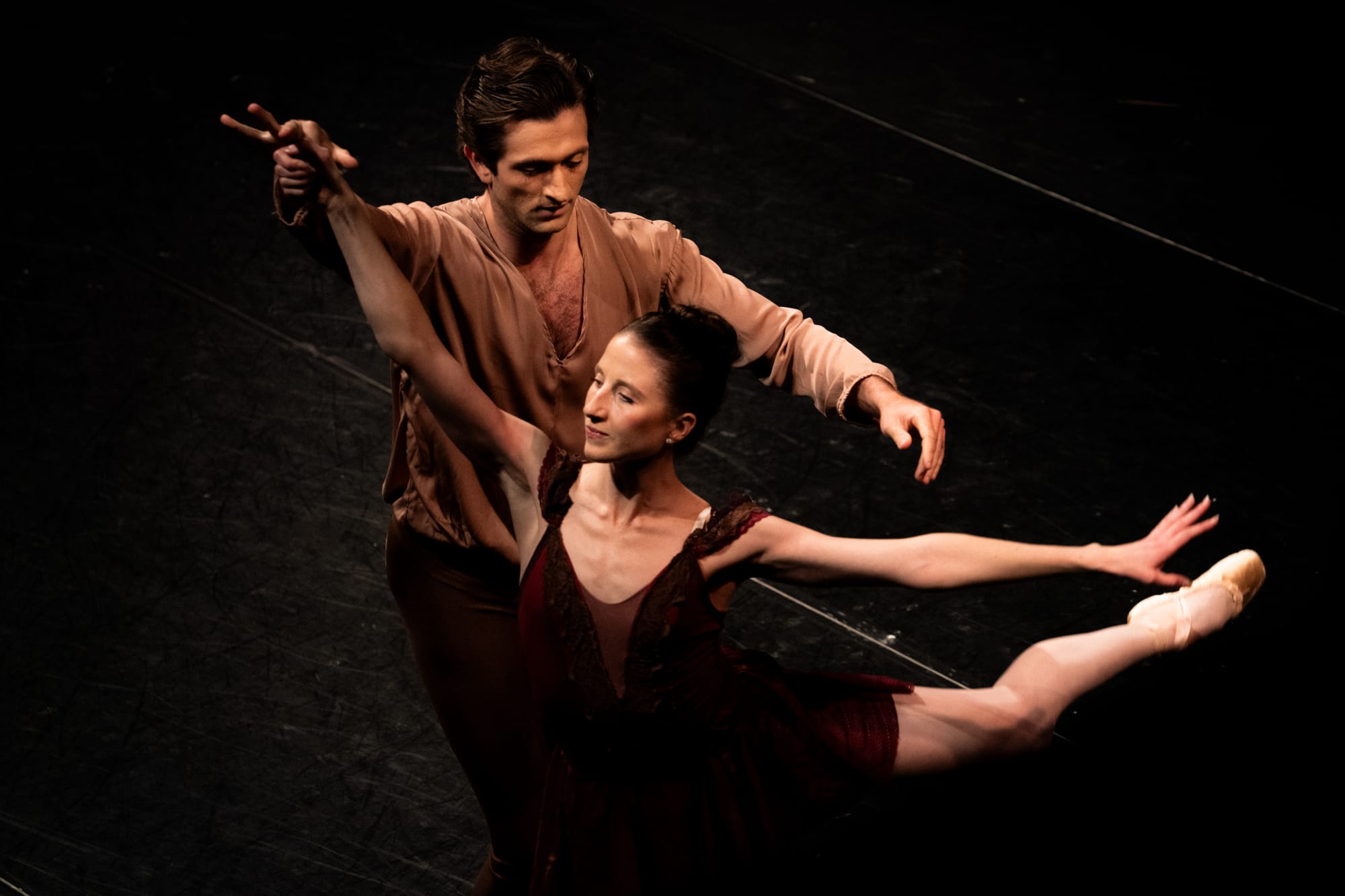
The opening work (both were premieres), “Otherwhere”, used four miniatures by Kreisler. Sara Adams and Harrison Coll, both NYCB soloists, danced an extended pas de deux. Adams has an unusual stage persona, both mysterious and strong (she made an indelible impression as the impassive woman in Balanchine’s “The Unanswered Question”) and Coll is a strong and generous partner. Gold used these qualities in his work, which was full of little folkish flourishes interspersed with Adams’ mysterious vaporous quality.
It opened with Adams, in a flattering red tunic (the evening’s costumes were by Marlene Olson Hamm, Gold’s longtime designer), dancing with a frisky elegance with sparking little jumps. Coll joined her and their dance explored a series of various moods, sometime exuberant, with a gypsy flair, and sometimes, wistful, as she seemed to vanish. They did end up together, to a piercing violin and a hint of passion.
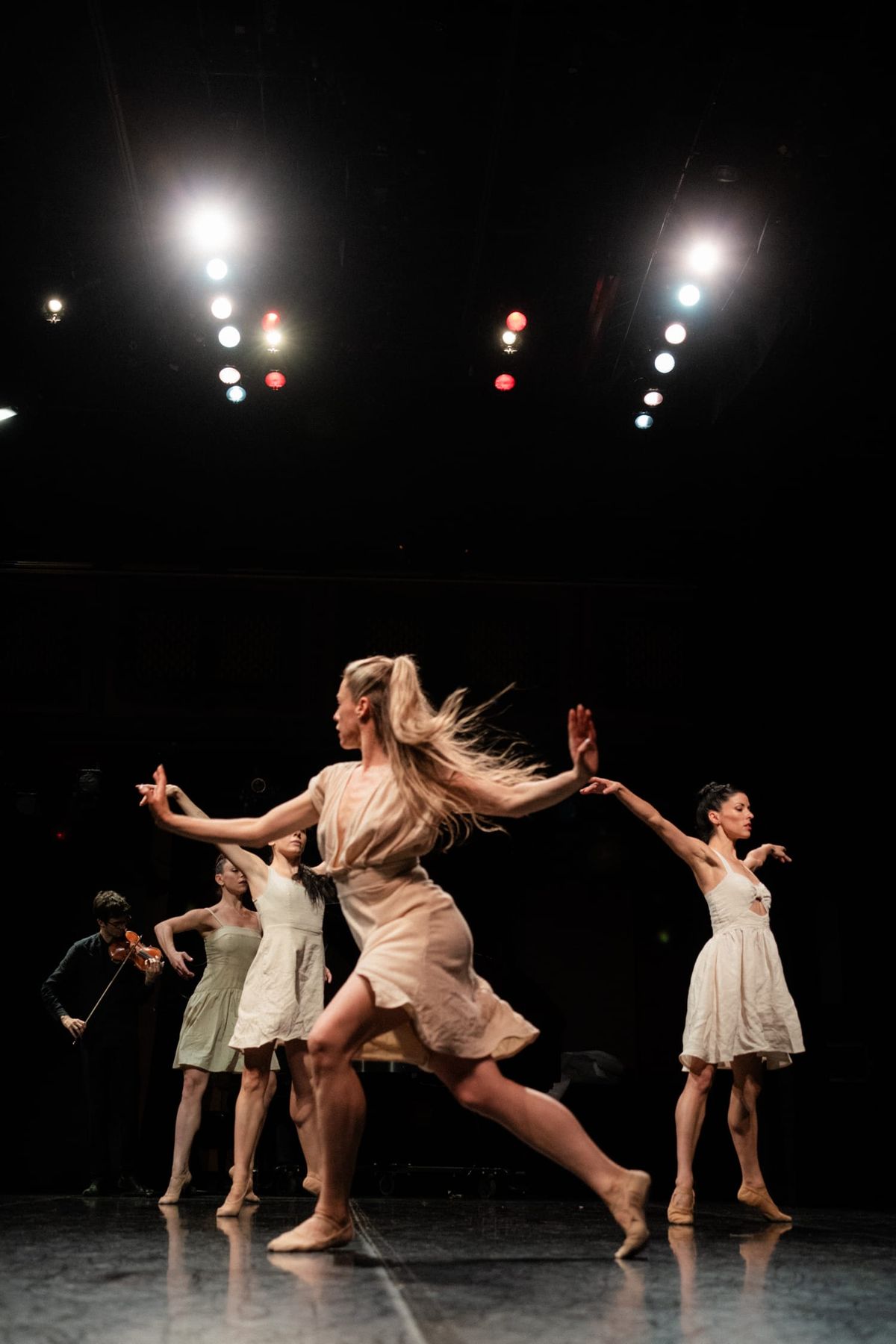
Gold set “Leaven”, the second premiere, to four pieces from Korngold’s “Incidental Music to Shakespeare’s ‘Much Ado About Nothing’”, which he wrote in 1919 for a performance of the play given at Vienna’s Schönbrunn Palace. Gold’s ballet was a long way from the palace; four girls (Emily Cardea, Jourdan Epstein, Laura Kaufman, and Cara Seymour) in simple summery white dresses and practice shoes, danced with an openhearted camaraderie, like modern day nymphs. Each movement had its own flavor, and each showed off the beauty and variety of demi pointe.
The first movement had some intriguing filigree arms, as the dancers caressed the air, the second was friskier, with little jumps added quick changes of direction, the third had a more meditative, late-afternoon feel, and the fourth was like a group celebration, as the four dancers skipped through the bright, clear music.
After the performance Gold talked to the audience about his new works, saying, perhaps with some exaggeration, that once he had chosen the music and knew the venue (the Jewish Community Center), he asked chatGPT for ideas and that it suggested the story of the dybbuk, which is, in Jewish folklore, a spirit who possess a human being, for the first ballet, and bagels for the second. Though these ideas were not spelled out in the choreography (there were certainly no dancing bagels), his explanations, though not necessary to enjoy the evening, certainly reflected the dances I had just seen, especially his description of the four movements of “Leaven”, mixing, kneading, dough rising, and eating. He may chat with his computer but Gold’s choreography has a rare musical wit and clarity that is uniquely his.
copyright © 2025 by Mary Cargill



