Wholeheartedly: The Complex Things
“Primitive Mysteries,” “Rust,” “Mosaic,” “Diversion of Angels”
Martha Graham Dance Company
The Joyce Theater
New York, NY
February 17, 2017
The Martha Graham Dance Company’s latest New York season, intriguingly titled “Sacred / Profane,” offered a mix of two Graham works and two newer choreographies, including one world premiere by Sidi Larbi Cherkaoui, in its second program. The works presented an interplay of ritual and innocence, problems of torture, a mosaic of human identity and spectrums of love, and their performance amounted to an evening of very earnest artistic presentation of these complex topics.
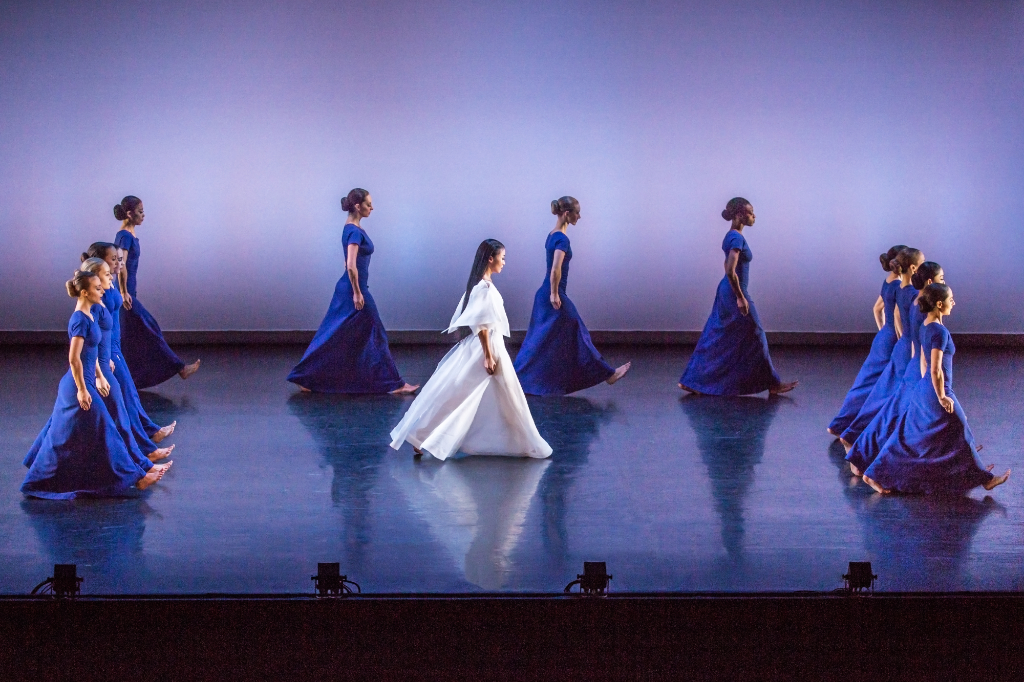
The beautiful, geometrically structured “Primitive Mysteries” opened the evening and the dancers’ impeccable handling of the work’s angular architecture immediately impressed. The ballet itself combines imagery of Native American communal identity with Christian ceremonial rituals, and with this all-female cast the work felt both rooted in history and tradition and soaring in novelty. The dancers performed with remarkable unity both in the dramatic steps of the silent walking entrances and exists and in the actual bodies of the dance’s three parts. This quality worked most powerfully in the “Offering” section of the work, where the lead, PeiJu Chien-Pott, was surrounded by the other women of the cast, who rhythmically moved in a circle around her, speeding up their jumps and adding an ominous rhythm of their landing to the score. Overall these dancers’ precision and femininity made for an alluring presentation of this Graham classic.
Nacho Duato’s “Rust” followed, and this time looked softer than in its past performances. While the initial torture scene of the work, which anchors the dance in the prison torture context that the work critiques, looked less compelling than in other performance, the torment scenes that followed benefited from this treatment. Certain of the moments became especially powerful and brought out the longing and protraction of the emotion embedded in the Arvo Pärt’s music, all helping to highlight the display of despair in the human condition. In some of these scenes the men moved fluidly across the stage with different steps but in perfect synchronicity, in others they huddle in the center, then gently lowered their heads and crawled away, covering themselves and their faces with shirts. As a final touch, the softness of this performance helped make the jarring finale of the work more impactful. As the blinding spotlight slowly moved back and forth across the audience, more times than I recall happening in prior performances, and the “blindfolded” men were “executed” one by one, the contrast of the harshness gave the work added raw drama.
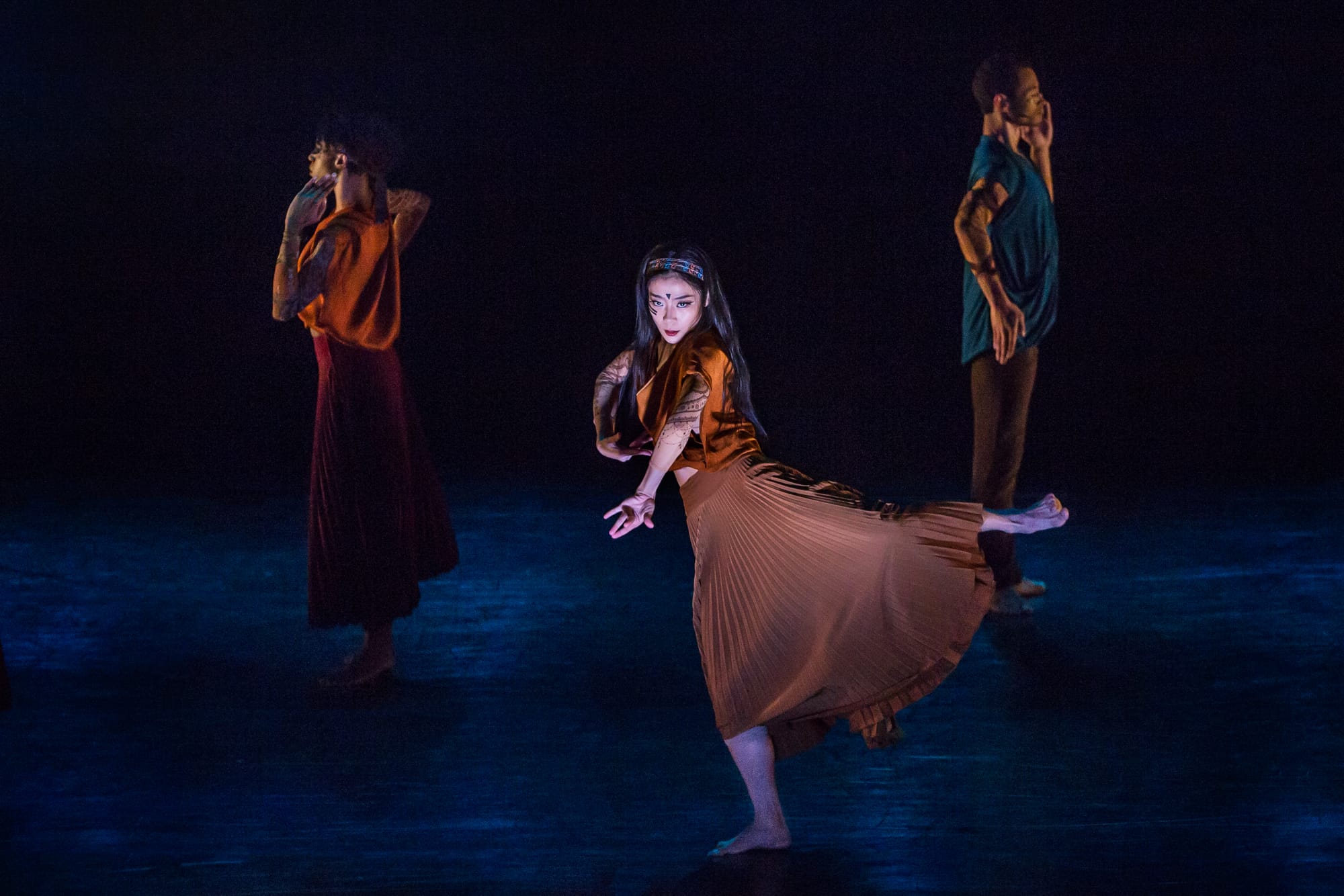
After an intermission, the world premiere of Cherkaoui’s “Mosaic,” set to music by Felix Buxton, started on a quasi-comedic note. The group of dancers, all intertwined into a mosaic of bodies in the middle of the stage, would mouth off to the various voiceovers that sounded like the evening news. Throughout this time, a solo female was dancing on the side, her movement carrying the ballet into a bigger story of dance with each performer having his or her own slightly different identity. The dancing was mixed, reflecting Arabic and Indian influences, and after a while, with the stage full of dancers, two couples hugged and spun off-stage, with the rest of the dancers following, leaving there just two men and two women whose movements adjusted to the more energetic music. Along with the texture and speed of the dancers’ movements the stage lighting changed hues from brown to green, and the work then shifted once more, toward more liberated dancing with many sweeping reaches that spiraled down to the floor. The dancers would pause, punctuating the flowing scheme, then resume the movement again, which seemed like geometric edges of the dancing’s jigsaw pieces. This, and several sections of the work that followed, like the male solo that used deep pliés as demarcations, gave the work a geometric feel of its own, though a different one from “Primitive Mysteries.”
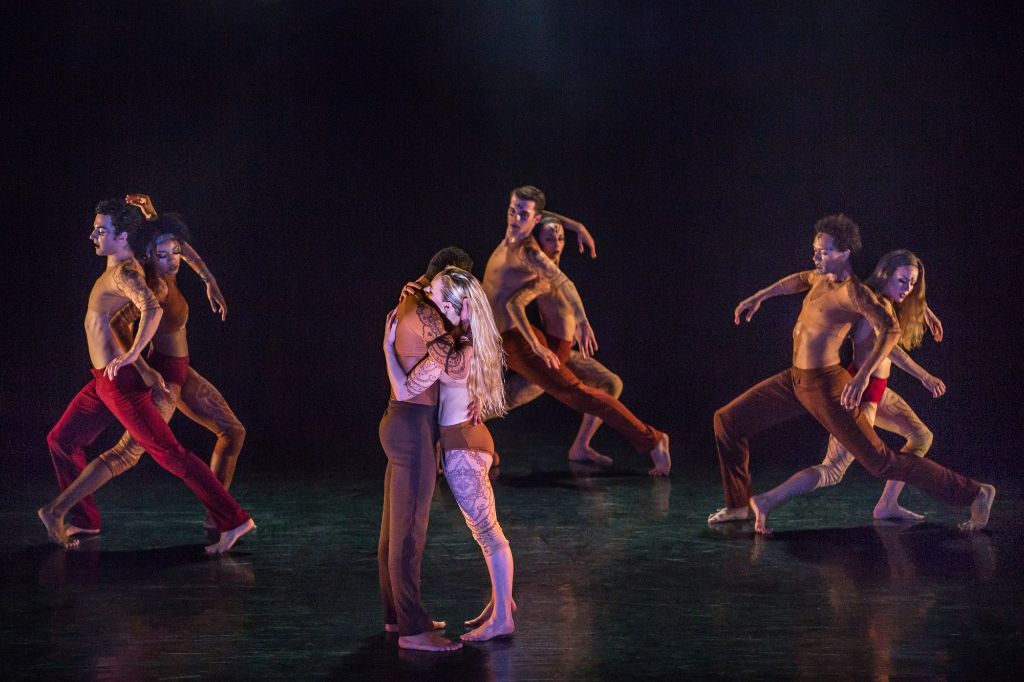
Unlike in the Graham work, where the focus was on linear shapes, Cherkaoui’s work was distinctly arabesque, with many oscillating config- urations. Toward the end, the movements became less ethnic and more modern, and the dancers shed most of their plain conservative clothing to reveal more skin-tight costuming that gave the illusion of their bodies having numerous body paintings and tattoos. Their dancing was then telling slightly different stories than at the beginning, or their different aspects, but the expressions all still seemed to relate to the same interconnected thematic narrative. With all its differences from the rest of the repertory, “Mosaic” ended up being the perfect work for this company that boasts dancers of great expression, physicality and artistic range, offering distinct types of movement and interpretations and showing new sides of these performers.
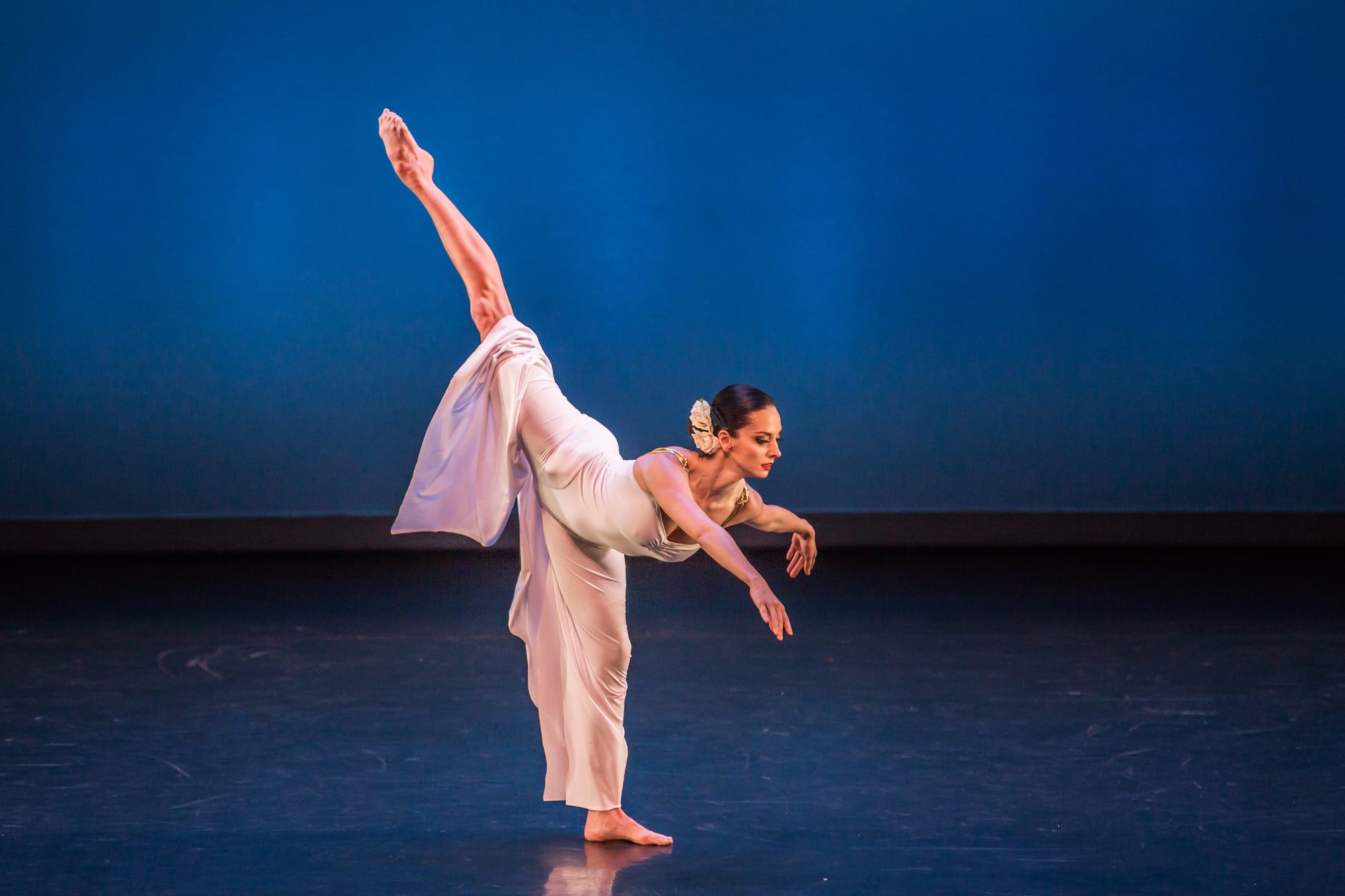
The final work of the night, Graham’s “Diversion of Angels,” gave the evening a light and whimsical finale. All three of the duets, representing mature, young and romantic loves, were lovely, but Xin Ying and Lorenzo Pagano as the Couple in Red were most memorable. Their rendition of this romantic duet was playful and grand, with broad movements and accents, especially in the moment where the steps come up from floor-bound to a romantic kiss.
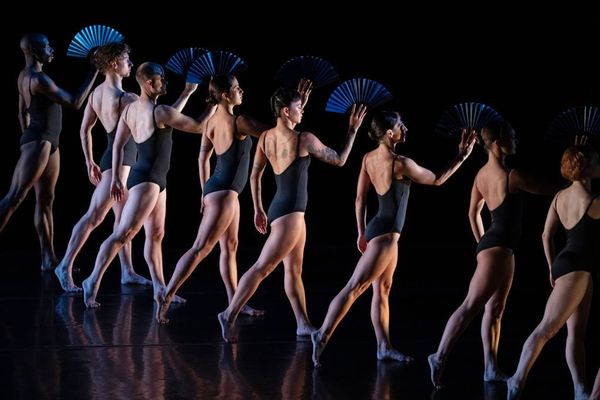
It was precisely the dancing, here and in the other works, that made the evening special. Not only did this troupe expertly carry the legacy of Graham, but they also proved to be a unique instrument for new creations. From the sheer beauty of the silhouettes of the company’s women as they’d walk on and off stage in “Primitive Mysteries,” to the athleticism of the dancers in “Rust” to the versatility of the troupe’s artistry and expression in “Mosaic,” the Graham Company proved to be one to watch in admiration.
copyright © 2017 by Marianne Adams