White Magic
"Giselle"
Paris Opera Ballet
David H. Koch Theater
Lincoln Center
New York, NY
July 13, 2012
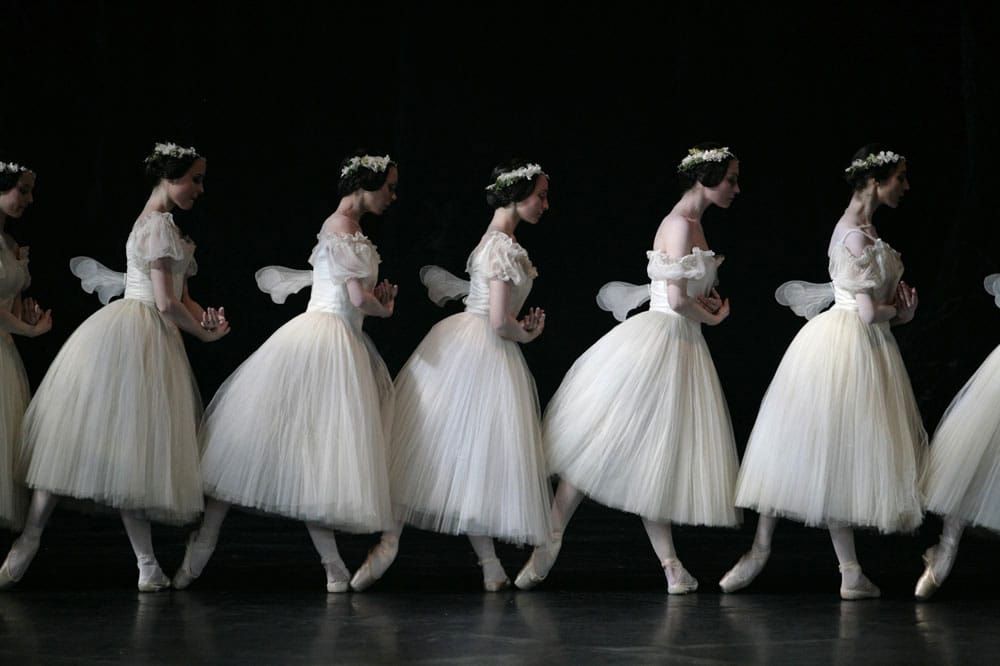
"Giselle" was born in Paris but survived in Russia, and now is a citizen of the world. Since Paris let their original version die in 1868, their current one is combination of the Russian version with some added features by the stager Patrice Bart. To those familiar with the ABT version (the one most often seen in the US), there are some differences, especially in the second act, but the main set pieces of choreography--Giselle's first act solo, the arabesques voyages of the wilis, the second act pas de deux, and Albrecht's solo, are remarkably familiar. The sets, based on the 1924 version by Alexandre Benois (the Russian designer responsible for the 1910 Diaghilev Giselle), are also quite traditional--the two houses with a castle in the distance. These sets are quite beautiful and detailed, like a wonderfully illustrated children's book. The second act is a bit starker than the traditional lush green forest, with bare trees against a black background, and a hint of a ruined chapel in the distance. The bare, wintery feel emphasizes the cool white of the wilis' costumes. What isn't traditional, at least to American eyes, is the absolute uniformity of style, especially of the corps, where, in the second act, it seemed that, not only was each head and arm doing the same movements but each heart was beating at the same rhythm. Also not quite traditional was the glorious orchestra (the New York City Opera Orchestra, conducted by Koen Kessels) which gave the charming, effective score a nuanced and soaring performance.
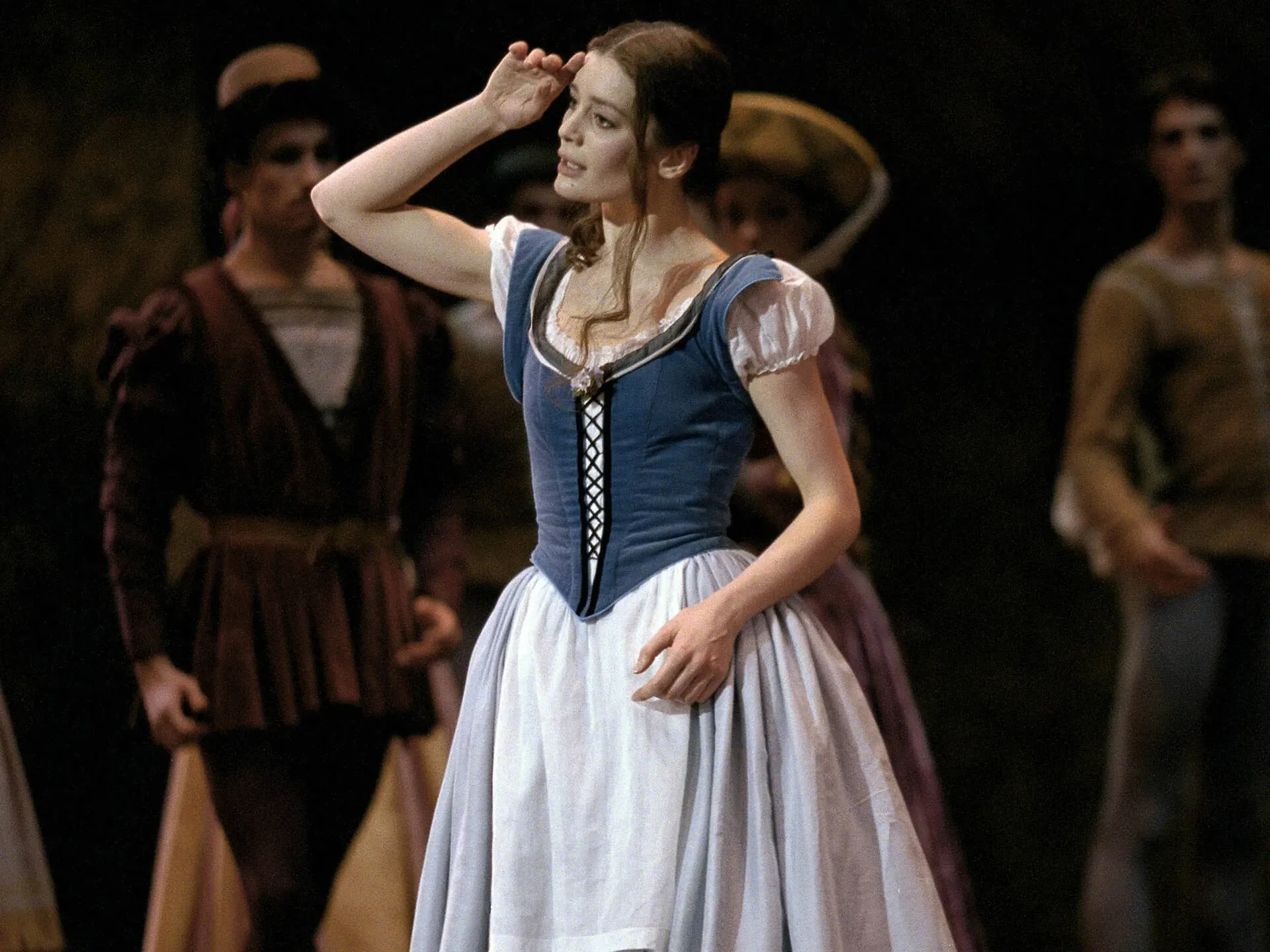
Aurelie Dupont, the Giselle, is a bit heartier and stronger than the traditional peasant girl. She didn't give an air of fragility or vulnerability, but her dancing was clear and elegant. She has beautiful, strong feet, and the hoppity-hoppity variation was smooth and effortless. Her mad scene was a bit understated (no wild flailing) but she drew the audience in. This production adds a freeze frame moment to the beginning, which seems like a modern touch (possibly borrowed from "Lilac Garden"). Yes, it does show her isolation, but its artificial theatricality pushes the audience away for a moment.
There was nothing artificial about her second act, where she used those beautiful feet, stylish upper body, and dramatic clarity to beautiful effect. The moments when she was invisible but trying to reach Albrecht were as beautiful as any I have seen. There were some wonderfully detailed gestures, such as her miming the tears she had shed as a living girl.
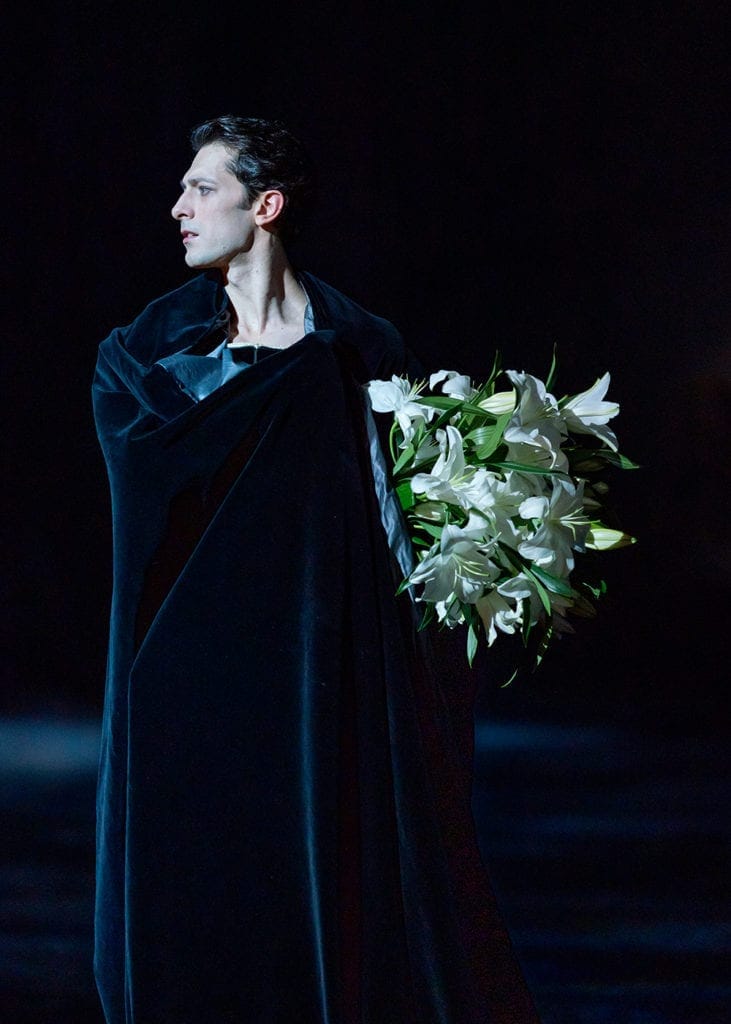
The Albrecht she cried for was Mathieu Ganio, a stylish, handsome heartthrob, with an elegant technique that never resorted to flash. He was an innocent Albrecht, truly in love with Giselle. Though he wasn't an especially individual Albrecht (we don't see much guilt or self-awareness) there were some interesting touches; during the story of the wilis, he, at first, seemed amused, and then finally frightened, but not frightened enough, apparently, because soon he was perfectly happy to dance with Giselle and her friends. His second act was sorrowful, but not guilt-ridden, and there wasn't the arc of personal growth that some Albrechts show, but his dancing was pure cream. He did the entrechants, bounding for what seemed like five minutes, with crisp, beautiful beats while his arms gradually, but so elegantly, began to tire.
The Myrtha, Emilie Cozette, was a bit earthbound (the French don't seem to have a high-flying jump). The introductory bourrees were slower and more deliberate than ABT viewers are used to, but with those soft and elegant feet, they had a hypnotic power. The real power, and the absolute glory of this production, though, was the corps. They were simply lovely in the first act, with the women's slightly sloped shoulders and elegant tilt of the torso. The men, who seemed uniformly handsome and beautifully proportioned, played more of a part in the group dances and got to show of their wonderful petit allegro. The women in the second act all wore black wigs adorned with flowers, which help give them an otherworldly symmetry. Their shoes were lightly blocked, which made the group dances almost silent. Even the famous chugs (so often accompanied by thumps) seemed to float, and they almost rolled over their points, giving them an air of taking flight. This wasn't just a style show though, there was a point and a meaning to their moves. They were attentive to Myrtha, nodding in agreement, bowing to her, doing her bidding, elegant, but also dangerous. The Paris Opera Ballet last visited New York in 1996, and with luck, we won't have to wait another sixteen years to see this glorious company.
copyright 2012 by Mary Cargill



