What Was, What Could Have Been
“Fandango,” “Bloom,” “Where We Dwell”
Roman Mejia, Tiler Peck and Herman Cornejo, Ayodele Casel
Fall For Dance – Program 5
New York City Center
New York, NY
October 23, 2021
The last program of this year’s Fall For Dance Festival looked back in looking ahead. Alexei Ratmansky’s 2010 work “Fandango” was presented in a restaging on a male dancer form, Justin Peck’s new work “Bloom” drew heavily on George Balanchine’s iconic “Tchaikovsky Pas De Deux,” and the world premiere of Ayodele Casel’s tap extravaganza “Where We Dwell” looked to historically American themes in dance and music, adjusting them for the times.
The balance of performance time was clearly shifted to Casel’s premiere, with the other two works feeling, somewhat regrettably, more like opening acts. But, to call this work strictly Casel’s is probably inaccurate, as the stage was taken up as much by dancing as by the original music and luscious live singing of Crystal Monee Hall, who was also the musical director of the production. The work as a whole, with gentle social justice undertones, felt like a call for inclusivity, but not just in the diversity sense that we are used to encounter in this topic. Sure, Hall’s reimagining of “This Land Is Your Land” elegantly and beautifully struck those chords, but the production also intertwined music and dance, integrating the movement and tap expression further into one presented whole. By far the best moment of it was when Casel sat down and listened to Hall, adding gentle taps while still seated. The connection between these two artists in that moment cannot be overstated, and it was interaction of the most organic sort.
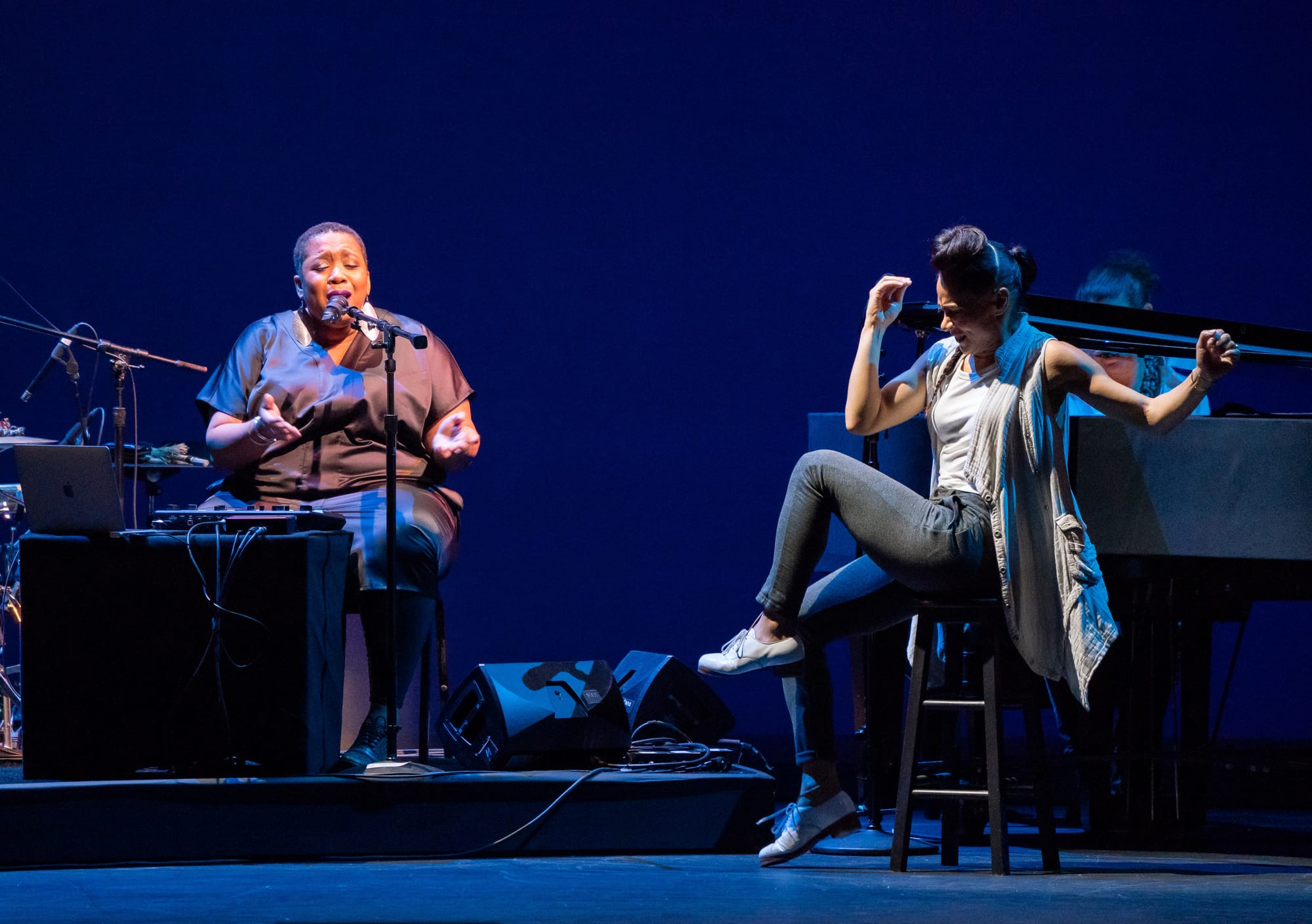
That wasn’t the only obviously bonding point between dance and music – the integration permeated the work. Amid the casual cool quality of their bodies’ movements, the eight dancers’ feet were the DJ – adding a beat to the instrumentation and vocals, their feet swipes – turn-table scratches. Further erasing the customary musician/dancer divide was Hall moving across the stage, leaving behind the perch at the back where the musicians were situated.
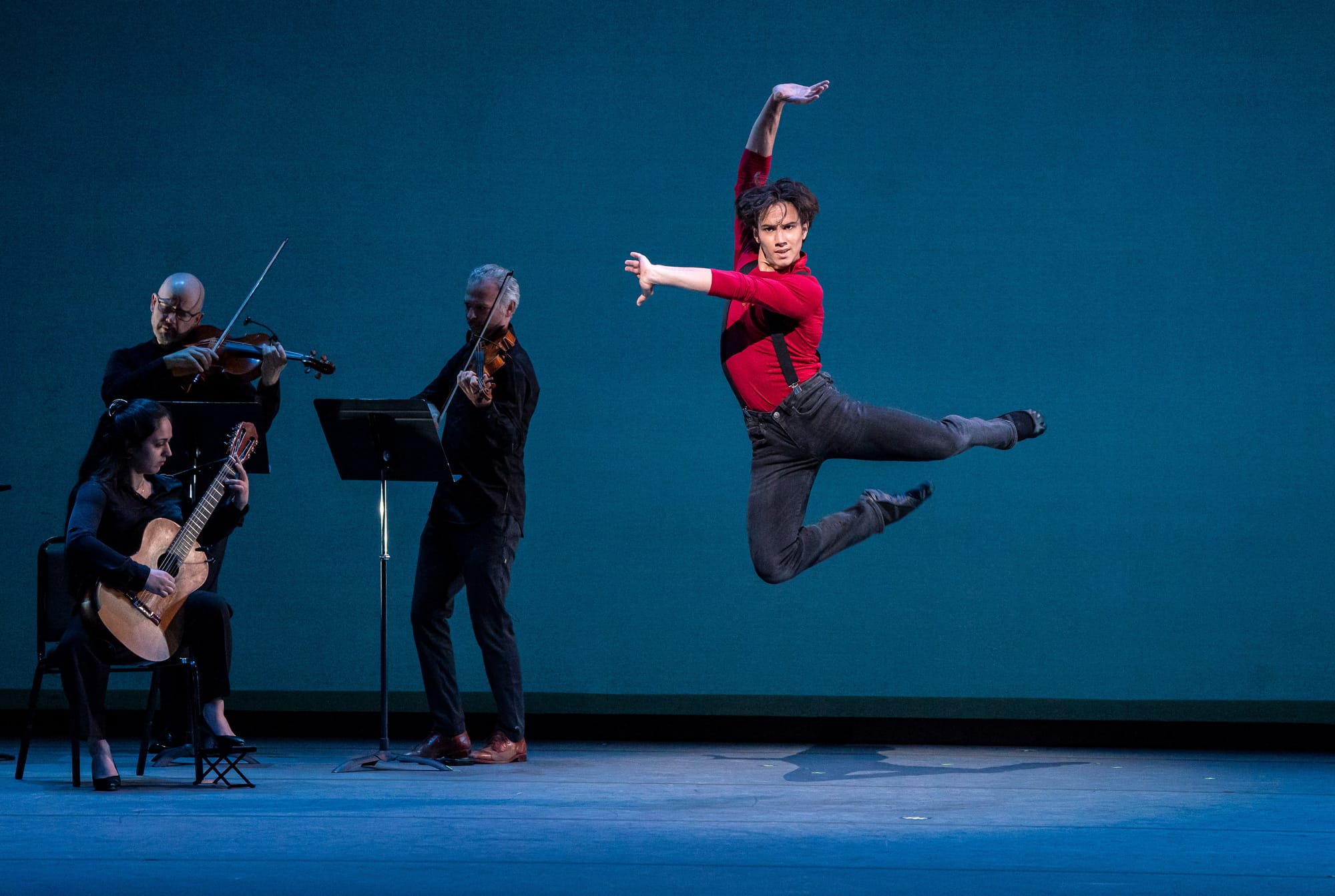
It wasn’t the only work to show such integration – a similar interplay happened in “Fandango.” The decade-old Ratmansky solo was updated to feature not Wendy Whelan on whom it was staged, but New York City Ballet’s recently promoted soloist and rising star Roman Mejia, and consequently more masculine, jump-driven moves. Mejia is a promising young dancer, but stepping into a work set on a legendary ballerina, let alone making it your own, is a formidable undertaking. He excelled. Throughout the piece he exuded confident masculinity, but in the elegant way that was a nod to Whelan’s take on the role. His gestures, accenting, and, not least of all, interacting with the musicians (and even sharing of a tambourine), had a commanding quality. Somehow though, it seemed that it was his presence that “made” the piece, not the other way around. When Mejia executed his last sequence of turns and collapsed on the floor, it didn’t feel like it was from exhaustion, or at least not dance-induced exhaustion, but rather from working to contain the energy restrained by not being given enough movement to really let loose. Perhaps we’d get to see its full force in a different work soon.
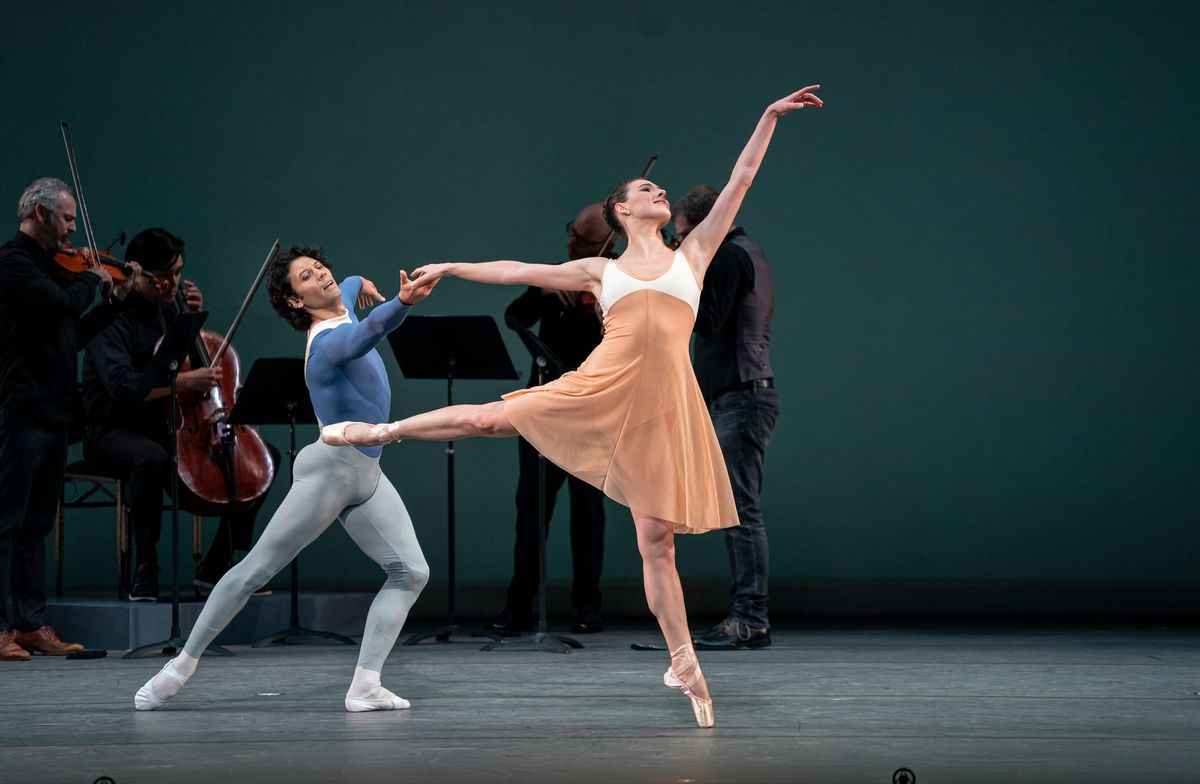
Another ballet that didn’t quite flourish was the New York premiere of Peck’s “Bloom.” In some ways, this recently created work read like the progeny of the “Tchaikovsky Pas De Deux”, in other ways, its wannabe. The structure, costumes, and many of the supported arabesques recalled that Balanchine work time and again. But, while the choreographer showed growth in his duet crafting, some of the construction still looked like group dancing executed by two in the repetitive patterns, smaller movements, and focus on that repetition. A culprit could have been the music by Caroline Shaw, which didn’t offer many splashes on which the casting of Tiler Peck and Herman Cornejo could have capitalized. As a result, both the male and female variations were feet-focused – without big, deep plié-driven jumps for Cornejo, or whirling, expansive turns for Peck, all of which could’ve improved the work. Still, the dancing was exquisite. So much so that for once I would have preferred for the musicians - the lovely Brooklyn Rider string quartet – to be off stage, and not serving as background for the dancing. Without intended interaction, it’s best to let the dancing take center stage.
copyright © 2021 by Marianne Adams



