Viva Verdi
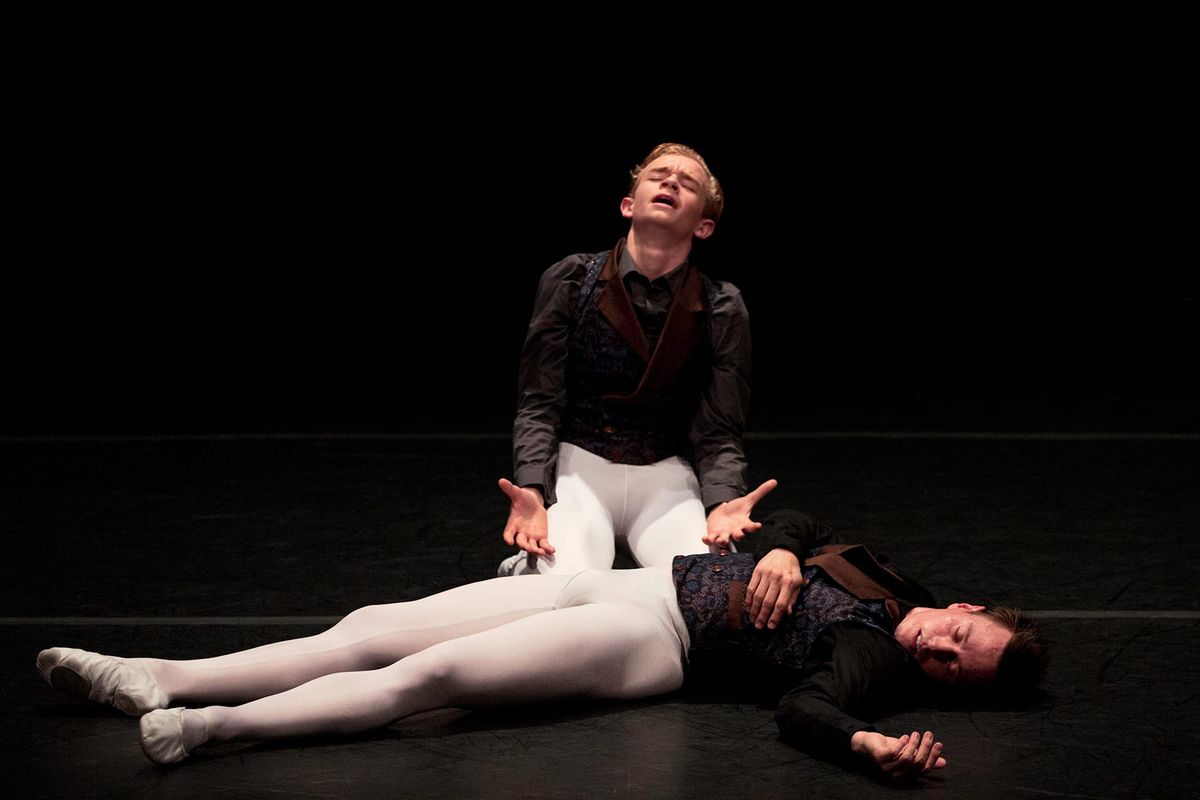
"Veils", "String Quartet in E Minor"
Celebrating the Music of Giuseppe Verdi
Intermezzo
Buttenwieser Hall
92nd St. Y
New York, NY
October 18, 2013
Giuseppe Verdi is two hundred years old this year, which is welcome news for opera marketers. Ballet companies have generally not taken up the opportunity (waiting for Tchaikovsky's party, perhaps), so ABT soloist Craig Salstein's Verdi celebration, with his new company Intermezzo, was a novelty. Verdi, of course, wrote a lot of ballet music, more or less related to his operatic dramas, but this music would require a full orchestra, which would be prohibitively expensive if it were played live and deadening if recorded. The imaginative solution was to use the Wyrick Quartet (two violins, a viola and a cello), and re-orchestrate themes from "Un Ballo in Maschera" for the first ballet, and to use Verdi's only string quartet for the second one.
"Veils", choreographed by Raymond Lukens, a faculty member of ABT's JKO school, was rather like an opera in point shoes, as the masked dancers, full of jealous passion, loved, fought, died, and forgave each other. The dancers ranged from experienced (Carlos Lopez, formerly with ABT and Kurt Froman, formerly with NYCB) to the very young Aran Bell, all elegant beats and noble line. The two older men, watched jealously by Bell, danced and flirted with two women, the luscious Rina Barrantes and Shoshana Rosenfield, whose fine turns the choreographer showed off. Perhaps in a nod to the original opera, Rosenfield turned gypsy and read Froman's palm, foreseeing doom, which came when Lopez strangled him in a jealous rage after he found Barrantes with his former friend. (It was a mistake, because they were all wearing masks.) Giselle-like, Froman managed to forgive everyone on stage before expiring to general grief. The choreography made the various emotions clear, and the story was easy to follow--not a given, without scenery or a printed summary. The dancers seemed to enjoy the somewhat old-fashioned full-blooded drama, an interesting change from most new work, and the dancers, with their different backgrounds, gave their roles distinctive personalities without overplaying the drama.
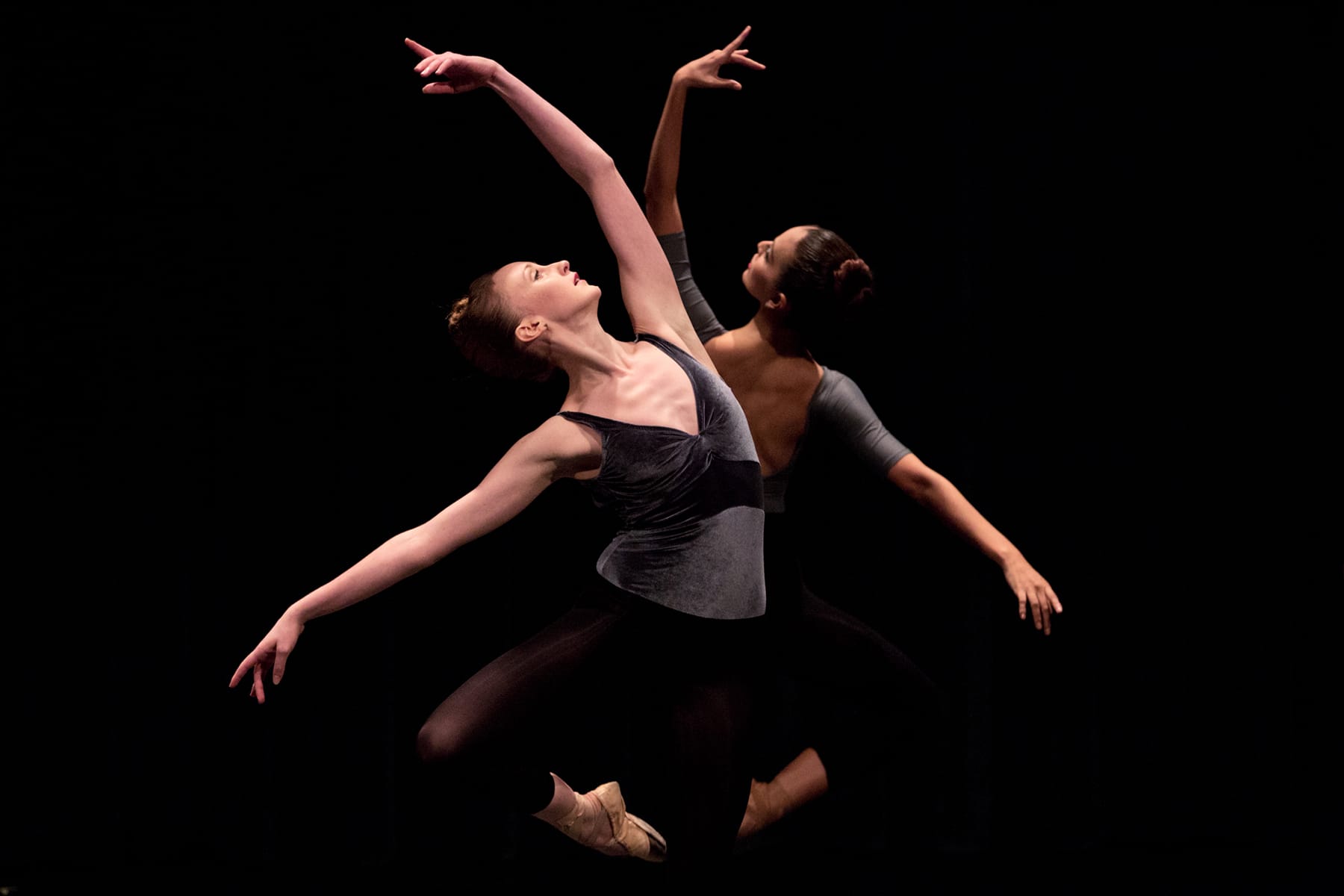
Salstein, perhaps realizing that a complete string quartet would be a bit challenging for one choreographer, had different ones for each movement, tying them together with the dancers who wove in and out of different sections in the same grey leotards. This experiment worked well, with a different accent for each section. Marcelo Gomes got the opening Allegro, lining up his six dancers in two straight lines, then mixing things up. As in other works of his I have seen, he tends not to trust stillness (as a dancer, of course, he can dominate the stage just by standing on it), and his choreography tends to be a bit jittery.
Lisa de Ribere, a more experienced choreographer, had the second, Andantino section. It was pleasant but not memorable, though Kaitlyn Gilliland (an elegant blond formerly with NYCB) had a leggy solo. She was also featured in the third Prestissimo section, choreographed by Adam Hendrickson. This, for me, was the most interesting section, with Gilliland in practice shoes, dancing a pulsating solo to attract Steven Hanna (as the program spelled his name, though when he was with NYCB it was Stephen). The dancers' bending, twisting movements echoed each other, as they flowed together, stepped apart, and finally ended supporting each other.
The finale Scherzo was choreographed by Gemma Bond, a dancer with ABT, and showed off the whole company. The movements were stylized, as the dancers often moved in profile, circling the stage as the dancers broke out into solos. The whole, though, was much greater than the sum of its parts, and the overall impression was of very good, beautifully rehearsed dancers doing what they loved, responding to the music, and dancing for the wildly appreciative audience. The intimate stage and the informal setting gave the evening a vibrancy and a warmth that was irresistible.
copyright © 2013 by Mary Cargill



