Variety Show
"Bourrée Fantasque", "Agon", "Slaughter on Tenth Avenue"
New York City Ballet
David H. Koch Theater
Lincoln Center
New York, New York
September 30, matinee 2023
There were a number of debuts in the strikingly varied all-Balanchine program which started with “Bourree Fantasque” a light-hearted and rarely seen bonne bouche, followed by the rigorous black and white “Agon” and ended with a trip to Broadway in “Slaughter on Tenth Avenue”. “Bourree Fantasque”, choreographed in 1949 to music by the French Romantic Emmanuel Chabrier is a somewhat uneasy mixture of comedy, romance, and virtuosity, as if the commedia dell'arte dancers of “Dances Concertantes” decided to crash the party that the “La Valse” dancers were having and turn it into a fun free-for-all. It has chic but somewhat dated costumes by Karinska; the men all wear black berets, looking like animated advertisements for Gauloises and the women carry fans and wear long black lace gloves and either short fluffy tutus or pale Romantic skirts with an overlay of black lace, so redolent of the New Look.
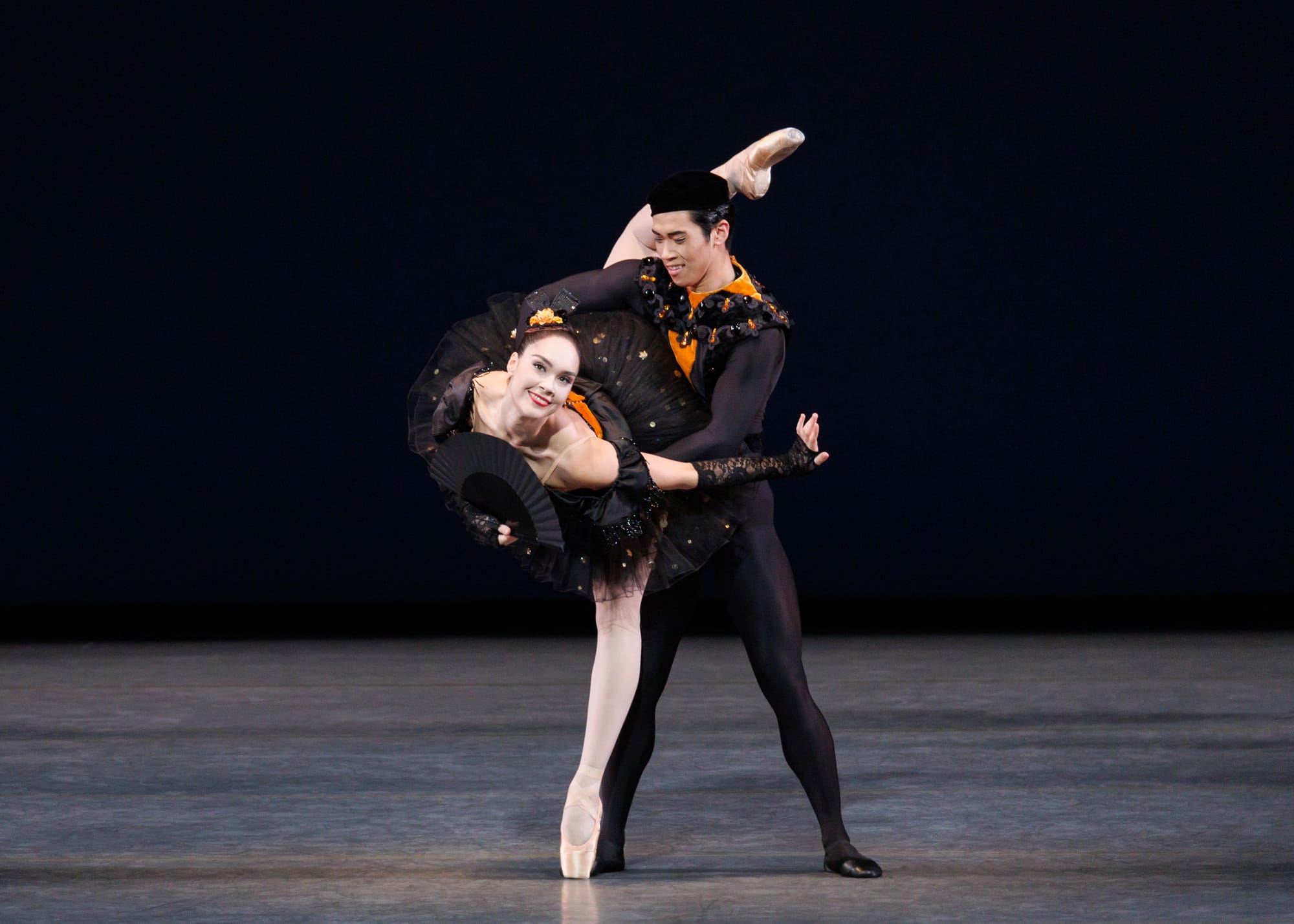
The traditional setting, seen in so many photographs, of rows of billowing curtains, has not been revived, and the ballet was danced against a dark backdrop with some chandeliers up top. This rather gloomy atmosphere worked against the comedy of the first scene, where a tall ballerina (Mira Nadon in her debut) dances so insouciantly with a shorter partner (K J Takahashi, also a debut), accompanied by a very well-rehearsed corps Nadon oozed with a sultry sang-froid and let the comedy seep out without elbowing the audience in the ribs. She seemed blithely unaware that she kept kicking her devoted partner in the head. Takahashi, too, seemed smitten with her, a witty cartoon of the lowly man and the unattainable woman. The choreography was full of quirky accents, with many turns with flexed feet, flickering arms, and staccato steps, while the corps formed and reformed some elegantly sculpted shapes before being replaced by the more Romantic corps of the second movement.
This section had yet another man (Gilbert Bolden III) yearning for a woman (Emilie Gerrity, another debut), this time without comedy. Bolden had a soft, romantic presence, as he walked through the group of women, searching without seeing. Gerrity emerged from the group and they danced a lush, gentle pas de deux where they echoed each other’s moves before they again disappeared for him, and both walked slowly off in different directions, as the corps formed yet more beautiful geometric patterns. Bolden was an exemplary partner, as he caught Gerrity in several mid-turns to let her show off her luxurious extensions. Gerrity also got to show off her gorgeous arabesque; it was beautifully danced but with experience she may be able to give it a richer perfume.
The third movement, led with a delicious verve by Alexa Maxwell and David Gabriel (both debuts), was a fast, Spanish-flavored finale, with the whole cast joining the fun. The ending, with circles within circles resolving almost magically into parallel lines of dancers with bouncy, jumping feet was especially exhilarating. Many of the motifs in “Bourree Fantasque” reappear in later Balanchine ballets, which may be why he let it languish but, despite the whiplash changes of mood, it has many truly beautiful passages, intriguing partnering, and gorgeous corps patterns and is certainly well worth reviving.
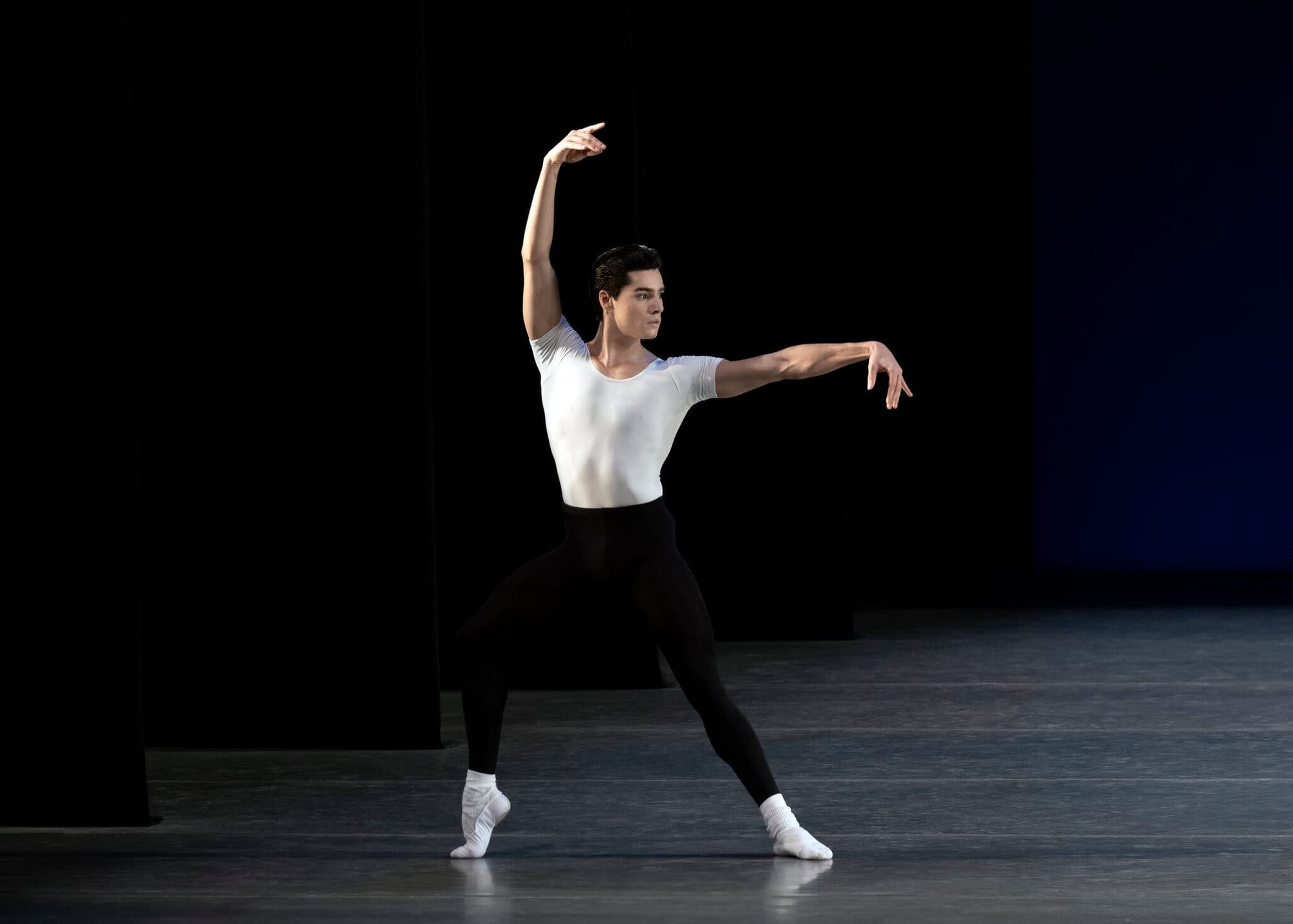
“Agon” is certainly not in danger of languishing. It looked well rehearsed—the opening four men were sharp and snappy but overall, the performance was a bit too smooth, almost too perfect. The uneasy sense of tension (the Greek “agon” does translate as struggle or contest) that the music and the choreography can give seemed glossed over. In the Saraband Jovani Furlan was smooth and effortless and looked like a classical god come to life, but I missed the quirky, off-balance feel. Balanchine choreographed it for Todd Bolender and used his modern dance background in a distinctively non-classical way.
Isabella LaFreniere’s balances where she stands on one pointed foot between the two men until she proudly offers them her hands, were effortless, but I missed the slight hesitation and self-satisfied gleam that can emphasize the witty “I can conquer gravity” triumph. Her “castanet” solo in the Bransle Gay, though, was wonderful, with clear, rippling shapes.
Miriam Miller with Peter Walker, in his debut, danced with an unexaggerated impassiveness, flowing through those odd shapes which was a welcome change from the sometimes overheated approach we see now, but again, there was a slight lack of tension. Walker, as his warm and dignified performance in “Emeralds” showed, has fervent romantic streak, and he was almost too deferential, worshipping a goddess rather than controlling her movements. The shapes, though, were crystal clear and the more muted approach certainly has its unique beauties.
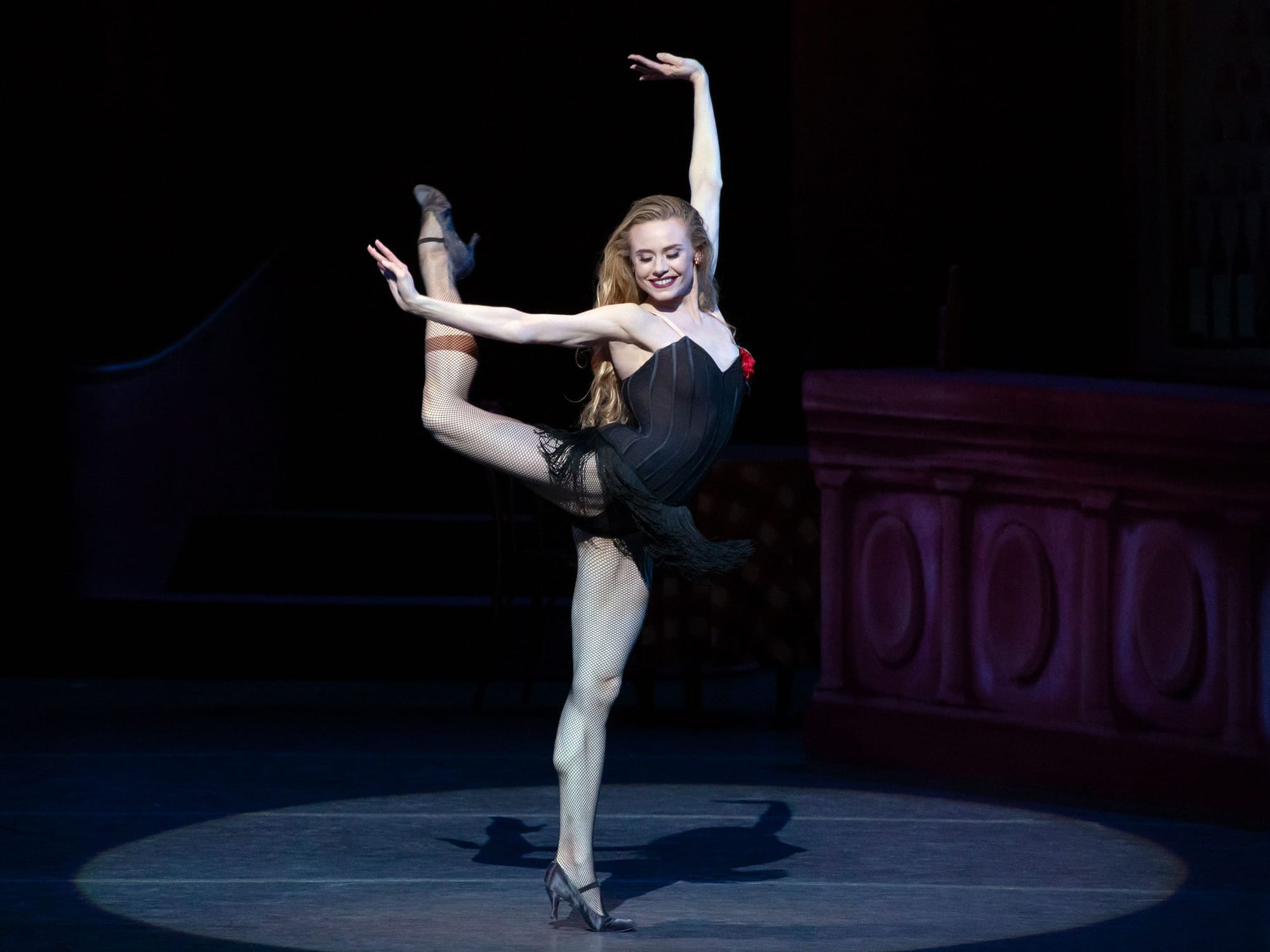
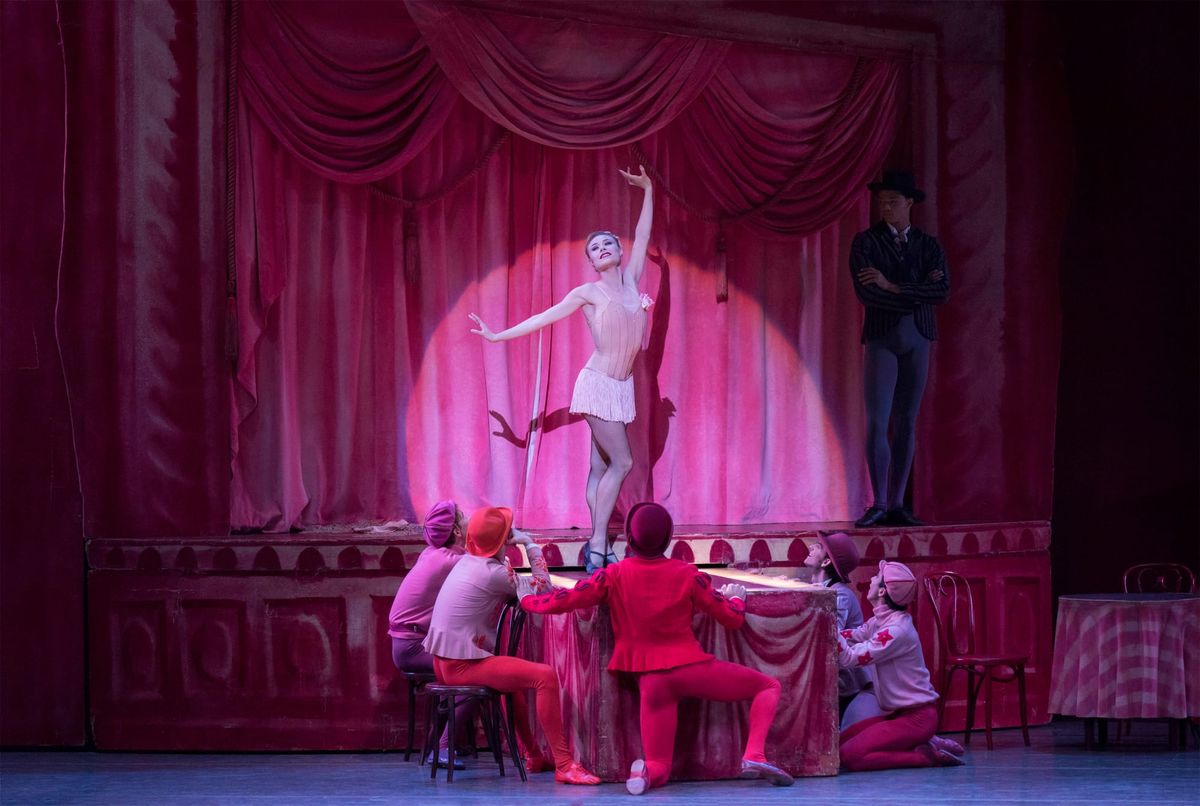
“Slaughter on Tenth Avenue” should never be muted, and with Sara Mearns as the Striptease girl, it certainly wasn’t. The cast seemed to be have the time of their lives, beginning with Harrison Coll’s very funny dime store Nureyev with his exaggerated Russian accent and danseur poses. Mearns, usually so white hot, differentiated between her solos, and gave her opening one a slightly shy, hesitant feel, as if she couldn’t quite believe the Hoofer (Andrew Veyette) was sincere. Once she came out in black with her hair down, though, she threw herself into the choreography with high kicks and a Broadway smile.
Andrew Veyette was a limber and fleet hoofer; he was also a fine and relaxed comedian, as he managed to make the play within a play clear with his desperate, goofy smiles as he kept trying to keep the music going. “Slaughter” may be a bit downmarket, but it, like “Bourree Fantasque” can be an absolute joy to watch.
© 2023 Mary Cargill