Fashionistas
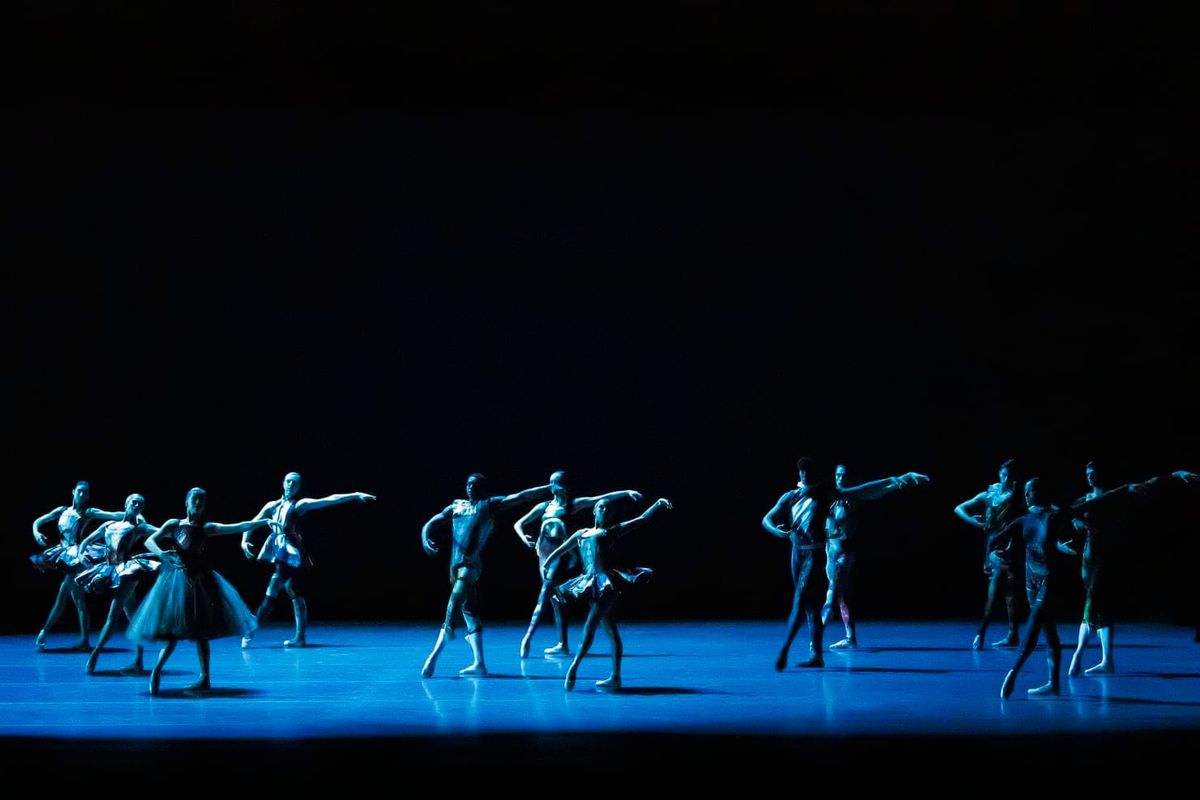
"Pulcinella Variations", "Auspicy", "Shared Rain", "Love Letter (on Shuffle)"
New York City Ballet
David H. Koch Theater
New York, NY
October 4, 2026
Since 2012, NYCB’s annual Fall Gala has featured new ballets with costumes by contemporary fashion designers; these galas have, reportedly, raised considerable amounts of money, though artistically, the results have been mixed at best, and few of the new works have long endured. This evening’s program included two veteran fashion gala works, Justin Peck’s “Pulcinella Variations” (2017) and Kyle Abraham’s “Love Letter (on shuffle)” (2022) as well as two of this year’s new entries, Alysa Pires’ “Auspicy” and Jennifer Archibald’s “Shared Rain”.
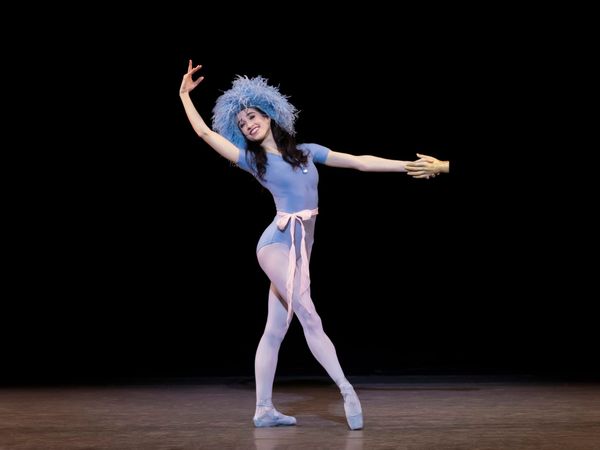
Peck set “Pulcinella Variations” to Stravinsky’s “Pulcinella Suite”, an excerpt the composer made from his “Pulcinella”, a score written in 1920 for Diaghilev based on music by various Baroque composers. The original ballet used the traditional commedia dell’arte characters, and Peck alluded to these in his ballet through the colorful costumes by the designer Tsumori Chisato, a Japanese designer known for her whimsy. Peck’s ballet does not refer directly to the original, it is a suite of dances, mainly solos and pad de deux, highlighting the gifts of his original cast. These gifts, as if often the case with the fashion gala works, were partially upstaged by their insistently surreal costumes.
Peck’s choreography was more classical than many of his works—there were no tennis shoes in sight—and the variations were bookended by the dancers moving in formal geometric shapes. The choreography for the variations was sharp and fast, though sometimes a bit lacking in variety—there were many fidgety little steps, many quick changes of direction, and a lot of stop and start phrases. Peck’s choreography floated on top of the acerbic Stravinsky music, and he didn’t dig into the little Baroque flourishes, giving the work a surface sheen without much depth. His choreography, for all its thrilling energy, showed off his dancers technique rather than their personalities. But that energy was great fun to watch.
Emma Von Enck, in the section originated by Indiana Woodward, wore the odd and unflattering one sided tutu, with one half flouncy and the other bare. Though the costume must have felt somewhat unbalanced, she tore through her turns with a bright clarity. Simeon Daniel Neeld, who joined the corps this year, debuted the fierce, fast Tarantella, ribbons flying. Neeld, who has been featured in virtuosic roles as an apprentice (he was one of the acrobatic swindlers in Ratmansky’s “The Naked King”) flew through the turns and jumps with ease. There were many other gleaming dances, especially Ava Sautter (another debut) gave the Andantino a stately majesty, showing off her elegant point work. Andres Zuniga gave his jumps and turns in the Toccata a witty timing, playing with the music.
There were playful moments in “Auspicy” too which is, according to Google, a “rare, archaic noun” related to foretelling the future by observing birds. Pires’ work was bird-related; the corps were called Fledglings and the music included Jocelyn Morlock’s “Oiseaux Bleus et Sauvages” (roughly “Wild Blue Birds”). Blue has been lost in translation, though, and Viktor & Rolf’s costumes and designs were rich gold body stockings for the Fledglings, darker burnished gold leotards for the Offspring (Emma Von Enck and David Gabriel) and the Community (Gilbert Bolden III and Preston Chamblee) in addition to a heavily embossed golden coat for the Mother (Naomi Corti in her debut); she does get to change to a shift later on for some actual dancing.
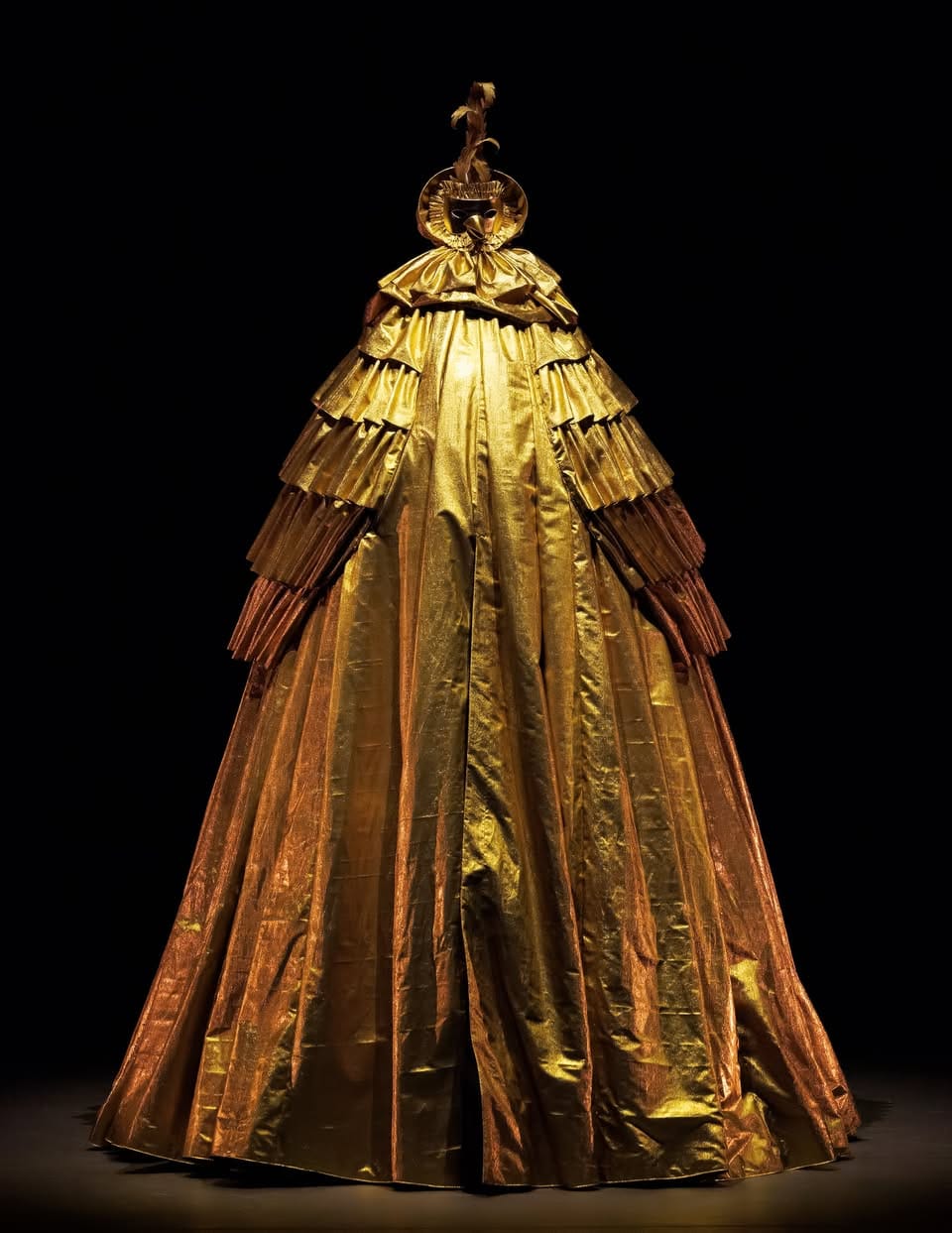
The work opens in the dark with what looks like a giant golden teepee watched over by Mother which disgorges Emma Von Enck and David Gabriel and eventually the large shimmering corps, who dance repetitive little steps with little bird-like arms. Corti’s gown was topped by large letters over her shoulder spelling out “PROTECT”, and the two Communities, earnestly practicing their arabesques, hovered around her as she watched her flock. Von Enck and Gabriel had a twisty, bendy, grabby pas de deux, which, since they were presumably siblings, did raise some uncomfortable questions.
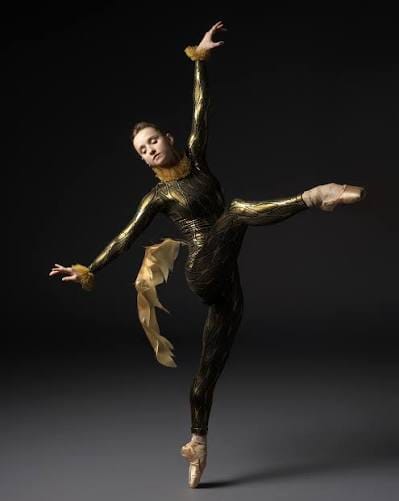
Corti then handed each one a large golden feather, presumably signaling that it was time they grew up and flew the coop. The helpful Community then removed her heavy coat to reveal a filmy white tunic and she danced an agonized solo, full of stuttering bourrées and what seemed to be dry heaves, apparently utterly distraught because all her children (the Fledglings got feathers too) had left. The work ended with Corti trying in vain to stop the curtain from falling, a metaphor, perhaps, about trying to stop time. This was clearly meant to be a serious statement about motherhood, but despite the luminous gold and committed dancing, the work seemed a bit confused and mawkish; not an encouraging ballet to see on Mother’s Day.

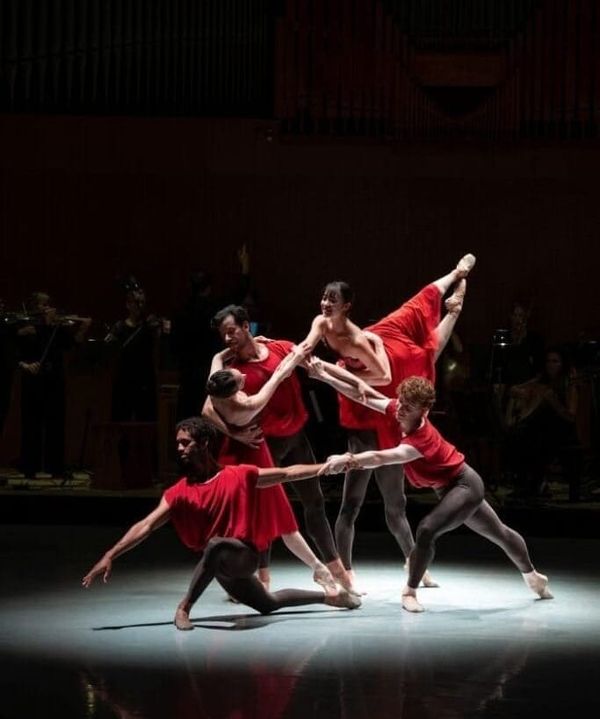
Jennifer Archibald’s “Shared Rain” (costumes by Robert Win) was less ambitious—there were no overt messages, just eight dancers moving to recored music, an amalgamation of modern percussive sounds from various composers. The rain was indicated by shiny stylized umbrella hats worn at the beginning, and then left behind, though the sparking costumes (flattering short cocktail dresses for the women and unflattering baggy pajamas for the men) could have been covered in raindrops.
The choreography was energetic, but a bit repetitive, and involved a lot of stylized violence, looking at times like a low key dance Apache. Occasionally, the women would strike back, but usually they were dragged around, spun in death spirals, or ignored. The men had the most interesting steps, including some thrilling jumps for Victor Abreu and KJ Takahashi, but it unfortunately will probably end up like most of the fashion gala entries—a brief flash.
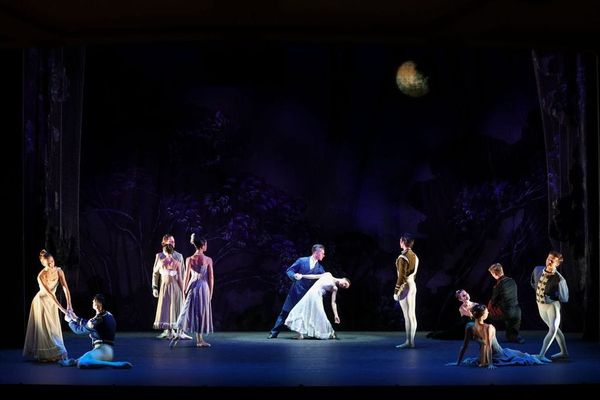
Kyle Abraham’s “Love Letter (on Shuffle)” (2022), with costumes by Giles Deacon, is one of the few Fashionista ballets that has had legs. Like “Shared Rain” it used recorded music, in this case songs by James Blake. The costumes evoked an imaginary Renaissance, with the men in billowy pantaloons and the women in various styles, from leotards to full Romantic tutus—they seemed a light-hearted tweak at ballet conventions.
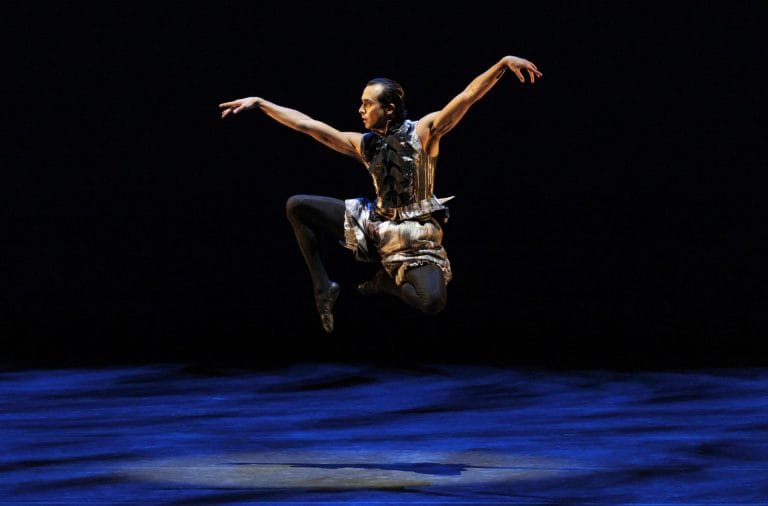
It focused on one man (Taylor Stanley), an outsider who was looking for love, and opened with what seemed a typical Stanley solo, full of melting limbs and rippling spines. Though it was originally made for Jonathan Fahoury, Stanley has put his haunting stamp on it. His journey ranges through a number of dancers (the work is about 40 minutes). Sebantián Villarini-Vélez got a long solo, full of loose-limbed little jumps and flowing arms; the lighting made it seem as if he were floating in water.
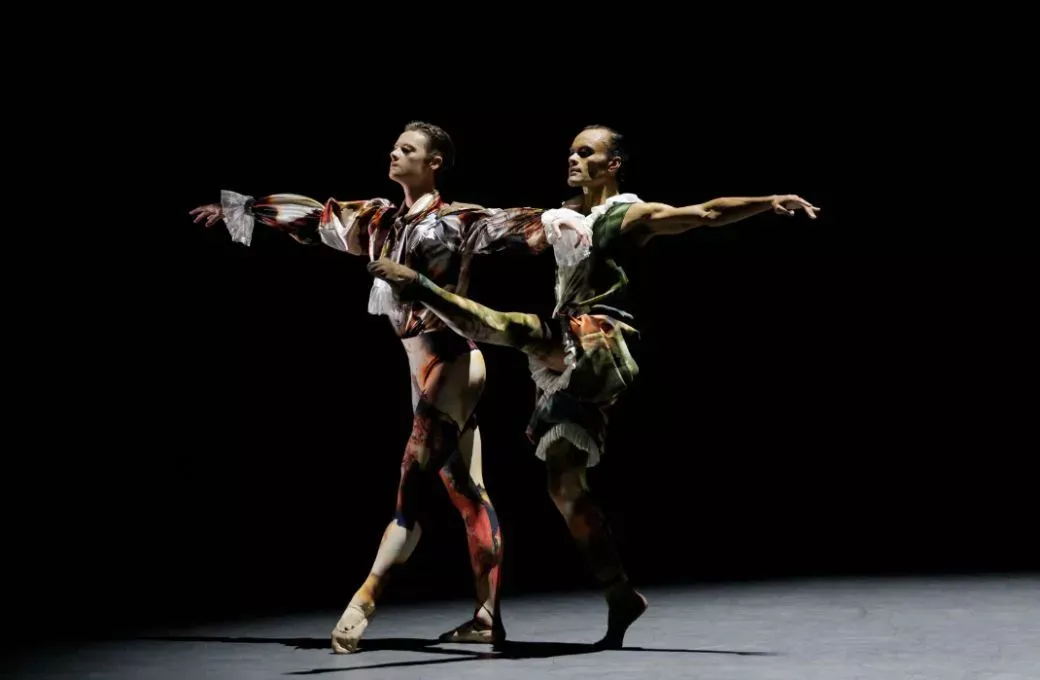
Eventually Stanley met Jules Mabie, and they had a slow, deliberate, and gentle dance, leaning into each other’s flowing arabesques. It was a study in contentment, of sharing thoughts, of peace, ideas which are welcome, even if they are not always fashionable.
© 2026 Mary Cargill