Union Jack & Co.
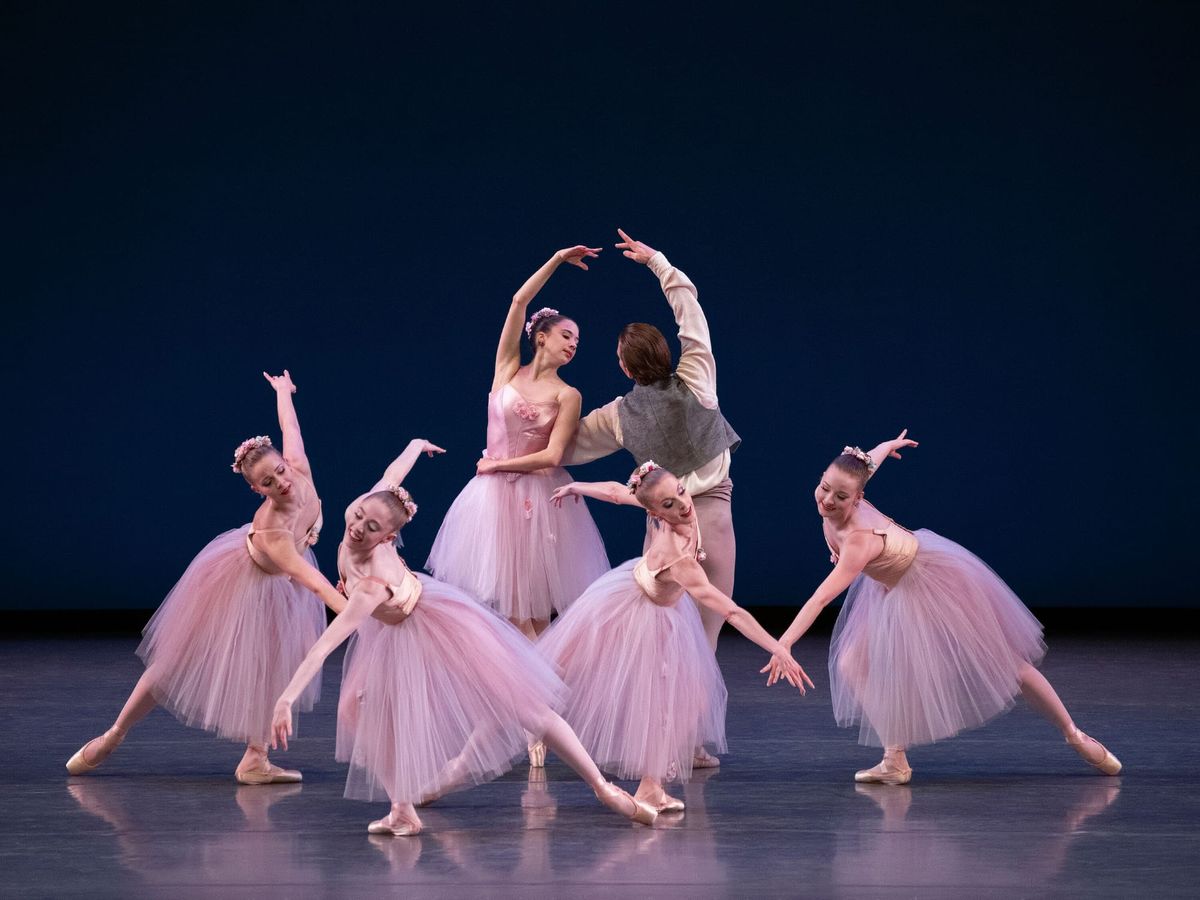
“Valse Fantaisie", "Kammermusik No. 2", "Union Jack"
New York City Ballet
David H. Koch Theater
New York, New York
September 21, 2019 evening
One of the casualties of a wholesale shift in programming last spring (along with "Liebeslieder Waltzer" and a revival of Jerome Robbins' "Branden- burgs"), "Union Jack'" is back. This was the best news of the night. Otherwise, things were often tipsy-turvy, including starting the evening, far from Balanchine's view of a triple bill – appetizer, main course and dessert – with a serving of whipped cream. "Valse Fantaisie", all of eight minutes long, is sweet, light, evanescent, a candied violet of a ballet. Both lead dancers are required to jump indefatigably, while four corps women daintily pick their way around the stage. Daniel Ulbricht and Erica Pereira, veterans of their parts, can certainly jump, and Pereira earlier in her career was so light that she seemed to disappear into the ether, leaving no impression behind. She's grown up, showing increasing authority, here accenting nailing balances effortlessly to the ground. Ulbricht can still jump like nobody's business, though here he was a little tight in the shoulders. The insouciance of youth, revealed here as fundamental to "Valse Fantaisie," is no longer the province of these mature artists; Pereira and Ulbricht have moved beyond this ballet which once suited them to a T.
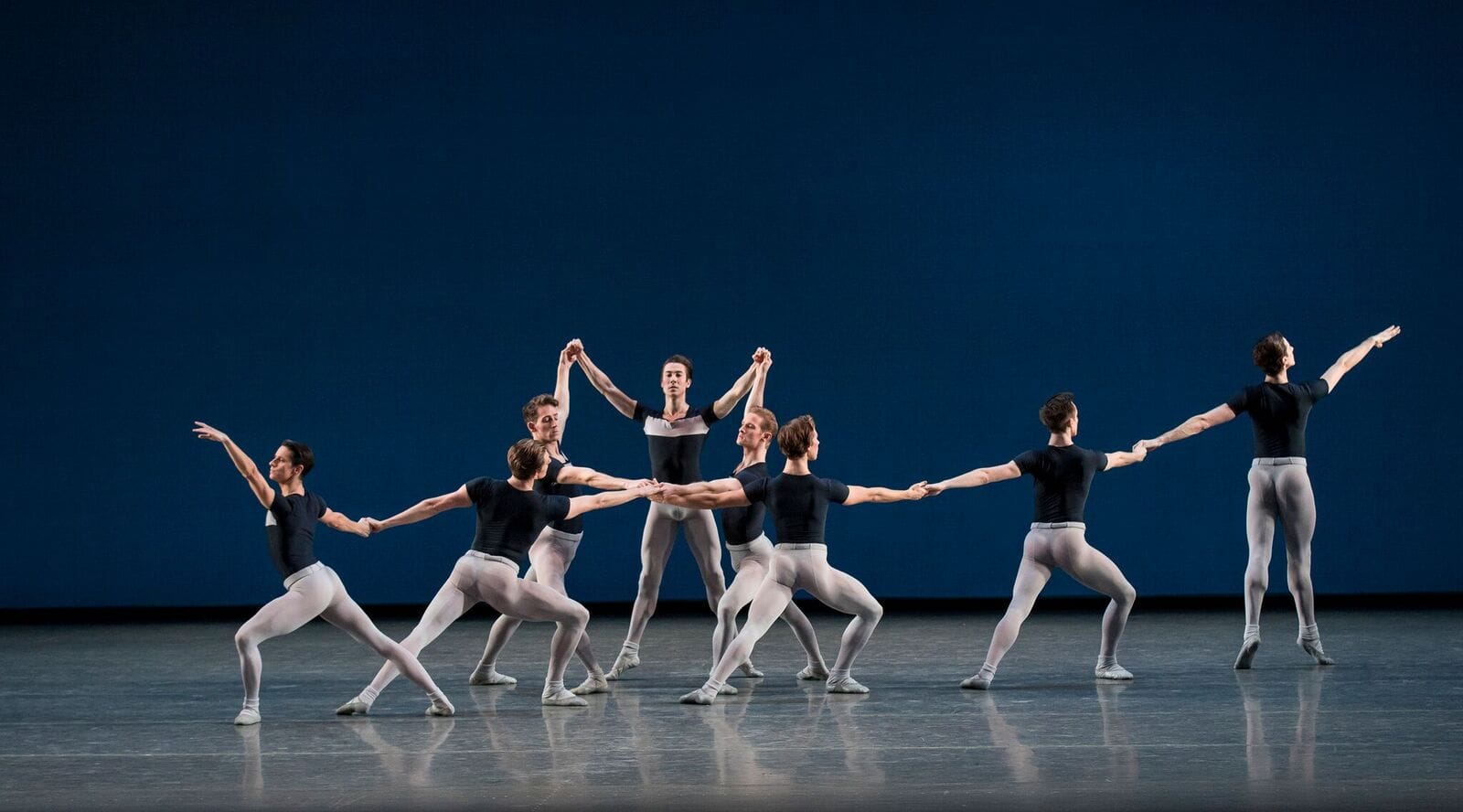
"Kammermusik No. 2" could hardly be different in tone or content. Hindemith's score is finicky, insistent, almost off-putting, a century away from Glinka's lilting waltz. The corps of eight men, an anomaly in Balanchine's oeuvre, writhes and pulsates like the machine room of a battle ship. The two leading couples, almost without affect, keep their emotional distance from the corps, the audience and each other. The four leads, making their debuts in New York or anywhere, were Emilie Gerrity and Jovani Furlan, and Unity Phelan with Peter Walker. Gerrity and Phelan, were all but indistinguishable, rendering them almost anonymous. Furlan and Walker were removed but receding. One can't overlook the scale at which Walker moves, and Furlan, a soloist newly arrived from Miami City Ballet, is so focused in his dancing that one can't help but follow him. But throughout, the angles, the sharpness, the bent knees and jutting elbows, bespeaking the menace of a mass of metal one step from going amok were absent. This was an over-oiled machine, too smooth, too calm and, in the end, bland.
To celebrate the bicentennial of the United States, Balanchine choreographed "Union Jack", a tribute to Great Britain, for seventy-four dancers and a donkey. It's not a perfect work, but its scale is unique in the company's repertory (only the finale of "Vienna Waltzes" made a year later, comes close) and "Union Jack" can and should be fun, witty, and unexpectedly moving, by turns. And so it was, though not always where it had been since 1976 nor as frequently as should have been. Watching Balanchine bring on seven clans, seventy dancers in kilts and full regalia, was as fascinating as ever with its variety of formations and steps, whether the measured tread of a line, reaching to the back of the stag,e of ten men in busbys or nine women in rows of three, behind their leader, completing a turn ninety degrees at a time, each clan's "signature" merging to form a coherent whole, perceived almost unconsciously while you watch. Its precision, finesse and attention to detail is akin to lace-making, here Honiton lace.
Among the clan leaders, Sterling Hyltin, in the role originated by Kay Mazzo, looked most at ease, clear, clean delicate, piquant. Gonzalo Garcia and Tyler Angle got the good-natured competition between the Lennox and Dress MacLeod regiments respectively, but not the contrasts of scale and tone. Garcia and Angle are similar in build and demeanor. As originally danced by Helgi Tomasson (Garcia's former boss in San Francisco) and Jacques d'Amboise, the meeting was a study in reticence versus exuberance, a Siamese cat meeting a Labrador puppy. Without that contrast, the texture of the ballet is diminished. Similarly, in the role originated by Peter Martins, Jared Angle was a fine partner opposite Hyltin. But he's not physically imposing enough among the regiments and just too nice to be the gob with the calculating and roving eye later on; he looked uncomfortable even trying. All these roles need to be reconceived within the world of "Union Jack" or recast. It can be and has been done (e.g. Nikolaj Hübbe in Martins' role).
Sara Mearns returned to the plum role, the leader of MacDonald of Sleat, the regiment of Amazons who take on all comers to the sound of pounding drums. It's a role that seems tailor-made for Mearns and her lust for going for broke. It brings down the house. Yet, at the end and for the first time ever, I felt nothing and I'm not sure why. However the pas de trois in the final section, usually little more than filler, just flew by with Mearns and debutants Daniel Applebaum and Sebastian Villarini-Velez rolling over the waves with rapid-fire sparkling good humor. Teresa Reichlen has the limbs for all the swimming motions for the WRENS but her take on her role lacks a point of view. The steps were there, the wit was not. It did not help that some unison passages in her regiment were frayed.
As the costermonger couple, Megan Fairchild and Andrew Veyette were a couple that had had to put their patter across one, or ten or one hundred times too many, a little brittle and removed, as if shielding themselves from boredom. It works but at the price of too much of the humor of the piece. The high kicks in the finale needed more precision and panache though considerately the donkey left no trace.
copyright © 2019 by Carol Pardo



