Group Dynamics
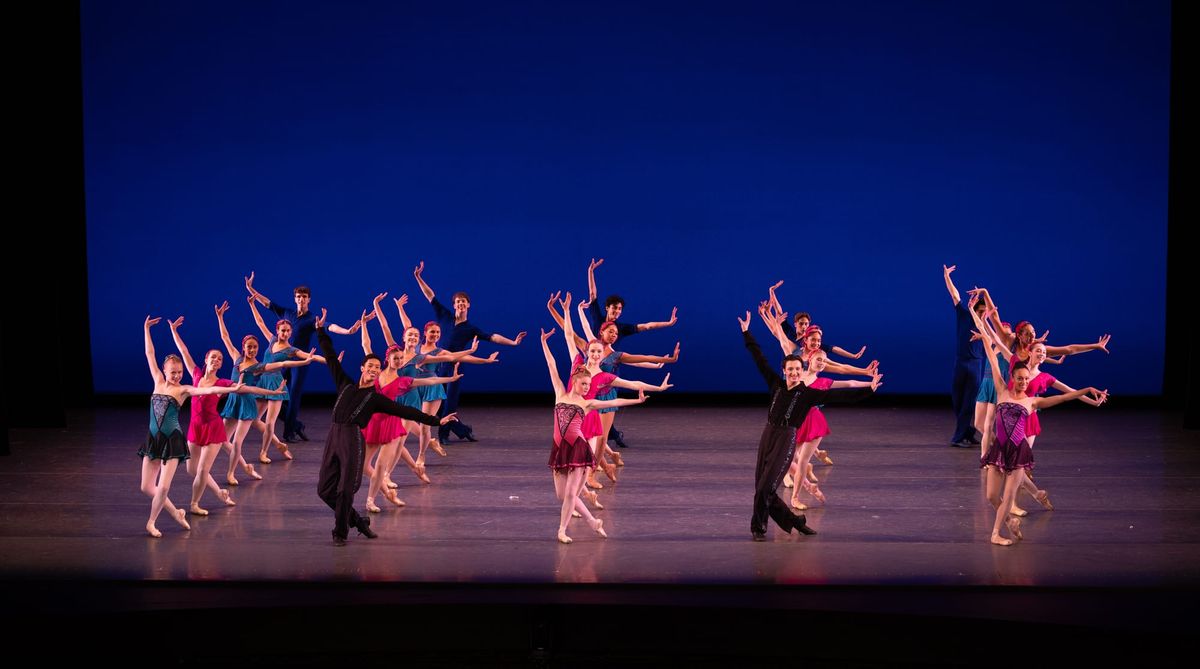
"Proof of Light", "Cortège Hongrois (Czardas)," "Scherzo la Russe", "Who Cares?"
SAB Workshop
Peter Jay Sharp Theater
New York, NY
June 6, 2026, matinee
The 2026 SAB Workshop showcased four ballets and three distinctive styles. There were two folk-inflected works, Balanchine’s czardas from “Cortège Hongrois”, set to Glazounov’s sumptuous music from "Raymonda", and his “Scherzo à la Russe” to Stravinsky, inspired by Russian women’s folk dances. The performance ended with Balanchine’s “Who Cares?”, a jazzy, free-spirited yet classically based celebration of American syncopation set to melodies by George Gershwin. It opened with a new work, “Proof of Light” choreographed by Kiyon Ross, an SAB trained dancer who is now the associate artistic director of the Pacific Northwest Ballet, to pulsating music by Michael Torke, Max Richter, and Joby Talbot.
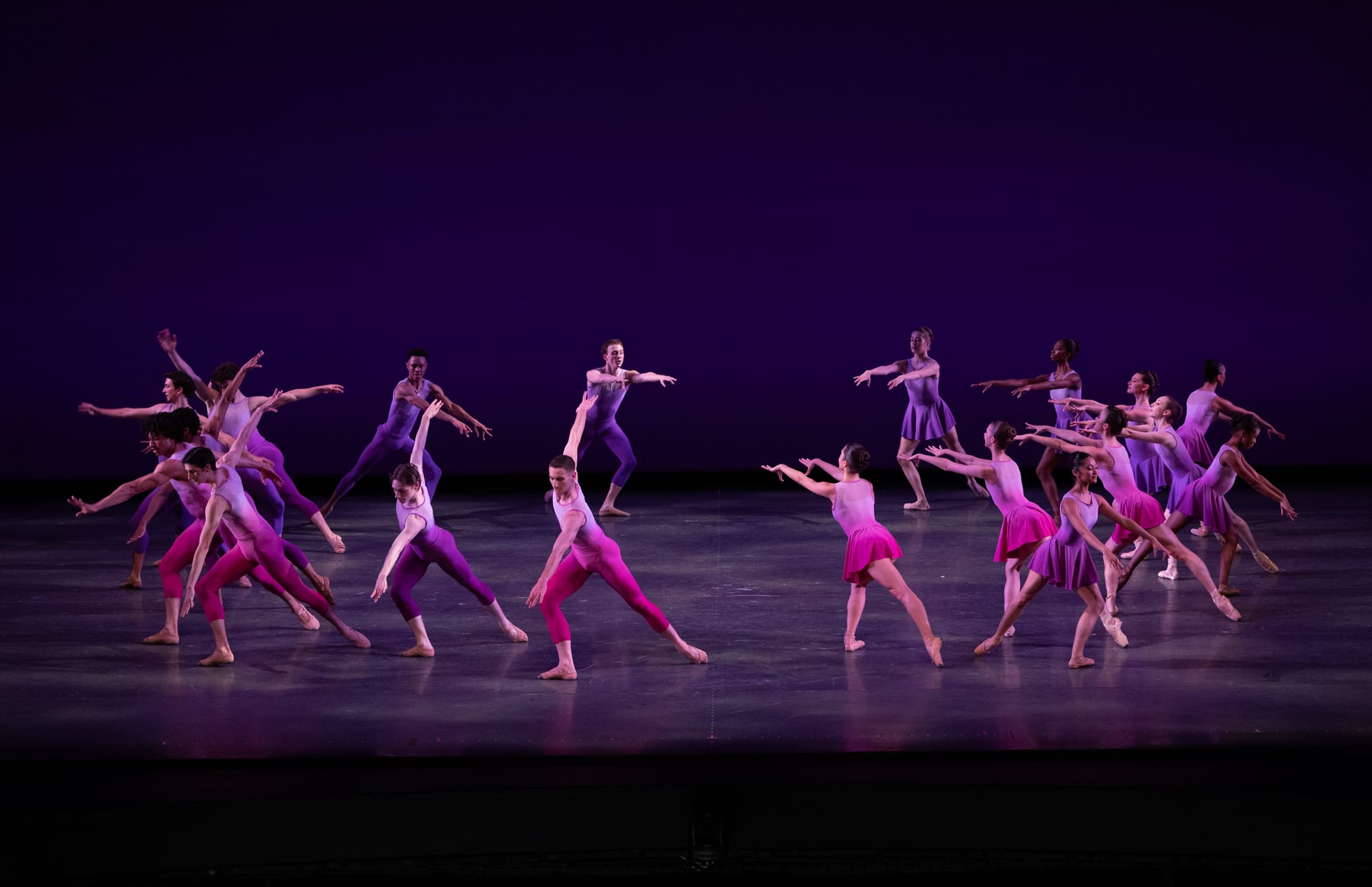
"Proof of Light" is a bustling five-part work for 20 dancers with many modern touches—slides on point, windmill arms, and death spiral spins. Ross showed off his large cast well, rushing groups on and off the stage, with breaks for many brief solos and pas de deux. The choreography was on the choppy side, as the dancers hurled themselves into position, paused, and then moved to another position, but the constantly shifting movement and eager commitment of the cast gave the work a rush of adrenaline.
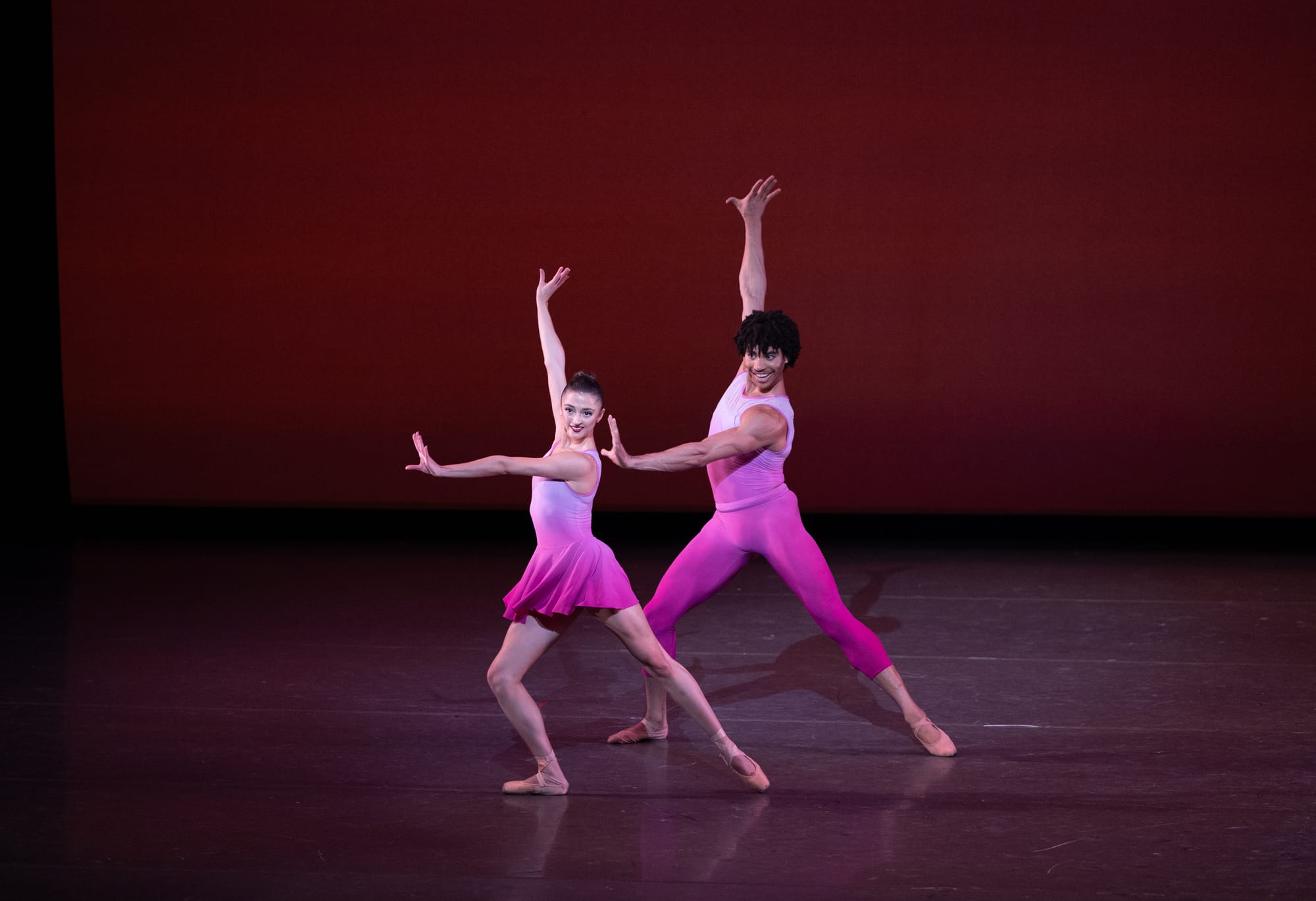
Mary Kennedy Sullivan, with Cameron Fikes, danced a pas de deux which showed off her long, elegant lines and his light jumps. Renée Augustyn and Ador Kadiasi had a longer, quieter rather wistful pas de deux in the fourth section, set to a violin work by Max Richter. It was full of slow, lilting lifts and near misses, as the dancers came together and separated, finally backing away from each other. They danced with an understated but powerful longing. Among the many fine pop-up solos, Jaiya Chandra, in the energetic third movement, stood out for her natural radiance and crisp dancing.
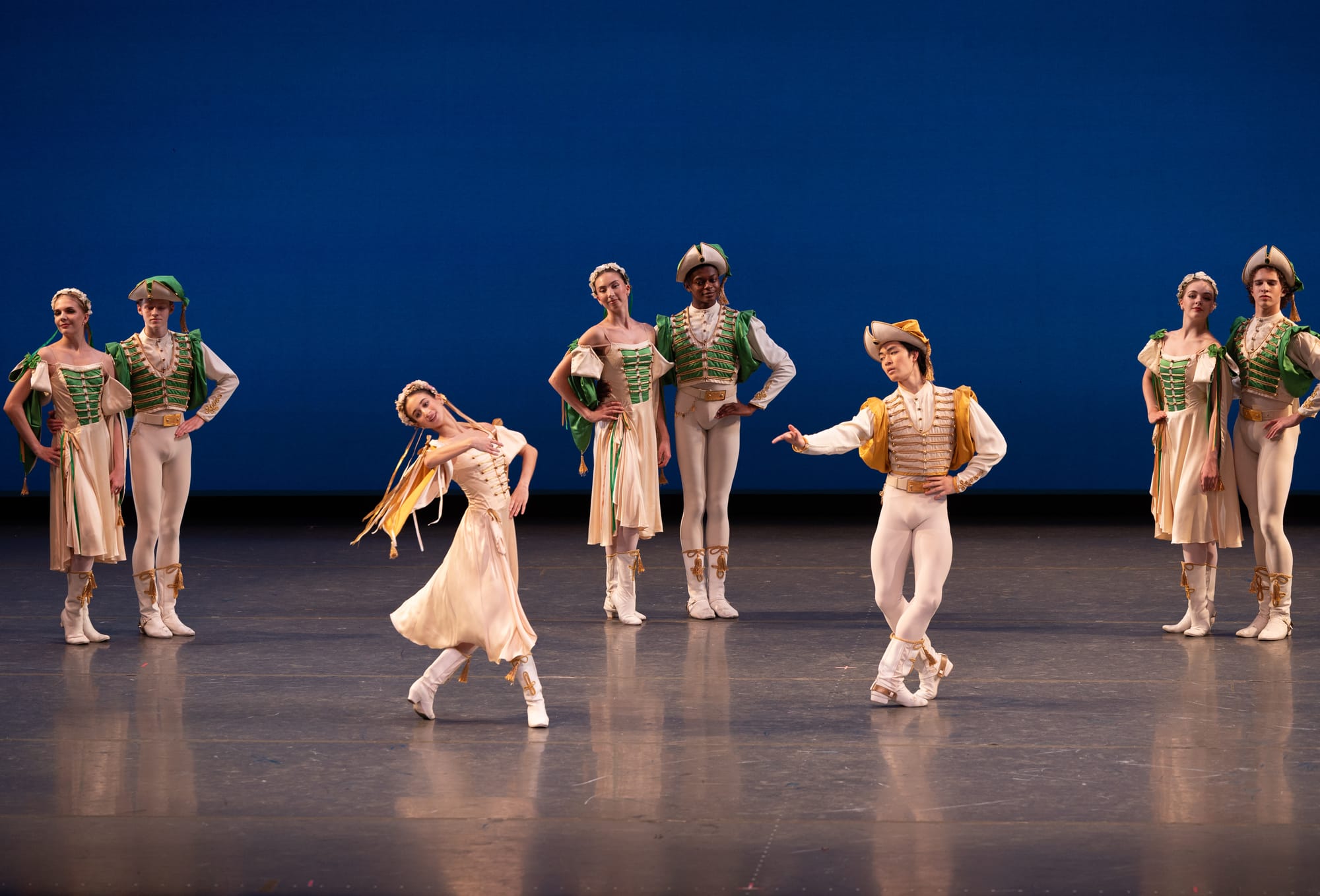
There was a lot of crisp dancing in the czardas from “Cortége Hongrois” and staged by Adam Hendrickson, as the four couples, led by Sydney Gerstein and Kensei Gunji, pranced and stomped energetically in their character shoes, though the men did look as if they weren’t used to wearing hats. Gerstein was especially dramatic with her fluid upper body and luxurious backbends. It was a brief, exciting glimpse of old Hungary, filtered through the Maryinsky.
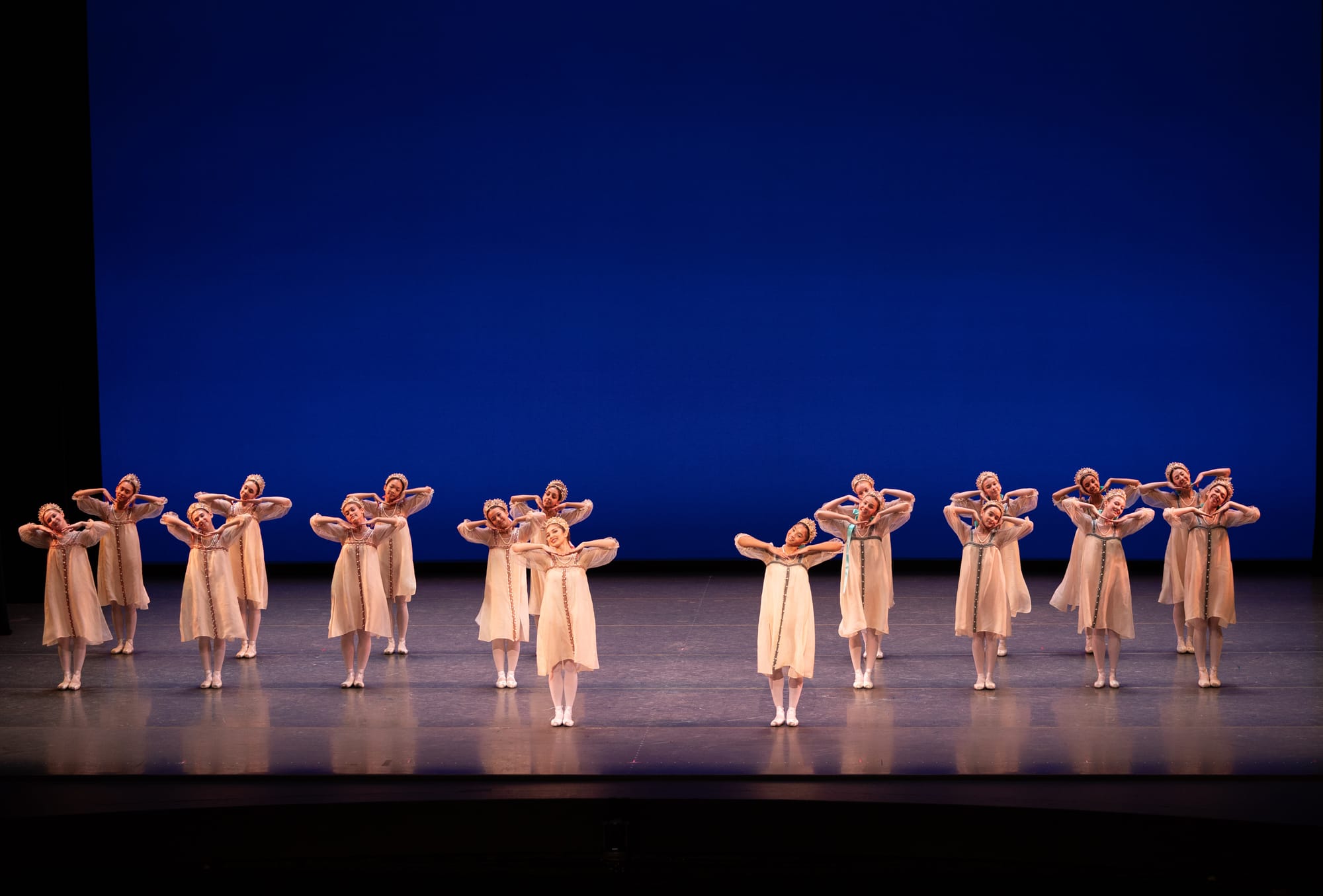
“Scherzo à la Russe” (staged by Marika Anderson) was a more balleticized version of folk dancing, as the all female troupe wore pointe shoes and stylized knee-length Russian peasant dresses designed by Karinska. Balanchine packed a lot of steps in the four minutes and the two cohorts danced the complicated Stravinsky rhythms with a sparkling confidence, led by Kaitlyn Giltz and Elyn Jenkins; Giltz's upper body was especially lush. It was as if the nursemaids from Fokine’s “Petrushka” were dancing somewhere in heaven.
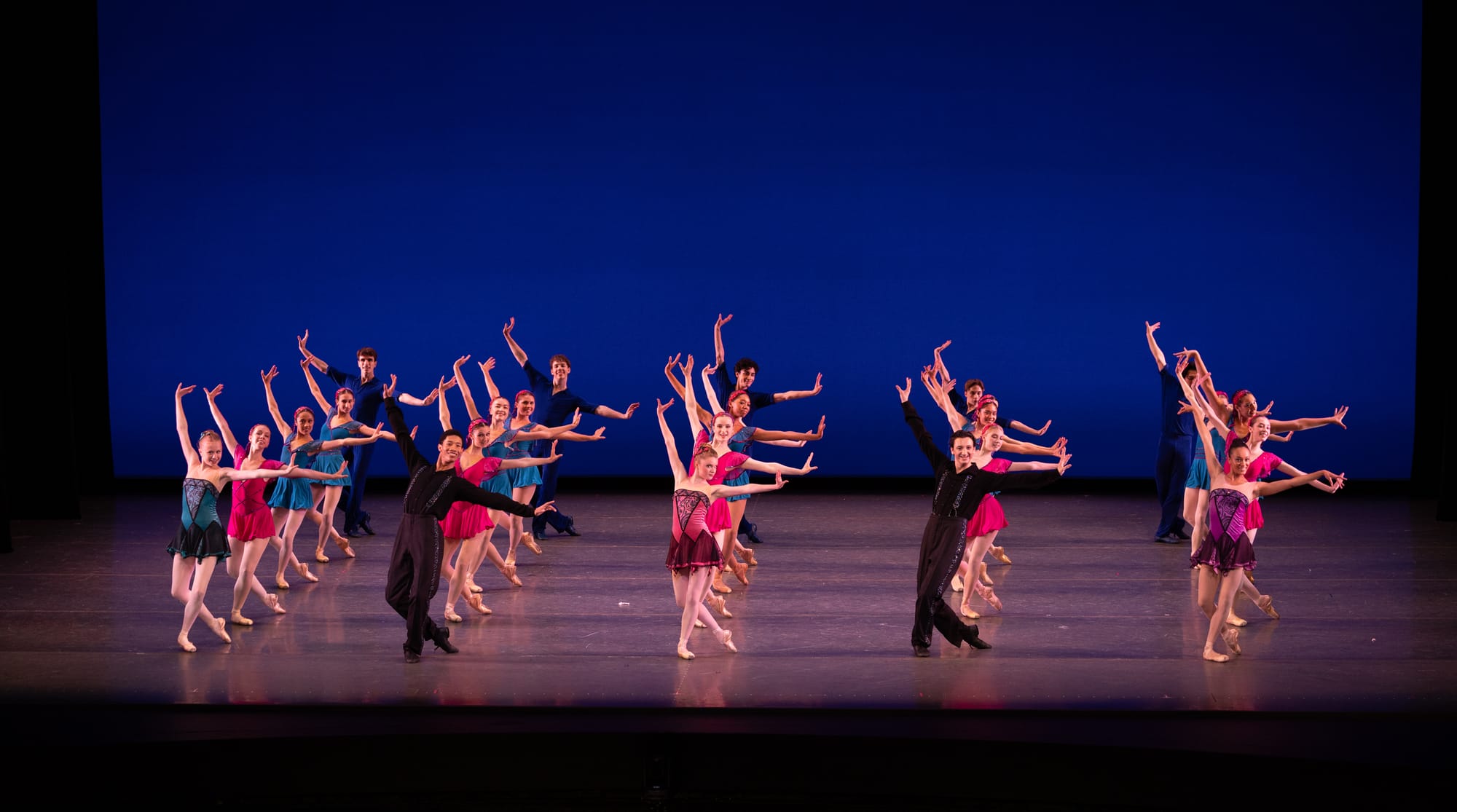
The dancers in “Who Cares?” (staged by Jennifer Ringer, Katrina Killian, and Meagan Mann) were dancing in a heavenly version of Central Park, though unfortunately the stage was missing the evocative star-lit backdrop. The production did have the overly bright and sometimes garish 2013 Santo Loquasto costumes; the lead man (split in this performance into two roles) got rhinestone suspenders and the three leading women sleeveless short statiny dresses smothered in black lace, inspired, it seemed, by naughty French postcards from the 1890’s.
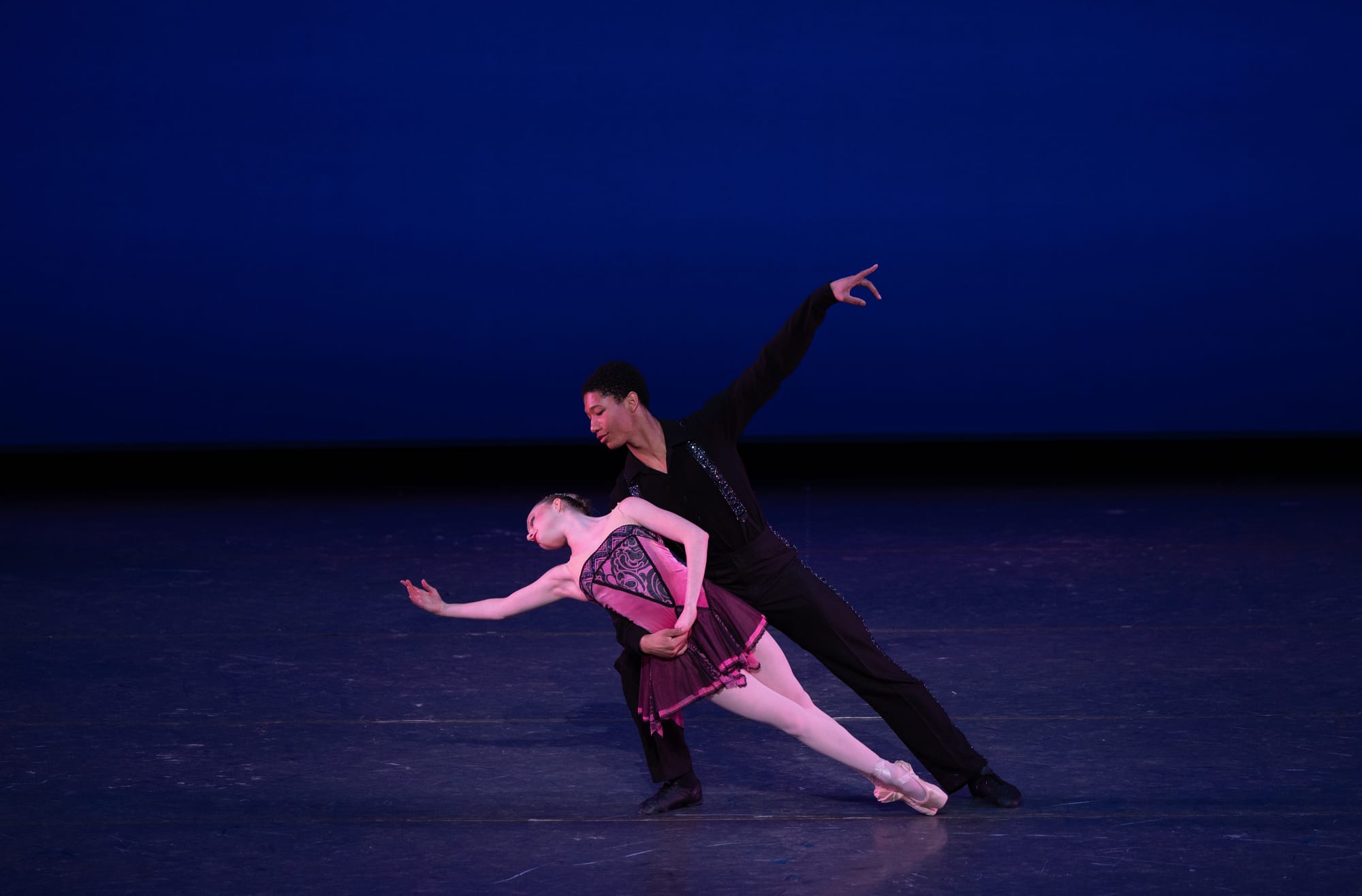
Despite this, the performance had a wonderful swing. The five men who were bidin’ their time (Liam Forest, Jordan Gourley, Kensei Gunji, Curtis Bowles, and Sam Shoemaker) danced with an infectious swagger and very confident double tours, and Charlotte Borden’s “Lady Be Good” gave her final leg kick a daring ease. The three female soloists (Leah Carter, Simone Gibson, and Caroline Cochrane) shared the two men (Anthony Smith and Samuel Greene). Carter and Smith negotiated the difficult over-the-back lifts in “The Man I Loved” with astounding ease, Gibson’s “Stairway to Paradise” was danced on a grand scale and Cochrane, in her “My One and Only” had a fine show-girl flair. Greene gave his "Liza" solo a playful, witty timing which he danced with a fine soft-shoe flourish; he ended with a confident wave to the audience, a bright little chink in the fourth wall.
Scrupulous and well-rehearsed dancing is certainly the norm in SAB performances, but the theatrical confidence and warm stage presence of these dancers was even more thrilling.
© 2026 Mary Cargill



