Two Ways of Listening
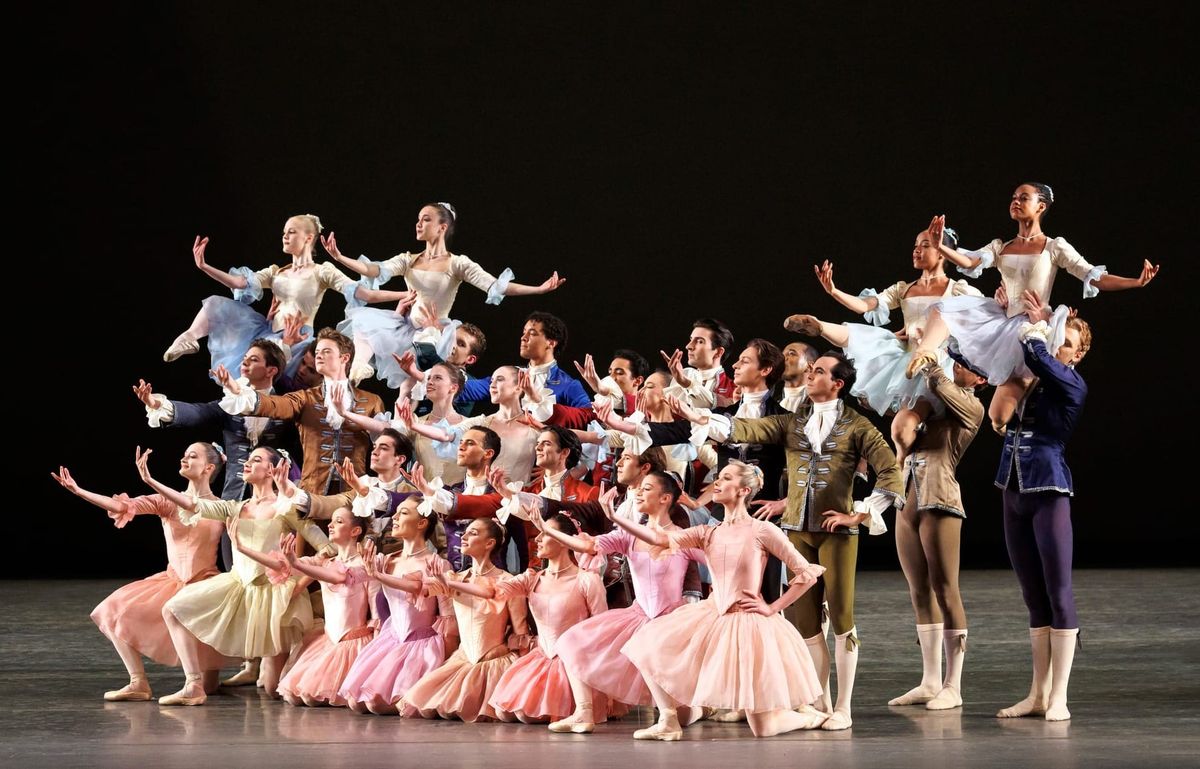
"Concerto Barocco,” “The Goldberg Variations”
New York City Ballet
David H. Koch Theater
New York, NY
May 16, 2026
There is a particular clarity that comes when NYCB programs its two founders together, and when they share a single composer, the company's bedrocks come into clear focus. The All Bach evening set Balanchine's stripped-down, mathematically precise “Concerto Barocco” against Robbins's studied and at times theatrical “Goldberg Variations” – one choreographer distilling Bach's nuance in movement, the other testing what could be wrested from a score that seemed almost undanceable, and even quoting the other in the result. Seeing the company work to prove itself worthy of both ballets was as compelling a sight as watching it actually succeed.
The ballerina roles in “Barocco” were danced by Isabella LaFreniere, stepping in last minute for Emilie Gerrity, and Unity Phelan, recently returned from maternity leave. Each brought a signature quality to their respective First and Second violin roles of this Double Violin Concerto score, but their styles resisted blending. LaFreniere entered with big movement and a radiant, persistent presence that serves her well in roles calling for individual force – but here it clashed with Phelan's more inward elegance. LaFreniere drove toward the up-accents and athletic extensions of the score; Phelan sought its more lingering phrases, leaning into notes rather than off them, particularly in her duet with Owen Flacke. All this resulted in more dissonance than dialogue.
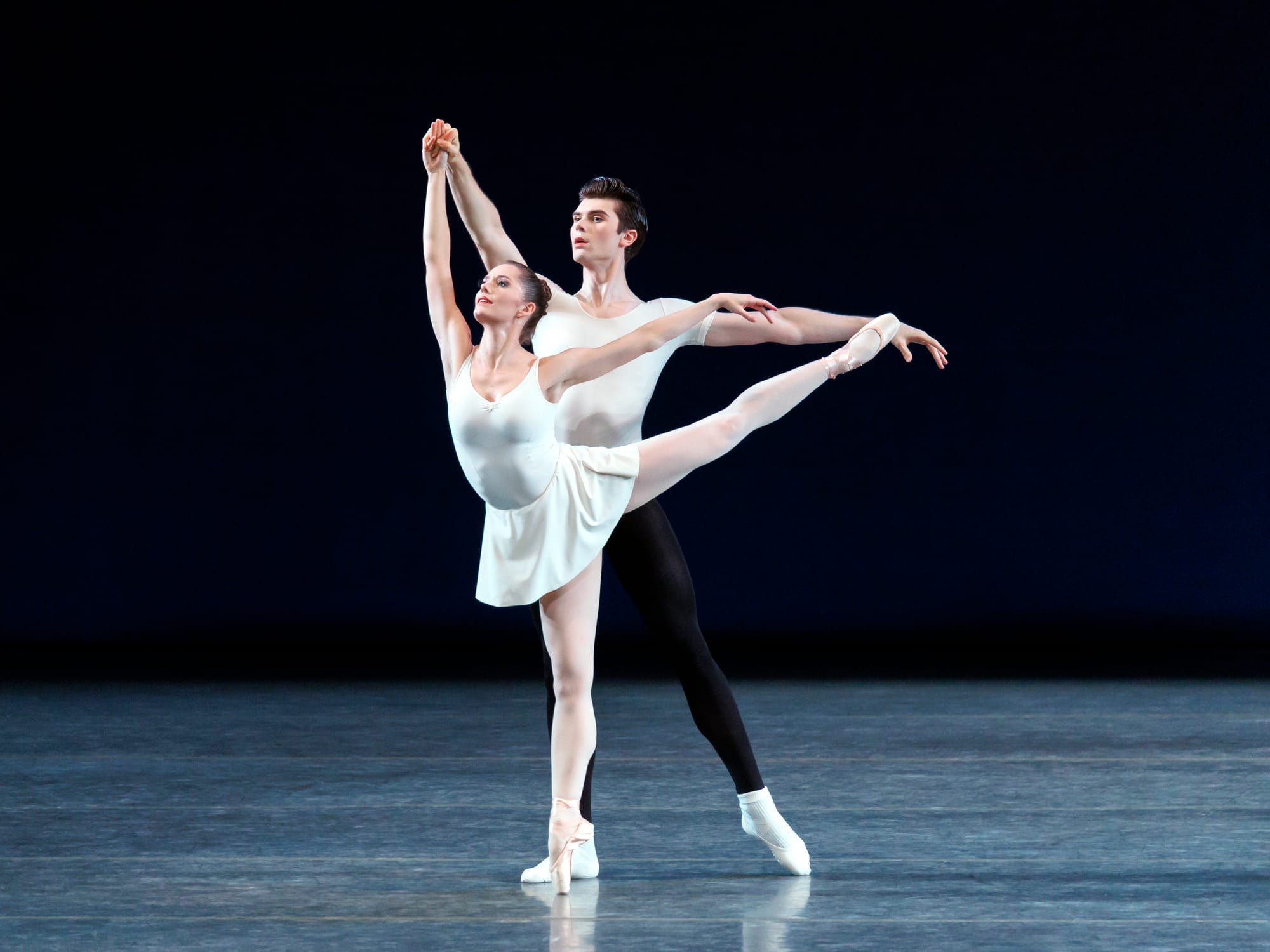
The real stars turned out to be the corps, whose impeccable stamina carried the ballet through every crisp balancé, soutenu and hop on pointe. Despite looking appropriately uniform, several dancers caught the eye: there was the refined bearing of Lauren Collett, the gentle femininity of Nieve Corrigan, and the violin-string sharpness of Meaghan Dutton-O'Hara's legwork.
“The Goldberg Variations” is not everyone’s cup of tea at nearly an hour and a half, but for a viewer alert to the difference in how the choreographers heard Bach, the evening's rewards doubled here. Ava Sautter and Shane Williams danced the opening and closing Theme with assurance – Sautter particularly acute in placing the accents of the opening baroque steps. It was a feeling of a real changing of the guard, like a contrast of eras, when Olivia MacKinnon, the solo debutant in this piece, appeared on stage in the rehearsal wear costume. Her dancing was crips and modern feeling, but with courtly acknowledgement that gave a nod to the opening theme. David Gabriel and Andres Zuniga picked up where she left off with remarkable interplay that felt like they were finishing each other’s musical sentences.
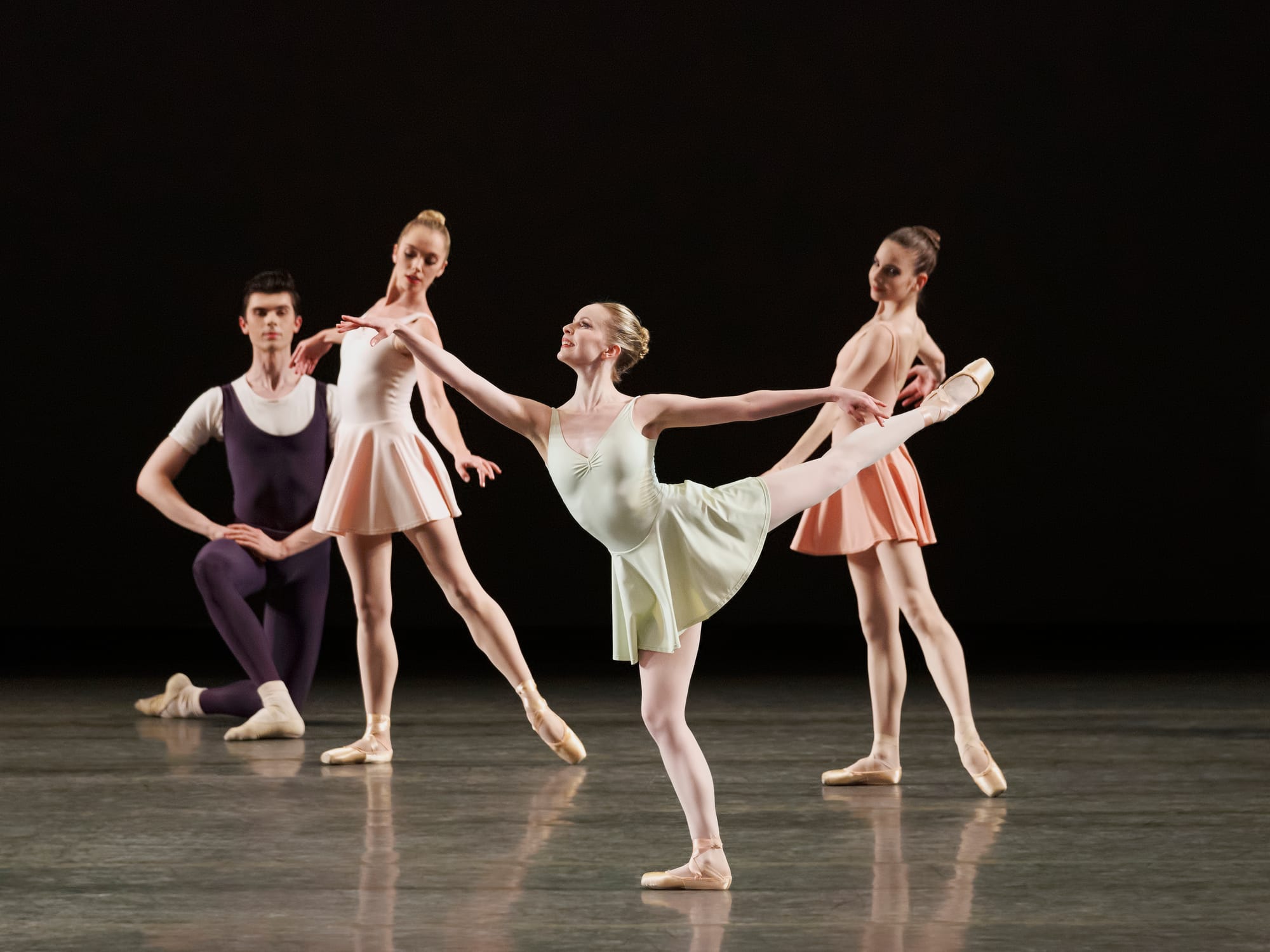
In the ballet’s second half – where the costumes get more ornate and the dancing more theatrical despite the music staying in the same key – LaFreniere, dancing with Ryan Tomash, allowed her sense of the stage to fully flourish, making her first act dancing feel like overture. There was no hesitation – she eagerly went after every step the choreographer and music afforded. Tiler Peck and Joseph Gordon had a similar quality, their syncopation feeling like the natural byproduct of joy rather than design, especially as Peck would drift away from her partner and then back again. Their later duet settled into a quieter, lovely eloquence. Alexa Maxwell, opposite Taylor Stanley, found herself in less favorable contrast in the third, playful duet. With his retirement set for next year, Stanley danced with the unhurried ease of an artist performing for the love of it, beyond career calculations, which made Maxwell's more reserved approach feel strained.
When the finale arrived and the hall went quiet with a kind of hushed collective breath, it was clear that these dancers had done their part – after almost hypnotically holding the long arc together, variation by variation, suddenly Robbins’s whole monumental structure stood. These may have been last century’s ballets, and still older music, but they are no where finished finding their admiring audience.
copyright © 2026 by Marianne Adams



