Two Violins and a Saxophone
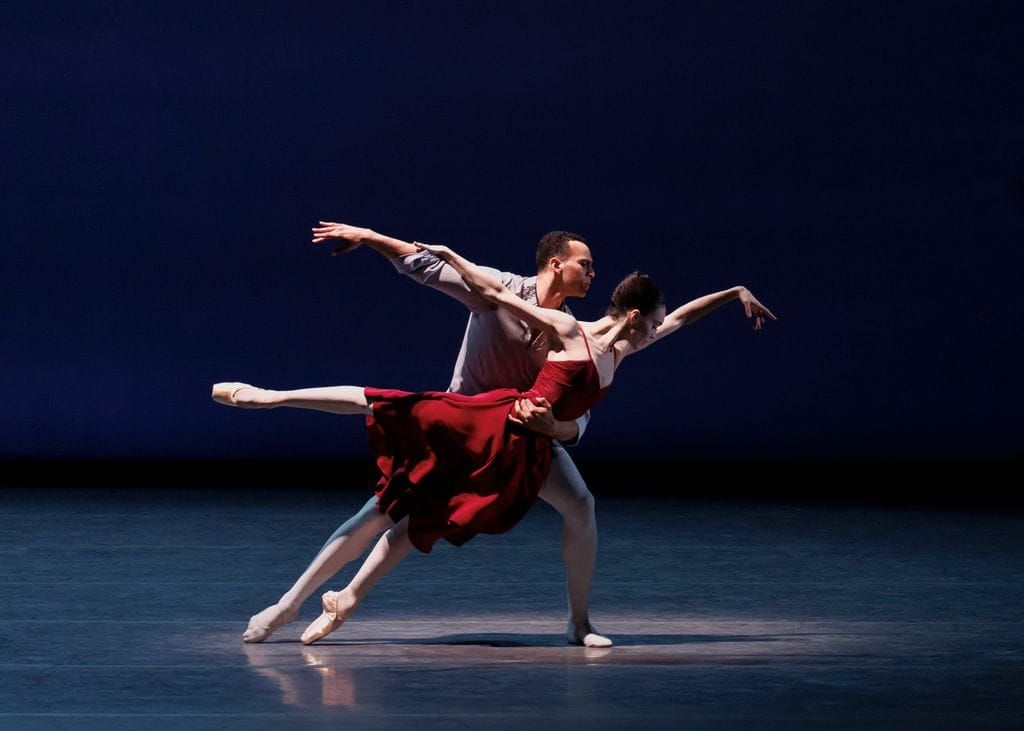
"Opus 19/The Dreamer", "Standard Deviation", "Symphonie Espagnole"
New York City Ballet
David H. Koch Theater
New York, NY
May 12 and May 17, 2026
All three ballets in the program, entitled Eclectic NYCB, were set to music featuring guest soloists. The music ranged from the 19th century (Édouard Lalo’s “Symphony Espangnole” for Tiler Peck’s new work, the 20th century (Prokofiev’s “Violin Concerto No. 1, op. 19” for Robbins’ “Opus 19/The Dreamer”) and the 21st century (Jack Frerer’s commissioned work for Alysa Pires’ “Standard Deviation”. The violins (Sean Lee for “Opus 19/The Dreamer” and Tai Murray (May 12) and Hillary Hahn (May 17) for “Symphonie Espangole”) and the saxophone (Chris Hemingway for “Standard Deviation”) all got a well-deserved round of applause from both the dancers and the audience, and the dancers got a well-deserved round of applause from everyone.
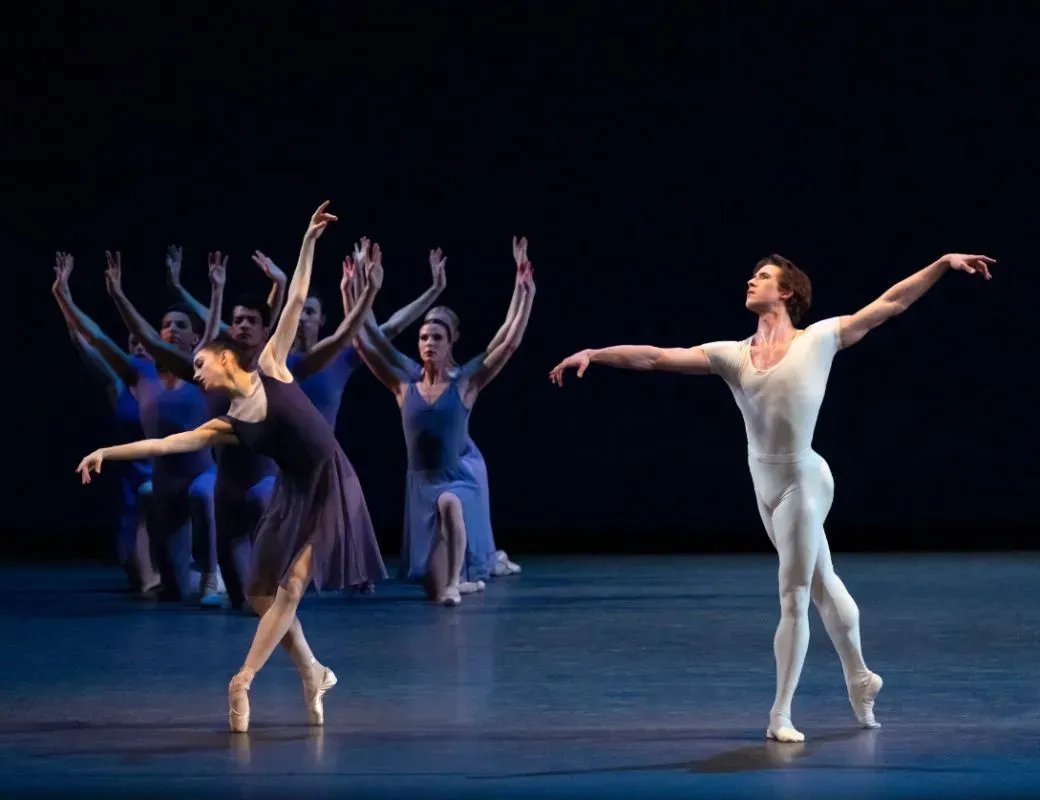
Robbins’ ballet was originally choreographed in 1979 for Mikhail Baryshnikov and Patricia McBride, two powerfully distinctive dancers. It is a rather gloomy opening ballet, with dark lighting and dark costumes for the corps, and at times seems to be the backstory of “The Four Temperament’s” Melancholic. It opens with a man in white (Joseph Gordon, May 12 and Roman Mejia, May 17) standing alone in a spotlight, while mysterious figures mill around in the background. Gordon gave a solitary, lyrical tinge to the opening, seeming to almost violently push something (despairing thoughts perhaps) away, and swinging his arms as if trying to break free, until he sits down, alone, to watch the female corps tiptoe in. Mejia’s approach was different, his movement were slow and deliberate at first, as if he were dreaming, until the music sharpened and he seemed to part the air with his arms, and come to life, a life full of struggle and suffering.
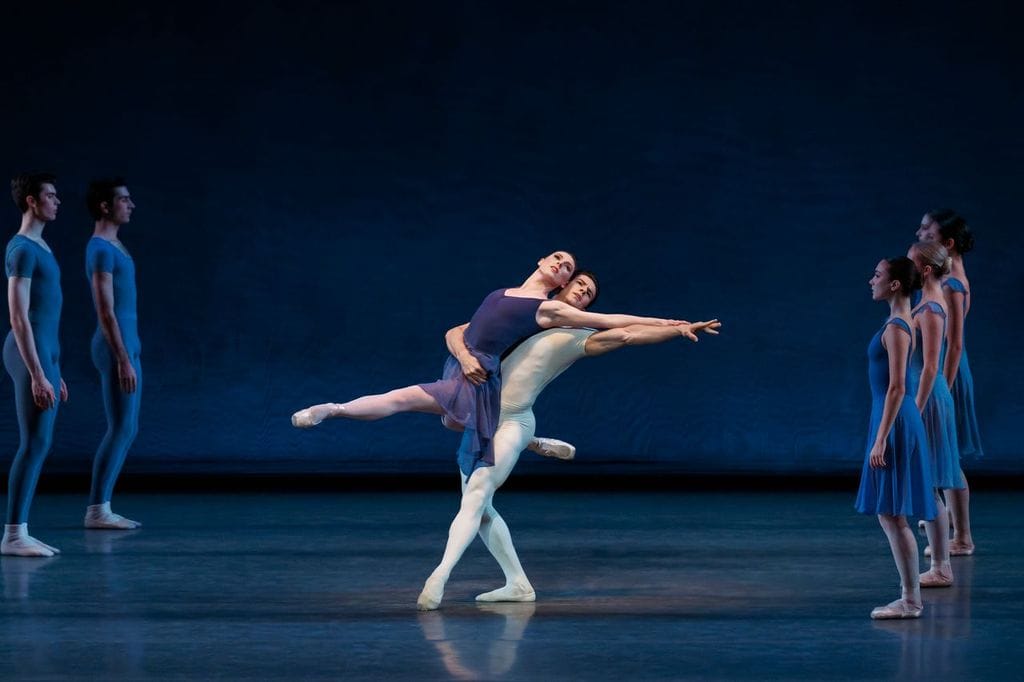
Alexa Maxwell (May 12) and Tiler Peck (May 17) finally emerged from the throng. Maxwell is a quietly confident dancer, drawing the audience to her with a powerful stillness, and even a slight slip didn’t break her concentration. She was by turns an echo of Gordon’s thoughts, a dangerous presence as she grabbed hold of Gordon, and then a victim, as he swung her around until she went limp. She eventually became an enchantress, and finally a comforter. Peck didn’t have all of Maxwell’s dramatic fervor and was a smoother, more lyrical presence who let the music ripple through her body.
The ballet does ramble a bit—it seemed as if the Dreamer had any number of random, unconnected thoughts and there were a couple of misleading endings, when the audience started to applaud, thinking it was over. But there are moments of real power and beauty, as well, and strong dancers can make it moving.
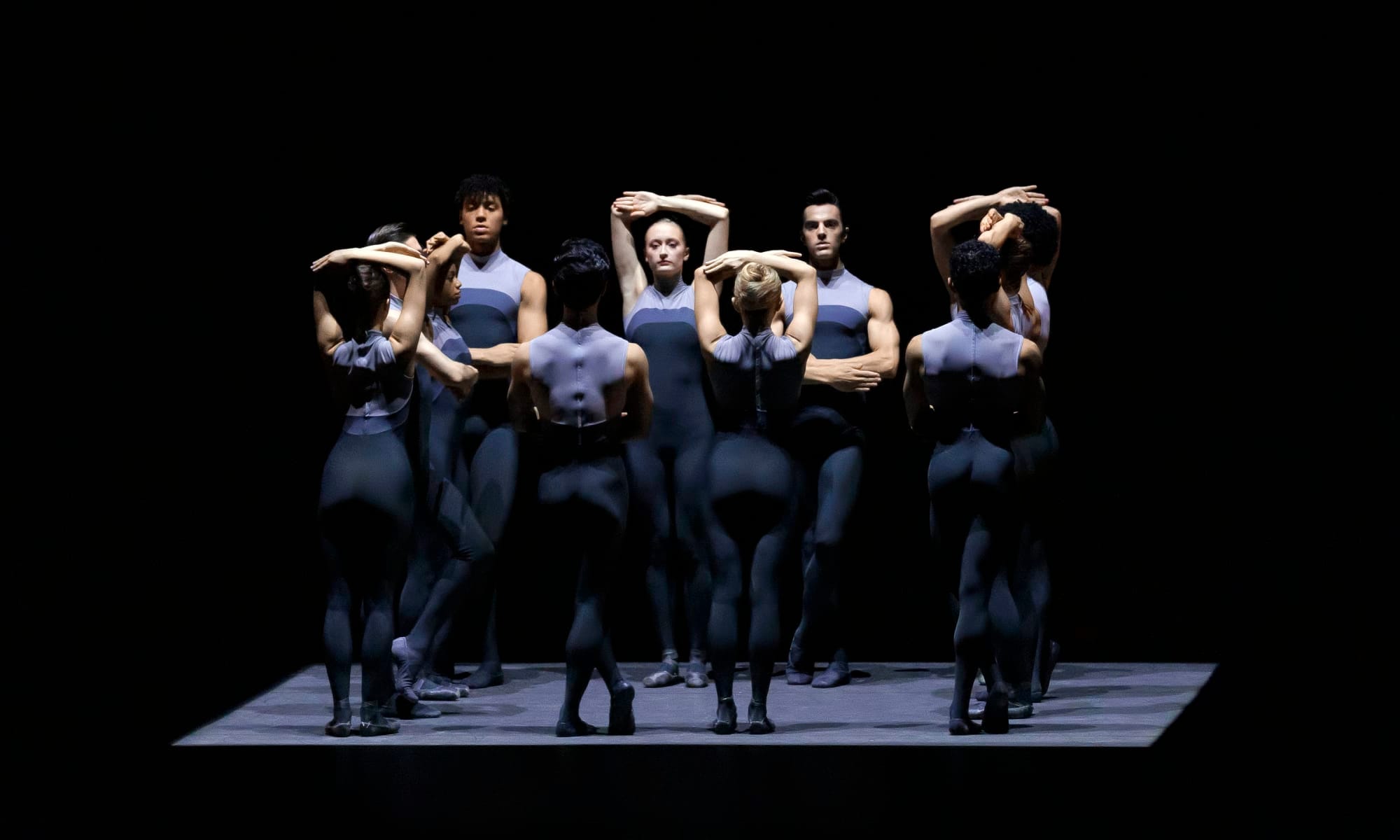
“Standard Deviation”, from 2023, was another darkly lit, abstract work, featuring a small corps and a principal couple (Naomi Corti and Victor Abreu); it also had an extra woman (Emma von Enck) who seemed to be a geometric whirlwind. Both men and women wore the same dark grey unitards (they were lighter above the bust, making a very flattering line) designed by Dana Osborne. It opened with the corps standing in rows in a square of light moving with a blank staccato verticality—they often retreated to this style, holding their arms behind their backs as if handcuffed; they looked like anonymous cogs in a square box.
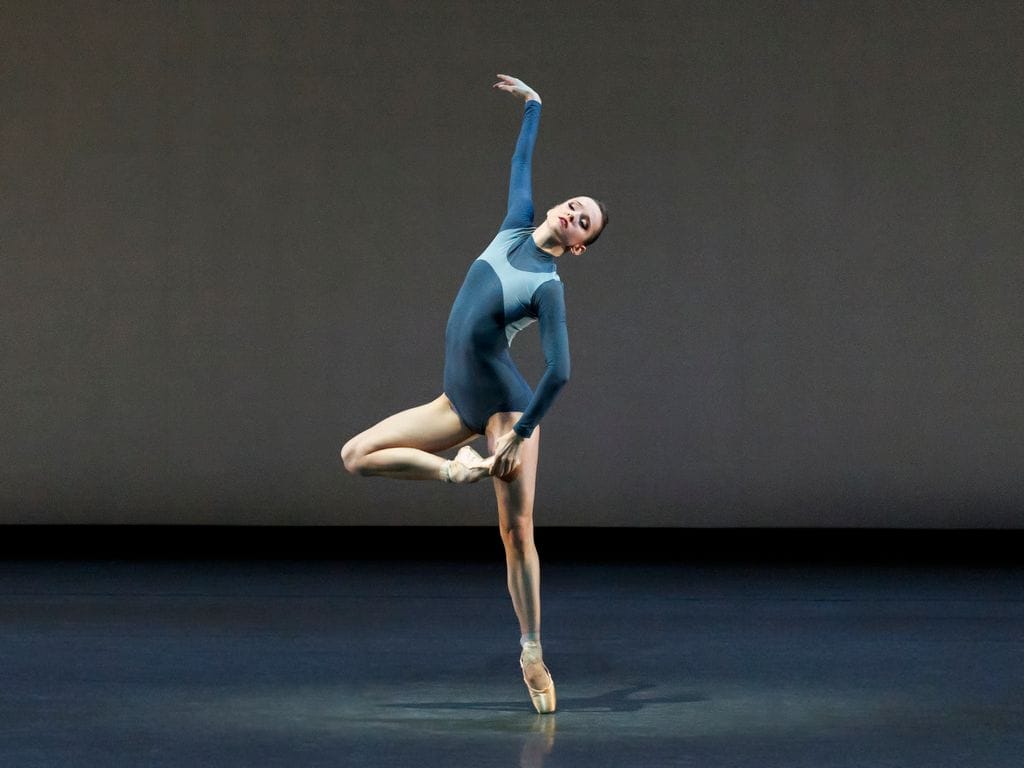
Von Enck, in a similar grey leotard though with bare legs, seems to have been a catalyst, freeing the regimented group, who eventually relaxed into pairs. Pires’ constantly shifting spare geometric shapes matched the odd rhythms of the music as the corps dominated the stage, gradually loosening their grip (they were literally holding on to their own arms), and their arms, now freed, made odd shapes as they drifted across the stage like wisps of smoke. David Gabriel and KJ Takahashi both got brief, impressive solos; Gabriel’s was contemplative, with wafting arms and Takahashi’s was more lively, with impressively fast turns. Von Enck danced with sharp turns and spiky jerks, and tossed in some impressive fouettés, and eventually (and inexplicably), based on her mechanically folded arms, led the group back to their regimented spaces, as the ballet ended with her in control.
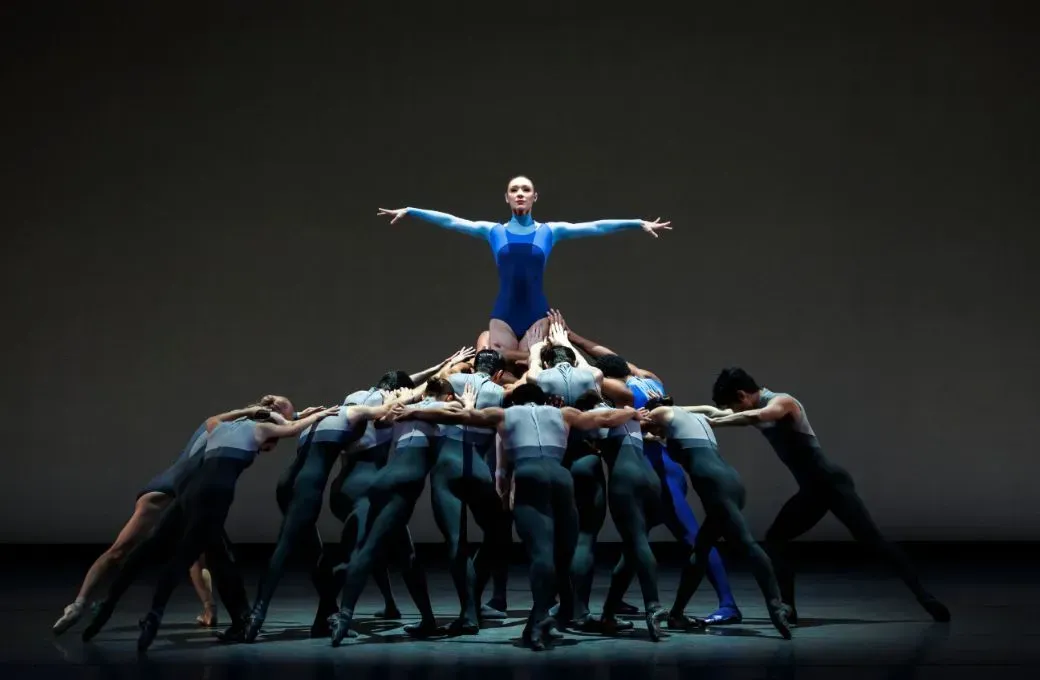
The couple, wearing blue, (Corti got a leotard with bare legs and Abreu got a body stocking) appeared to be the only truly free people on stage, and got most of the saxophone music. The couple was less vertical than the corps, and Abreu had a meltingly soft solo, all fluid arms and melancholy poses. Corti, with her arrow-like arabesques and her dominating presence had a haunting power, but overall the ballet was somewhat emotionally diffuse as the music and the dancing tended to ricochet between the strident bangs and the melancholy saxophone, between rigid conformity and lyricism.
Tiler Peck has said that her new work was inspired by Balanchine’s “Symphony in C”; both have large casts (Peck used 40 dancers), both have multiple soloists, and both use 19th century French symphonic music. That said, it is really not fair to compare a ballet by a novice choreographer with one of Balanchine’s greatest works. Peck’s is certainly accomplished, especially in her use of the corps. The ballet revels in classical shapes and in the belief and affection Peck showed for her dancers. Peck gave each movement an individual flavor, with a few Spanish accents delicately sprinkled through the ballet.
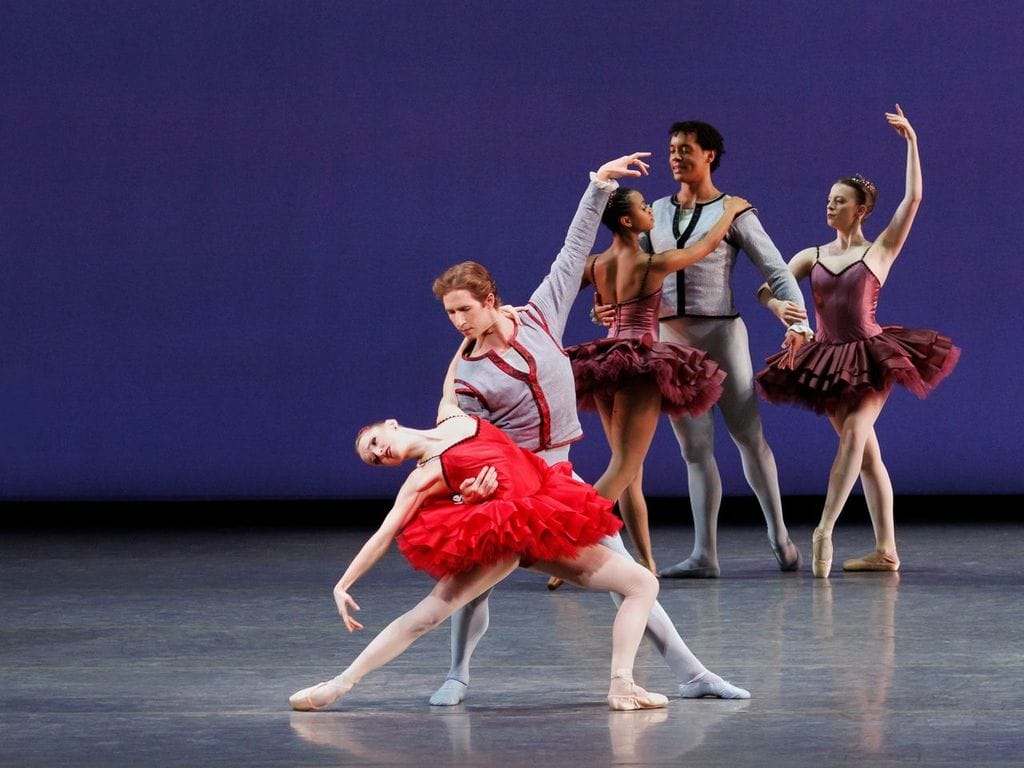
The first movement, led by Indiana Woodward and David Gabriel (May 12) and Emma von Enck and Joseph Gordon (May 17), was the most traditionally classical, with corps patterns of elegant symmetry and bright, crisp dancing. Women ruled the second movement, led by Kloe Walker (May 12) and Mira Nadon (May 17, a debut), with hints of passion suggesting the Ballet Formerly Known as “Tzigane”, and men dominated the third movement with Roman Mejia (May 12) and Ryan Tomash (May 17, a debut) as an elegantly lyrical matador. The fourth movement featured Mira Nadon and Ryan Tomash (May 12) and Ruby Lister and Chun Wai Chan (May 17, both debuts), in a dramatic pas de deux full of lifts and lunging arabesques. The couple cheered up for the finale, which brought everyone back to dance together, with some lovely shifting formations. Unfortunately, the finale music, lovely though it was, was a bit subdued and only the loud final chords seemed to celebrate the occasion.
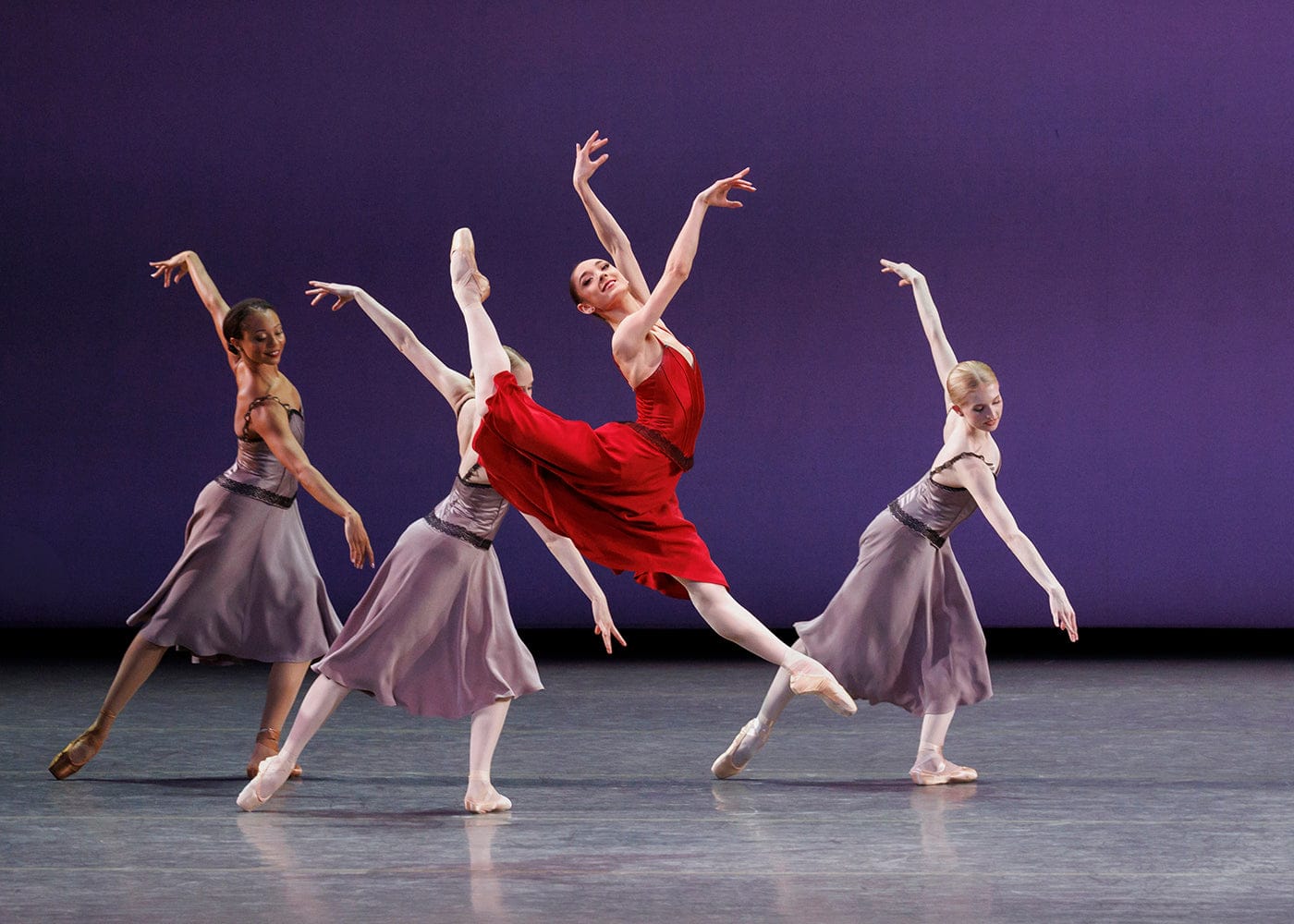
The costumes were by Robert Perdziola who may have been straining to avoid the classical “Symphony in C” connection, since the ballet has both tutus (first movement) and cocktail length flowing skirts (second and fourth movements) for the female principals and the corps, which did make the finale, with its elegant corps arrangement, feel somewhat disjointed as tutus and soft skirts intermingled like creatures from two different worlds.
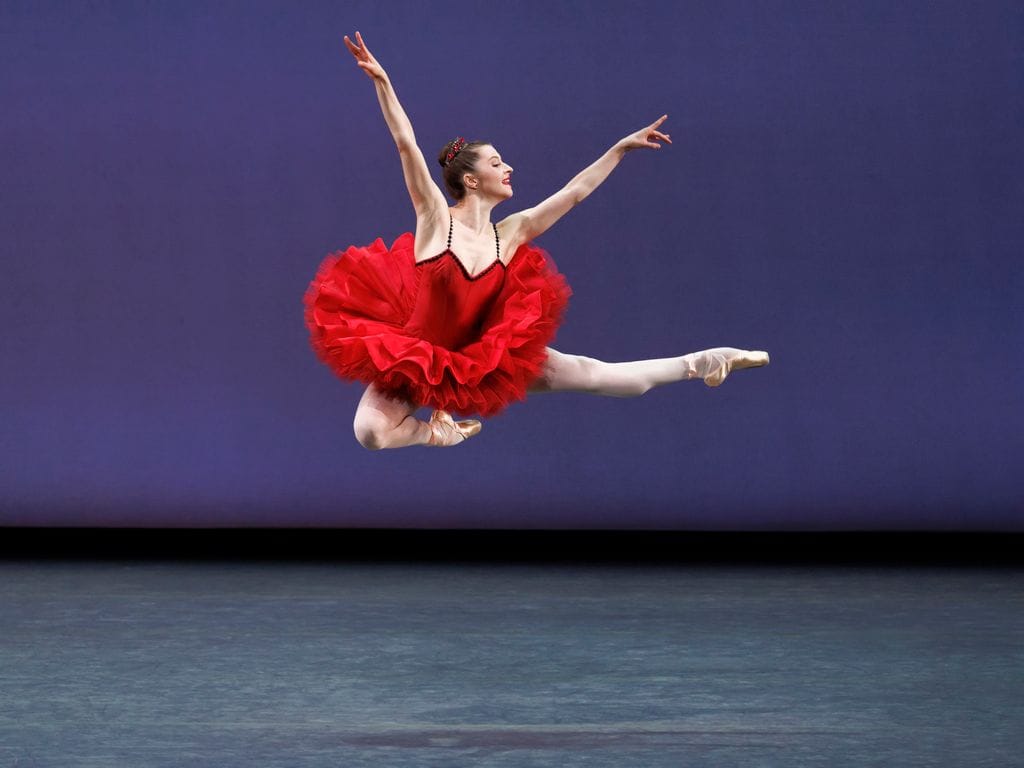
The first movement tutus were beautifully cut, smokey mauve for the corps, with a jarringly contrasting red one for the principal woman, a red so bright that it would send Kitri running for sunglasses. Woodward and Gabriel sparkled in their pas de deux, welcoming the audience. Woodward was especially gracious, using her warmly elegant upper body to create soft little musical accents and she flicked through her solo with elegant little steps and explosive jumps, and von Enck’s clarity made every step picture perfect, with elegant, musical little pauses.
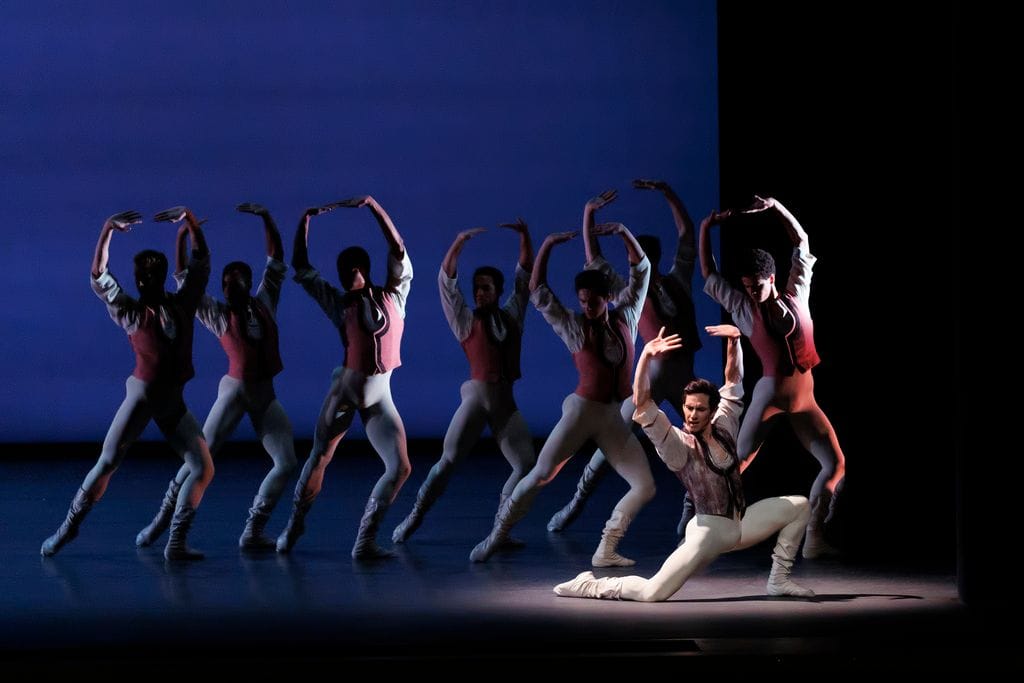
Walker, a young corps dancer with long legs and luxurious arms, danced with a riveting command in the second movement; Peck’s confidence in her was completely justified. Nadon gave a daring sense of freedom in her quirky flat-footed moves, as if she were just making things up on the spot. Mejia and his male cohorts gave the third movement a Spanish flair, dancing as if they had invisible cloaks. Mejia tossed off a number of traditional male bravura steps, but Peck kept the choreography soft, so the dancing seemed light and effortless and Mejia seemed to float from jump to jump, matching the delicate power of the music. He did give the audience a slight nod of satisfaction, more of a gleam than a grin—there was no “Eat your heart out, Basilio!” aura about his dancing, just pure unaffected joy. Tomash had a different take, dancing with a solemn majesty, as if he were a matador facing his last bull. It was a moving and sombre interpretation.
The couples in the fourth movement also had their own individual interpretations. Lister, with Chan, was a mystery, pulling away from her partner, as if she were not really there. Nadon and Tomash danced their pas de deux like a burgundy dream, as they relived some hidden sorrow, separating and reuniting with dramatic lifts, until Nadon seemed to expire. They were accompanied by three other couples in the background sometimes echoing, sometimes watching their moves. This gave the choreography a stylized, timeless elegance, avoiding any overheated, melodramatic feel. Both Nadon and Tomash gave powerfully restrained performances; Nadon living each moment and Tomash watching, supporting, and focusing on his partner; he has been a magnificent addition to the company. He is, however, a guest star, and guests do eventually leave. If this is his last New York season, then, thinking of his dignified elegance, I wish him bon voyage, but, remembering his warm, raucous debut in “Western Symphony”, I wish I could say “Howdy, partner!”
© 2026 Mary Cargill



