Mama Anabella
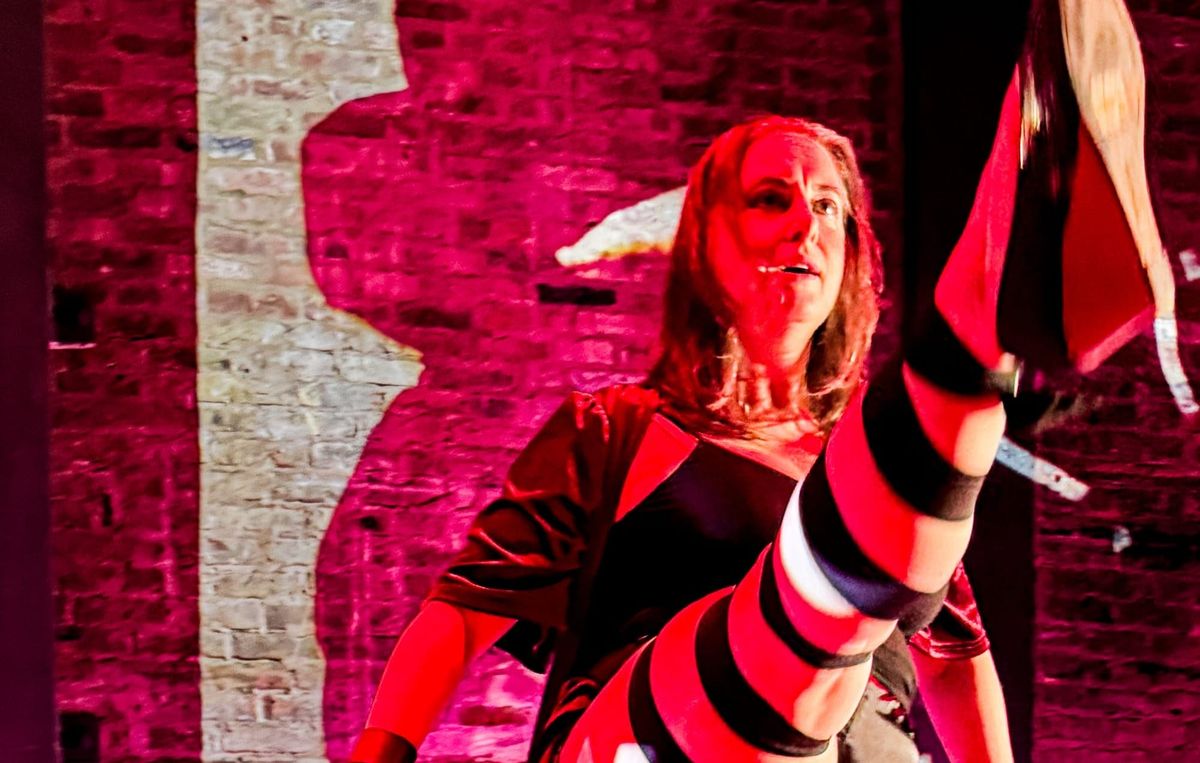
Distance / decay / by Pioneers Go East Collective
Anabella Lenzu, choreographer/performance artist
Gian Marco Riccardo Lo Forte, director & filmmaker
LaMama Experimental Theatre Club
New York, New York
May 8, 2026
In the unlikely event that women ever achieve equal rights in America, someone should put up a statue of Anabella Lenzu. In her new solo, she dances the full scope of humanity in female form.
Distance /decay / begins in captivity. To a sound track of solitary, sad poetry by the late Argentine feminist Alejandra Pizarnik, Lenzu adds the scratch of a live microphone on her tight sequined party dress. She circles her breasts and digs into her belly, searching for the life within. She strips off the glitz, down to a leotard and bare legs, but then has to tear up a series of pictures and diagrams that cover her torso and face. Gaining strength with each false image that falls to the floor, Lenzu picks up a huge megaphone, shouts into it, but abruptly gives up and covers her head with it.
What follows is a demonstration of the power of dance drama. Lenzu dons a deep red cape and performs a slow, fierce tango. Then she straps her legs like a Roman gladiator and marches with soaring battements across the stage, slashing the air with her cape like a bullfighter. Rocked back in our seats, struck dumb, we watch as she exits and a minute later returns with a sweet smile and a modest bow—once again a mother, teacher, artist and friend.
A double immigrant from Argentina and Italy, Lenzu radiates the warrior ethos of ancient Rome and the steely dignity of flamenco and the bull ring, without losing a drop of her maternal warmth and intelligence. Grazie, Anabella. We get it.
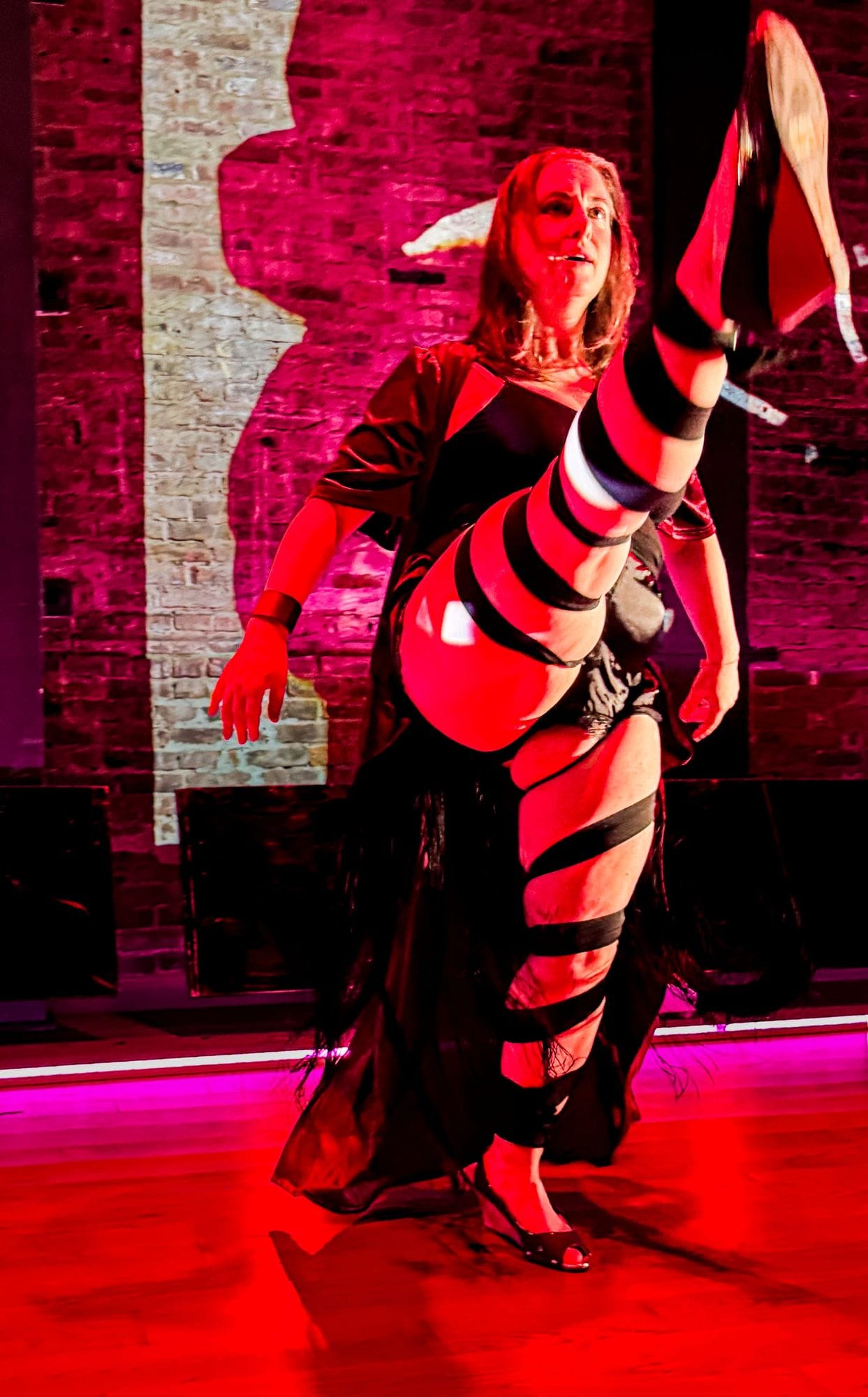
Distance / decay / was half of a double bill called Crossroads, put on by the Pioneers Go East Collective as part of the LaMama Moves! Dance Festival. The other half was a work-in-progress by the comic dance team of Miranda Brown and Noa Rui-Piin Weiss, with a title of keyboard gibberish. The program says they realized that their silly dances may go down in history as "art under the rise of fascism in America," so they thought they'd write some grants about that.
Their work-in-progress is two dancers doing their best to follow orders from an offstage voice, which starts out friendly but then becomes increasingly demanding and ruthless. Many of the results are funny, such as Noa's attempt at 32 fouettes. They go along with a prompt to torture each other, with mental cruelty and slaps in the face. But they have a problem when told to kill someone.
It's a subtle satire, mocking the powers-that-be both human and artificial. But there's also a bit of self-mockery in the idea of writing grants about art under fascism. This show is more like fascism under art. Trump can have the Kennedy Center. LaMama will mock on, rock on, and outlast them.
copyright © 2026 by Tom Phillips