Dark to Light
"Continuum", "Each in Their Own Time", "Distant Cries", "Concerto DSCH"
New York City Ballet
David H. Koch Theater
New York, NY
May 1, 2026
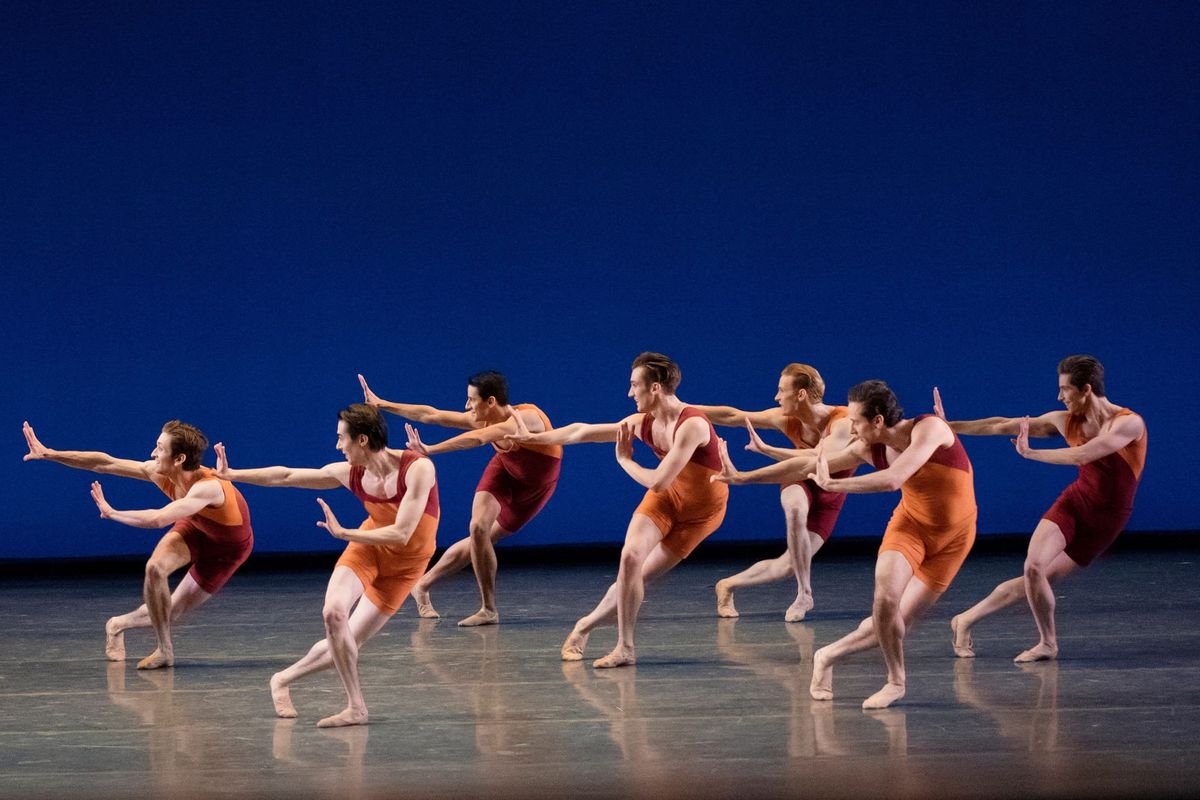
NYCB’s programming has had some ups and downs this season, and this program, called forthrightly “Contemporary Choreography III” (Contemporary Choreography I and II were danced in the Fall and Winter seasons respectively so it seems that one contemporary collection a season is allotted), opened with three rather dark and knotty works, which, perhaps coincidentally, were originally made for other companies. The evening opened with the NYCB premier of the dark , dense, and lengthy “Continuum”, Christopher Wheeldon’s 2002 work for the San Francisco Ballet. The middle section had two darkly lit pas de deux, Lar Lubovitch’s “Each in Their Own Time” which he choreographed for the 2021 City Center Fall for Dance season, and Edwaard Liang’s “Distant Cries”, made in 2005 for Peter Boal’s small company. The lights came on in the final work, Alexei Ratmansky’s exuberant “Concerto DSCH”, choreographed in 2008 for NYCB.
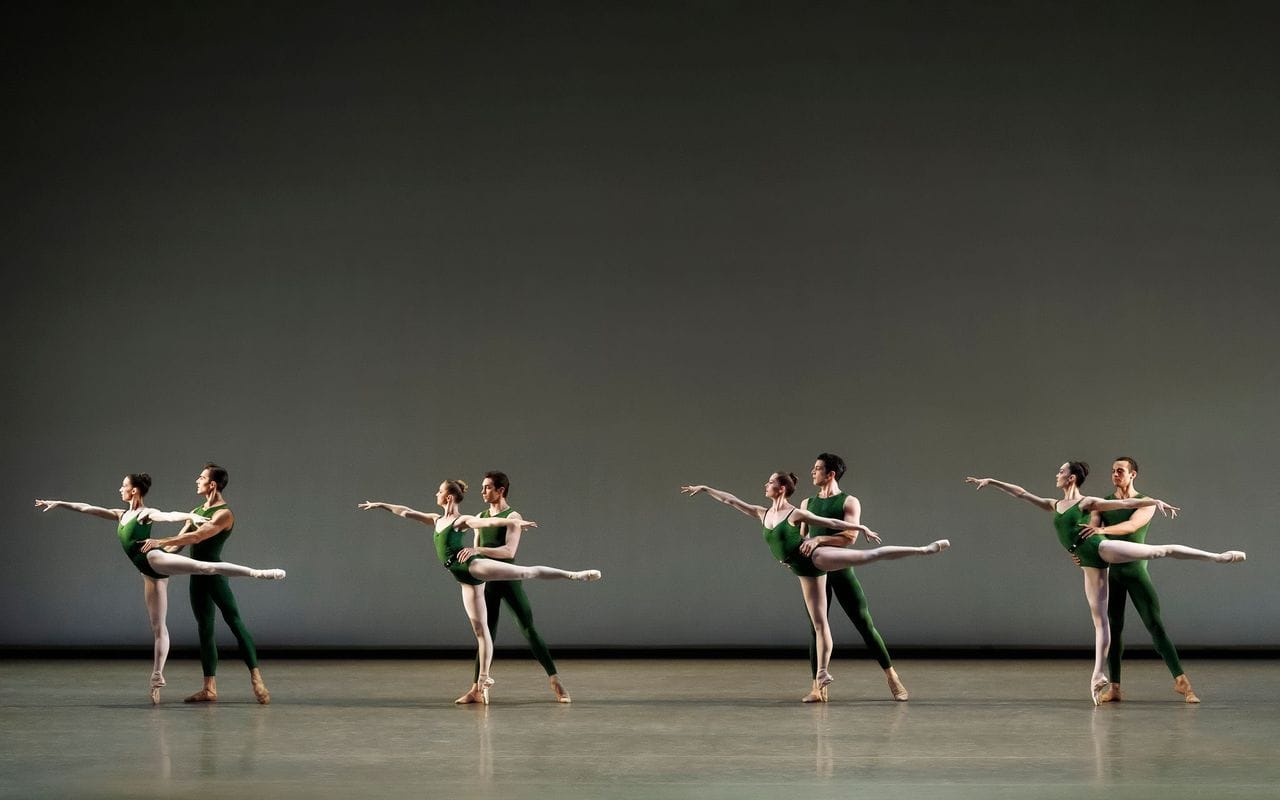
“Continuum”, set to one harpsichord and nine piano studies by György Ligeti, sturdily played by Stephen Gosling and Alan Moverman, had four couples (Mira Nadon with Ryan Tomash, Alexa Maxwell with Davide Riccardo, Emma von Enck with David Gabriel, and Unity Phelan with Gilbert Bolden III) in emerald green, the men in unitards and the women in leotards. Most of the ballet consisted of pas de deux with the spiky, off-center eccentric moves amplifying the subtle rhythms of the music; the “Xs” formed by the women as they were lifted by their partners at the beginning and the end were a sharply punctuated statement. There was an especially masterful rhythmic male pas de quatre, where the four men linked arms, moving like space-aged Morris dancers.
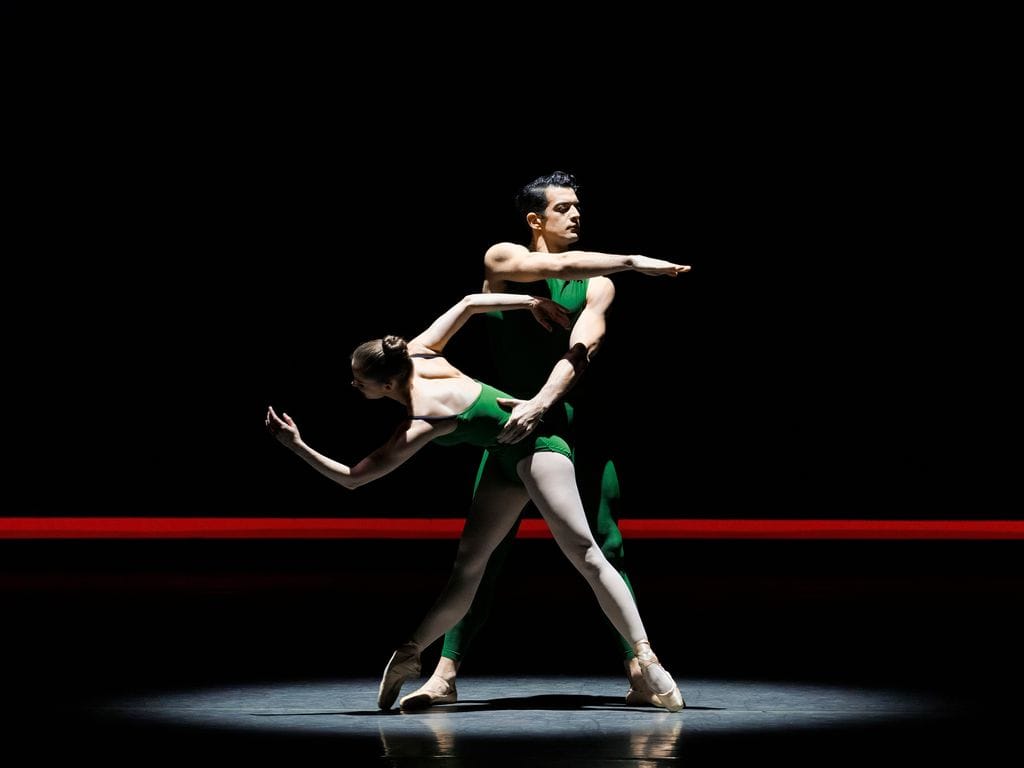
The couples got two pas de deux, which was a bit too much of a good thing; the quirky moves were impressive and interesting but the repetition and the overall darkness did tend to blunt the effect and at 40 minutes, the piece seemed unnecessarily long. The dancers, though, were dynamic and committed and gave their dancing both a slightly distant abstract air and an underlying emotional tug. Nadon and Tomash had an odd waltz, with revolving flexed feet and upside-down lifts and a moment of stylized disagreement which was both haunting and sorrowful. Their second pas de deux, to shimmering harpsichord music, had a meditative, listening quality, as they raised their arms to the descending black curtain. Maxwell had a moody solo, seeming to be trying to break free from Riccardo. Von Enck and Gabriel were an animated duo, rolling, crawling, and breaking into jazzy walks, while Phelan, with a sympathetic Bolden, was all yearning arabesques and broken lines.
The ending was striking, with the lighting giving the dancers enormous shadows coming and going on the backdrop as the women were lifted into those “X” shapes. It is a substantial addition to the repertoire, full (almost too full) of interesting ideas, but it made a heavy opening to the program.
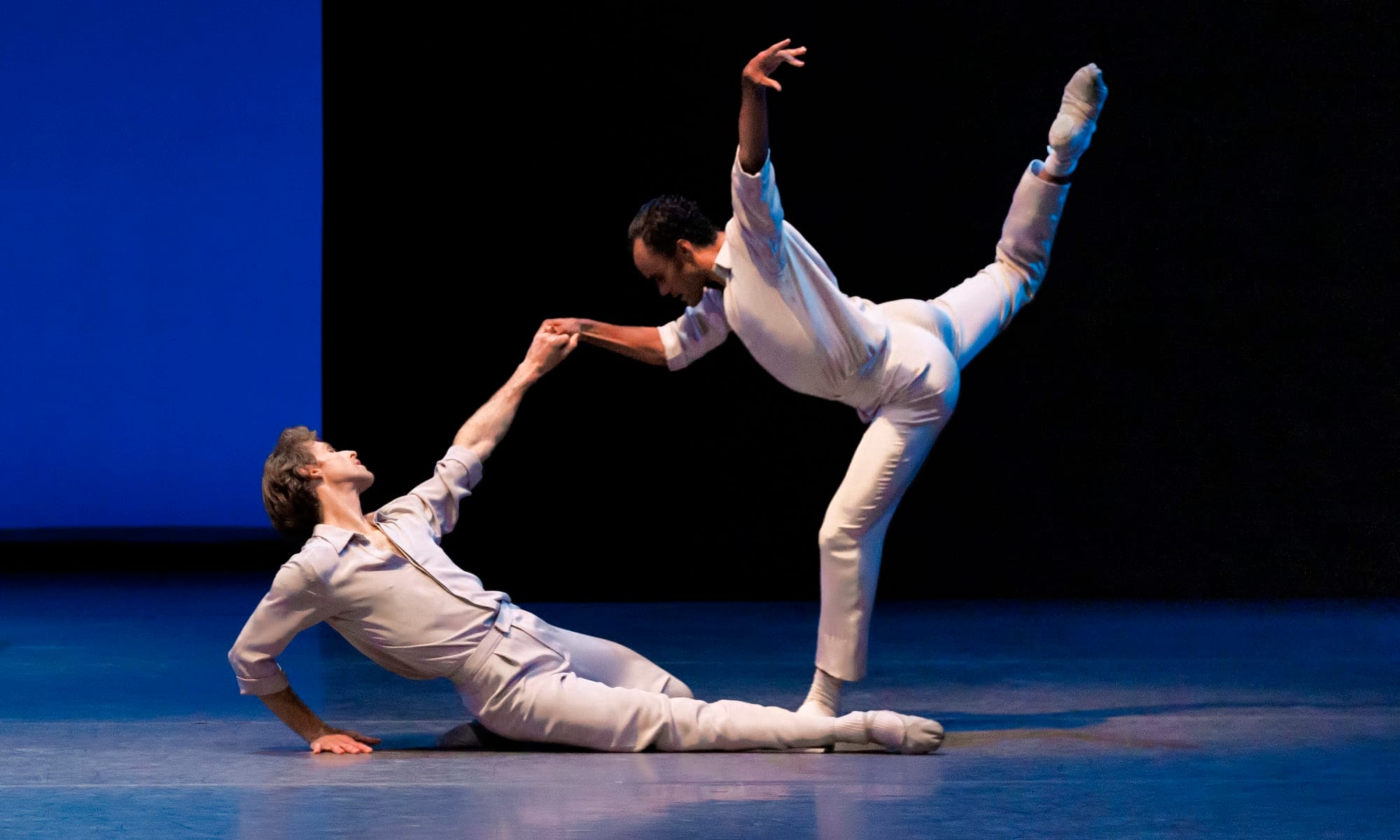
Lubovitch’s obliquely titled “Each in Their Own Time”, first danced by NYCB in 2024, also used piano music, this time by Brahms, selections from his "Eight Piano Pieces', played by Hanna Hyunjung Kim. She, and her grand piano, were center stage, flanked by Adrian Danchig-Waring and Taylor Stanley, who were standing in pools of light listening to the music and looking rather moody. Yes, there were certainly echoes of Balanchine’s “Duo Concertant”, not to mention the Trocadero’s “Yes Virginia, Another Piano Ballet”, but the soft, round shapes, the light, airy jumps, and the contemplative restraint of the dancers eliminated any overly sentimental tinge. Both dancers have announced that they will be retiring next year, and their every performance is a chance to say goodbye and thank you—this was a fine way to do so.
They were both dressed in casual tennis whites, which made them resemble marble statues come to life and they both had brief solos; Danchig-Waring's was more athletic and Stanley's more lyrical. The choreography showed of their pliant flexibility as well as their command of the stage, and the work, with its ambiguous ending (Danchig-Waring reaching out to Stanley, holding him by the leg as he seems to be exiting), had a haunting beauty.
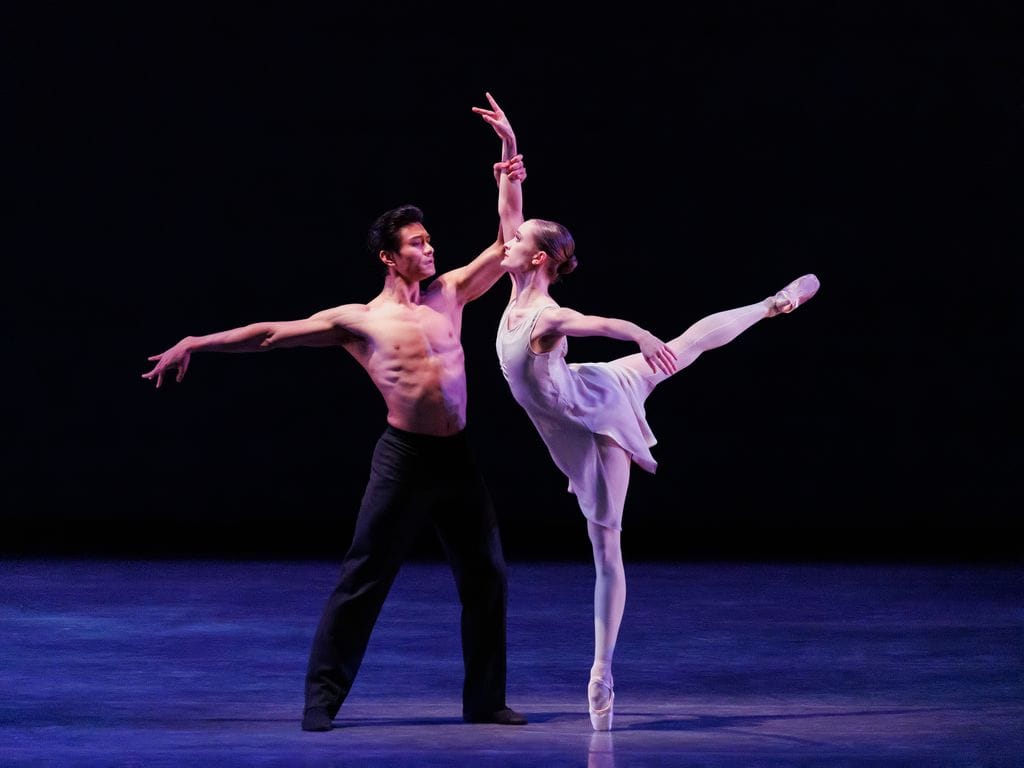
There was much haunting and an odd beauty in Liang’s “Distant Cries”, a pas de deux he made for Wendy Whelan and Peter Boal, which premiered at the Joyce in 2005. The two dancers also performed it at NYCB that year, the year that Boal retired. It was revived this season, presumably at Whelan’s suggestion, and Ruby Lister and Chun Wai Chan danced the opening performance. Lister, still in the corps, dances with a fierce intensity (so, of course, did Whelan) and had a cool command as an opening shadow in the dark, sweeping her arm; her concentration didn’t flag, even in the opening confusion (it appeared that the conductor was a bit late in arriving), and she repeated the move even more forcefully.
The music, to the baroque composer Tomaso Albinoni, is pleasantly lighthearted, and is either an intriguing contrast to the fraught choreography, or irrelevant background music; either way, the steps seemed to have little connection to it. After the powerful opening, with Lister using her legs like bolts of lightening, the shirtless Chan emerged from the gloom, possibly a memory of a past love, and they danced together with a powerful intensity and conflicting emotions. The choreography itself was slightly episodic, and at times cliched—Lister hid his eyes briefly, he lifted her as she walked on air, there were death spiral spins, and lots of spreading legs. But the dancers’ sincerity and commitment blazed through, and the final moment as Chan disappeared back into the mist and Lister stood alone, seeming to grip the air had a real power.
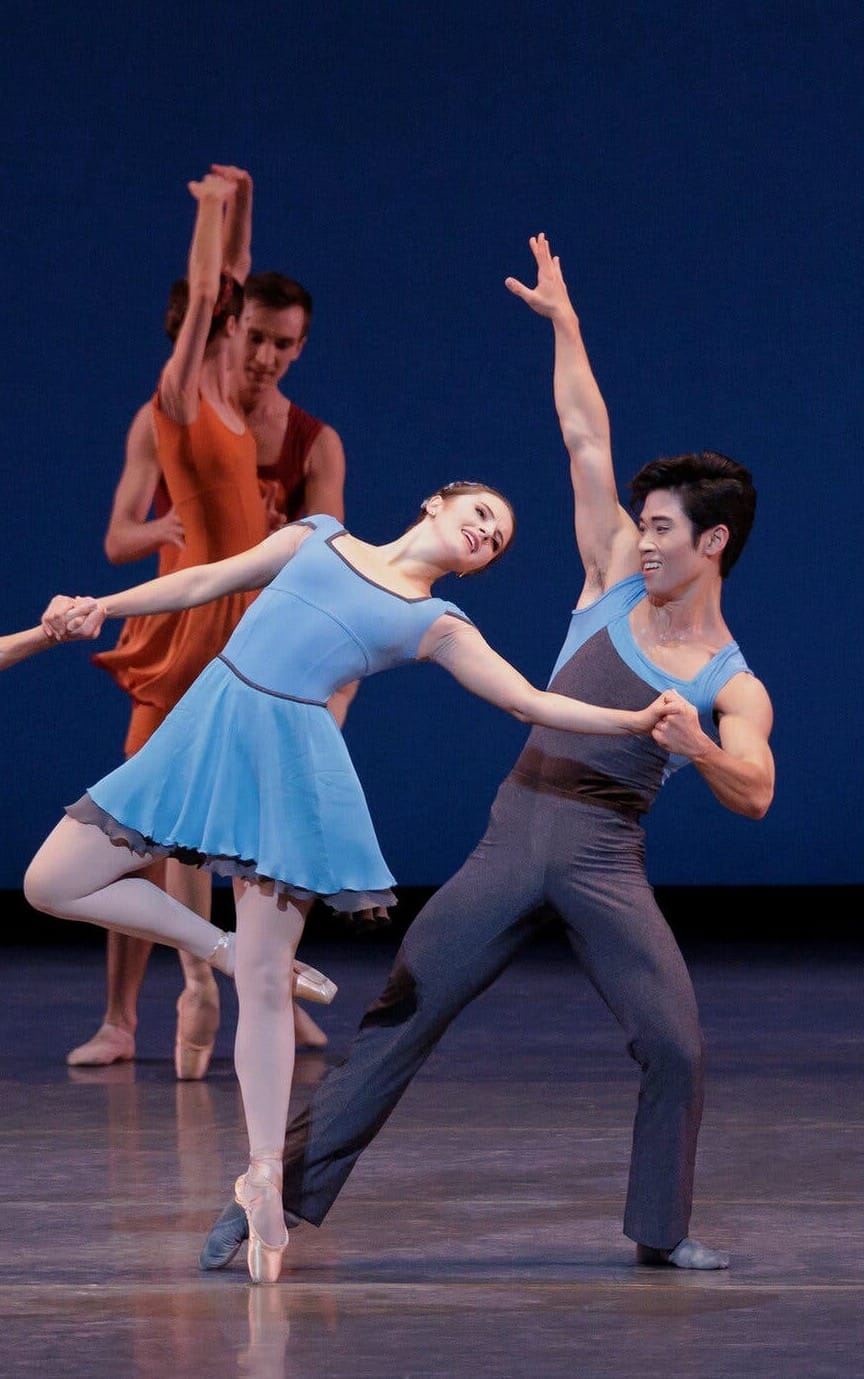
Ratmansky’s “Concerto DSCH” is another ballet that Whelan premiered, but it has had a much more robust performance life at NYCB, and its bright adrenaline made a great finale to the evening. Ratmansky set it to Shostakovich’s “Piano Concerto No.2” a bright and invigorating score, with a lyrical interlude in the middle, danced, with floating abandon, by Phelan and Danchig-Waring—they had quite an evening, as did the pianist Hanna Hyunjung Kim. The couple emerged from the bustling group to wander off into their own world, Danchig-Waring following Phelan, touching her gently on her shoulder as they fluttered around each other, seeming to walk through the music.
This quiet interlude was surrounded by some of the fastest and most exciting choreography around, as a group of three gymnasts in excelsis (Indiana Woodward, KJ Takahashi, and Roman Mejia, in his debut) bound joyfully through their jumps, turns, and somersaults. Woodward, in the role Ashley Bouder originated, didn’t have her firecracker persona, Woodward seemed more like a champagne bubble ready to burst into the air. Takahashi was a charming imp, with Mejia egging him on in a warm, friendly competition, with a slight wink to the audience whenever he pulled off some extraordinary jump.
The pure physical triumph of the choreography was uplifting, but Ratmansky’s piece also had a rigorous musicality, a complex and slightly off center symmetry that echoed the music. This was not the rich, filigreed symmetry that Balanchine used in, for example “Divertimento No. 15”. Ratmansky often had two separate groups, one seeming to dance the melody and the other the rhythm. It was as if the music had sat next to him and said “These are the steps that I need.” And that was the light the program needed.
© 2026 Mary Cargill



