Two Premieres at New York City Ballet
“Sky to Hold,” “Suspended Animation,” “Western Symphony”
David Koch Theater, Lincoln Center
New York, New York
October 2, 2021
Last week, New York City Ballet premiered two works that pointed toward an expanding reach into the twenty-first century. It is a healthy sign in a company that often seems to have settled into a narrow repertory that looks to the past in works dominated by Robbins and Balanchine, and choreographers influenced by Balanchine or the Russian school.
Both “Sky to Hold,” choreographed by Andrea Miller, and “Suspended Animation,” by Sidra Bell, challenged what some undoubtedly consider the company’s duty to the old guard. For this, one can only thank directors Jonathan Stafford and Wendy Whelan. Whelan in particular was adventuresome in pursuing new dance avenues after leaving City Ballet as a principal in 2014. With her return as associate artistic director in 2019, the repertory is being shaken up a bit. This is not to say a revolution has occurred. It is hardly that, but new directions are being explored, and they are welcome.
Miller is from the world of modern dance. After studies with Ernestine Stodelle, an early Doris Humphrey dancer, and at Juilliard, she joined the Batsheva Ensemble in Israel, founded by Ehad Naharin. She then went on to start her own group, Gallim, in New York. Naharin, in particular, helped shape her approach to choreography, which is to say, she is not concerned with creating beautiful images. Her movement can look awkward or harsh within a ballet context. But it also looks fresh and Interesting, and the dancers responded to it with conviction.
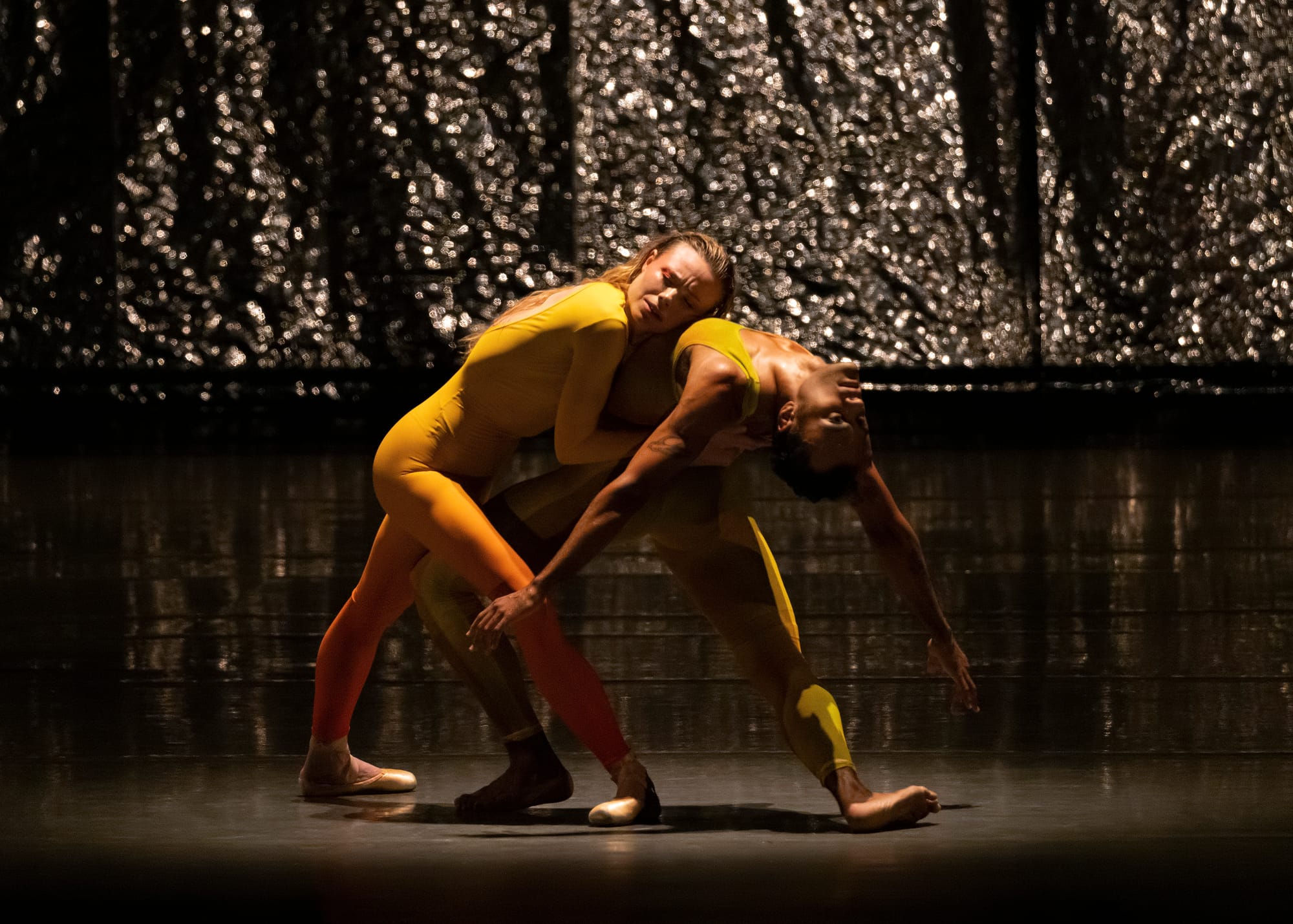
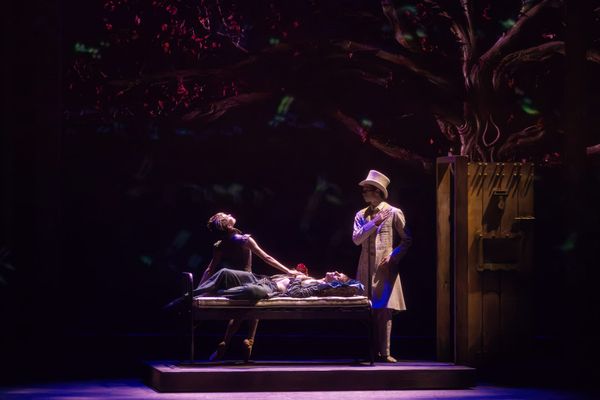
“Sky to Hold” is set to a score by Lido Pimienta, a Canadian-Colombian composer, who also served as onstage vocalist. The music tells the story of a seed that falls in love with a storm, ending in light and heat. To open the work, Miller had the dancers swirling onto the stage as if blown there. Taylor Stanley was the seed, Sara Mearns the wind. After a solo in which he uncurls and slowly becomes upright, the two meet and are separated as the wind waxes and wanes amid the intensifying heat. Throughout, the music has a strong Latin pulse that urges the dancers on and which the choreography reflects in energy. Mearns gave herself completely to the work, appearing, as always, to relish new ways of dancing. Stanley, too, was stimulated by the choreography’s unaccustomed challenges. In recent seasons he has been showing an expanding range of expression and approach to material that marks him, not just as a principal, but a star.
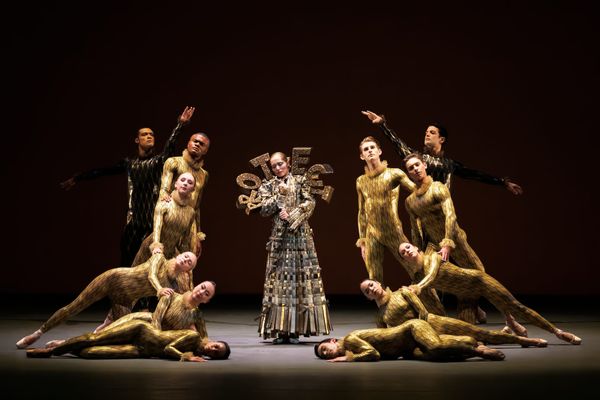
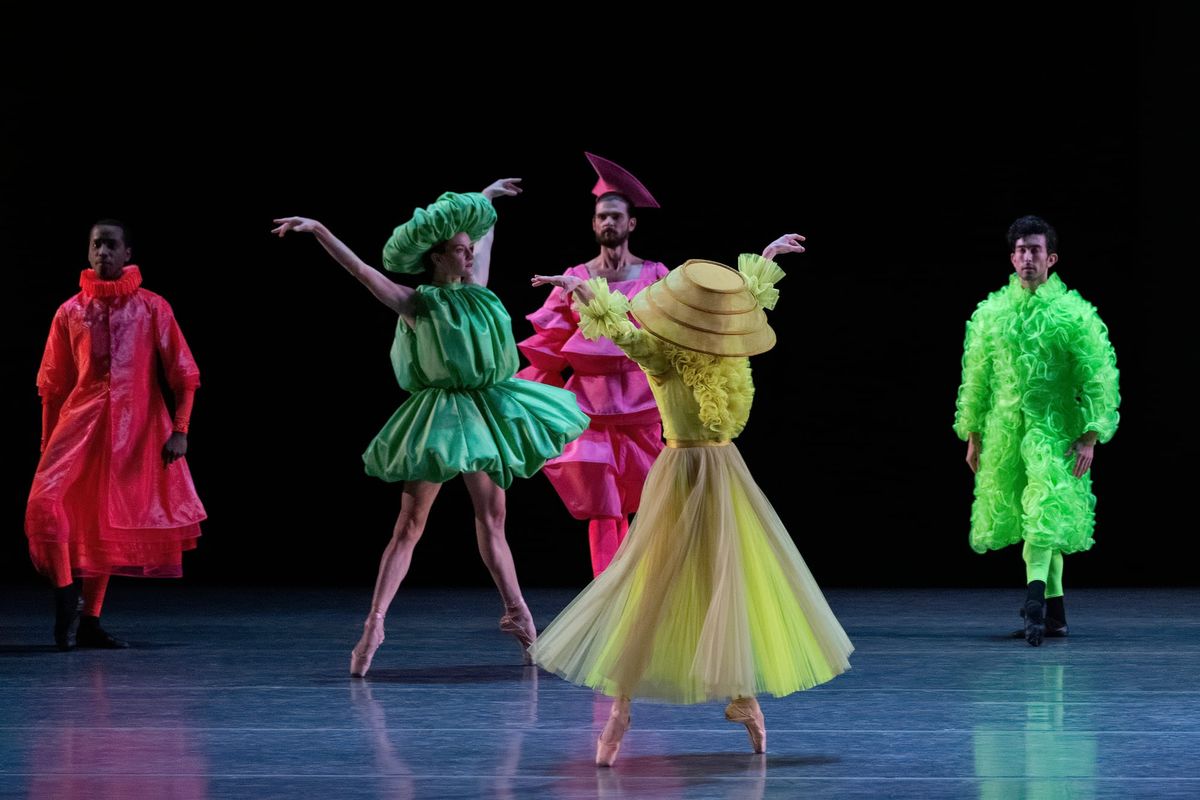
Bell, like Miller, comes from a dance background outside ballet. She is the founder of an experimental dance company in New York that bears her name. Both choreographers are unusual at New York City Ballet, in that they are women, and Bell is a woman of color. Their works were created as part of City Ballet’s annual fashion gala, so costumes had to be of more than average consideration. Those for “Sky to Hold,” by Esteban Cortazar, were diaphanous and in shades of blues, reds, and yellows, appropriate for the work and well within the usual range of ballet costuming. Those by Christopher John Rogers for Bell’s “Suspended Animation,” were far more startling. The costumes were elaborate and included headgear that in some cases resembled architectural sculptures and in others lampshades. I feared these concoctions would overwhelm the dance, but they were soon discarded and replaced with more movement compatible unitards.
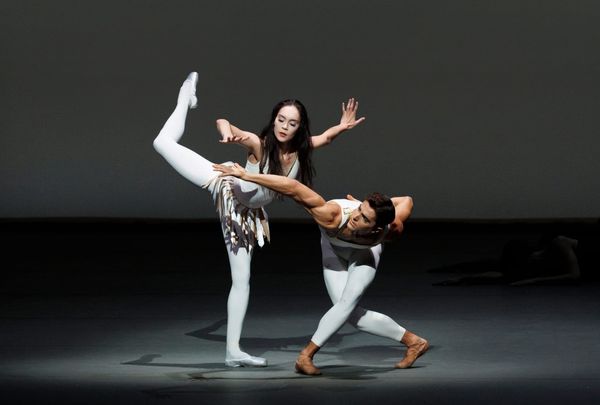
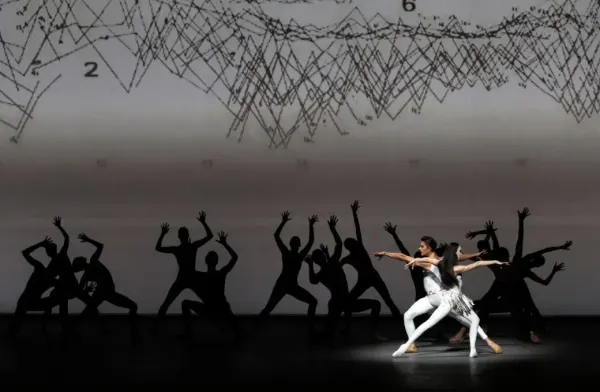
The opening of the ballet had the dancers relating to each other like the inhabitants of a fantastic society, but once the fussy costumes were dispensed with, the dance became one of abstract patterns formed and dissolved. While the music, a mix of compositions by Nicholas Britell, Oliver Davis and Dosia McKay, had the slightly inflated richness of a film score, the dance, itself, was calm, depersonalized, and a little mysterious, as if we were watching astral bodies moving in space. Teresa Reichlen was particularly memorable in a cast which also featured Megan Fairchild, Anthony Huxley, Harrison Ball, Peter Walker and Megan LeCrone.
The concert ended with Balanchine’s “Western Symphony” (1954), looking extremely dated in the company of the Miller and Bell dances. “Western Symphony” was never a major work and probably was never meant to be. In this instance Balanchine garnished a standard divertissement construction with “howdy ma’am” cowboy cliches. Concocted during the Cold War, it was, like “Stars and Stripes,” a way of hyping American exceptionalism, albeit here in a lighter, less jingoistic manner. But the ballet certainly looks time-worn, like a Hollywood mid-century musical whose charm has tarnished with the passing years.
copyright 2021 © by Gay Morris