Two Debuts in Coppélia
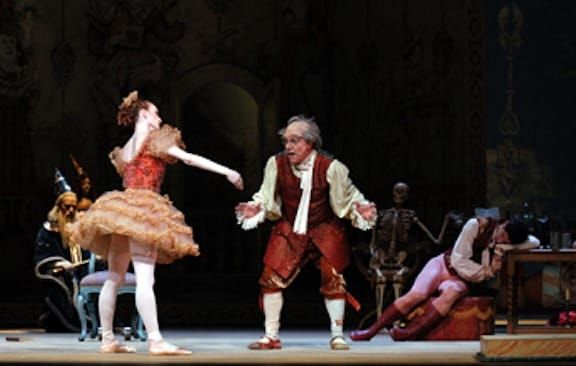
"Coppélia"
American Ballet Theatre
Metropolitan Opera House
New York, NY
June 23, 2004
Like all comedies, Coppélia is hard do put across without being condescending or coy. In their respective debuts, Gillian Murphy and Marcelo Gomes, had mixed, though technically brilliant, results. Murphy is a phenomenal technician, but playfulness and charm do not seem to come naturally, so Swanilda is a challenge. She has obviously worked very hard on the character, and the opening mime scene was thankfully not rushed. (It is, I suspect, much harder to come on to an empty stage at the beginning of a ballet and create a character through gestures and expression than to come on and dance full out.) She seems a bit too grand to capture completely the mischievous Swanilda of the second act but her dancing was pure and exhilarating. She flew through the final pas de deux, with her trademark multiple fouettés, but the final grace note, the idea that it is the culmination of a true love discovered, was still missing.
Gomes seemed more at home as the bumptious Franz, warmhearted but impulsive. This production plays down the gang mentality—the boys seem to be asking the poor doctor to go for a drink with them, rather than basically mugging him, so Franz doesn’t completely loose the audience’s sympathy, even after killing the butterfly. Gomes’ bafflement at Swanilda’s grief (after all, he wanted that butterfly as a token of her) was charming.
Kirk Peterson’s Dr. Coppélius was also charming, rather like a warm fuzzy Geppetto in Walt Disney’s Pinocchio. He was a fussy, bumbling old man, which suited the light-hearted production. I missed, however, the slightly sinister edge that can give some depth to the story. There was not any real feeling of awe and danger in the second act, no implication that Franz’s soul was being stolen, and thus no real sense of relief when he came back to life.
The corps got to show off their impressive skills as character dancers, and both the mazurka and the czardas (both led by Erica Fischback and Sascha Radetsky) looked very good. Swanilda’s friends, too, seemed very well-rehearsed and danced with a delicate period charm—I loved the ever-so-slightly titled torsos. The final act’s allegory is somewhat underplayed (no spinner to signify work) but both Dawn (Erica Cornejo) and Prayer (Maria Ricetto) danced very well; Ricetto especially had a serene purity.
copyright © 2004 by Mary Cargill



