Trying On a New Style, With Plenty of Attitude
“The Taming of the Shrew”
Bolshoi Ballet
Bolshoi Theatre
Live Movie Theater Broadcast by Fathom Events
January 24, 2016
The live movie theater broadcast of its 2014 production of “The Taming of the Shrew” showed the Bolshoi Ballet taking a confident step into what could well be its new era. The ballet features original choreography by Ballet de Monte Carlo’s Jean-Christophe Maillot to a selection of music by Dmitri Shostakovich, and strikes a careful balance among English storytelling, Russian expression and Monaco style. Both minimalist and detailed, it is perhaps the first modern work that really feels native on these dancers, despite its abstractions, embellishments and rejection of classicism’s boundaries.
The ballet is the brainchild of the company’s artistic director Sergei Filin who, if the live broadcasts of the two men’s intermission interviews are to be trusted, nearly begged Maillot to create it for the Bolshoi. The step was a big one for Maillot who traditionally does not set original works on foreign troupes, but it likely was precisely this unique combination of the different styles and dance cultures that had the 8-week creative process at the Bolshoi result in this fresh look for the company. As an added bonus, the ballet’s gestation also uncovered wonderful and previously hidden talents within the company’s lesser known principals Ekaterina Krysanova and Vladislav Lantratov who originated and danced in this performance the leading roles of Katharina and Petruchio.
Using familiar-to-the dancers Shostakovish music, but foreign choreographic language that is both elegant and uninhibited, Maillot impelled the dancers’ individuality to speak beyond the parameters of their schooling and ballet tradition. The veiled temperaments that may have been observed in Krysanova as Kitri in “Don Quixote,” or in Lantratov as Crassus in Bolshoi’s “Spartacus” in the past, here came rushing to the surface with unrestrained and unexpected power. The tantrums, madness, stubbornness, need for attention, recklessness but also hidden want for tenderness were on full display in the many mimes, winks, pursing of lips, jerks of shoulders and handling and mishandling of those around them. It was almost as though these artists have long been eager to show these aspects of their expressive range, but were previously unable to do so with their other roles.
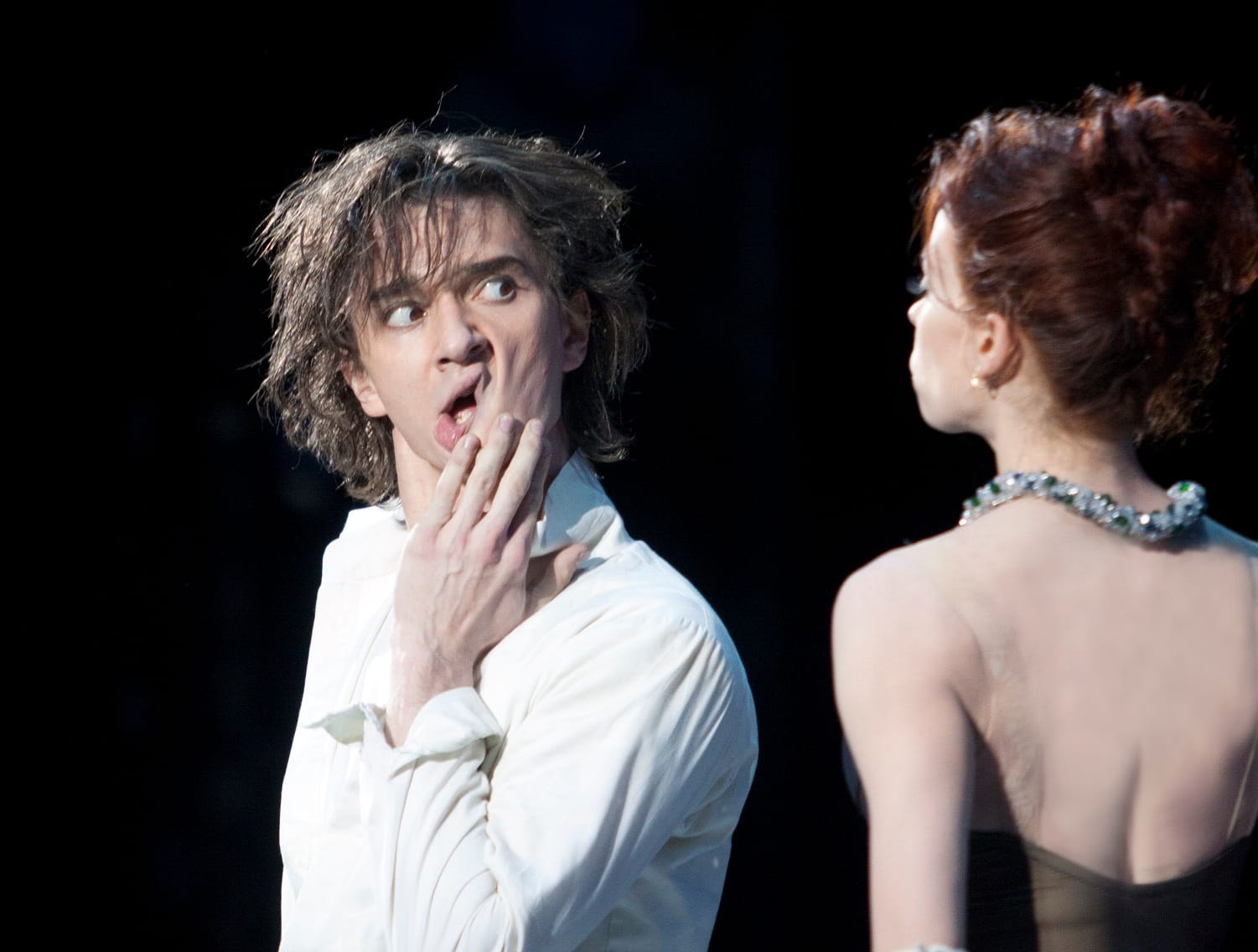
In their colorful performances they retained impeccable individuality, presenting their characters as self-sufficient and self-defined, with just a few rough edges. For Krysanova those moments came in the rebellious attempts to assert her free will and dominate her surroundings; for Lantrov, in his unpolished lack of care of what the wills of those around him may be. The two of them seemed made for each other, but it was difficult to foresee how the ultimately seamlessly reached “taming” and harmony of these two free radicals, swirling around chaotically on their undefined trajectories, could come to pass.
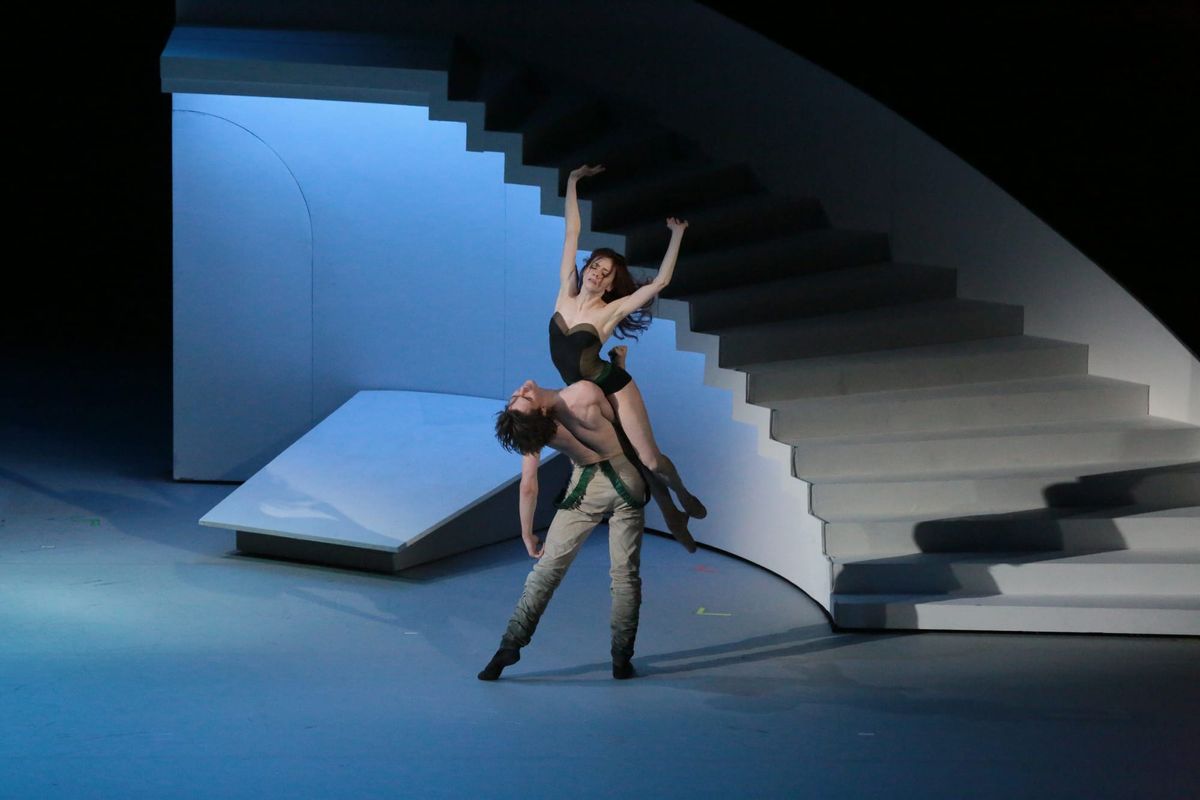
While they let their expressive palettes take over the virtually colorless and barren stage design created by Ernest Pignon-Ernest, the dancers also effortlessly presented the many complex and counterintuitively styled steps of Maillot’s choreography, with the many off-axis balances that weaved into shapes and technique-testing transitions. Physically, Krysanova’s delivery was marked by extreme athleticism through the step sequences and modern lifts, all of which she constantly spiced with varying doses of untouchable attitude and annoyance. The carefully orchestrated carelessness in Lantratov’s steps enhanced his character presentation, and at times looked like a test of Krysanova’s personage, a chance to one-up her radical quality. The interplay of these two approaches was particularly entertaining to watch in their first duet, where Lantratov grabbed Krysanova and let her fall backwards away from him, only to then take one of the arms that was now keeping her from being on the floor from underneath her, letting her fall yet again only to lift her up once more. Oh the looks shot at him by this shrew!
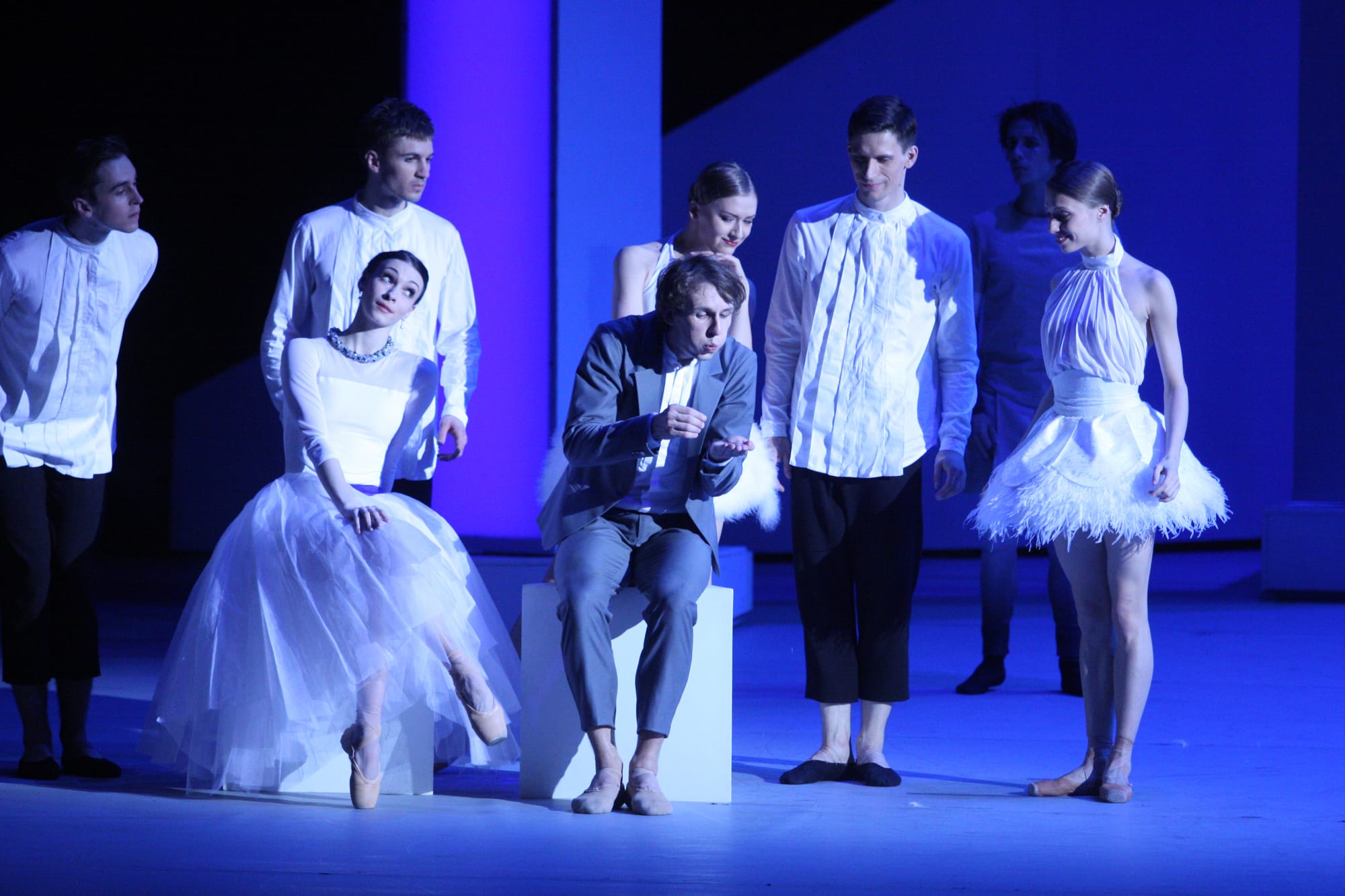
It was almost surprising that these leads didn’t overshadow the other couple in the ballet, made up of Bolshoi’s marquee ballerina and newly promoted principal dancer Olga Smirnova as Bianca and her now regular partner Semyon Chudin as Lucentio. For Smirnova, this performance was her first appearance on stage as a principal, and she danced the role she originated as someone worthy of the promotion. Setting aside her typical introverted presentation, Smirnova showed several alternative sides of herself in the dances she had with her suitors; acting dismissing to one, and annoyed with the other, but then genuinely in love with Chudin’s Lucentio. Both her and Chudin showed their growth as artists, with Chudin having cultivated his portrayal of tenderness which was most apparent in the scene where he touched Smirnova in awe, gently trying to capture her scent, and then sought to pour it all over himself in adoration. They were the softer, simpler alternative to the main leads.
Making use of not many more characters and only a handful of corps members to fill in a few scenes where a volume of bodies was needed - a typical move for Maillot, and arguably a very atypical one for Bolshoi - this ballet is the least elaborate of all of the Bolshoi’s recent productions. The company’s tradition may be grandness, expanse, and creating a tornado of a force on stage, but this was a different Bolshoi. With the “Shrew” pomp and circumstance were left in the wings, and what was presented was the freedom and excellence of this company’s artistry and abilities. The ballet proves that the company needs neither to embellish its old works, nor to reinterpret existing foreign ones to make its best contributions to the ballet world. Instead, it is the bold embrace of wholly new creations that may be where the goldmine of its future treasures lies.
copyright © 2016 by Marianne Adams



