To the Manor Born
"Ballo della Regina", "Kammermusik No. 2", "Tschaikovsky Suite No. 3"
New York City Ballet
David H. Koch Theater
New York, NY
February 6, 2016, matinee
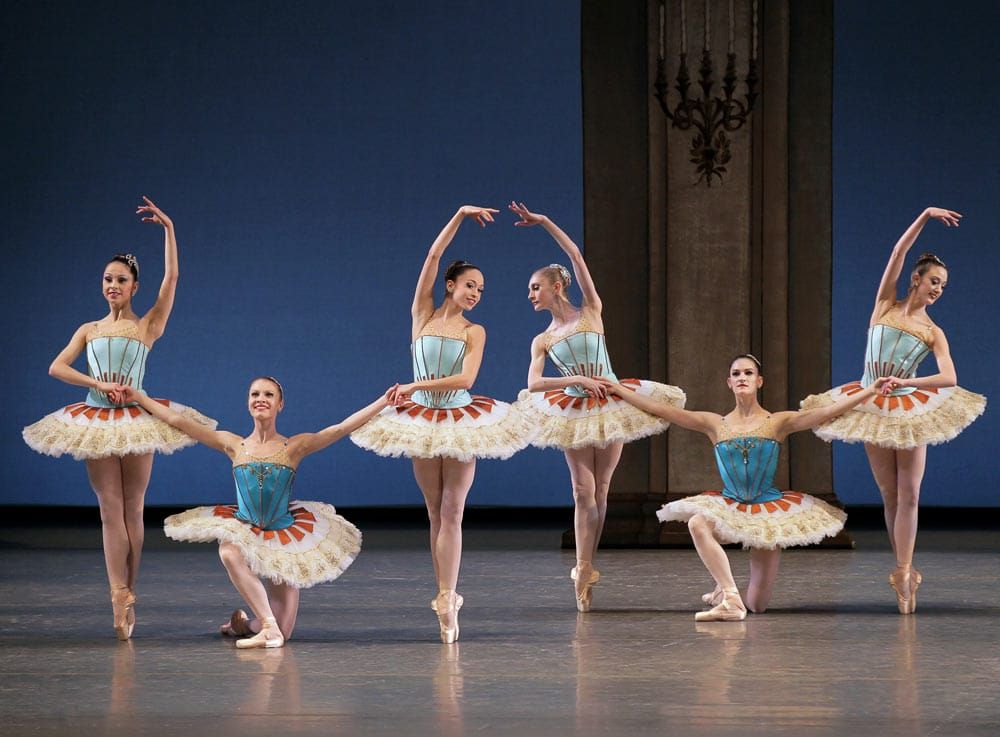
NYCB's all Balanchine program opened with a bang (Tiler Peck's debut in "Ballo della Regina") and closed with a flourish, ending with "Theme and Variations", where Balanchine appears to have made a bet that he could to "The Sleeping Beauty" in 20 minutes, a bet which he won. "Ballo della Regina" is short on plot but packed with atmosphere, supported by the frothy melodies of Verdi's incidental music from "Don Carlo". Peck and Gonzalo Garcia danced the lead couple, an abstraction of the original story of a fisherman and the pearl he found among the gems of the ocean.
Merrill Ashley, the original pearl, was an astounding technician and the role, full of quick jumps and turns, is technique in excelsis, leavened with charm and musicality. Peck, too, is a fearless technician, a bit softer than Ashley, and some of the poses, especially the strobe light arabesques in the finale, were not as sharply etched as the original. Peck's upper body, though, was softer and more lyrical than Ashley's. Peck can pause slightly at the top of a move and seem to caress the atmosphere; she clearly ruled the ocean.
Garcia was a gracious and attentive partner, unobtrusively saving a balance on one occasion. He has an especially juicy lilt to his dancing, which made up for some slightly fudged footwork. The four little jewels (Brittany Pollack, Sara Adams, Alexa Maxwell and Emily Gerrity) were all making debuts too; Adams with her flowing delicacy and Gerrity with her precise turns and noble carriage were especially notable. The corps, too, looked beautifully rehearsed, switching from the elegant little swimming moves to the charging emboîtés, so reminiscent of Petipa's corps but charged with Balanchine's modern electricity.
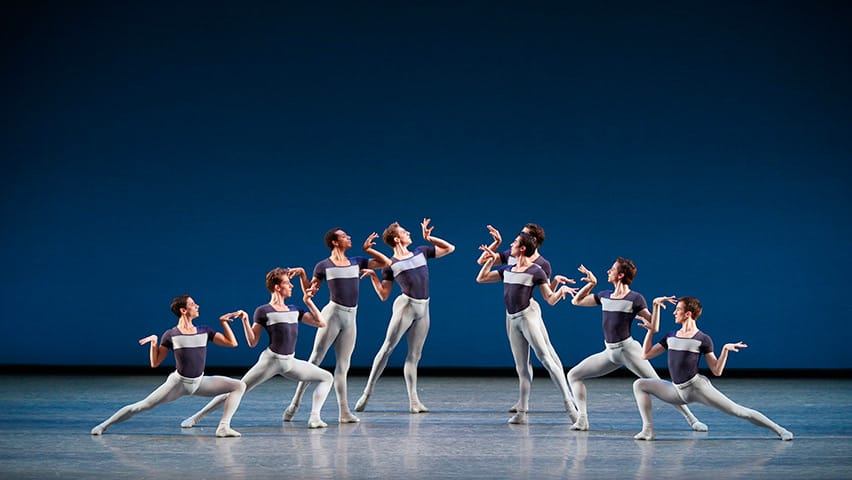
There should also be a surge of electricity in "Kammermusik No. 2", Balanchine's 1978 exploration of an all-male corps, with its echoes from the 1929 "The Prodigal Son". I once heard a member of the original corps explain that Balanchine had insisted the corps "not be beautiful". The years have softened it a bit, but the quirky symmetries of the patterns are still startling. Ask la Cour (in his debut) and Adrian Danchig-Waring were well-matched, knotty and impersonal, as they supported Rebecca Krohn and Abi Stafford. The women, unfortunately, seemed to be dancing on different wavelengths. Krohn moved life as electrified elastic band, tense yet limber, embracing the music, while Stafford was soft and pleasant, flowing through those odd shapes.
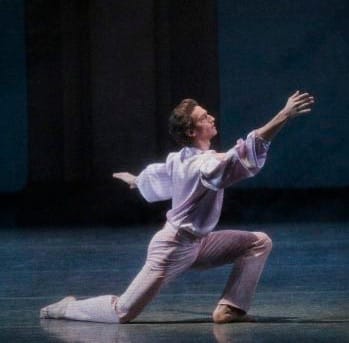
There are some odd shapes in the "Élégie", the opening section of "Tschaikovsky Suite No. 3, as the forlorn man (Zachary Catanzaro) kneeled on the floor yearning for an idealized woman (Teresa Reichlen). Catanzaro was a true Romantic hero, defeated yet defiant. The moment when he stood alone, head back, chest open and arms down, accepting his fate, was as moving and powerful as any "Melancholic" I have seen. Reichlen moved with a long-limbed, diaphanous coolness, as if she were a vision only he could see or feel. It was a magical performance.
The final "Tema con Variazioni", better known as "Theme and Variations" was danced by Megan Fairchild and Joaquin De Luz. They are both scintillating dancers, but not really ideal for the pair, who may as well be called Aurora and Désiré. De Luz has a sparkling technique which he can combine with a rich understanding of classical style and he flew through the steps without flaunting his skill; he is a dancer who can make you sigh as well as gasp. But he is a bit too short for Fairchild and he got lost behind her. Fairchild, too, is a fearless and crisp dancer who is able to shade her dancing and she was able to give the brief vision scene a silky melancholy. But she didn't dominate the stage, and was a princess, not a queen.
Copyright © 2016 by Mary Cargill



