To the Cottage Born
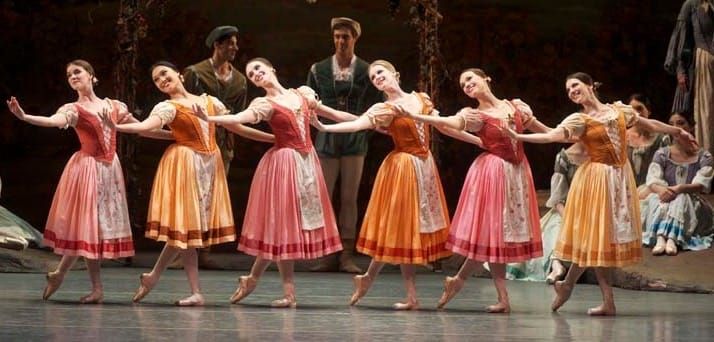
"Giselle"
American Ballet Theatre
Metropolitan Opera House
Lincoln Center
May 27, 2017, matinee
The Saturday matinee of "Giselle" was a mini-festival of debuts, as all the leads made their first New York appearances in the ballet; Sarah Lane as the doomed heroine, Daniil Simkin as Albrecht, Christine Shevchenko as Myrta, and Craig Salstein as Hilarion. None showed any hint of nerves and all gave strong, detailed, and moving performances in one of ABT's most durable classical productions.
Lane is a small dancer with dark hair and an expressive, innocent face, a natural Giselle, which she combined with a solid technique and vivid, natural acting. Her mime was clear and she had the confidence to give it time to register, but she also used her dancing to develop her character. Her opening solo began quietly and shyly, as if she were still unsure of Albrecht and it gradually became more expansive and complex as her happiness sank in. Those hops on point floated across the stage but she fixed her eyes on Albrecht, so that it seemed as if her heart and not her ankles was propelling her. She didn't chew any scenery during the mad scene, she just collapsed with a powerful, tense stillness. She really did seem to forget that the sword was on the ground and it was almost shocking to see her trip.
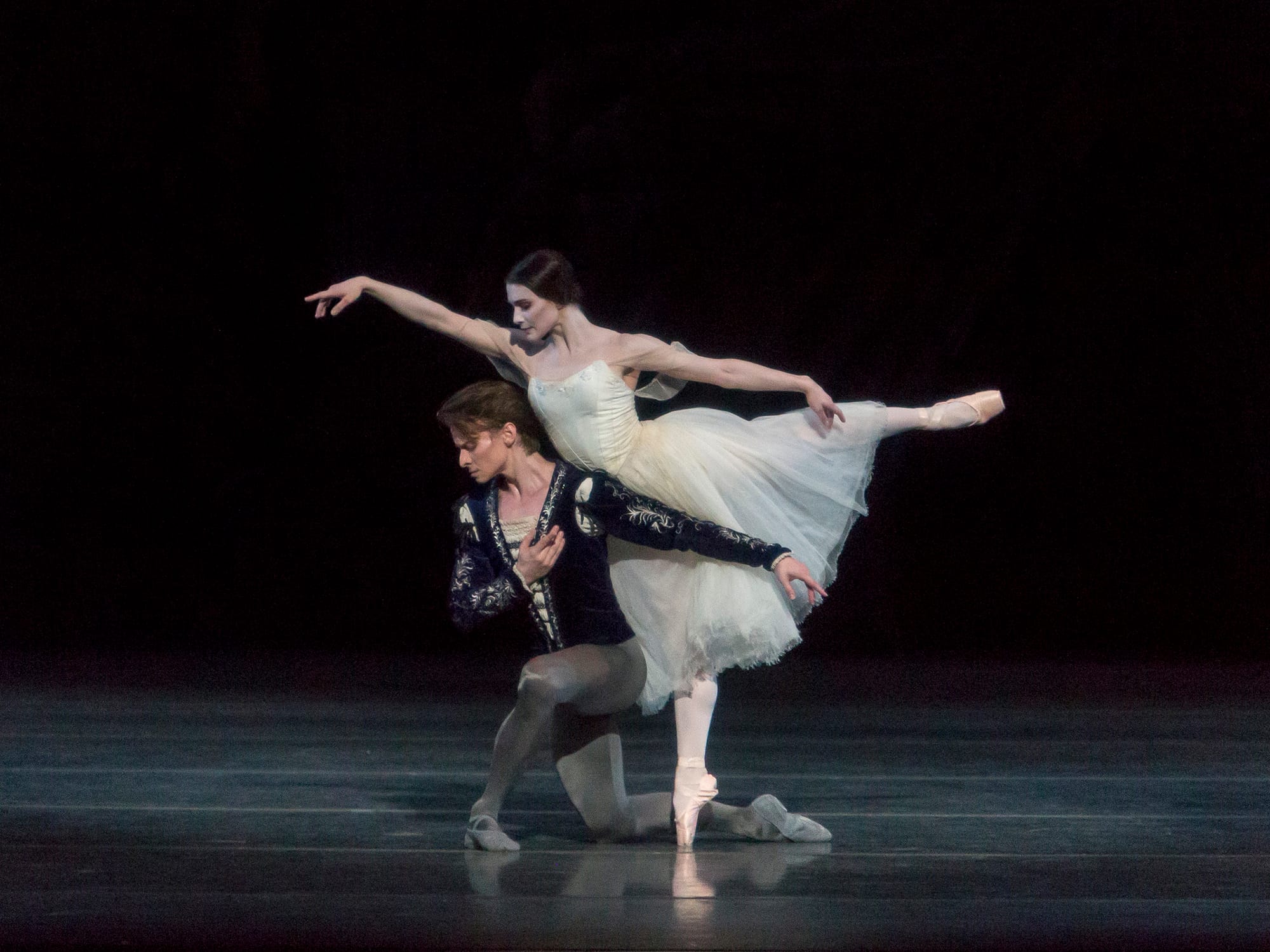
Lane's Act II, despite a few minor wobbles, was luminously danced. Her upper body hinted at the iconic Romantic poses without the "I'm ready for my lithograph, Mr. De Mille" artifice that some dancers impose. She made it seem as if her love for Albrecht kept her spirit anchored to the earth though her body floated above it, and she had a sad, fierce, focused determination to save Albrecht.
Simkin is also a small dancer with a slight frame and a boyish face which is not designed for tragedy, but he can be a subtle and imaginative actor. He had the dramatic integrity to keep his audience-pleasing tricks under control and his Albrecht never looked like was dancing on an invisible trampoline. He was very much an adolescent at his entrance, almost sulking when Wilfred (Patrick Frenette, who was especially vivid, concerned but clear-eyed) tried to reason with him.
Simkin's Albrecht was really too young to understand the consequences and he showed an adolescent's lack of control as he lunged furiously at Hilarion tossing the sword down almost petulantly once he heard the answering horn. He seemed to greet Bathilde out of spite, glaring at Hilarion as if to say "I am so much more important than you", without thinking of Giselle's reaction. There were hints of self-awareness, as he did the daisy trick, and as he turned his back when Giselle learned the truth, too ashamed to face her. This made the final Act I tableaux all the more dramatic, as he did finally turn around to accept his guilt. Simkin's second act was elegantly danced, though the vertical lifts were a bit strained. He had fast, furious brisés and clear cabrioles, but he used these emotionally, with a real desperation.
Craig Salstein's Hilarion, too, had an emotional richness, as he made the poor man a decent guy who thought the truth would set Giselle free. He made the opening of Act II especially poignant as he lay his pathetic bouquet on her grave, knowing that this time, at least, it wouldn't be rejected. I found myself feeling that for once, Giselle might have tossed him a lily too.
But all he got was Shevchenko, a cold, hard, vengeful Myrta with icy bourrées and predatory arabesques, and all of his thrilling turns were useless. Shevchenko made a very impressive debut, using those rosemary branches like flame throwers and exulting in her power over Giselle And the audience, appropriately, exulted in these extraordinary performances.
Copyright © 2017 by Mary Cargill



