To Feast, Perchance to Dream
“Who Cares?” (excerpts), “to be seen,” “Concerto Six Twenty-Two” (duet), “Lady Swings the Blues”
Fall for Dance Festival – Program 2
New York City Center (Pre-recorded Digital Broadcast)
New York, NY
October 26, 2020
There may not have been many good news for the dance world this year, but the enduring holding of the Fall for Dance Festival, even if in an abbreviated, digital format, was certainly one of them. Admittedly, in these trying times the starved audience would have been content with mere fresh performances of old works on a real stage (not that all those recordings of dancers in non-conventional places have been unwelcome!), but the Festival did one better. Rather than taking some old faithfuls out of the refrigerator and reheating them for our delights, it presented some brand new concoctions, and those dishes, along with their execution and presentation, were of the finest flavor.
The most delectable was the world premiere of “to be seen,” a City Center commission by Kyle Abraham set on Calvin Royal III, who, along with New York City Ballet’s Taylor Stanley, collaborated on the creation process. The dance, set to Maurice Ravel’s “Bolero,” was a slowed down, introspective experience of a man existing in conversation with his environment and with his thoughts. Royal, who was recently promoted by the American Ballet Theatre to the rank of Principal, moved across the stage with maturity, plasticity and a very conscientious presence to the legendary Ravel music. At times he seemed to be taking it in, at times journeying through it, with his emotional response and movement trigged by something within it. It was a path of plain, unperturbed walks with hands in pockets, but also daunting moments warranting of head grabbing, and amid that were strings of sustained plasticity where Royal’s body would weave around its axis, his legs tracing circles with ronds de jambe par terre.
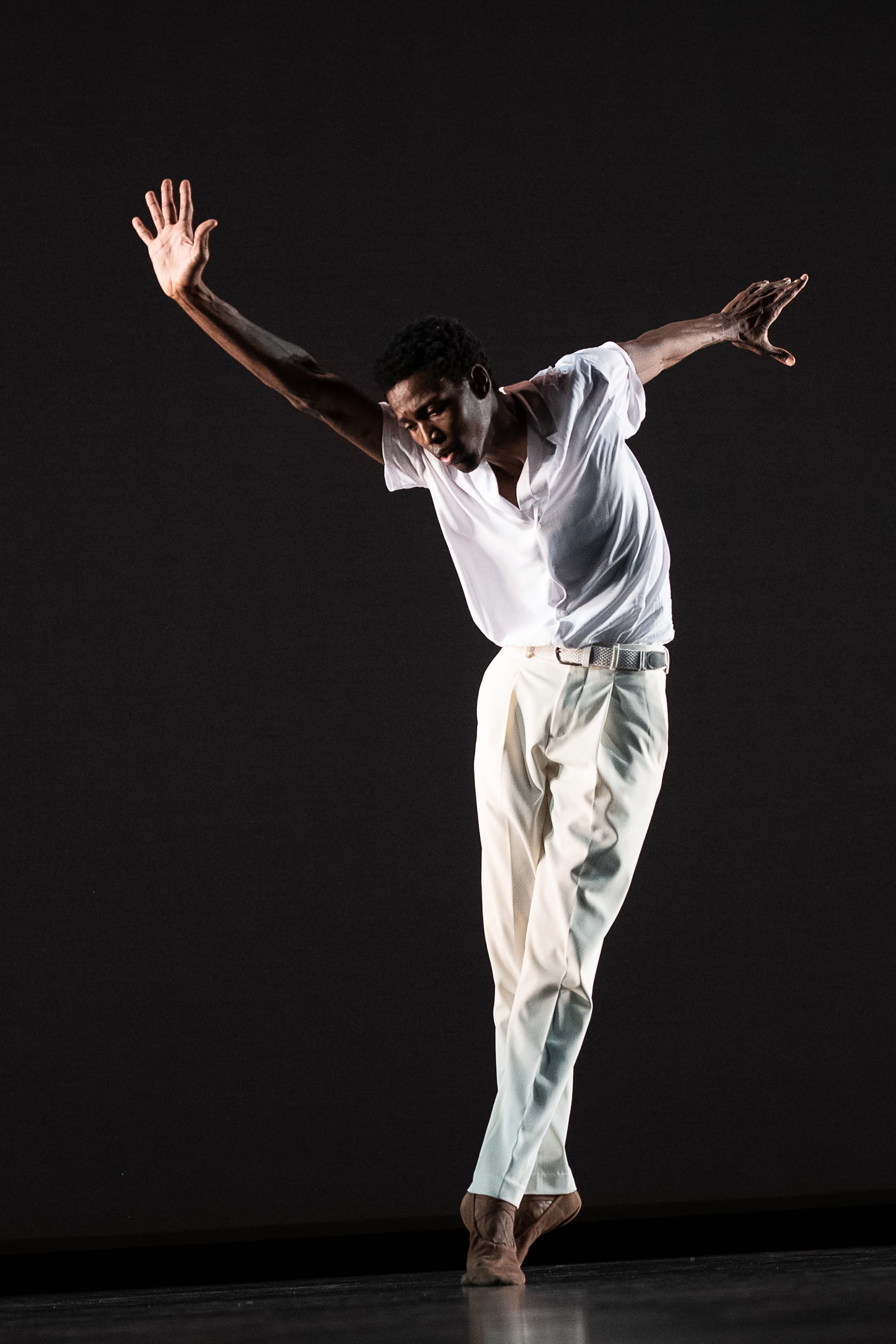
With its more introspective form, deliberately not seeking intensity as is usually the quest with this music, Abraham’s choreography gave the score itself a completely new taste. Little details like brushing off movements, as though Royal was brushing off the proverbial dust from his shoulders, or moments where the dancer would kneel on one knee and stare into the audience, simply but effectively filled out this score with nuance. It was a respectable choreographic accomplishment, as this isn’t a piece of music that can be filled with anything less than stellar movement without betraying confidences and integrity.
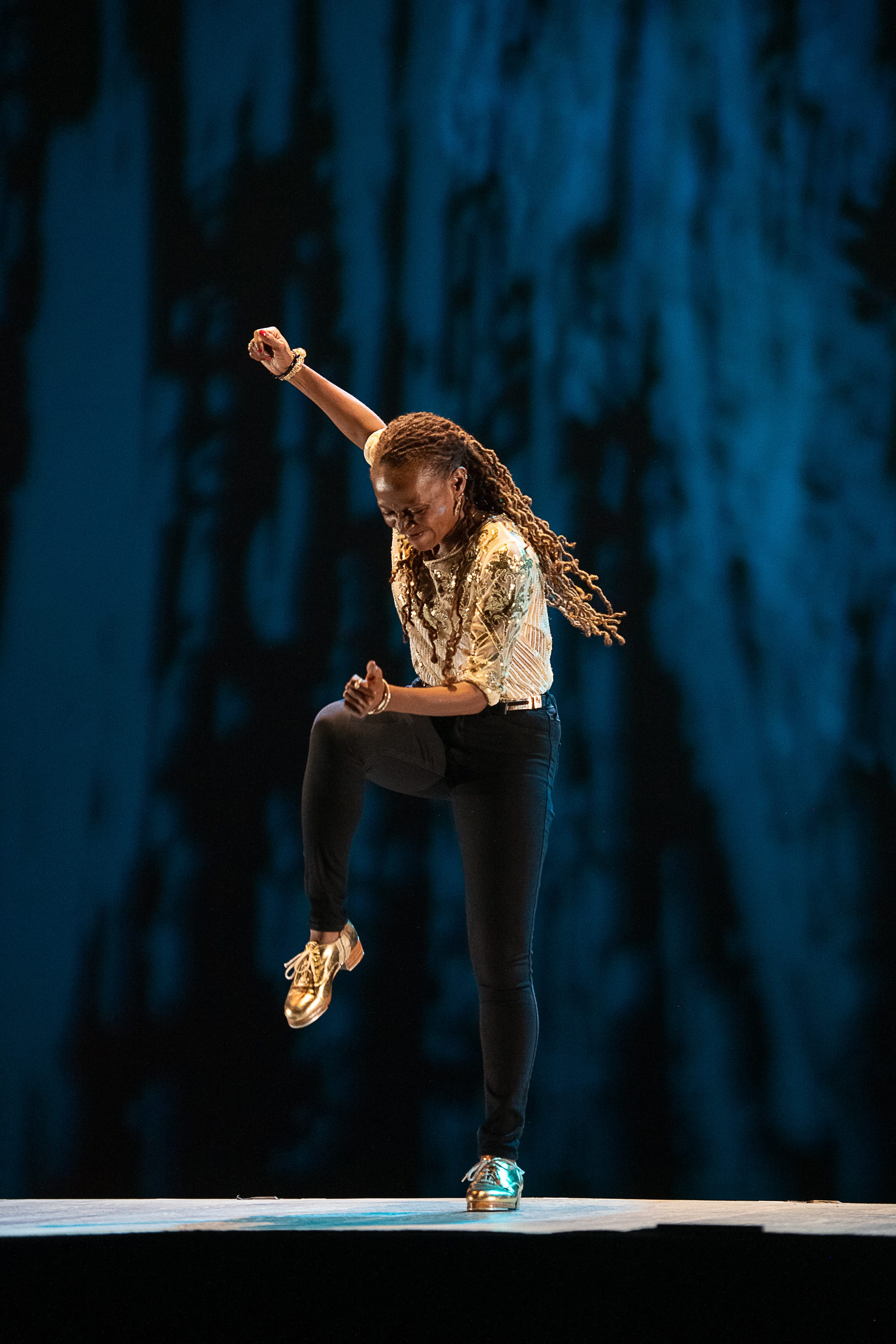
The other world premiere on the menu, “Lady Swings the Blues” by Dormeshia, somehow maintained some of the casual spirit of the Abraham work, though in a completely different way. Choreographed, conceived and performed by Dormeshia, the dance joyfully combined all those things some of us miss about the less formal arts experiences in New York. The three jazz musicians on stage reminded one of jazz clubs, the more casual flair in Dormeshia’s exceptional dancing called back simplicity and wonder of some of the city’s exceptional street performers, and the at time independent, at times interactive nature of the artists’ interactions echoed the fiercely individual, yet highly collaborative spirit of the city’s arts scene. Then there was the dancing itself: Dormeshia’s infectious immersion in the jazz music, which her feet filled to the brim with rhythm, showed such freedom that it was enough to make one long for a chance to dust off own dancing shoes and tap into some of that energy.
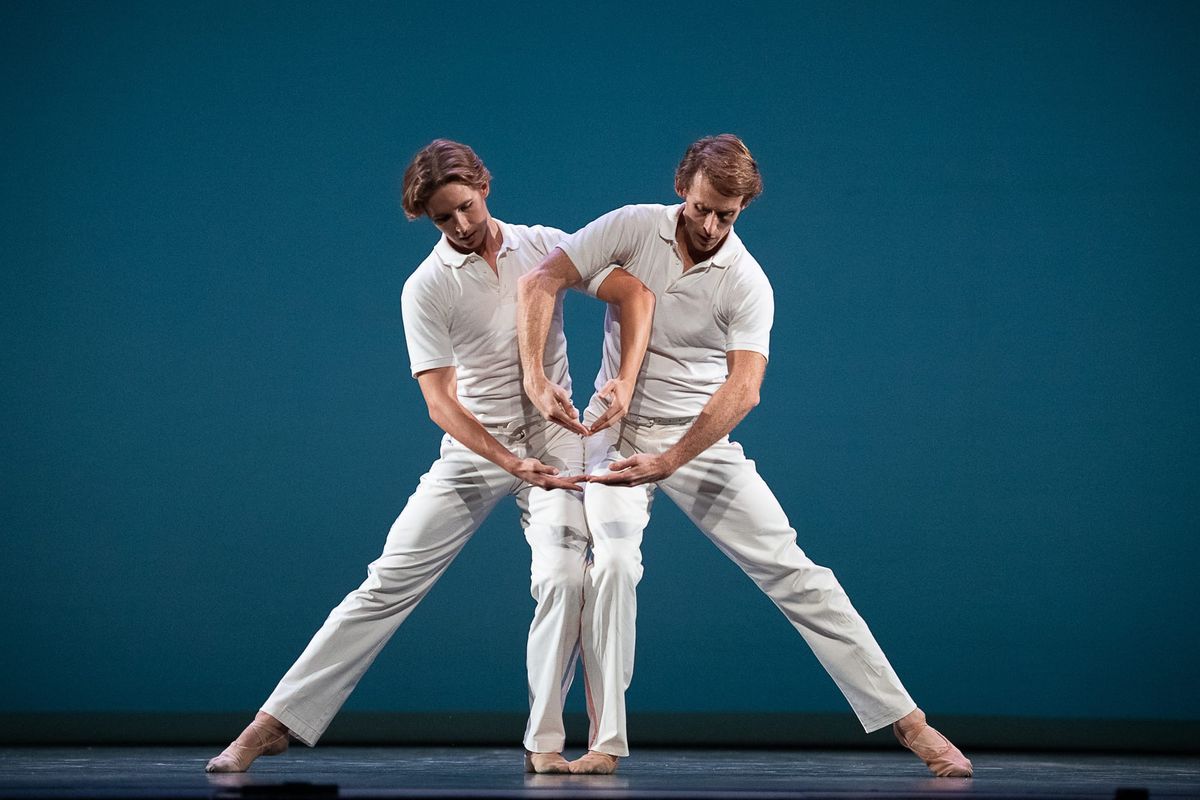
Of the older works, the duet from Lar Lubovitch’s 1986 work “Concerto six twenty-two,” performed by Adrian Danchig-Waring and Joseph Gordon, was its own discovery for those, like myself, previously unfamiliar with it. The duet was designed to reflect friendship and support during the height of the AIDS epidemic, but its tender and kind tones were both echoing of and instructive for the current times. The dancers were as much individual actors as they were a pair invisibly interconnected with some delicate string that inextricable bound them. The many slow and fragile lifts signaled the gentle and caring support that help in a crisis warrants, and the dancers added an emotional dimension to that messaging.
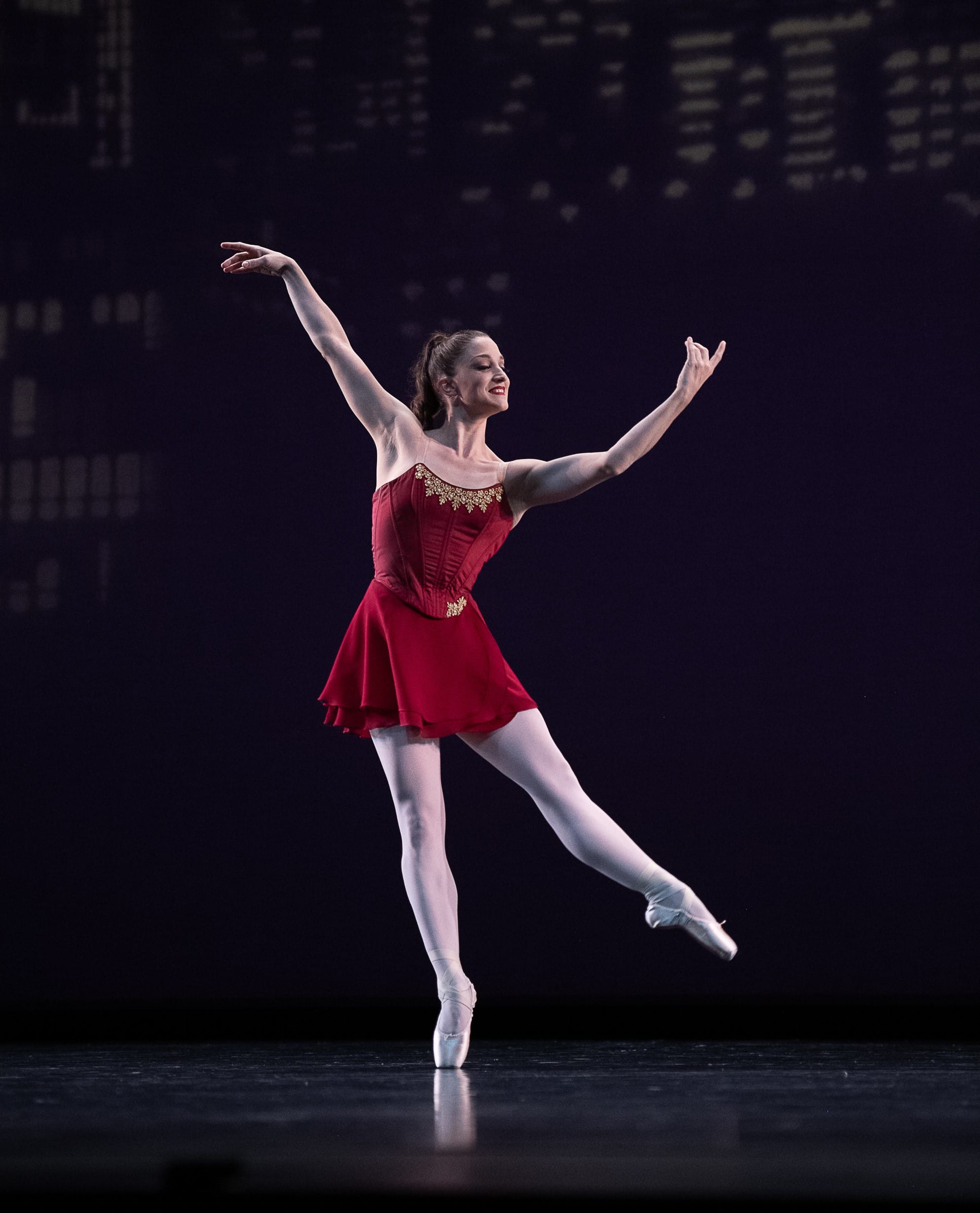
The one dish of the evening that probably should have stayed off the table, awaiting a better day, was an excerpt of variations from George Balanchine’s “Who Cares?” Danced by Ashley Bouder, Brittany Pollack and Tiler Peck, the dance not only felt odd thematically, but illustrated some of the downsides of the performing arts hiatus. While all three women showed zeal and technical proficiency, the lightness of movement, crispness of steps, and overall fitness were not what we have been accustomed to from all but one of them. Time off stage has registered differently on different dancers, and is certainly a reason to long ever strongly for their proper return to proper performance formats.
copyright © 2020 by Marianne Adams



