To Be a Pirate King
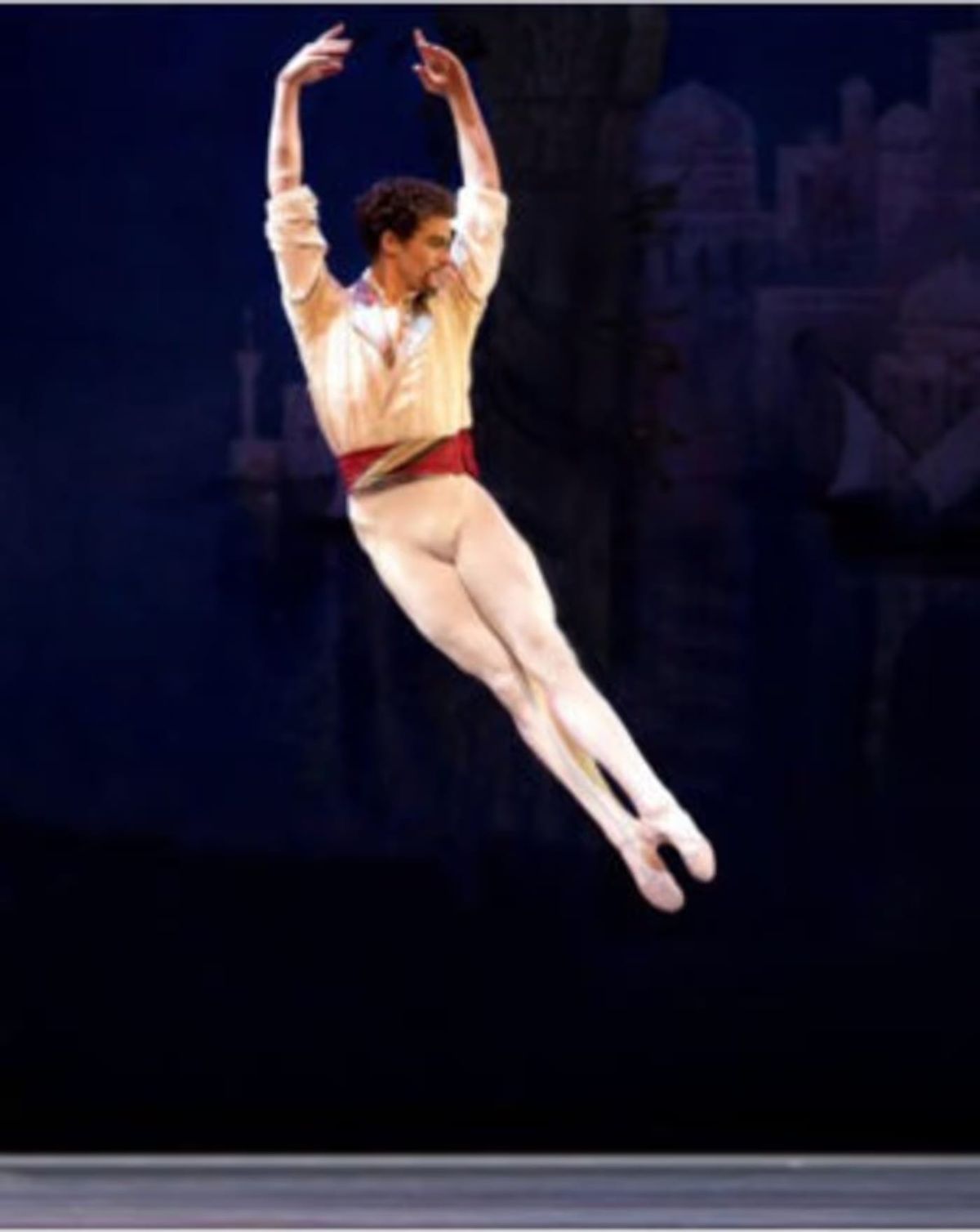
"Le Corsaire"
American Ballet Theatre
Metropolitan Opera House
New York, NY
June 1, 2016, matinee
There are pirates galore in "Le Corsaire", as well as, like Gilbert and Sullivan promise, some glorious things, primarily by Petipa, which unfortunately means the men must play second fiddle, choreographically, to the women, no matter how high and often they jump. ABT has dropped its flimsy 2013 redesign to return to its 1998 Bolshoi production. The pop-up book look of the sets has a stylized charm, though the women's tutus are not always in the best of taste, especially the mouthwash pinks and shrieking yellows of the Jardin Animé scene, but they do have a comforting familiarity.
The stirring commitment of ABT's dancers, too, is familiar, as they traded in their scythe's for swords, and there were some spirited performances, including several debuts. Veronika Part danced the frequently kidnapped Medora and Cory Stearns the somewhat thankless role of Conrad, her frequent rescuer. The nineteenth century Conrad was a stalwart if somewhat inactive danseur noble who left most of the dancing to the girls. The post-Imperial Conrad was given a slave Ali, with whom the modern Conrad must compete, dancing energetic but generic and very unmusical jumps. Rather than the skull and crossbones, his flag should read "I jump, therefore I am". Stearns can jump with the best of them, and gave his steps (choreography is too inflated a term) an elegant incisiveness. He didn't condescend to the material, playing it straight, with only a slight twinkle, and gave the dolt (who can't recognize the word "mutiny" when it stabs him in the face) as much heroic dignity as possible.
Part, too, danced with elegance and restraint, a major achievement, since she enters wearing a sequined brassiere and big pink polka dots. The rather one-dimensional Medora doesn't play to her strengths, since she doesn't need emotional resonance, but Part showed a glorious sense of fun teaching the Pasha and seemed to enjoy being lifted. Her solo in the famous pas de deux (with Conrad as the third wheel) was elegant, and her fouettés (singles with a double flourish at the end) were steady and centered, and much more exciting than a double quick start which runs out of steam.
Her Jardin Animé showed her digging into Petipa's celebration of female beauty. I especially remember her series of bourrées through the garlands lying on the floor, as she used her upper body to build excitement, ending with an upturned face catching the light; she did look like a rose bush growing towards the sun.
Gulnare, her flowery companion, was Devon Teuscher in her debut. She is tall and majestic, but made her solo in the Pas D'Esclave a sorrowful little lament for lost freedom letting her arms linger at the end of a phrase, though she certainly perked up for her thrilling diagonal turns in the coda. Her owner, Lankendem, was the corps dancer Joo Won Ahn, in another remarkable debut. He gave Lankendem a swaggering menace, so different from the oleaginous, sniveling cowardice that Vladimir Malakhov projected, though he almost matched Malakhov's confident, secure jumps into grand plié.
In another debut, Gabe Stone Shayer danced Birbanto, Conrad's greedy second in command. Even stripped of his mime, which has reduced his expression to an eternal "Curses, foiled again", Shayer's Birbanto was forceful. He was especially effective leading the Forband, that wonderful relic of real character dancing. He apparently is incapable of dancing a step that is not musical or that looks ungraceful. James Whiteside was Ali, Conrad's loyal slave, who interrupts Birbanto's dastardly plans. Ali basically wanders around in turquoise harem pants until the famous pas de deux, which Whiteside ate up, with lots of flowery tricks: turns into splits, turns with an automatic slow down speed, jumps of corkscrew complexity, and even a Vladimir Vasiliev move, as he rose up on demi-pointe while carrying Medora. But he also gave the solo a fine polish, finishing all those flamboyant jumps with soft, secure landings. The audience, quite properly, ate it up. "Le Corsaire" may have many empty calories, but there is enough real choreography to keep it alive.
copyright © 2016 by Mary Cargill



