Times Past
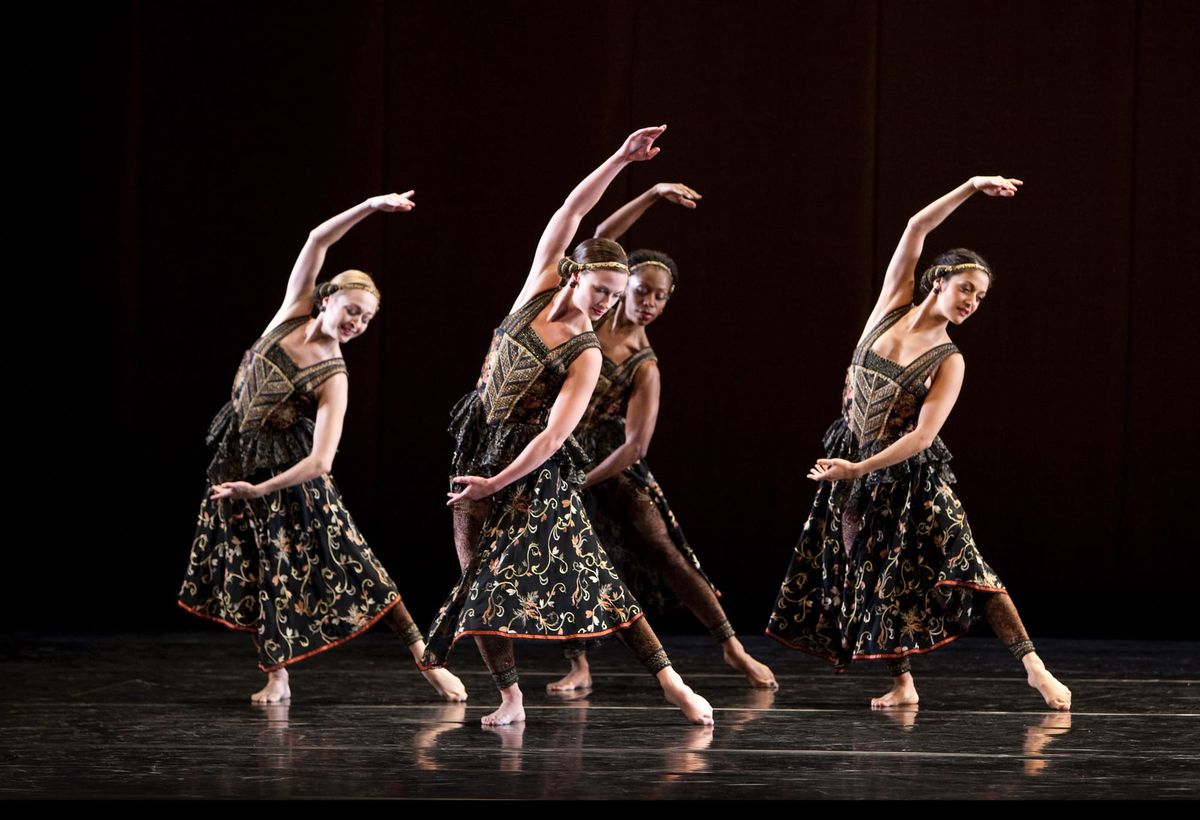
"Cascade", "Eventide", "Company B"
The Paul Taylor Dance Company
David H. Koch Theater at Lincoln Center
New York, New York
March 9, 2013
For the second year, Paul Taylor has chosen the larger, more formal Koch Theater (State Theater to some of us), rather than the City Center. The dancers have adjusted to the bigger canvas well, though what is the use of an orchestra pit without live music? The recent Saturday matinee (complete with a fractious child) was a nostalgic glimpse of various past times; the first two works (music by Back and Ralph Vaughan Williams) would have been even stronger, I suspect, with live music, but the final work, "Company B", used the period recordings of the Andrews Sisters to set the scene, a fine and imaginative answer to the perennial problem of paying for live music.
"Cascade", from 1999, is vintage Taylor, with many of his signature moves; sideways jumps, open arms, bouncy crouches, and joyful grace notes. The costumes, by Santo Loquasto, nod to the 1910's, especially in the women's hair styles, so redolent of Anna Pavlova. As in so many Taylor pieces, there are shadows as well as sun, and Amy Young had a slow solo with a repeated motif of reaching up, and dropping to the ground; it seemed to me that some of the poses resembled the famous Pavlova photographs of "The Dragonfly", but it may have been Young's eloquent grace and that hairstyle.
There was a cheeky formality to the steps, especially in the pas de quatre (to give it a formal term) for Laura Halzack, Heather McGinley, Robert Kleinendorst, and James Samson, as the two couples echoed each others moves in a dignified measure. The main couple, Michelle Fleet and Michael Trusnovec, entered warily, and their steps had an old-fashioned formality which seemed to express a powerful emotion, so much richer for the restraint, as Trusnovec slowly offered his hand to Fleet, and she paused just briefly before holding it. There is a molten quality to Trusnovec's movement, it combines flow, as him movements seamlessly merge, with a weight, which gives them power.
The quality showed to great advantage in the 1997 "Eventide", a misty vision of English country life set to Ralph Vaughan Williams. The beautiful backdrop, again by Loquasto, is a twilight mist, out of which the four couples emerge; never has walking seemed so mysterious and so beautiful. Trusnovic and Parisa Khobdeh danced the main couple (originally performed by Francie Huber and Patrick Corbin). Khobdeh, a beautiful dancer, lacked some of Huber's spacious vulnerability, but Trusnovic was as magnanimous as Corbin, and more ghostly, as he seemed to float above the ground, like a memory of some Thomas Hardy hero.
Like Hardy, Taylor knows there are snakes even in this bucolic Eden, and that life in the country isn't just plucking posies. There were hints of violence in the pas de deux by Eran Bugge and Robert Kleinendorst, a rough and careless seduction, as he casually walks off as she huddles on the ground. Andrew Asnes, the first dancer, gave this role a swaggering heartlessness, which the softer Kleinendorst didn't have, as he seemed almost apologetic as he walked off. I also missed the sharper-edged individualism of some of the original dancers, but some of the smaller touches may have been diluted by the larger theater. However, the final scene, as the dancers fade away into the wings, had more of a shimmer than the original--a hauntingly beautiful scene of times gone by.
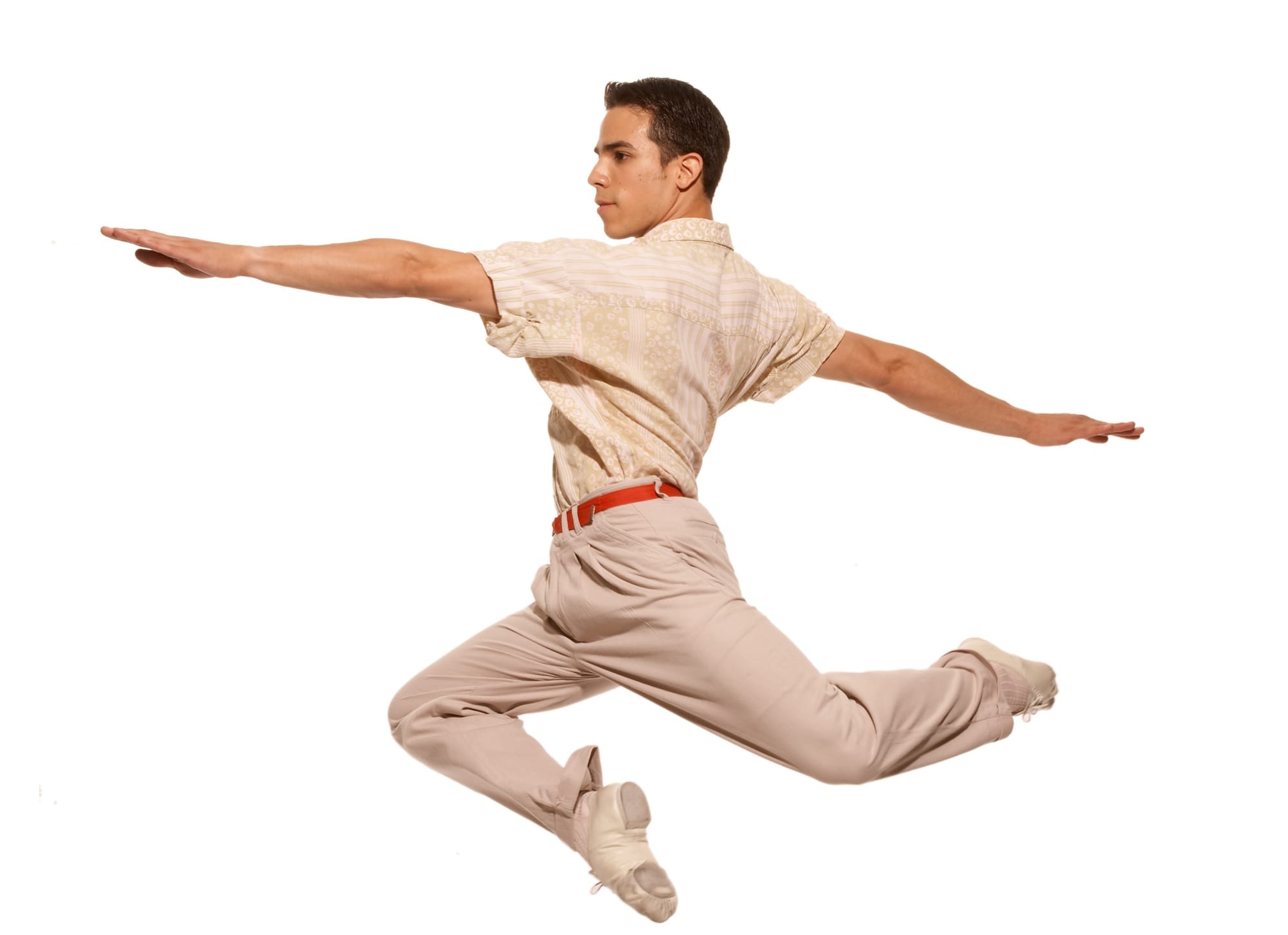
"Company B" is another evocation of the past, as dancers who probably don't know who Der Bingle was or why he was crooning, dance to recordings of the Andrews Sisters, whose music will always bring up World War II and all those boys sent off to do a man's job and the women who waited for them. Francisco Graciano was a poignantly young innocent in "Tico, Tico" as he leapt to the rhythm, dodging bullets until he could dodge no more. Kleinendorst was winning as the Bugle Boy, though he seemed to flag a bit at the end of his solo. Khobdeh was the woman who dreams, and yes, she could, combining yearning with bursts of anger. Amy Young used her quiet majesty to dominate the stage in "There Will Never Be Another You", in one of Taylor's powerfully quiet scenes, as she sits on the stage, still dreaming of the man who disappeared from her arms, while the rest of the cast bounces to "Bei Mir Bist du Schon", until she too, puts her past behind her and joins in. Tragedy happens, Taylor seems to say, but humans survive.
copyright © 2013 by Mary Cargill