Timeline
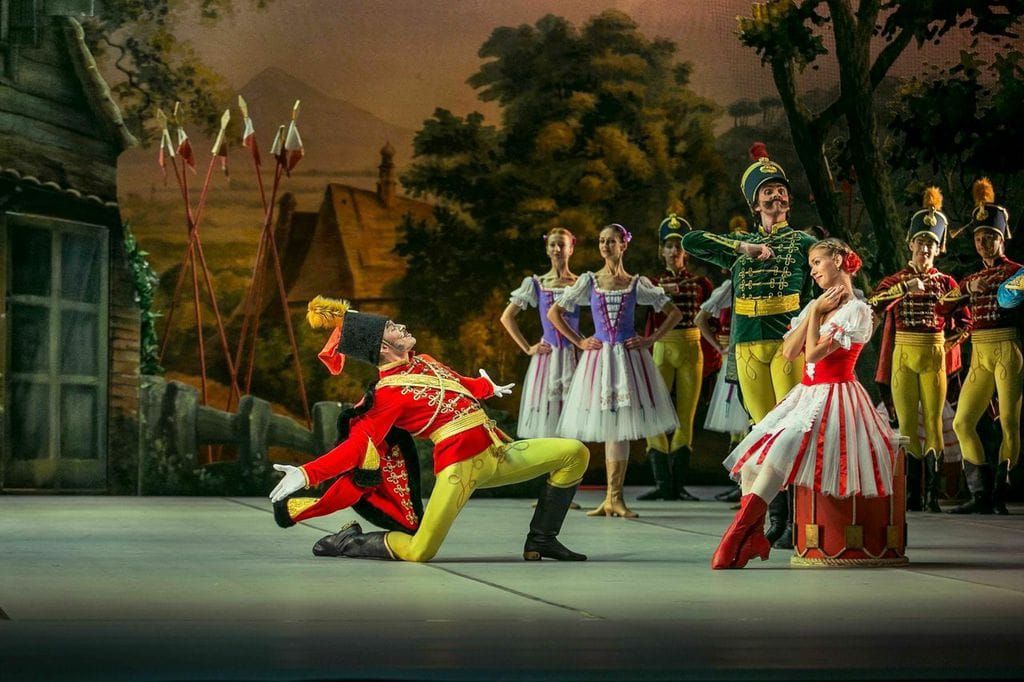
"Le Halte de Cavalerie", "Class Concert", "Prelude"
Mikhailovsky Ballet
David H. Koch Theater
New York, NY
November 19, 2014
The Mikhailovsky's triple bill was a brief trip through its archives, featuring a one-act Petipa comedy, a 1960 Bolshoi classroom extravaganza and a 21st century piece by its former director Nacho Duato. The program was presented in chronological order, but unfortunately, the quality of the choreography was in descending order, though the dancing throughout was generally first rate. "Le Halte de Cavalerie" is late Petipa, from 1896. Petipa's one-act works are not well-known in the west and his name is generally used as a synonym for over-long, crowd pleasing full-length works, but single act ballets were not invented by Diaghilev. The Mikhailovsky's version was set for them in 1975 by Pyotr Gusev, a famous Russian dancer who had studied at the pre-Revolutionary Maryinsky. (He was a classmate of Balanchine's.) He would have seen the Petipa version, so this may be as close as we can get to the source.
The story is simple; Peter, a peasant boy (Leonid Sarafanov) in an Austrian village loves two women, Maria with point shoes (Anastasia Soboleva) and Teresa with character boots (Kristina Makhviladze), and he ends up with Maria. In between a cohort of soldiers visits the village and Teresa dances with three amorous soldiers whom she makes fun of. This is just a hook to provide Petipa an excuse for lots of dances, classical and folk, to tuneful, danceable um-pah-pah music by one Ivan Armsheimer. There were two classical pas de deux for Maria and Peter, the first playful and flirtacious involving a long blue ribbon. (This may be the origin of the ribbon motif in Ashton's "La Fille Mal Gardee", since Tamara Karsavina, whose memories were so instrumetal in inspiring that great work, would certainly have known this ballet.) Soboleva with her fluttering feet and Sarafanov with his boyish charm made the dance utterly winning. The second pas de deux, a more mature declaration of love, had the traditional structure--adagio, variations, and rousing coda, with some character touches as Peter acknowledged his peasant origins with some flexed feet (very similar to Balanchine's choreography for El Capitan in "Stars and Stripes). Soboleva isn't a natural balancer, and did come off pointe a few times, but her turns were beautifully controlled as she seemed to stop at will. Sarafanov's solo seemed to harken back to Petipa's training, as there were some what we would call Bournonville jumps, with open arms and bent legs, and lots of thrilling little beats, which Sarafanov performed with a real dash.
The classical dancing was balanced with the comic characters, the three soldiers (a Cornet, a Captain, and a Colonel) who have their eye on Teresa, and try to win her with their dancing, which went from the romantic but hapless waltzing of the young Cornet (Konstantin Kilinchuk) to the passionate but hapless mazurka of the Captain (the mustachio twirling Vladimir Tsal) to the inept attempts of the lame old Colonel (Roman Petukhov) to defy his age--cartoonish, yes, but fun. Teresa evaded them all and got the final curtain; this was only a comedy but it was fun to see a peasant girl go toe to toe with an Austrian Colonel and come out the winner.
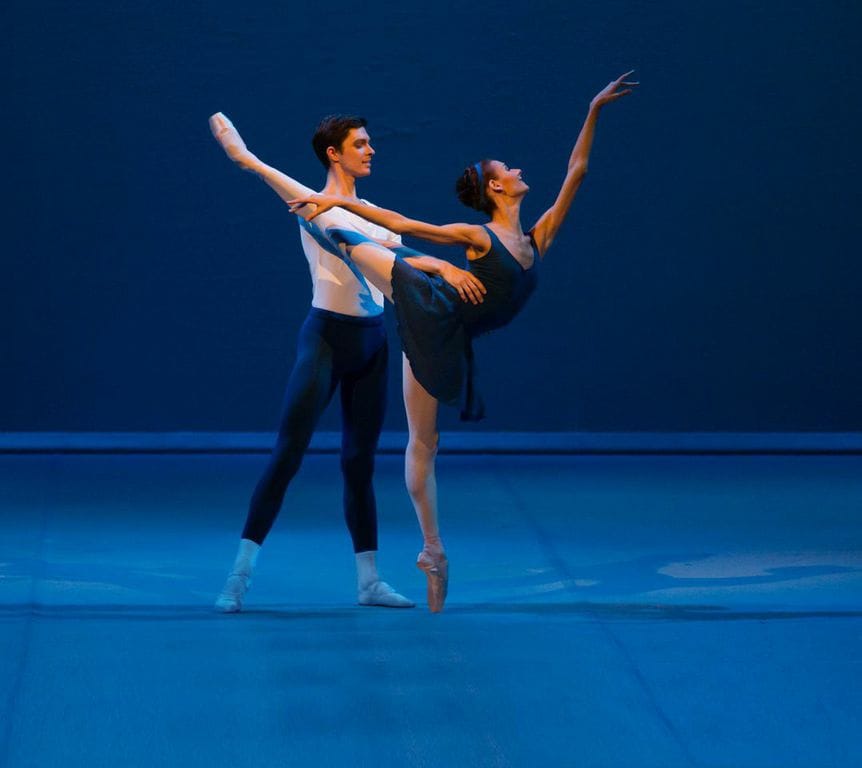
"Class Concert" is yet another ballet class compendium, choreo-graphed for the Bolshoi to show off their bravura dancers by Asaf Messerer. There is a seemingly insatiable appetite for these collections of steps, and indeed the behind-the- scenes atmosphere is ballet's equivalent of popcorn, but this serving was fresh and topped with real butter. It opened with a group of children (some from the Vaganova Academy and others from local schools) and their earnest sweetness avoided the dreaded pink tutu effect of cloying precociousness. The dance featured most of the company and was a great way to see them dance, even if they weren't really performing. The adagio, danced by Soboleva and Victor Lebedev, was a welcome respite, choreographed with a dignified flow.
But the audience really came to life when Ivan Vasiliev flew on with his trademark leaps, one involving fluttering his legs behind his back in an apparently death-defying jump. For me, his sloppy techique ("feet, I don't need no stinkin' pointed feet") is off-putting, but not as off-putting as his slightly sullen stage presence. A bit of vulgarity can be fun, but not when it just seems like work. Sarafanov's fast, elegant turns a la seconde, which followed Vasiliev's jumps with no name, were much more satisfying.
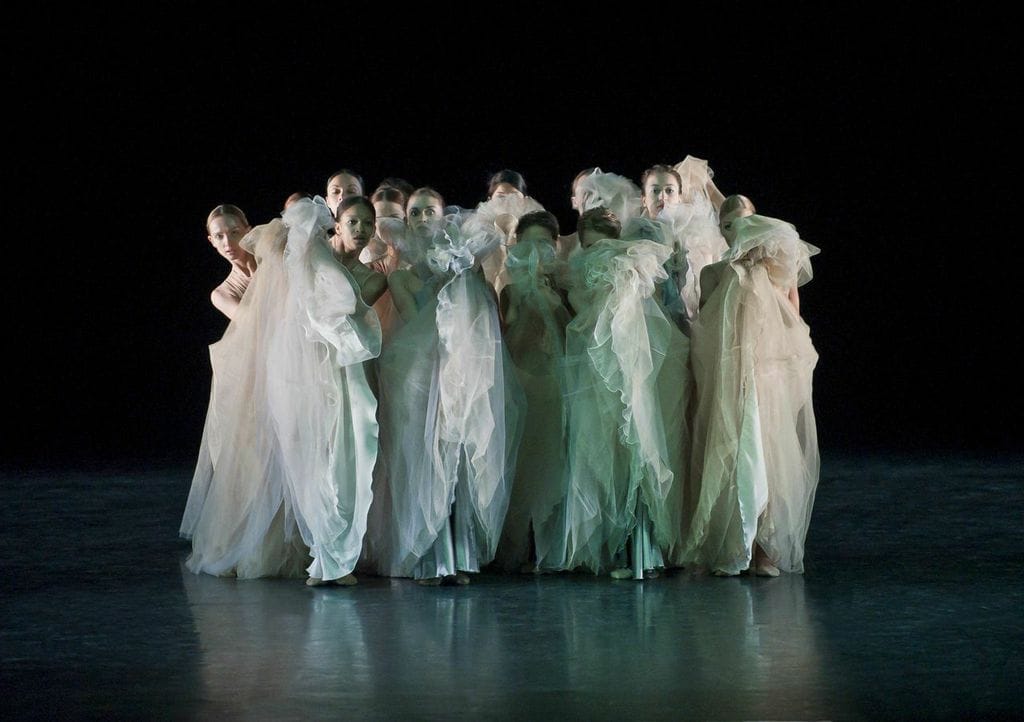
Sarafanov was also the star of Nacho Duato's "Prelude", a confused and overly long piece to Handel, Beethoven and Benjamin Britten, which, according to the program, is about "the meeting of classical dance and contemporary dance". Sarafanov was dressed in a whitish leotard and seemed to be an angelic sprite, wandering around some postmodern wilis. (The backdrop of the company's "Giselle" made an appearance). The choreography was mainly twitching and rolling, with absolutely no relation to the music; all three composers got the same limited range of movement, and it seemed as if Duato was hiding behind those great names, hoping their shadows would magnify him.
There did seem to be something Profound going on, as the lyrical Irina Perren was manhandled by Marat Shemiunov, only to be apparently rescued by Sarafanov and taken to a Spiritual Place where wilis roamed, but I could only think with regret that the spunky, independent Teresa that Petipa created had degenerated into an anonymous masochistic dishrag.
copyright © 2014 by Mary Cargill



