Time Stands Still
“Don Quixote”
Ballet Nacional de Cuba
Opera House
The John F. Kennedy Center for the Performing Arts
Washington, D.C.
May 29, 2018
by Ashley McKean
copyright © 2018 by Ashley McKean
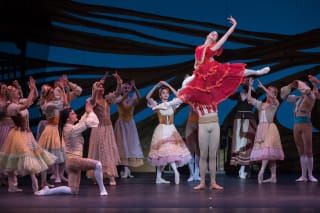
The Ballet Nacional de Cuba returned to Washington to celebrate the 40th anniversary of its United States debut (at the Kennedy Center in 1978), giving balletgoers a glimpse of a living legend — renowned ballerina, founder and artistic director, Alicia Alonso — and her legacy. The evening showcased the company’s spirited and classically Cuban “Don Quixote,” originally staged by Alonso in 1988. After an opening video tribute to the prima ballerina, Ms. Alonso, looking stunningly agile for her 97 years, rose from her first-tier box and waved to the audience with gracious port de bras, welcoming the dance. Her presence was palpable throughout the evening, and her influence was never more evident than in the dancing of the company’s principal ballerina, Viengsay Valdés (Tuesday evening’s Kitri), herself a veteran in her 28th year with the company. Valdés won the audience over immediately with her endearing energy, innate sense of drama and effortless quality of movement.
The production as a whole, choreographed by Alonso, Marta García and María Elena Llorente after Marius Petipa, is like a faded relic worth keeping but in need of refurbishment. The sets look somewhat worn and the ornate costumes, while pleasing, could be more flattering. Yet the production’s artistic value lies in Alonso’s thoughtful adaptation of Petipa’s choreography and Minkus’s score. Clearly elaborated storytelling and enhanced musical shading infuse the work with authenticity often lacking in other versions of the ballet. The storyline embellishes the role of Don Quixote (the errant knight after which Cervantes’ acclaimed novel is named), bringing depth and texture to the traditionally lighthearted antics by developing the knight’s relationship with Kitri, his illusory Dulcinea. One of the ballet’s most touching moments on Tuesday was the serene, otherworldly pas de deux for Kitri and the knight (danced by Yansiel Pujada) in the second Act’s dream scene. Valdés’s ethereal port de bras and romantic reverence for Don Quixote legitimized the relationship between the two unlikely admirers, bringing deeper meaning to the ballet's usual narrative.
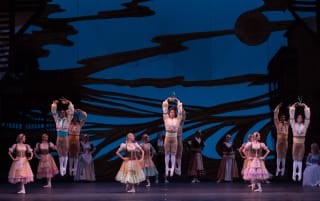
Unusually varied tempi and musical interpretation (particularly in Act I) also add to the intrigue of the Cuban version of this ballet, overlaying Minkus’s well-known score and Petipa’s classical choreography with Latin flair and folklore. Cuban conductor Giovanni Duarte took the Kennedy Center Opera House Orchestra on a wild ride on Tuesday (they kept up, for the most part), at times imposing breakneck tempos that accentuated the folkloric danciness of the village romps, and other times slowing the pace way down to allow for extended balances and jumps that seemed to suspend in the air. The high-spirited dancers rose to the challenge, combining energetic passion with precise, Russian-style technique that distinguishes this company. The corps of villagers displayed succinct footwork and plush upper bodies. Ariel Martinez’s irresistibly masculine Espada led the bullfighters through a particularly captivating series of high-flying jumps and complex maneuvers with their capes, leaving the audience wanting more. Ginette Moncho’s Mercedes showed feminine authority and solid technique, complementing Martinez’s daring bravura.
Valdés and the tall, charming Dani Hernández (as Basilio, Kitri’s beloved barber) carried the evening with their fiery dancing and sophisticated acting, even if their technique was uneven. Hernández was a gallant partner with a buoyant jump and clear turns, although he seemed boyish compared to the mature Valdés. If no longer a jumper, Valdés made up for it with magnetic charisma, superb artistry and the balances that have made her famous. Their wedding pas de deux in Act III was full of fireworks, she balancing repeatedly for what seemed like ages, and he delivering jumps and turns with panache. After pulling off a nearly flawless sequence of fouette turns, Valdés uncharacteristically stumbled out of a rotation. In an unusually human moment, she bowed to the audience, shaking her head apologetically, giving us a glimpse of the pressure she must have been under on this momentous occasion. The audience responded with thunderous applause as if to say “you had us at hello.” And in fact she did.
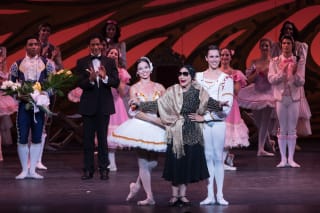
As the company took their bows to a standing ovation, Alonso graced the stage, supported by her dancers, to bow alongside them in an evening of milestones. One could not help but feel nostalgic in seeing a master share the stage with her protégés. Only time can tell how this great company will fare in its next era.
copyright © 2018 by Ashley McKean



