Till We Meet Again
“Have We Met?!,” “Serenade after Plato’s Symposium,” “Theme and Variations”
American Ballet Theatre
David H. Koch Theater
New York, NY
October 30, 2025
For one of the final programs of its fall season, American Ballet Theatre presented a study in contrasts: the world premiere of Juliano Nunes's "Have We Met?!" explored parallel love stories across a century, while George Balanchine's "Theme and Variations" reminded us what timeless classicism looks like. Sandwiched between them, Alexei Ratmansky's 2016 "Serenade after Plato's Symposium" offered seven men in conversation – though about what, exactly, remained frustratingly unclear.
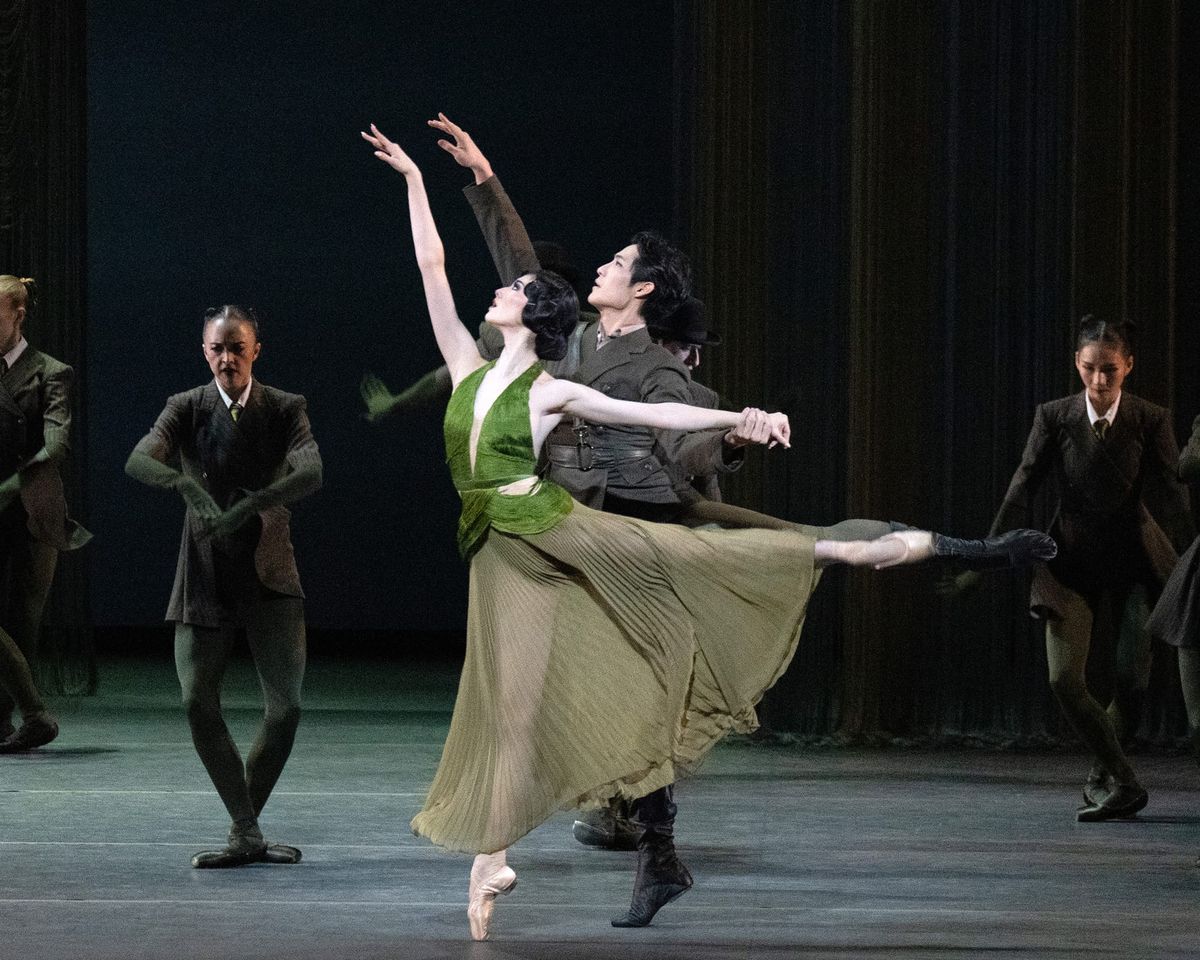
Nunes's new work, set to Luke Howard's evocative original score, opened in 1928 beneath the Manhattan Bridge (created by fringe decorations dangling above the stage), presenting the characters of Rose and Julian. They meet in a simple but effective moment: walking toward each other from the opposite wings, they pass, then turn back, anchoring their connection with a glance. Chloe Misseldine in the role of Rose embodied a 1920s beauty with a rich inner world and endless elegance, though she is not given any concrete biographical background. That weight was fully on Joo Won Anh as Julian – a Great War veteran haunted by trauma, finding salvation in Rose's presence. Misseldine’s movement maturity was likely the reason why this plotline felt authentic – her every step brought calm and reassurance, with that serenity flowing through the many leans into arabesques as Ahn twisted her into dips and embraces, even as a crowd of corps dancers would surround then. Eventually, the choreography became redundant, as if Nunes couldn’t stop repeating one perfect phrase that captured all the points he tried to make. Only the menacing corps swarming around the leads provided contrast.
That’s where the ballet first stumbled in earnest. The ensemble moved with jerky, angular gestures – bent elbows yanking awkwardly, spastic lunges that bordered on the cartoonish – at times evoking Disney's 1929 "Skeleton Dance" more than period expressionism. They pulled at Ahn as he clutched his head in anguish, pursuing him relentlessly but never approaching Misseldine. Why? The thematic logic remained unclear, unless they were but Julian’s intrusive thoughts. But then, she had such warmth and pull, how could she not bring full salvation? A tortured solo finally showed Julian's loss of control, the section ending with his death and her collapse.
The scene then reset in 2038, this time with Isabella Boylston and Joseph Markey as the leads under the (still fringed) Brooklyn Bridge. They did get names – Orion and Arya – but no backstory in program notes or choreography. The opening repeated itself: they walked past each other, then caught each other’s attention. Alas, these leads had neither the same presence nor expressiveness of steps. There was a crowd again, but they seemed to take cues from the protagonists, sometimes imitating their movements, like with an odd detail where Boylston got on pointe in fifth and wiggled her hips. There were reaches and twists for the leads again, but if they looked dramatic, if thematically bare in the first section, here they devolved into repetitive walking, excessive leaning, and awkward straddles. The program notes claimed that "in a world fraught with loneliness and noise, their love becomes a sanctuary," but what we witnessed was perfunctory romance, barely an echo of the first couple's intensity. If this was love, who’d want it?
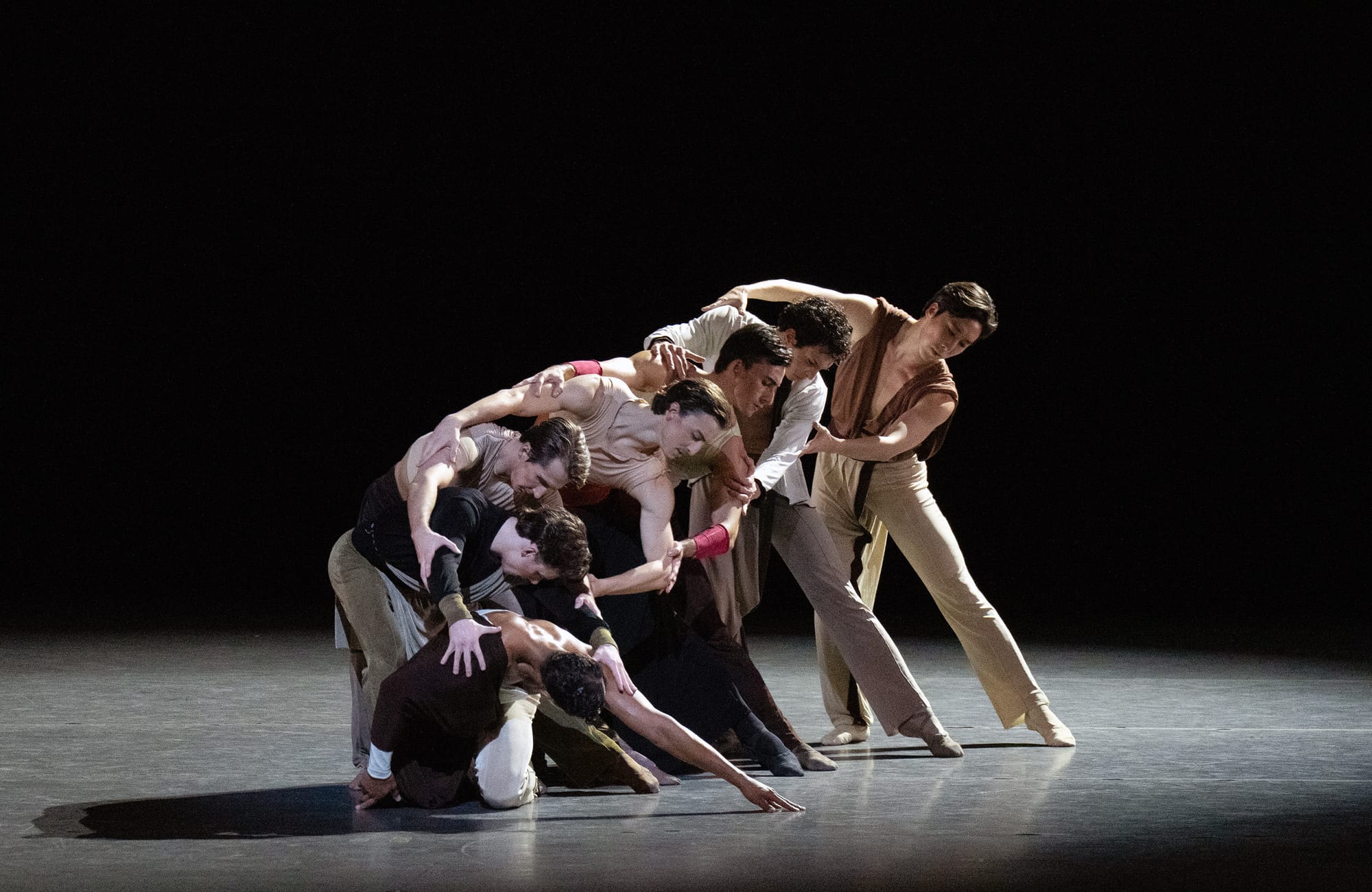
The evening’s challenges didn’t end at the bridge. Ratmansky’s ballet was another ambitious adaptation that, in a different way, offered potential and conundrums. The work purports to be an abstraction with intricate dance for seven talented male dancers, yet with so much richness in Plato's actual "Symposium" and in Leonard Bernstein's music, the disconnect between source material and stage realization quickly became frustrating. There was explosive jumping, inventive partnering and gestured phrasing, but no dancer was ever clearly identified. Who here was Socrates? Who was Aristophanes? The audience was left to guess. Amid a solid cast – Jake Roxander, Carlos Gonzalez and Jose Sebastian among them – no one really got to stand out and tell a story that made sense. When Sunmi Park finally appeared, so late that her entrance felt like an ending, we could at least identify her as Diotima. She commanded the stage and reduced the dynamic to reverential worship, obliterating whatever camaraderie and brotherly (or romantic) love the men might have shared.
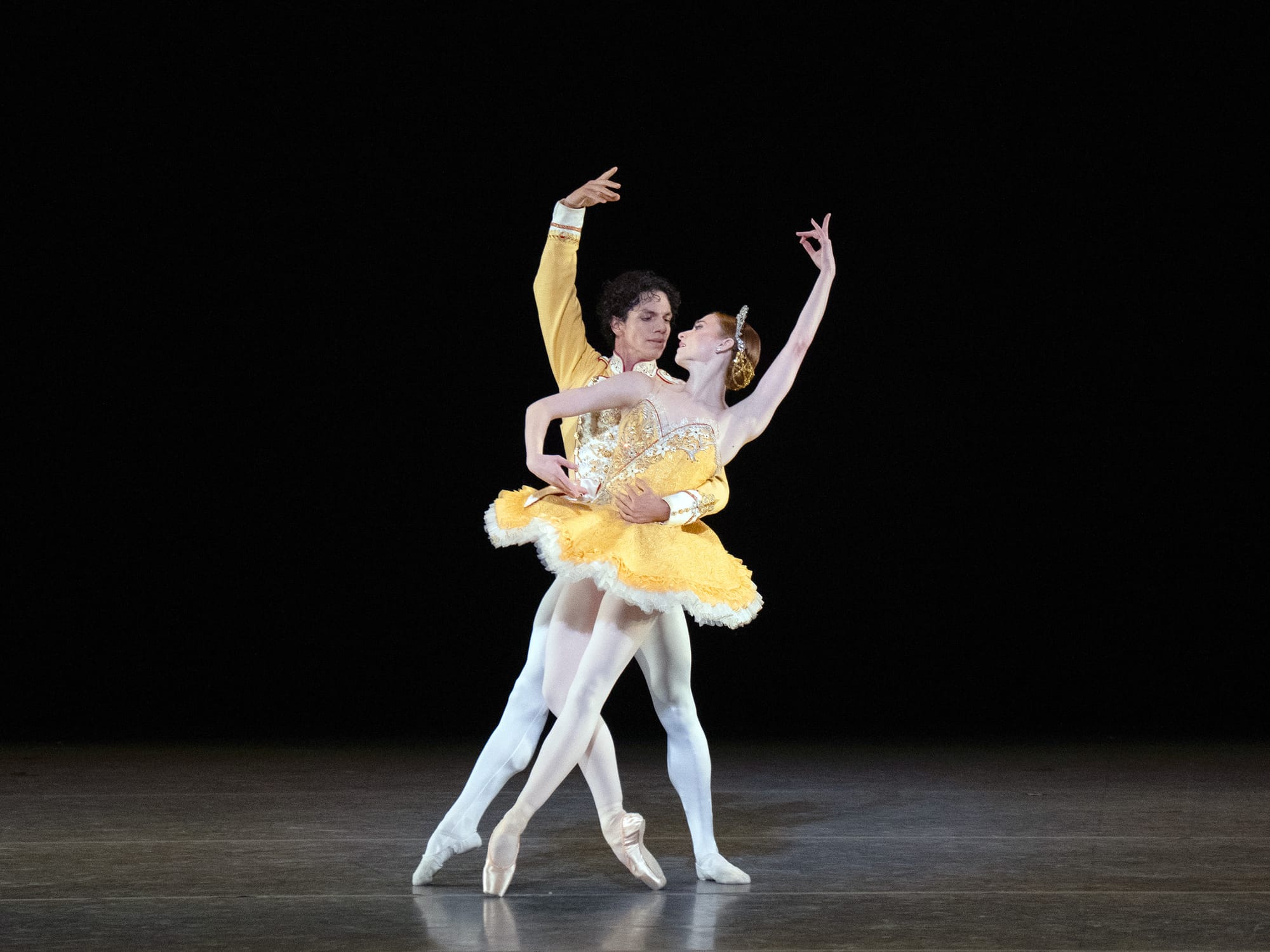
Finally and blissfully came “Theme and Variations,” and with it a truly memorable, if uneven performance by Catherine Hurlin and Isaac Hernández. Her dancing revealed an internal debate: whether to emphasize Balanchine's neoclassical refinement or showcase her formidable technique and eloquent styling. The tension yielded some conflicting, though still beautiful, results. After a demure opening, she positively stormed into her turns with big arm reaches, impeccable speed, and intense focus on elegance. In the pas de deux, this focus became a slight detriment: the emphasis on refined movement and cultured feet left some punch missing. Hernández by comparison offered more even dancing throughout, solid and assured. There was great dancing from the rest of the cast too, particularly Sierra Armstrong, whose eloquent arabesques demonstrated the clarity Balanchine demands.
The evening thus offered a microcosm of the company's current identity: a group of talented dancers eager to champion new voices while anchoring itself in repertory cornerstones. Till we meet again, let's hope they get new choreography that wouldn't waste them.
copyright © 2025 by Marianne Adams