Three of a Kind
"Pictures at an Exhibition", " 'Rōdē,ō: Four Dance Episodes", "Mercurial Manoeuvres"
New York City Ballet
David H. Koch Theater
New York, New York
February 11, 2015
New York City Ballet's "New Combina- tions" program showed works by three modern choreo- graphers, Alexei Ratmansky, Justin Peck and Christopher Wheeldon. Each piece was an abstract take on symphonic music and had a rambunctious corps surrounding a mysterious couple with a casual atmosphere--there were no tutus in sight and the first two did away with tights, exposing lots of bare, muscular legs. Each would probably have looked more distinctive on a program with greater contrast but each work, all with significant debuts, had unique joys. One constant, fortunately, was the vibrant and committed dancing from everyone. It may have been the opportunity to work with living choreographers or the casual atmosphere (or both) which gave each work a warmth and connection between the dancers which seemed to include the audience.
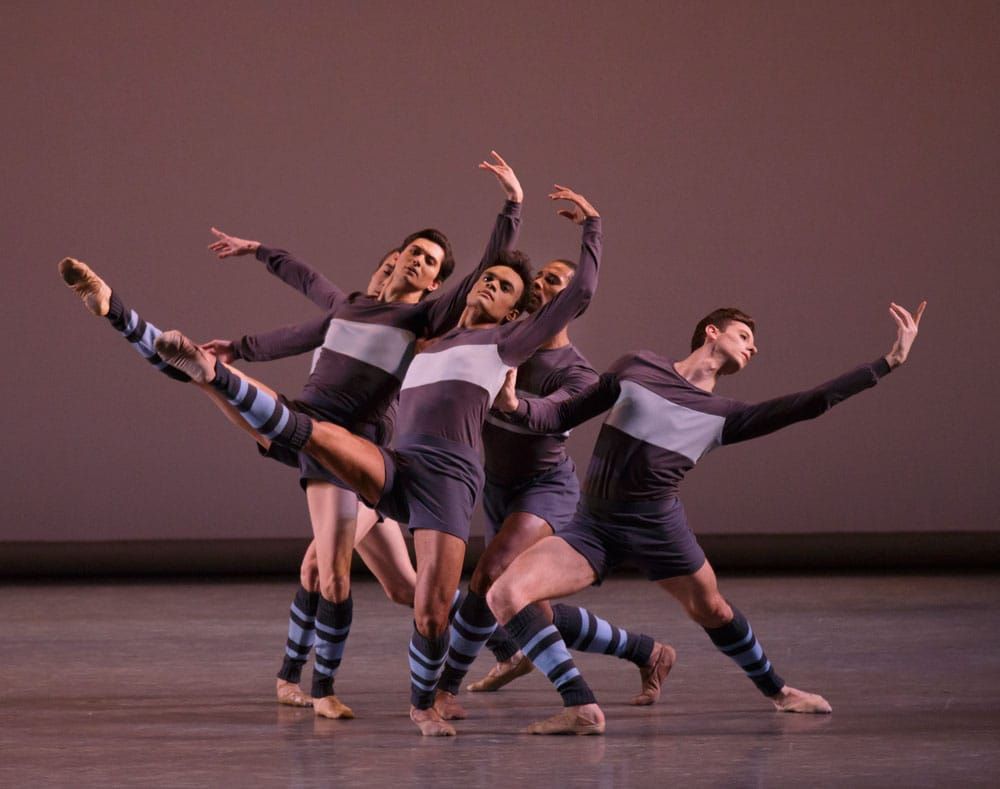
Photo © Paul Kolnik : “ 'Rōdē, ō: Four Dance Episodes”
Ratmansky's "Pictures at an Exhibition", to the familiar Mussorgsky score avoids the obvious literal interpretation of Mussorgsky's inspiration (specific pictures by Viktor Hartmann) but Ratmansky did use painting as a source, as the backgrounds and costumes are based on colorful, abstract images by Wassily Kandinsky. The work is an explosion of color with varying moods and hues and the dancers seem to emerge from the music.
Georgiana Pazcoguin made her debut in the fierce role created by Sara Mearns; her opening solo was windblown and full of a secret pain. Craig Hall also made his debut dancing the dreamy, mysterious pas de deux with Sterling Hyltin. He gave the deceptively difficult partnering, with it flying motifs, a molten dignity which set off Hyltin's wistful waif; they made a hauntingly beautiful couple. Taylor Stanley, in another debut, gave a burnished clarity to his solo, with its quick changes of direction.
Stanley was also featured in Justin Peck's new '" 'Rōdē,ō: Four Dance Episodes", set to Aaron Copland's symphonic arrangement of the familiar ballet score. The peculiar punctuation may be a post-modernist joke too advanced for my linear mind but the piece is straightforward, bright and fluid. It's a man's world, with echoes of Agnes de Mille's energetic cowboys as the dancers swagger through the score and casually sit with their legs dangling over the stage. The friendly competition between Gonzalo Garcia, Sean Suozzi and Daniel Ulbricht flavored flamboyance with wit and musicality, and Ulbricht was especially impressive in his a la seconde turns where he seemed to have ball bearings for joints, slowing down in perfect time to the music and making it look like so much fun.
Taylor Stanley led the impressive second episode, a fluid adagio dance for five men with intertwining, shifting shapes and extended arabesques which made me think of comrades sharing stories around a campfire. It was a rare and moving illustration of friendship.
But ballets, like Hollywood, need to get a girl in the picture, and Tiler Peck debuted as the love interest. She wandered on, dancing a serenely self-contained solo, attracting Amar Ramasar's attention. They danced a rather fussy, generic pas de deux full of complicated lifts and melting arabesques which didn't amplify the potent sentimentality of the "Goodbye Old Paint" melody. Only a rare moment of stillness, when Ramasar slowly and somewhat awkwardly embraced Peck, showing a raw and moving vulnerability underneath his dynamic flair, hinted at emotional depth.
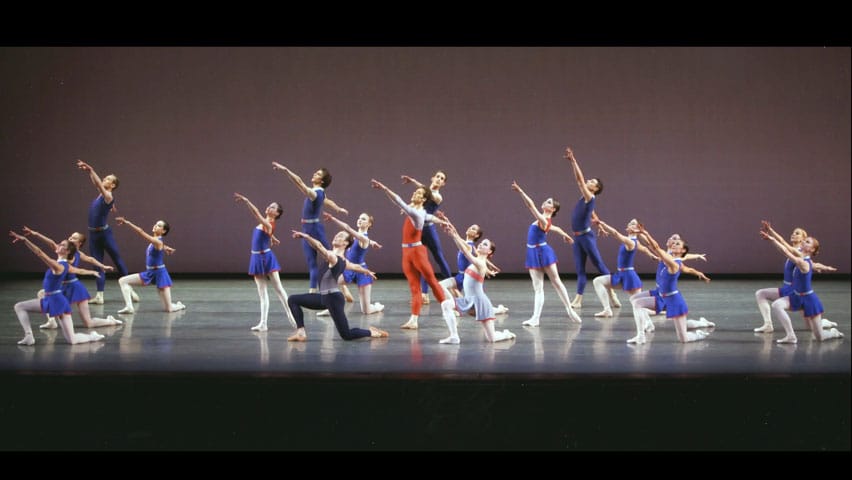
Christopher Wheeldon's 2000 "Mercurial Manoeuvres", to Dmitri Shostakovich's "Piano Concerto No. 1" has the opposite problem. the pas de deux, danced by Sara Mearns ad Russell Janzen (in their debuts) had a mystery and imagination that the efficient military precision of the surrounding ensemble lacked. The group choreography seemed to skate politely and decorously over the top of the music, with the soloist (the stylish and appealing Gonzalo Garcia) energetically leading the way. The corps work was efficient and showed off the dancers' style and stamina; Sarah Villwock and especially Indiana Woodward stood out in their joint debuts as the side girls, but this work has none of the crevices and nuances that Ratmansky gave to his very personal and haunting take on the same music.
There were hints of a more personal exploration in the pas de deux, as Mearns, with smoldering intensity, seemed to be pulled along by the music, oblivious to everything expect her partner. Janzen, a tall, powerful dancer, is a fine partner for Mearns and have gave the lifts a dreamy, flowing quality. This early Wheeldon avoids the more complicated, knotty partnering of his more recent work, and lets the dancers bloom. And so, most emphatically, did the other ballets.
copyright © 2015 by Mary Cargill



