This and That
"Divertimento No. 15", "After the Rain", "Firebird"
New York City Ballet
David H. Koch Theater
New York, NY
May 6, 2009
This diverse and somewhat disjointed program opened with Balanchine's exquisite, and exquisitely difficult, salute to Mozart and classical dancing, "Divertimento No. 15". The Emperor Joseph II is usually help up as the prime example of a philistine for his comment "too many notes, Mr. Mozart", but the solos in Divertimento do seem to be a case of "too many steps, Mr. Balanchine", and even the most sublime of dancers tend to seem rushed and jerky at times. Ana Sophia Scheller, though, in the first variation, made strong case for all those steps. She is the type of dancer who seems to have been born wearing a tutu, and moves as if she were dancing on a velvet cushion. Megan Fairchild danced the leader of the five; she danced the same role as a student at SAB, where her exquisite footwork and assured and gentle manner were unforgettable. She has the same diamond and pearl attack, though her upper body seems to have become a little more rigid.
The two side boys, Tyler Angle and Amar Ramasar, both had plush extensions and gracious manners, and their gentle competition was elegance itself. The ballet settles down in the languid, serene andante, that glowing necklace of classical decorum where the steps flow seamlessly from one couple to another; three and five make a magic number.
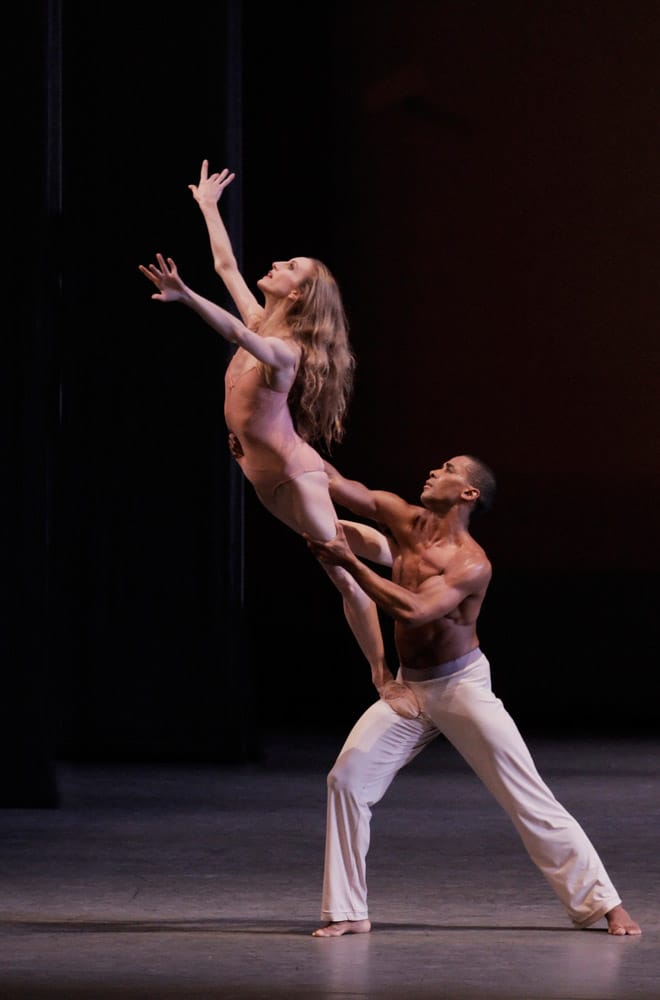
This was followed by Christopher Wheeldon's popular but very gray "After the Rain", made up of two disjointed parts. The first had three couples in gray leotards stretching their legs and looking at the audience; the second had one of the couples (Wendy Whelan and Craig Hall) return, having changed their costumes and taken off their shoes. They danced a very long and quirky pas de deux, in front of a dull yellow background (presumably the sky after the rain). It looked like what might have happened if the couple from "The Cage" has escaped the Queen and made it to a desert, where they eventually died of either thirst or boredom. Whelan gave this her very considerable all, investing every movement with delicacy and fervor. Hall, in the role originally done by Jock Soto, was strong and gracious, and both dancers deserved a more flattering piece.
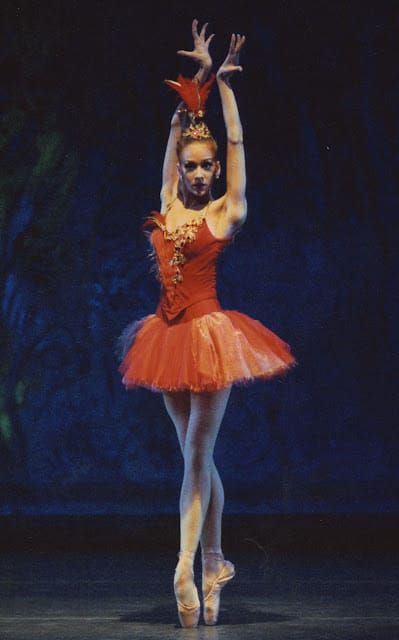
In this Diaghilev centennial year, it is a shame that the Fokine "Firebird" seems to have flown away. Balanchine's follows the basic outline, but it lacks the magical power of the original. Balanchine's two set pieces for the Firebird, the heart of the ballet, while powerful and beautifully choreographed, don't actually make dramatic sence. The Firebird is supposed to fight the Prince and beg for her freedom--she gives the Prince her red feather and its promise of aid as a bribe, and then is bound to help him, but Fokine makes it clear that she is a wild character who basically hates the prince. Balanchine has softened the edges, and has his bird dance around while the Prince watches and she offers her feather almost as a gift; nowadays it is danced as if she were Odette in a red tutu. The magical Berceuse, in the original, is danced by the Firebird to put the court, including Kastchei to sleep, so the Prince could break the egg hiding the wizard's soul. Balanchine's lovely dance is performed after Kastchei has been killed, so there is no reason for the Prince to hang around. However, any chance to hear that beautiful score, even the abridged one that Balanchine used, is welcome.
Maria Kowroski was the Firebird; she is a tall and lovely dancer, but lacked the tautness needed to suggest an inhuman being. She simply flapped her hands, but the movement didn't come out from her center. Ask La Cour was Prince Ivan, and his Danish training gave him the rare and welcome ability to create a character out of a walk and a crouch. Dena Abergel, as the enchanted Princess, was warm, gracious, and lovely. Their folk-inspired dance was a model of dignified simplicity.
copyright © 2009 by Mary Cargill



