There is a Purpose
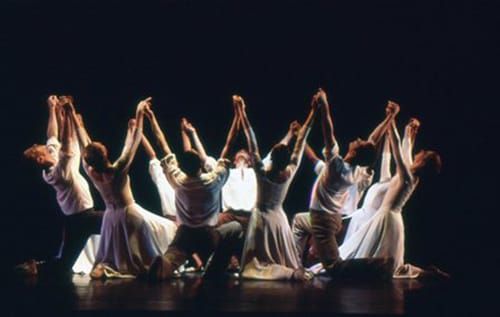
"There is a Time", "Chrysalis", "The Emperor Jones"
Limón Dance Company
Gerald Lynch Theatre
John Jay College
New York, NY
June 7, 2011
The Limón Dance Company faces the same issues of all companies trying to continue without their founding choreographer. Some, like Cunningham, have decided that memory is the best preservative, but the Limón Company has heroically tried to maintain the founder's works while judiciously adding modern ones. This program is a good example--one familiar piece, one new choreographer working in the Limón tradition, and one major revival. This made for a varied and interesting program, cohesive enough to not be jarring, but full of interest.
"There is a Time", Limón's 1956 meditation on the famous verses from Ecclesiastes, has been regularly programmed, but it is always rewarding, even if, as in this performance, Norman Dello Joio's music, so full of rhythm and sparkle, is played on tape. The theme and variations structure of the work, opening and closing with all the dancers in a circle, with the individual "times" danced by varying groups. Many of the vignettes have a stylized literalness (a time to plant shows men almost miming as they place their hands on the stage, a time to laugh has a young girl shaking her shoulders with mirth), but the movements have a timelessness that makes them seem almost ritualistic.
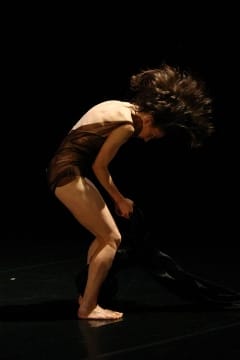
Jonathan Frederickson's 2010 "Chrysalis" is also about a ritual. The notes say that the work was "inspired by the Oracle of Delphi and those who are chosen vessels throughout history." Apparently being a chosen vessel isn't a lot of fun. The dancers did individual solos of wracked intensity, until the last dancer, Belinda McGuire, who seemed to fail the test, as her solo was more tentative, and she seemed to fall into a trance. The other dancers went up to her, kissed her, unbound her hair, and then attacked her, stripping her down to a flimsy brown leotard. She danced with a strip of black fabric, in various quite striking ways, and finally stood on it, signifying, apparently, a willing or at least compliant sacrifice.
The music (played live) composed for the work by Marcos Galvany, had a pungent urgency, the dancing was vivid, and the action, if somewhat predictable and heavy handed, was clear.
The action of Limón's "The Emperor Jones" is certainly not predictable, as the emperor relives his life in frenzied flashbacks. Limón choreographed the all-male work in 1956. It was inspired by the Eugene O'Neill play but, like Limón's "The Moor's Pavane", his version of Shakespeare's "Othello", it doesn't try to recreate the action, it translates mood and emotion into movement. The revival was redesigned by Sheryl Liu; I have never seen the original, but the new designs seemed simple and effective. The work opens with the emperor, in red and gold, sits in a large, slightly twisted throne. Daniel Fetecua Soto, the emperor, danced with authority combined with paranoia. Clearly here was a powerful presence losing control. The various episodes leading up to his madness flicker through the stage, none more powerful than the images of a younger Jones being sold into slavery. Jones' broken pride and helpless anger are haunting, but Limón does not fall into sentimentality, excusing the murderous and megalomaniac Jones. Soto's performance was dominating, as he was powerful, frightening, and ultimately tragic.
copyright © 2011 by Mary Cargill



