The Way it Used to Be
"Ride the Culture Loop", "We Remember", "Steps of Silence", "Kurt Weill"
Sokolow Theatre/Dance Ensemble
The Theater at the 14th Street Y
New York, NY
March 9, 2016
"Theater" is listed first in the title of the company founded by the late Anna Sokolow and the dancers all lived up to the billing, giving dramatically incisive and committed performances; there were no too cool for school vacant stares that so many modern choreographers ask for in the compelling works presented, three by Sokolow and one, a premiere, by former Sokolow dancer Rae Ballard. The program opened with Sokolow's 1975 "Ride the Culture Loop" to music by the jazz composer Teo Macero. Sokolow choreographed the original version of "Hair" and the piece had a hippie vibe, with the women's bell-bottomed jeans and flowered crop tops. This was a darker version of the period, and the dancing had the desperate exuberance of young people searching for meaning.
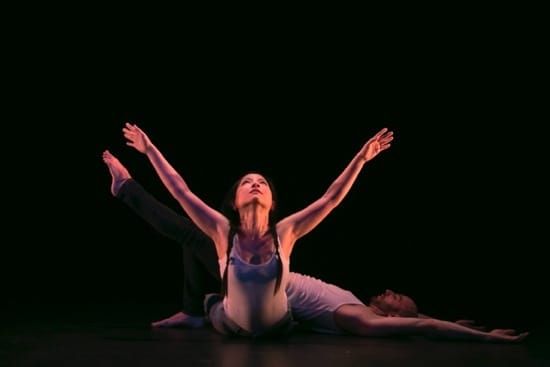
Yayoi Suzuki and Richard Scandola were a calm center in the affecting pas de deux, as they stood still, looking at the audience, barely touching each other, yet making the simple gestures--pointing feet or rotating ankles--feel like explorations. It was as hypnotic as a human lava lamp. Suzuki is an especially compelling performer with shimmering hands and a transparent, expressive face which conveyed hope, joy, and eventually resignation.
"We Remember", the premiere by Rae Ballard, had a weighted, timeless feel as the three older dancers (Ballard, Samantha Geracht and Lauren Naslund) scooped the air and raised their hands in ritualistic, symmetrical poses, like the ghosts of Doris Humphrey. The music, a recording of Joshua Waletzky singing his Yiddish composition "Crossing the Shadows" perfectly reflected the elegiac mood.
"Steps of Silence", Sokolow's 1968 work, offered no ritualistic comfort, as the ten dancers, all in black, opened the piece with their hands bound and their fingers splayed in front of their faces, as if they were trying to hide from some unnamed horror as their voices intertwined with shards of ominous, disjointed phrases. The work was unreservedly bleak. Even when the dancers broke free the effect of their captivity lingered and violence begets violence as the stylized fights and hints of crucifixions showed. The dancers eventually shed their black to reveal flesh colored briefs which made them look hauntingly vulnerable. At the end, they fell into an indistinguishable heap as torn newspapers blew over them. (The last phrase of the opening montage referred to discarded newspapers.) The grim, hopeless vision had a powerful effect.
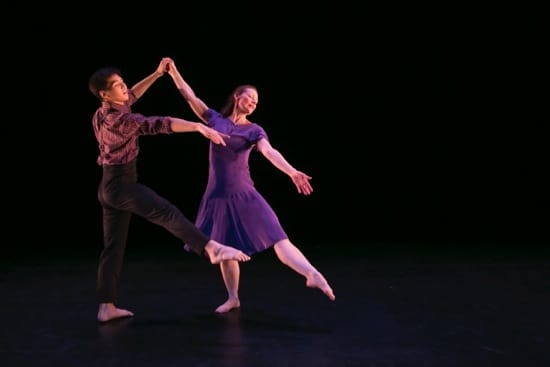
Sokolow's 1988 "Kurt Weill" was another bleak view of human relations as the dancers, in costumes suggesting the 1940s, began and ended with a stylized tango, a dance of almost desperate bleakness. The simple, almost robotic stylization of the steps echoed but did not compete with Weill's haunting melodies. "Surabaya Johnny", sung in English by Marianne Faithful in the whiskey and cigarette style of Lotte Lenya, was less successful as the three couples fought for attention, though the despairing lyrics of that magnificent song generally won.
"Soldier's Wife", also sung by Marianne Faithful, was much more successful, as the simple, stylized choreography had a whiff of the cabaret as the lyrics described the booty sent back to the wife, ending with widow's weeds. This brief vignette summed up the company many strength's, commitment, purpose, feeling, and the power of simplicity.
Copyright © 2016 by Mary Cargill



