The Sun and the Moon, and Stars Too

"Allegro Brillante", "Romeo and Juliet", "Thaïs", "Manon", "The Dream"
American Ballet Theatre
Metropolitan Opera House
June 21, 2010
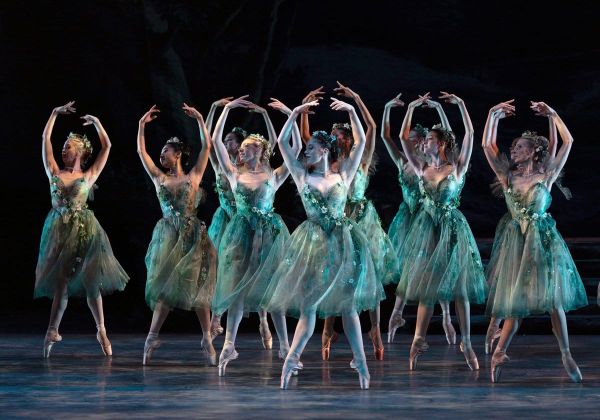
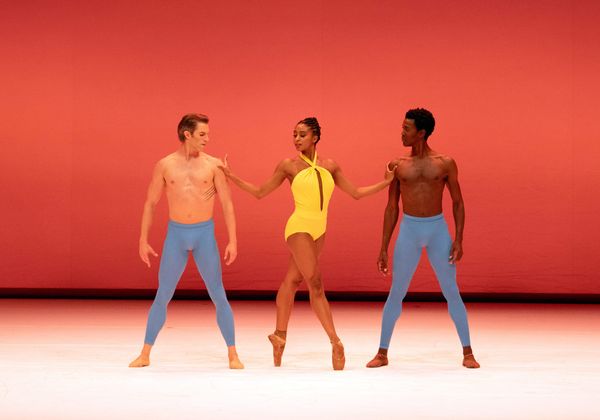
ABT's "All Classic Masters Program" was a glorious sight, from Balanchine's bright "Allegro Brillante" to the moonlight glade of Ashton's "Dream". Gillian Murphy was in her element in Balanchine's glorious cacophony of steps, throwing off multiple turns and stops on a dime as if these were as easy as talking. But it was not just a display of technique, it was a display of technique used for artistry, as the phrasing and the nuances showed a radiant beauty, dancing for pure love and joy. There was a feeling that she was luxuriating in the movement and her arms seemed to caress the air. Ethan Stiefel, in one of his rare appearances (he appears to be winding down his dancing days), was a gracious and enthusiastic partner, and the straightforward good nature of the choreography suits him so well. The small corps got a workout (Hee Seo did take a tumble, but recovered well) in what was a sparkling performance.

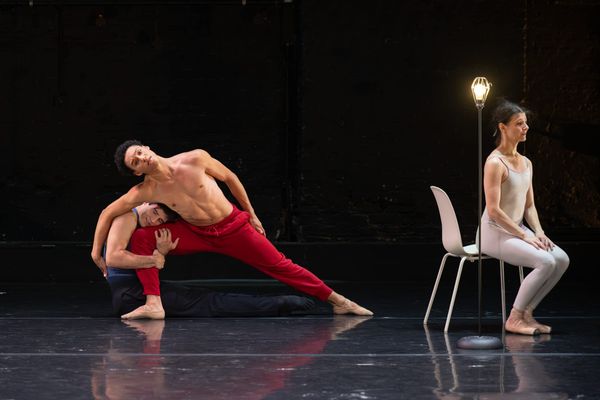
The middle section was made up of three pas de deux, maybe not artistically coherent, but strongly cast. Tudor's "Romeo and Juliet", long rumored to be on the revival list, seems to be relegated to the farewell scene. This out of context presentation is obviously not ideal, but it does give a glimpse of what might have been. Xiomara Reyes and Gennadi Saveliev were the tragic couple. The costume and hairstyle are very flattering to Reyes, as is the gentle and apparent simplicity of the choreography. There is no scenery chewing in Tudor's version since he requires a stylized intensity that comes from the dancing, not the face. There is a sculptural quality to the movements, and haunting images that linger.
Ashton's Thaïs has haunting images as well, and since it was choreographed as a complete work, there is an arc to the choreography. Hee Seo and Sascha Radetsky made their debuts. Radetsky is a bit too short to complement Seo's lines and so some of the magical symmetry was missing (Ashton's original dancers, Antionette Sibley and Anthony Dowell seemed to move as one). His persona is also a bit too straight forward for the sandalwood scented atmosphere, but he danced well. Hee Seo was his mysterious partner, and she looked lovely in the slightly kitchy orange and gold outfit. Her dancing had a slightly dangerous edge to it, as if she were a magical creature out to captivate a hapless human. Her final kiss before she disappeared had a slight air of doom, as if she were ensuring that he would spend the rest of his life looking for her, in the old "fairy's kiss" story.
There is a great deal of kissing in Kenneth MacMillan's bedroom pas de deux from "Manon", danced by Diana Vishneva and Jose Manuel Carreño. Vishneva used her long and elegant arms to create a fascinating child-woman, grabbing for anything she wanted. Carreño, though he had some trouble with the lifts, was certainly worth grabbing, but the choreography is basically from the roll on the floor and look anguished school, and needs stars to make it work.
There is plenty of real choreography in "The Dream", a complete joy from beginning to end. It had stars too, in Julie Kent and Marcelo Gomes. No, they weren't Sibley and Dowell, the inimitable original pair, but this was a thoroughly lovely performance from everyone. Kent did scimp a bit in her difficult solo, and her back bends were a bit sketchy, but the shades of feeling, from haughtiness, to rapture (no matter how deluded), to the final surrender, were perfectly delineated. Gomes' warmth and open stage presence make the mysterious Oberon a bit of a stretch (he was wonderful as one of the lovers in ABT's first performances), but his dancing had power and elegance. The scherzo went by in a thrilling green blur, and the final pas de deux was elegant and moving.
The supporting roles were also terrific. Craig Salstein's mime was witty, and if his dancing doesn't have quite the incisive power of Cornejo's, it was nevertheless sharp and clear. Isaac Stappas managed the point work very well as Bottom, and the final mime scene, when he remembers, with awe and embarrassment, the hours with the beautiful Titania, was truly moving. The lovers didn't make the mistake of trying to be funny, they tried to be real, and so the wit came through, especially in Kristi Boone's prissy Hermia. But every dancer on stage contributed, and it was hard to come back to reality after sharing that moonlit world.
copyright © 2010 by Mary Cargill