The Source
"The Sleeping Beauty"
New York City Ballet
David H. Koch Theater
Lincoln Center
New York, New York
February 24, 2023
It is no exaggeration to say that without “The Sleeping Beauty”, ballet as we see it today would not exist. New York City Ballet’s program provides a useful outline of its importance, starting with the group around Diaghilev and without that great impresario, there would be no Balanchine, no Royal Ballet, and possibly no modern ballet at all. “The Sleeping Beauty” is more than a collection of pretty music and difficult dancing attached to a simple fairy tale, and any production should try to convey what it is about the work that has captivated so many brilliant artists over the years. Of course, the dancers should not look as if they were tiptoeing around a great cathedral, overawed by the grandeur, but they should all be part of the overarching story. That story, to me, isn’t just about a nasty guest who was overlooked, and the moral isn’t “doublecheck your list”, it illustrates, so elegantly, the importance of generosity.
Carabosse embodies the worst of human nature — vain, vindictive, insisting on justice, whale the Lilac Fairy stands for mercy and forgiveness. There are so many instances where mercy ultimately triumphs over justice — that is why the mime scene with the knitters is so crucial. The King (especially in the 1999 Maryinsky revival) argues for justice, since he has banned the knitting needles he must stick to his decision, while the Queen and the court beg for mercy, and ultimately win out, showing that this court is a truly good one. In the 1999 version, it is clear that Aurora forgives Carabosse at the wedding, though the court does keep an eye on the wicked fairy. Evil isn’t completely destroyed (as in Swan Lake), it is contained. “The Sleeping Beauty’s” theme isn’t some grand existential battle between good and evil, it is a very personal one, that each of us can choose mercy, can forgive Carabosse, and can earn our happiness.
Despite many fine elements, Peter Martins’ version fast forwards through these ideas and weakens the power of the work, though Tchaikovsky’s music gives any version a firm and indestructible structure.
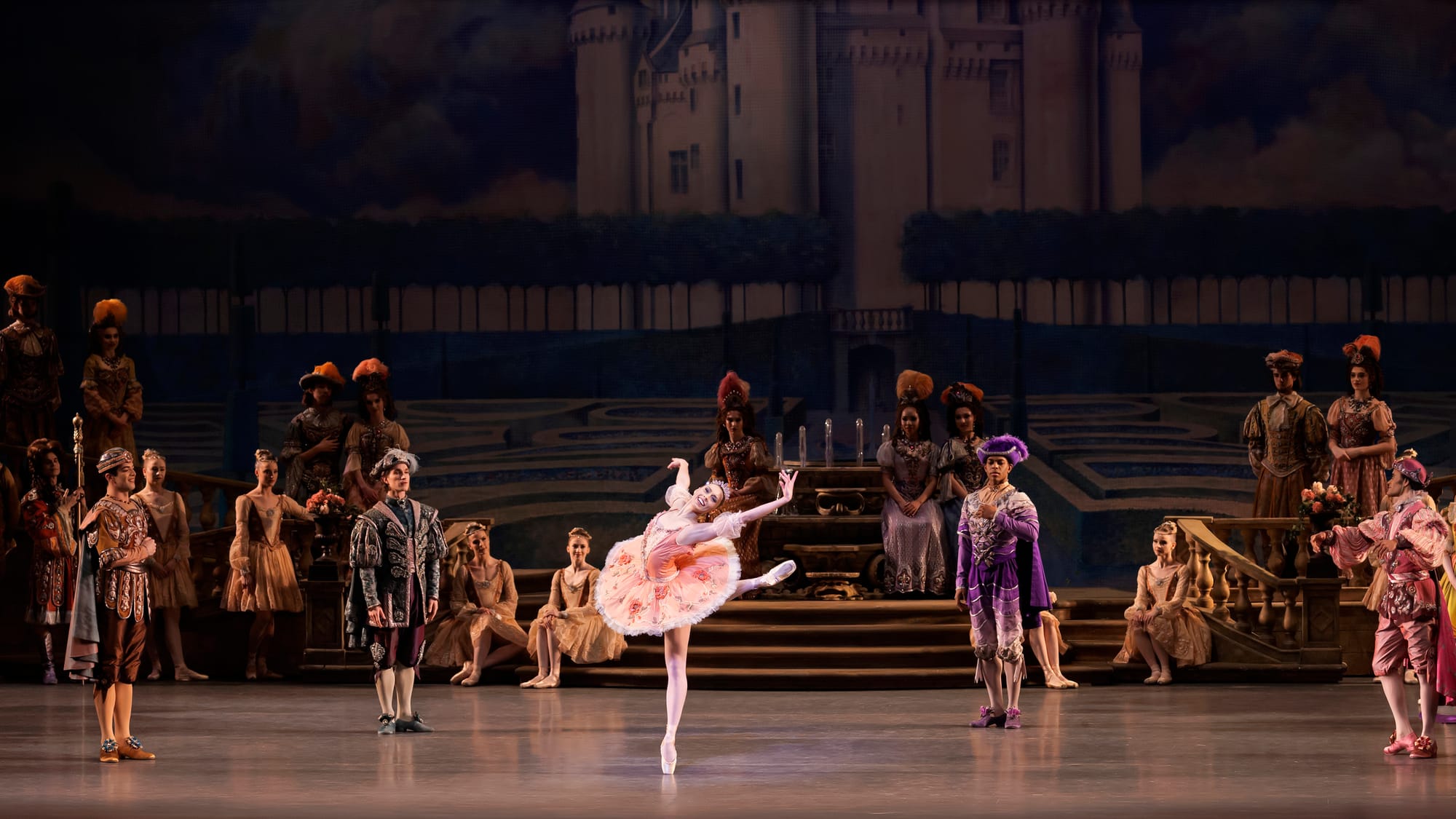
The February 23rd performance had a new Aurora (Isabella LaFreniere), a new Lilac Fairy (Emily Kikta), and a very new Prince (Peter Walker, substituting for Jovani Furlan). LaFreniere, a tall, stately dancer, is not a typical Aurora, though her luxurious arabesque shimmered. She seemed to be concentrating on the steps, and danced each act with the same fixed smile, so there was little emotional arc to her portrayal. Her Rose Adagio was a bit unsteady and the conductor (the sensitive and nuanced Andrews Sill) had to stretch out the music for the final balances, but she finished with a triumphant (and slightly relieved) flourish. Her solo, despite her rather fixed grin, was expansive and luxurious and her final diagonal was beautifully modulated, the jumps growing in height until it seemed she could fly off. Her puzzled, pained expression when stabbed by that spindle was a vivid picture of a girl who had never been hurt and could not believe anyone could be so cruel.
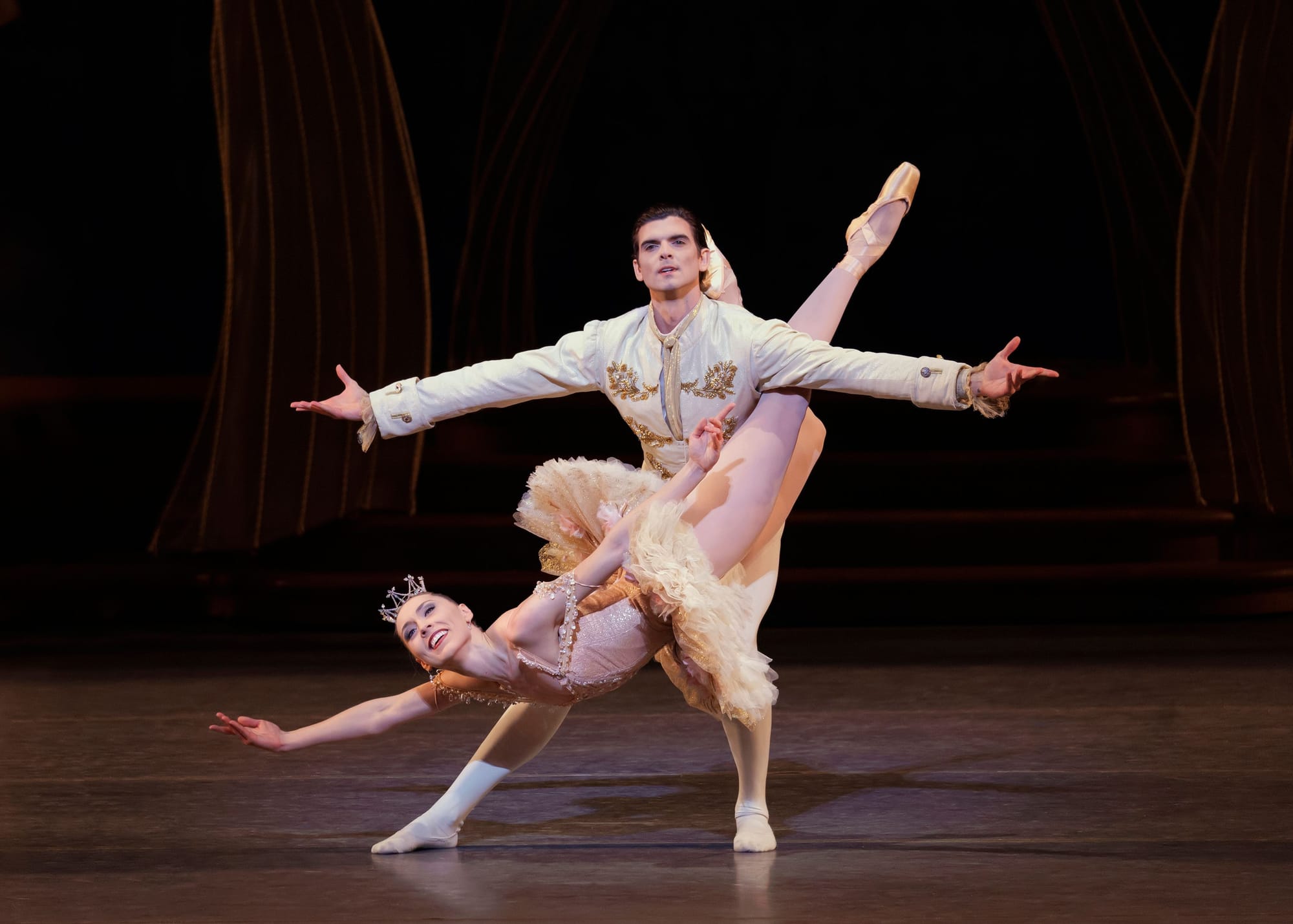
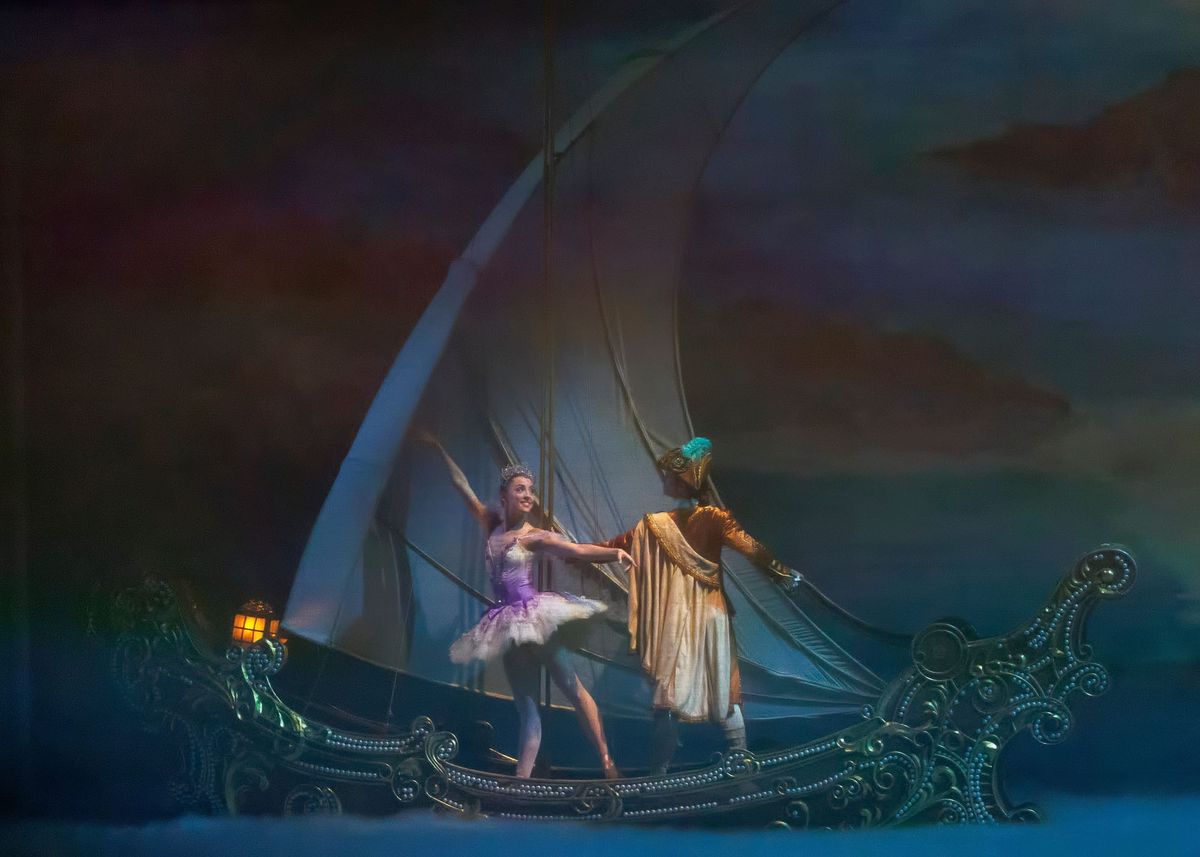
She was a bit too robust in the Vision scene, dancing it as a woman who was really thrilled to see that Prince, rather than a misty dream of perfection. Her control, though, in the reverse développés as her hands wafted over her face, was impeccable. She was at her confident best in her final solo, and her hands in the folk influenced hand curls had a lovely lilt. Her Prince, Peter Walker, did his best, despite having to zoom through the hunt scene, to indicate a kind and decent man (he was so patient with his Countess Mary Elizabeth Sell’s exaggerated sulkiness) who felt that something was missing in his life. Walker is tall, with long legs and a beautiful line but is more of a regular fellow than a Prince; regal nobility isn’t NYCB’s forte. It may have been a lack of rehearsal time, but his final double tour to arabesque crumbled, and the wedding pas de deux skirted disaster, as a couple of the fish dives veered off course. The final “no hands” pose, though, was triumphant.
Emily Kikta’s Lilac Fairy, too, was triumphant. She was not afraid to use her height and wing span to dominate the stage, and her mime was clear and powerful. Her arms seemed to caress the air. With experience, she might be able to play more with the music, lingering in a pose rather than occasionally rushing the steps but it was a very convincing performance, generous and expansive.
KJ Takahashi, a young corps dancer with explosive power, made an impressive debut as the Bluebird, with crisp, clear beats and springy entrechats. Erica Pereira as Princess Florine was hindered by the music’s speed and the charming little grace notes of her cupping her hands to listen to his instructions whizzed by like a poorly performed salute. She seemed to think that nodding her head would make her bird-like, but Princess Florine is not a bobble-headed doll. Mimi Staker’s Fairy of Tenderness was especially lovely, and she danced with a luxurious femininity. Davide Riccardo, in his debut as Gold in the jewel variation danced his somewhat fussy and unmusical solo with an elegant flow, and Alexa Maxwell’s Ruby variation seemed to skim the stage. The stage-filling garland dance and the luminous vision scene cast their usual charms, and gave glimpses of the ballet that changed everything.
© 2023 Mary Cargill



