The Show Must Go On
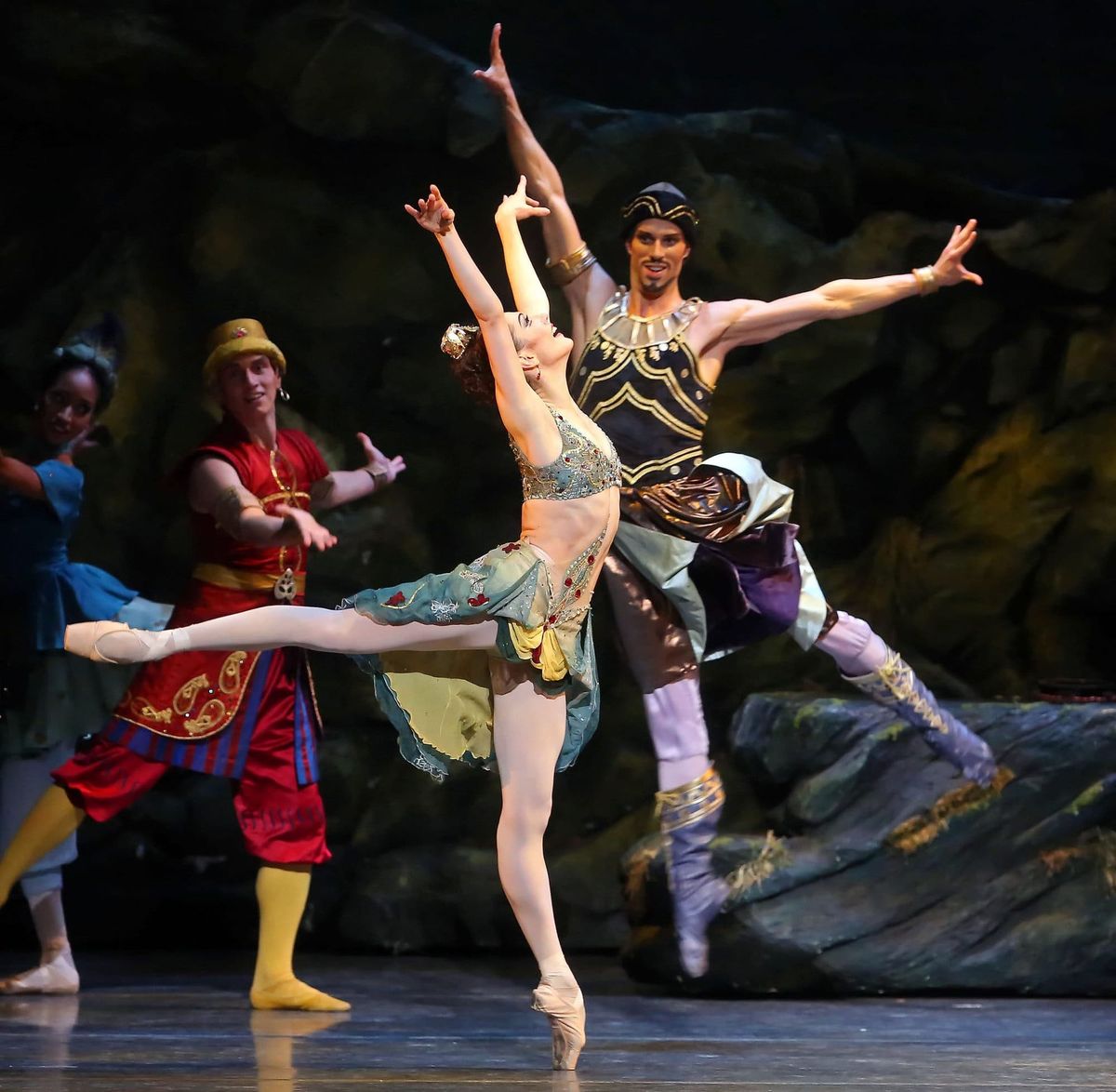
"Sylvia"
American Ballet Theatre
Metropolitan Opera House
New York, New York
June 26, 2013 Matinee
Veronkia Part and Cory Stearns were scheduled to make joint debuts as the nymph Sylvia and her beloved Aminta; however at the last minute Stearns was injurned and replaced by Marcelo Gomes. (There wasn't even enough time to put a slip in the program.) Gomes, of course, is an experienced Aminta and a partner extraordinaire, but much of the partnering requires split second timing, and there couldn't have been much time for rehearsal, so I expect the performance of the pas de deux was at best a dress rehearsal.
There is a great deal of dancing before the pas de deux, of course. Part's long, adagio legs weren't built for Ashton's fast, detailed, complex, twisting steps, and her feet seemed often to lag behind the music. Her upper body, though, with the rippling arms and beautiful musicality, was a joy to watch. She was a more pensive first act Syliva than any other I have seen, and she gave the impression that she was longing for something amidst all the female frolicking. Her attacks on Eros seemed to be an attempt to repress her own feelings, and she gave the brief bathing scene, where she sits by the fountain, a beautiful sensual quality. Her womanly yearnings were very near the surface long before Eros' arrow found her heart. Her bourreeing entrance, when she discovers Aminta's body, was as moving as her Odile, one long, tragic sigh.
This sigh continued to the beginning of the second act, where her statuesque beauty gave her rejection of Orion's advances an outraged innocence. The original title of the ballet was "Sylvia ou la Nymphe de Diane" and in her sequined seduction outfit, Part made it look like is should have been "Sylvia ou la la". Her footwork issues showed up in the final pizzicato solo, and she was not able to carve the sharp, clear shapes of the choreography, though her upper body was ravishing. Her arms seemed to turn to ribbons fluttering in the music.
Writing about Gomes' Aminta is difficult--how many synonyms for magnificent can there be? His opening solo, with the beautiful arabesques, so expressive of the innocent purity of Aminta, was secure and flowing. His final solo was a burst of pure joy, the quick changes of direction seeming to explode from his very being. The pas de deux started beautifully, as Part used her flexible, luxurious back to lean in his arms. The quick turns, where he must stop her with precise placement and timing so she can freeze in the elegant position, though, came unstuck. Fortunately, this didn't seem to faze Part, and she hurled herself with complete confidence at Gomes in those leaping fishdives. The following section, where he pulls her head to him shoulder and holds her gently shows why Gomes is the John McEnroe of the ballet world; the most romantic couple in ballet today is Gomes and anybody.
James Whiteside danced Orion. His drunken miming was quite vivid, but for me, his dancing lacked the power that it needed. His jumps were a little too easy and his extensions too fluid for the vigorous, earthy villian. Craig Salstein was a witty little Eros, prancing so playfully in his grey rags. His feet were comic gems. The goats (Gemma Bond and Arron Scott) got their well deserved applause for their frisky, delightful dance. The other supporting dancers were all elegant, but Christine Shevchenko, as Ceres, especially stood out for her graceful carriage. The show did go on, but the casting gods scheduled Part only once, so one hopes if she has another chance, there will be some rehearsal time.
copyright © 2013 by Mary Cargill