The Shoe Fits
Cinderella"
American Ballet Theatre
Metropolitan Opera House
New York, New York
June 9, 2014
"Who will play the sisters?" was the constant refrain when ABT announced that it would perform Sir Frederick Ashton's version. The Cinderella story certainly seems like a natural in the full-length sweepstakes--a familiar story with a ballroom setting and a happy ending, but the previous two versions (by Ben Stevenson and James Kudelka) were choreographic duds. The somewhat episodic Prokofiev music is not pretty in a sweet Disney way, with its occasionally spiky rhythms, but it has glorious moments of rarefied rapture. Ashton made his steps look so natural, so inevitable, that the musical complications fade away.
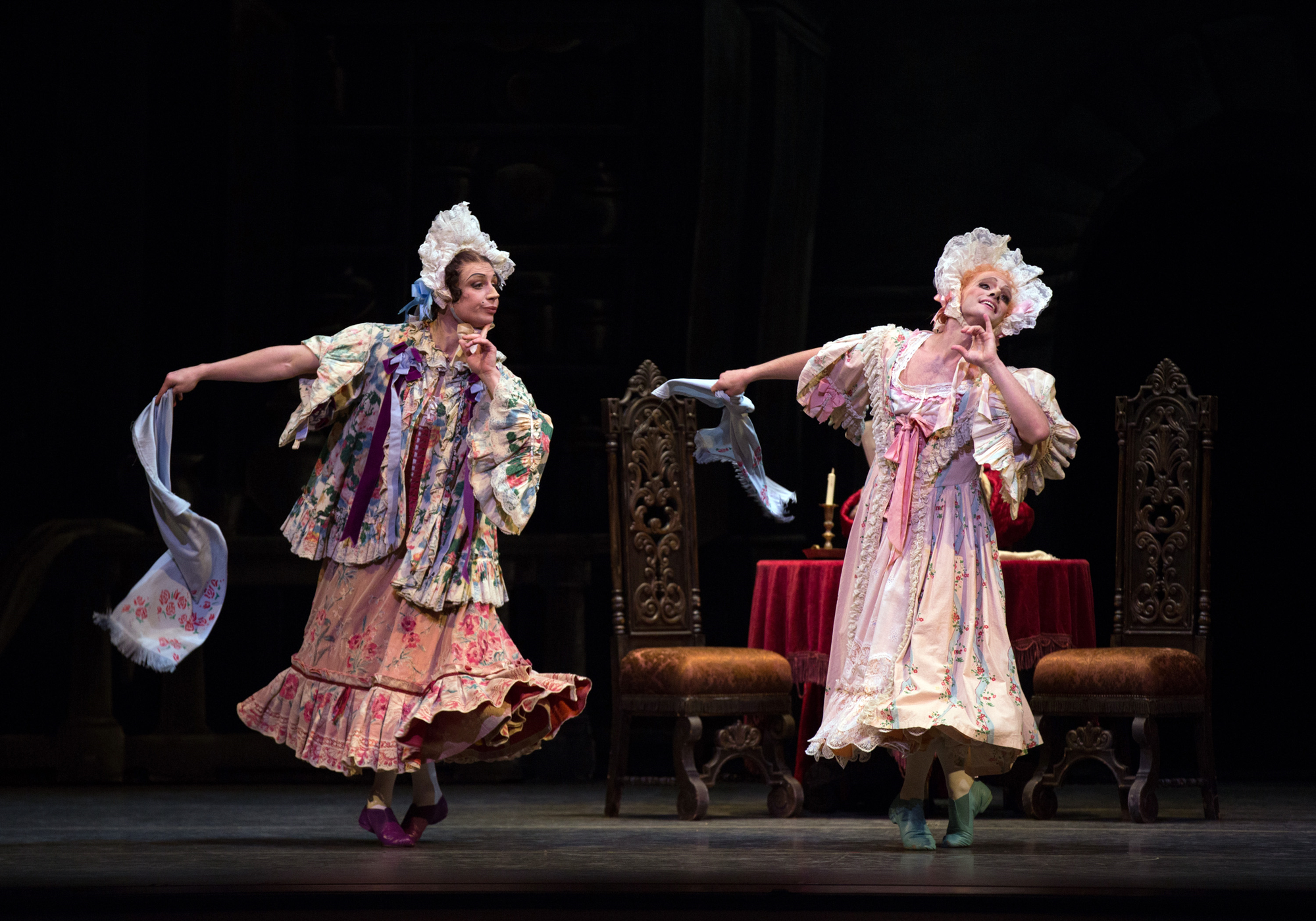
Ashton and Robert Helpmann couldn't help but dominate any scene in which they appeared, but later performers have tended to congeal their genius into camp. Craig Salstein (as the timid Ashton sister) and Roman Zhurbin (as bossy Mr. Helpmann) were the most successful I have seen since the originals, musically apt (those sisters do move), and real characters. Salstein's sister was fussy and giddy, with mincing little steps and bouncing curls. I missed the sweet desperation that Ashton gave her, and Salstein's defeated little walk off stage to lonely old-maidenhood could have been stronger. Zhurbin was selfish, vain, and deluded, and had a number of other human qualities, as well. How Ashton loves his losers; from Bottom and Alain to the shallow Natalia of A Month in the Country he shows such sympathy for their feelings. The audience laughs at the sisters, but it is a slightly wry laugh, as we can see our own dreams reflected in their hopeless vanity. These were real performances, not broad winks to the audience.
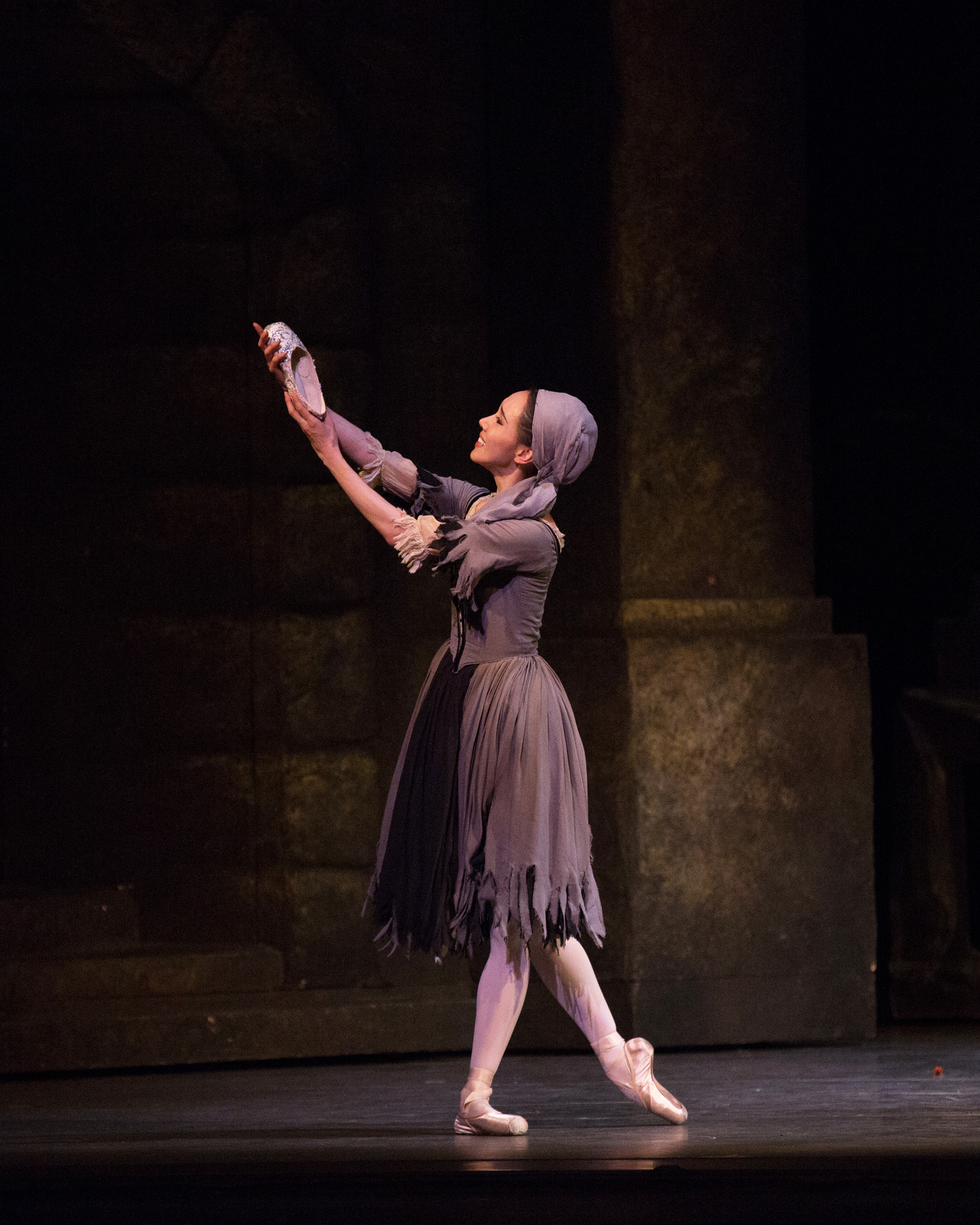
But dominating as the sisters are, the ballet is really about Cinderella and her triumph. Hee Seo was by turns touching, funny, and serenely elegant, as she used her eloquent feet and and slightly illusive stage presence to create a shy, loving, and radiant Cinders. She could have made more of the floating walk down the palace stairs by slowing down, but that deceptively difficult entrance went without a hitch. Her solo in the second act, with the little back-bends and quick turns did seem to weave a spell around the Prince.
James Whiteside, her prince, was a gracious partner, and the so-called Présages lift in the final act seemed to float, as he gently lowered Cinderella to the ground. His dancing though, seemed a bit pushed, as if he were ending each sentence with an exclamation point.
Veronika Part, as the Fairy Godmother, was all commas as she strung her open, generous arms and liquid torso into a radiant vision beauty against that starry sky. She did have some issues with the faster steps and quick turns of direction, and didn't dive into the series of arabesques with as much abandon as some dancers, but overall, she was one of the most glorious godmothers I have ever seen.
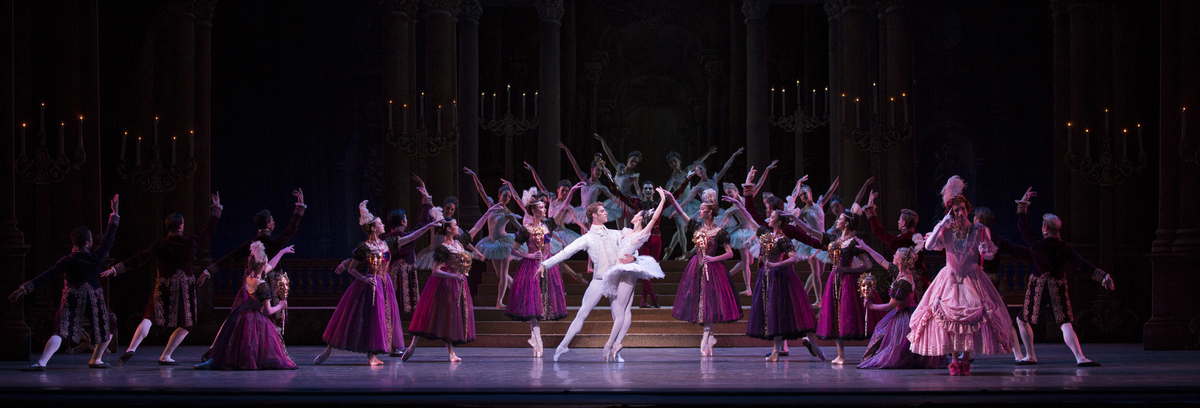
The Fairy Godmother, like her cousin Lilac, doesn't travel alone; she is accompanied by a group of twelve stars, who dance some of Ashton's most inventive, musically astute choreography, classical with a twist, like his astringently glamorous Stravinsky ballet Scènes de Ballet which he choreographed a few months before Cinderella. The stars, with their V and inverted V shaped arms echo and enhance the strange Prokofiev rhythms as they form their kaleidescopic patterns in the echo of The Sleeping Beauty's vision scene, magical and inevitable. (Only the prince seems to notice them, as they mingle with the guests.)
The Godmother's assistants, the four seasons, also danced their tricky, frisky solos with a fine attention to detail. Skylar Brandt, as Spring, had a slightly stiff upper body, but danced with a bright and eager attack that was irresistible. Christine Shevchenko was especially lush as Summer, Yuriko Kajiya used her flowing arms to show a light-hearted Autumn, and Melanie Hamrick caught the swirling speed and cool attack of Winter. Their group dances in the ballroom scene, though, looked a bit under-rehearsed, as their legs made various angles. The palace courtiers, too, looked a bit stiff; the choreography looks so much more interesting when the upper body bends. The jester, Luis Ribagorda, wasn't stiff at all, as he led the dances. His dancing was crisp and his jumps high and easy, but he didn't try to capture the haunting sense of isolation that Alexander Grant, with his long, sad, clown's face, gave the role.
The ballet is a company effort, and doesn't completely depend on individual performances. The final scene, as Cinderella graciously forgives her step-sisters and turns her back to the audience, walking slowing into the bright, happy, secure future with her prince as the music shimmers was absolutely transcendant, and ABT has found the right fit.
copyright © 2014 by Mary Cargill



