The Power of Love
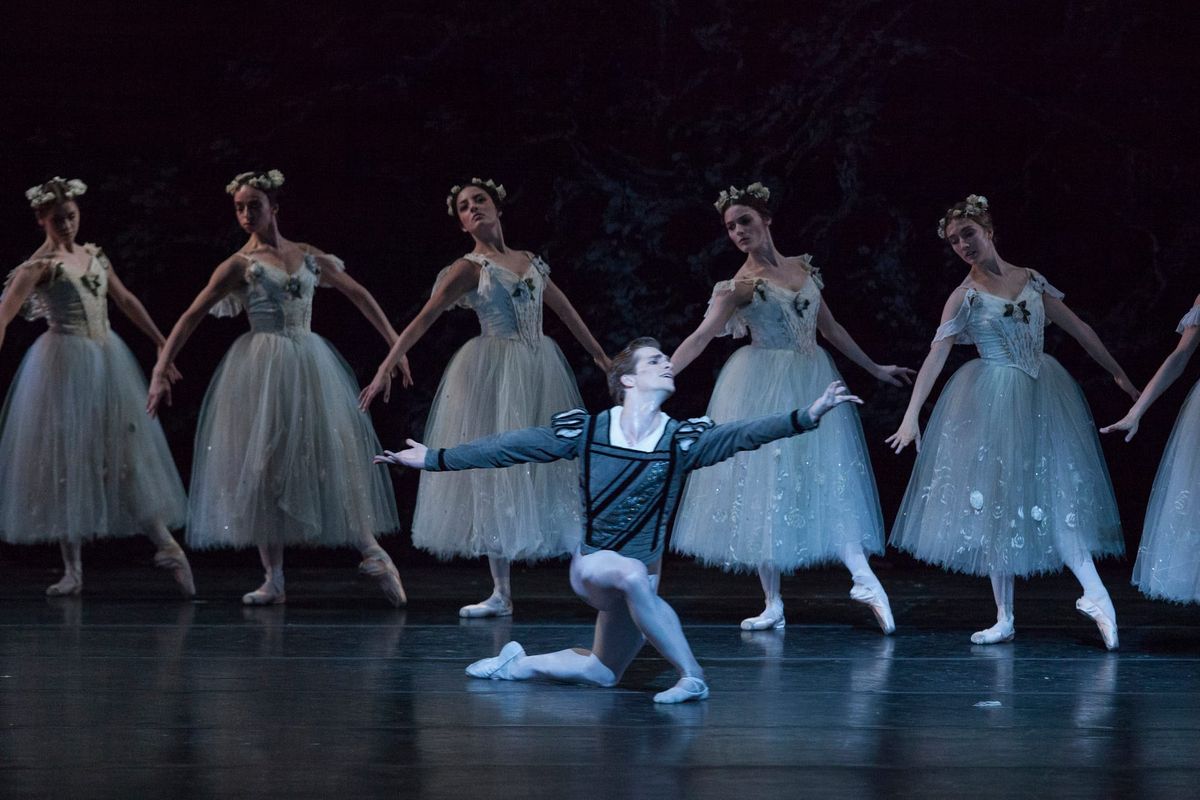
“Giselle”
The National Ballet of Canada
Four Seasons Centre for the Performing Arts
Toronto, Canada
Nov. 20, 2024
The story of “Giselle” hasn’t changed since its premiere in 1841. Today, “Giselle” is all about the performances. There is a reason this romantic era ballet has endured as long as it has. No other work so perfectly embodies romantic values – idealism, emotion, the supernatural and the irrational. The National Ballet of Canada has been performing Sir Peter Wright’s version since 1970. As the saying goes, if it ain’t broke…
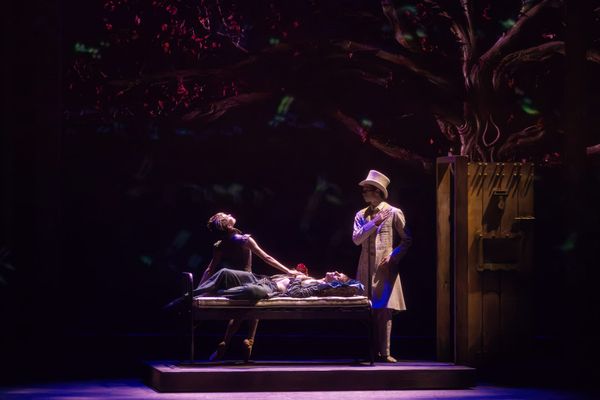
Svetlana Lunkina is by now an expert and veteran Giselle, having danced this role at every stage in her career. At 18 years old when she first joined the Bolshoi Ballet, she was cast as the tragic heroine and became the youngest Giselle in Bolshoi history. Now at 45, she brings decades of experience to her interpretation. An undercurrent of fragility is ever present in her first act. She has big jumps, but featherweight landings belie their power. Her arms are held, but sway ever so slightly, as if moved by the wind. Even without her mother’s warnings, her weakened heart is evident in her delicate and carefully placed movements. She fell for Albrecht hook, line and sinker. When Bathilde approaches her fiancé, Giselle instinctively stands in front of him, arms outstretched, blocking him in a stance she will later repeat in Act II as she shields him from Myrtha.
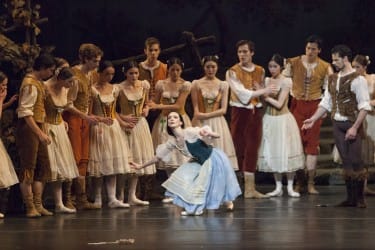
Her mad scene was equal parts disturbing and heartbreaking - a masterclass in acting. If the ballerina does too much or too little, it does not read. Lunkina found the perfect balance. For an uncomfortable length of time, she stood motionless, hunched over and holding her head in her hands. Next, she slowly marked the steps of her pas de deux with Albrecht in a daze, as if wondering if the courtship happened at all or if it was all an illusion. Without warning, she starts vividly hallucinating, furiously ripping petals from an imaginary flower as the town looks on in horror. Lunkina had the audience rapt – one could hear a pin drop in the theatre.
Her Albrecht was Harrison James, looking in top form. James depicted Albrecht as an emotionally immature and impulsive person, rather than a cad. He acted before considering the consequences. In his privileged position, he had never had to. He disguised himself as a peasant, thinking it a harmless diversion. He is curious and novelty seeking. He is genuinely caught off guard when he reaches for his sword during an altercation with Hilarion and finds nothing there. For the first time in his life, he has to be resourceful and figure things out on his own.
As compelling as she was in Act I, Lunkina was even more remarkable in Act II. In contrast to her frailty in the first act, as a Wili she showed a quiet strength stemming from her steadfast forgiveness and determination to redeem Albrecht. The spinning arabesque chugs when she rises from her grave were chilling in their speed and power. In the adagio sections, her arms are impossibly long, reaching into another realm. She looked part angel, part zombie. She was sensitively partnered by James. As he swung her from one position to the next or lifted her, she let her body sway passively and corpse-like. Dancing together, they seemed to bring out the best in each other. James steadily supported her throughout so that she could create an illusion of skimming the stage weightlessly and never coming down. His grief was believable and his pleading with Myrtha desperate. His technique and stamina were impressive, particularly in the seemingly endless series of entrechat six. He is in a place where the mechanics of the steps are second nature, allowing him to pour more energy into his characterization.
As Myrtha, Genevieve Penn Nabity made a stunning debut. She ate up space with silken bourées and huge pas de basques and grand jetés, immediately commanding attention. Her expression was vengeful and detached. Only in the end did she crumble, weakened by witnessing Giselle’s authentic love.
Donald Thom also gave a notable and inspired performance as Hilarion with clear mime and expressive dancing. His feelings for Giselle are pure but his manners are gruff and startle her gentle sensibility. His contempt towards Albrecht is palpable. His mocking bow to Albrecht with a twirl of the wrist says “I’m on to you.” He feels triumphant when Albrecht’s true identity is revealed, but this is short lived as he is soon overwhelmed with grief and regret after witnessing Giselle’s reaction. During the mad scene, when Giselle grabs the knife, Thom drops to his knees and puffs up his chest, begging her to stab him.
Hope Muir reinstated the peasant pas de six from Wright’s original staging. In previous runs, it has been a pas de quatre. Thus, two of the variations are done by pairs side by side without much interaction. It does create an opportunity to showcase more dancers, but visually it just looks like a solo variation with an extra person. The pas de six was led by David Preciado and Emerson Dayton who both danced brilliantly. Preciado in particular was exciting to watch. In his variation, he landed every double tour en l’air like an arrow hitting a target – an exclamation mark at the end of a phrase.
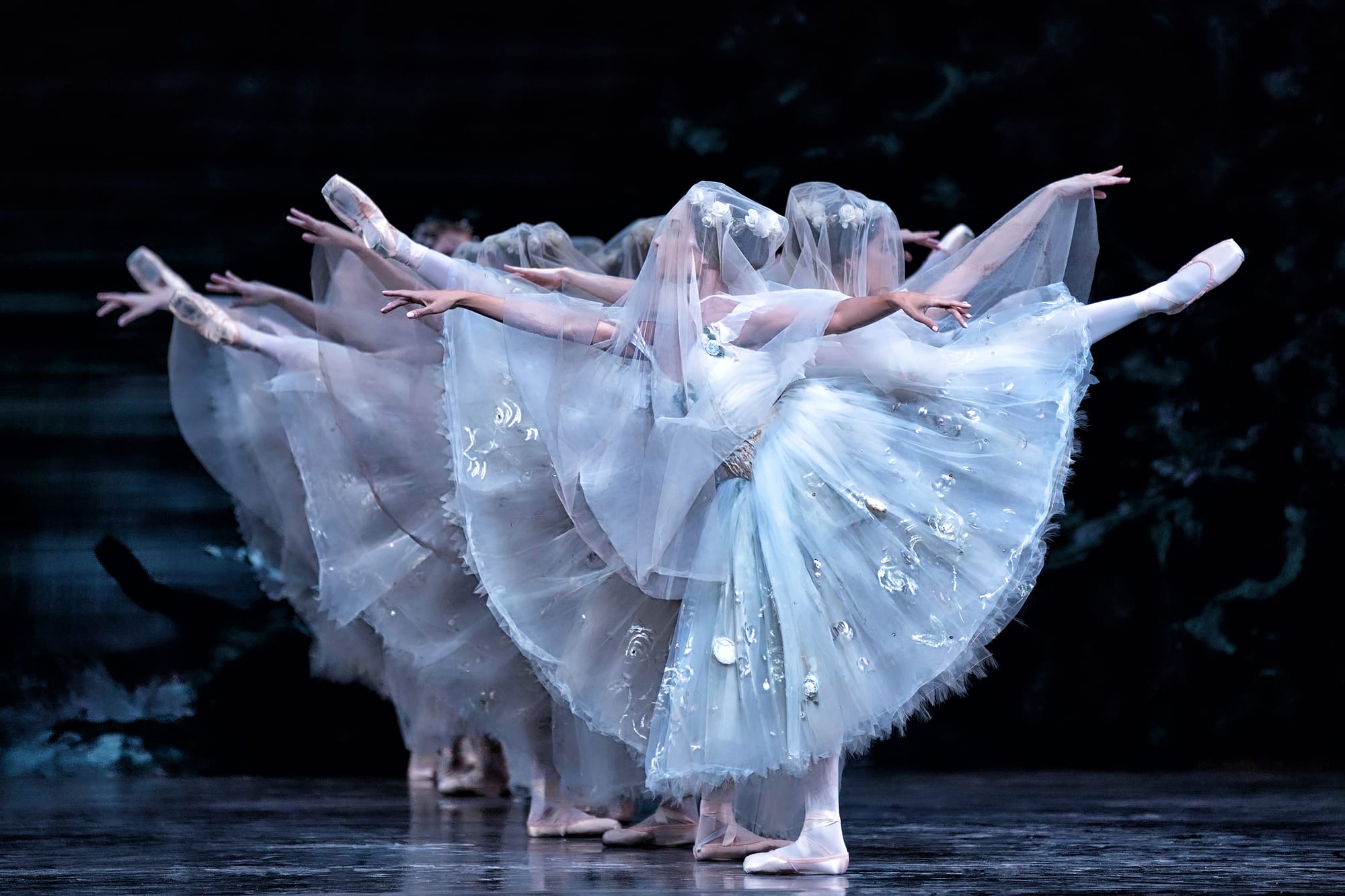
Last but not least, the corps de ballet deserve recognition for their beautiful ensemble work. They are the backbone of Act II and truly moved and breathed as one. They are essential to creating an otherworldly atmosphere, not only through their dancing but also through their quick thinking. When Myrtha tossed a branch and it got stuck on part of the set, later falling to the ground, it ended up a serious slipping hazard. Rather than breaking the flow and picking it up, the dancers kept going, mindful to dance around it. When the opportunity finally presented itself, one of the corps dancers kicked the loose branch off stage in one swift movement, blending it with the choreography. The Willis are a sisterhood; they look out for each other.
copyright © 2024 by Denise Sum