The Merry Widow
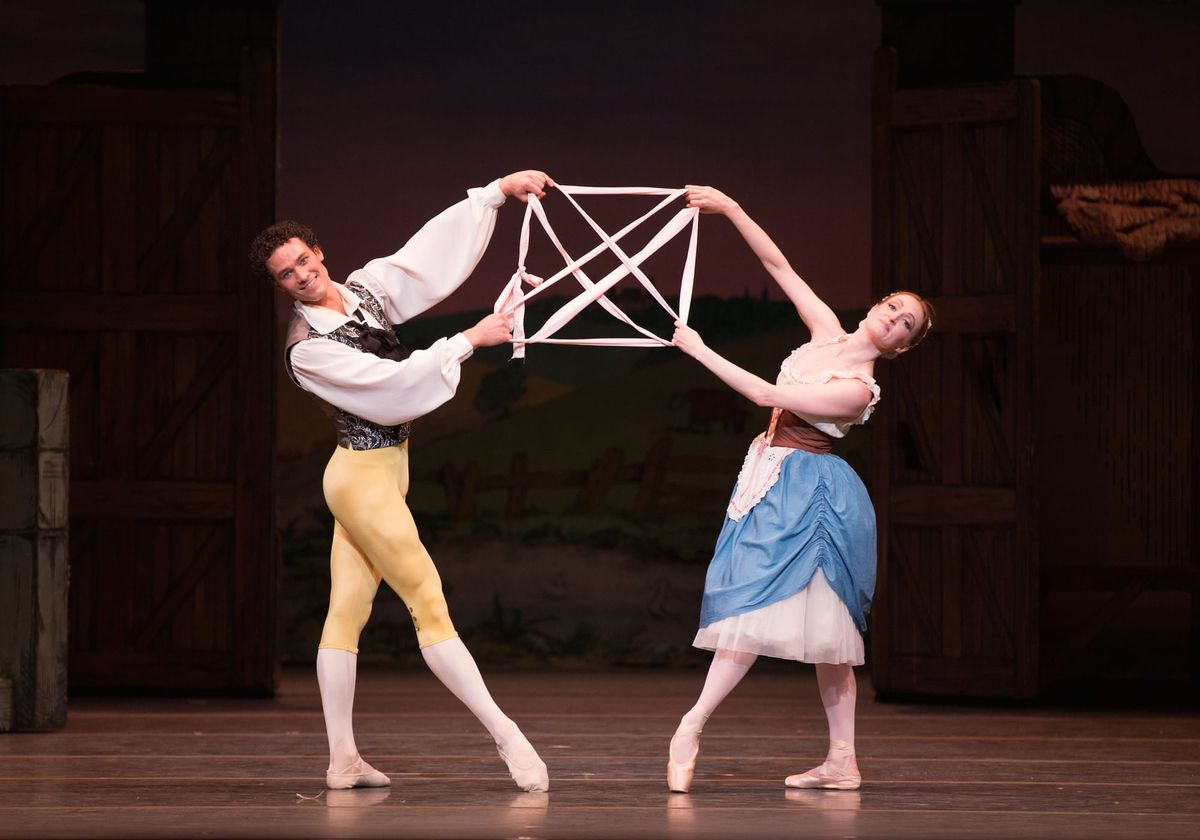
"La Fille Mal Gardée"
American Ballet Theatre
Metropolitan Opera House
New York, NY
May 25, 2016 matinee
The Widow Simone's first entrance in Frederick Ashton's "La Fille Mal Gardée" is rarely greeted with the same storm of applause as that of her daughter, but the Wednesday matinee's Widow was the revered dancer Marcelo Gomes, trying out his clogs for the first time. I did see Stanley Holden, the original Widow, who danced it like an old-time, well-loved music hall performer, sharing the joke with the audience slyly, with a quiet wink, not with a brusque elbow to the ribs. Gomes had that same approach; he didn't try to disguise his features and feminize his movements, while putting the story first; this was Jack Lemmon in "Some Like it Hot", not a burlesque comedian. He seemed to be having a wonderful time both as Gomes and the Widow, and the audience lapped up this double approach, loving the sight of Gomes spanking Gillian Murphy or lifting Cory Stearns in a huge bear hug, while being gripped by the story he was telling with so many fussy, funny details. It was a performance to savor.
Murphy had danced Lise in ABT's first foray into Ashton's sunshine. Then she was neat, precise and accurate but couldn't find any emotional range. This time she was a Dresden shepherdess come to thrilling, pulsating life as she let the light play on her expressive face, full of fun, grace, and love. She didn't act young – there were no wide-eyed, nose-wrinkling moments – but she was able to embody youth, with all its hopes. Her final open-armed embrace, which in earlier years had been a somewhat anonymous gesture, was heartfelt, as she seemed almost shy sitting up there on Colas' shoulder, in awe at her happiness, and then reached out with growing confidence to embrace the theater.
Her dancing was as sharp and elegant as before, especially in the harvest scene where she seemed to throw caution to the haystacks, whirling through the jumps and almost striking sparks with her point work, without distorting any of those classical shapes. It may be due to the stylistic work on Ratmansky's "The Sleeping Beauty", but she danced the final pas de deux with a real Pavlova softness and grace.
Cory Stearns, in his debut, was a stunning Colas, dancing with a wicked gleam in his eye. Ashton certainly doesn't make life easy for the poor farmer as he has to dance his swaggering opening solo holding on to a stick, prance around the harvest scene carrying wine bottles, do a Bolshoi-inspired one-armed lift, as well as those low, hovering lifts in the final dance, not to mention all those ribbons. Stearns made it all look like fun. I especially enjoyed his slow, cautious ascent at the top of the door, like a cat stealing a glimpse at a canary. And few have been as sensuous during the final mime scene when Colas grows from a cocky young farmer to a romantic young hero.
Arron Scott was Alain, his hapless rival. He made Alain very young, almost desperate to please the grownups, proud but almost uncomprehending when offered a wife. It was an individual, detailed, and touching performance and, like the others, was focused on letting the wonderful choreography and warmhearted wit of the ballet triumph.
copyright © 2016 by Mary Cargill



