The Human Touch
Avi Scher & Dancers
Alvin Ailey Citigroup Theater
New York, New York
April 7, 2012
Avi Scher's third season, like his earlier ones, featured essentially a pick-up company, augmented by some big names; Herman Cornejo, of ABT fame, was the biggest this season. But there was no pick-up feeling about the dancers, as they seemed to dance for and with each other. Scher has the ability not only to make his dancers look good, he also makes them look interesting, and it was pleasant to spend an evening without munching on any stale "after Balanchine" pretzels. The program was varied, balanced, and engaging, though Scher seems to have caught the modern tic of point shoes with bare legs. The small stage made the sight of pale, slightly wobbly thighs a bit unappealing.
The first dance, and excerpt from his 2010 "Touch", featured the tall, blond, and elegant Victoria North and the Joffrey Ballet's Derrick Agnoletti. It seemed to be a modern take on "Le Spectre de la Rose", set to the modern music of "Alles Wie Gross" (unfortunately the program only identifies the composers, not the titles) with North seemingly oblivious to Agnoletti's fast, quirky and detailed movements (with lots of jumps), while almost unconsciously imitating him. Though she clearly wasn't able to see him, there was a definite connection between the dancers, which created an unusual tension and interest.
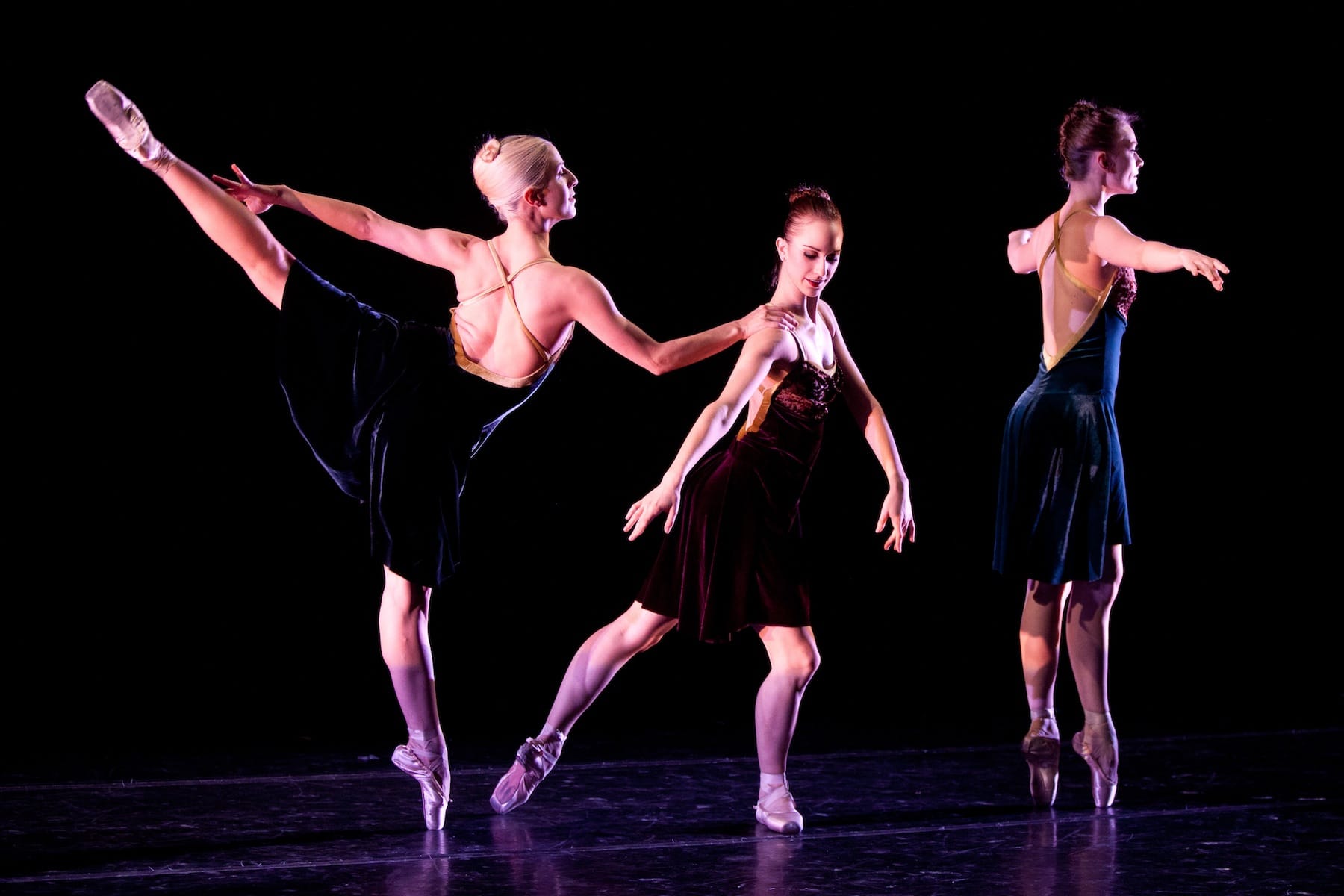
The second work "Mystery in the Wind", was also an excerpt from a 2010 piece. The three female dancers, elegantly costumed in velvet by David Quinn, danced a beautifully crafted, old-fashioned pas de trois, with a dreamy beginning, variations, and a sparkling, gypsy-inflected finale. The music (again unidentified) was by Rachel Portman, well-known for her movie music, and it was melodic, varied, and with a slight twang to keep it from being a complete pastiche. The three solos were not just athletic romps through the music, they had distinct characteristics. Maddie Davenport, in the first one, was elegantly Oriental, Nancy Richer was more seductive, and Kelsey Coventry was flamboyant. They all joined in the turns and jumps of the devil-may-care finale. This type of finely judged arc is a rare sight nowadays, with so many "all systems go!" applause generating machines on view, and the piece had real charm.
"The Gift", a premiere, was set to Mendelssohn, a piano version of the music Ashton used so indelibly for the pas de deux in "The Dream". Scher has performed Puck in that version, so he is familiar with that beautiful work, but his pas de deux avoided any reference to that version. Derrick Agnoletti and a piquant Laura Feig play with a purple scarf, and, presumably the gift, Agnoletti ends up with it. It seemed a bit overwrought--I didn't understand quite why he was so thrilled with it, but the interplay was light and airy.
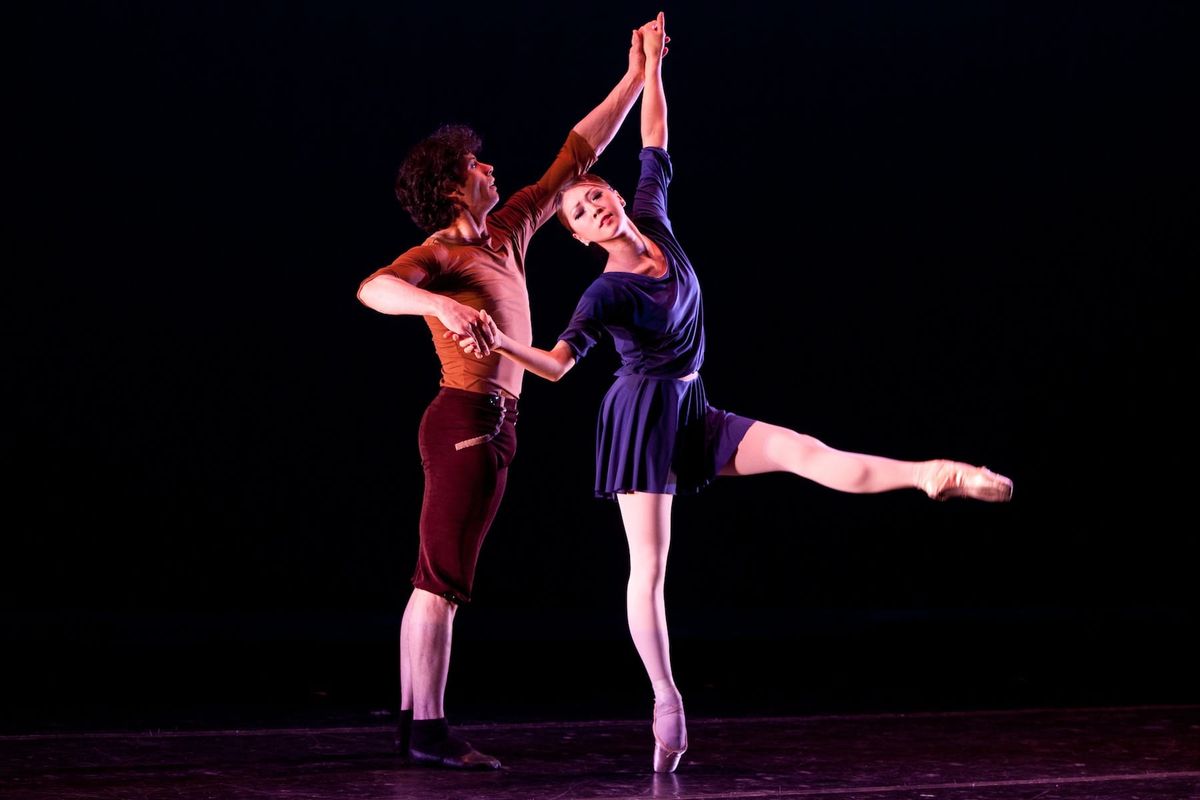
"Phased" was not so light and airy, and was danced with live guitar (Villa-Lobos, played by Nate Brown). Herman Cornejo danced with Misa Kuranaga, an elegant and precise dancer from the Boston Ballet. They look very good together; Cornejo is usually paired at ABT with soubrettish dancers, but Kuranaga has a womanly presence that belies her small stature. The pas de deux's emotions were more fraught than those of "The Gift", with a fair amount of rushing from wing to wing, a lot of push-away, pulling-towards emotion (Kuranaga was often on the floor rolled up in pain.) The costumes (by NYCB's Janie Taylor) supported the casual, improvisational feel, with Cornejo in knee-high tights and Kuranaga in a flattering blue dress. The artistry of the dancers gave the piece more depth than the slightly histrionic choreography.
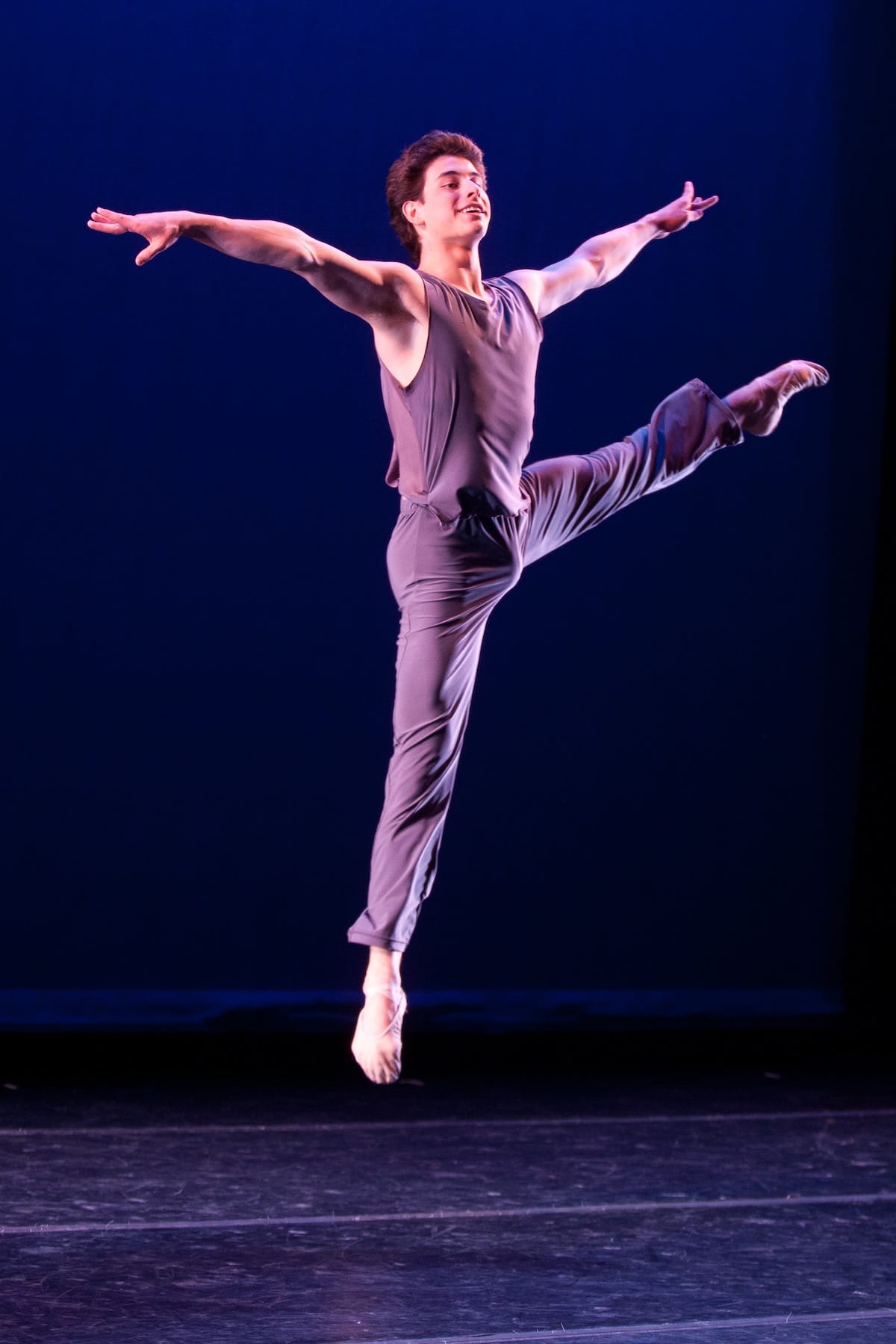
The somewhat obscurely titled "Dwindle" was a larger piece for six women (including ABT's luscious Zhong-Jing Fang, out for so long with an injury) and three men. It had two parts, to recorded modern music by "Alarm Will Sound" and "Broken Rider". The first part seemed to take place somewhere on the back of the moon, with grey chiffon dresses for the women and grey tights for the men. The dancers seemed to be in their own bubbles, with an interesting quality of movement, as if they were floating in a mist. The second half was brighter--perhaps the sun came out. Sean Stewart (a stalwart at ABT) and Carlos Lopez (another fine, recently retired ABTer) had a rolicking duet, and the sunny Sterling Baca (a new corps member at ABT) got a charming solo. Scher clearly leans more towards the sun than the moon, and it was a cheerful, upbeat evening.
copyright © 2012 by Mary Cargill



