Golden Oldies
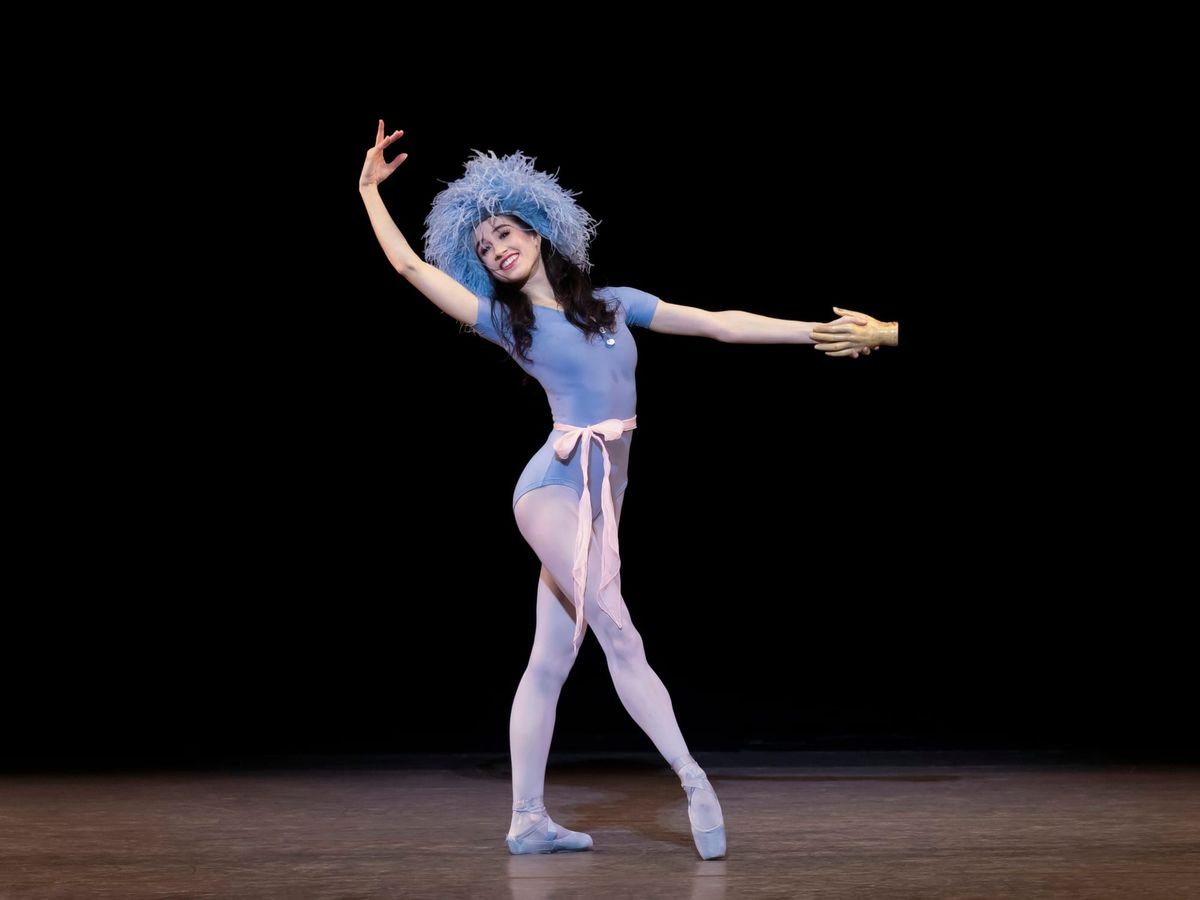
"La Source", "The Four Temperaments", "The Concert"
New York City Ballet
David H. Koch Theater
New York, NY
October 3, 2026 matinee
This performance featured three varied works, one each from the 40’s, 50’s, and 60’s—it is astounding to realize that the most recent one, Balanchine’s “La Source” (1968), is almost 60 years old. The dancing however was vibrant and fresh, with a number of debuts. It was a finely balance and varied program, starting with the prancing pink of Balanchine’s “La Source”, a salute to Delibes and all those nineteenth century ballet girls. “The Four Temperaments” (1946) for all its jazzy accents is a timeless masterpiece which never gets old, and Jerome Robbins’ “The Concert” (1956) remains an astute and very funny exploration of various reactions to Chopin, even if the references to “Les Sylphides” were more familiar to the audiences of the 1950’s than they are to current ones.
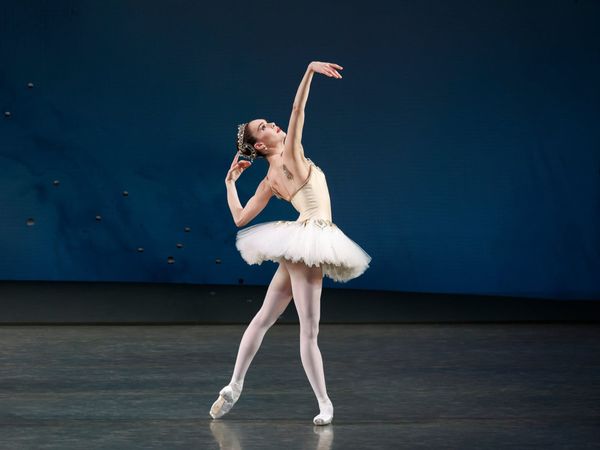
Tiler Peck and Roman Mejia were both debuting as the romantic couple in “La Source”. They luxuriated in the episodic atmosphere, without imposing any underlying emotions. The ballet is an elegant piece of froth, a section of lace from an old wedding gown with a hint of perfume still clinging to it. Their opening pas de deux was fluid, smooth, and flowing; the work has a decorous, sweet-natured formality, as the male partner revolves around the woman, delicately supporting her so she can seem to float. Peck’s arms were especially eloquent and she seemed to melt into the music without any ostentatious playfulness.
Mejia danced with a powerful restraint and gave his solos gracious, effortless air, especially his revolving entrechats, where he seemed to fly. His jumps were fluid but controlled—his landings were precise and completely silent. The couple did give the audience a slight nod now and then, with a few smiles directed their way, but it was a warm acknowledgment, not a plea for applause. They were not dancers who vanish into the mist and make the stage disappear, they invited the audience to share in their fun and danced with a beautiful and generous clarity.
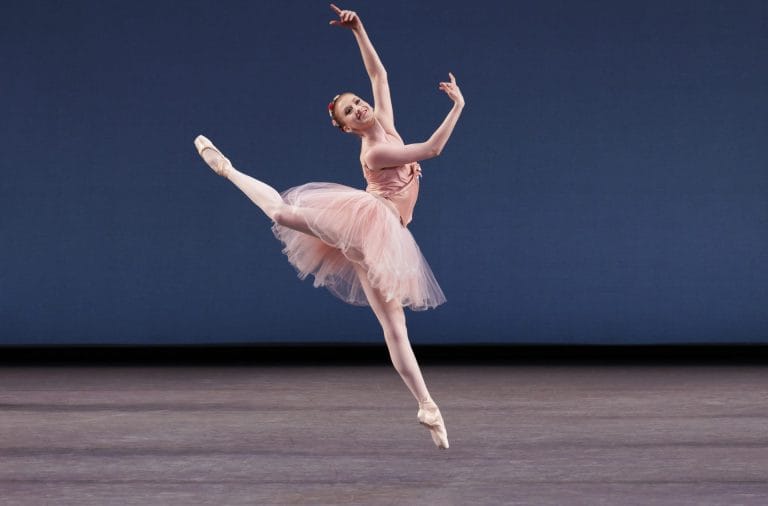
“La Source” started out as an extended pas de deux, and Balanchine added the corps later, apparently to give the couple a breather. This helps explain the slightly disjointed feel, but it is easy to relax and enjoy the bouncy, frisky filigree. Baily Jones led the corps with a thistledown lightness and elegant emboîtés, so emblematic of Petipa’s corps choreography; the performance was a luminous pastel valentine.
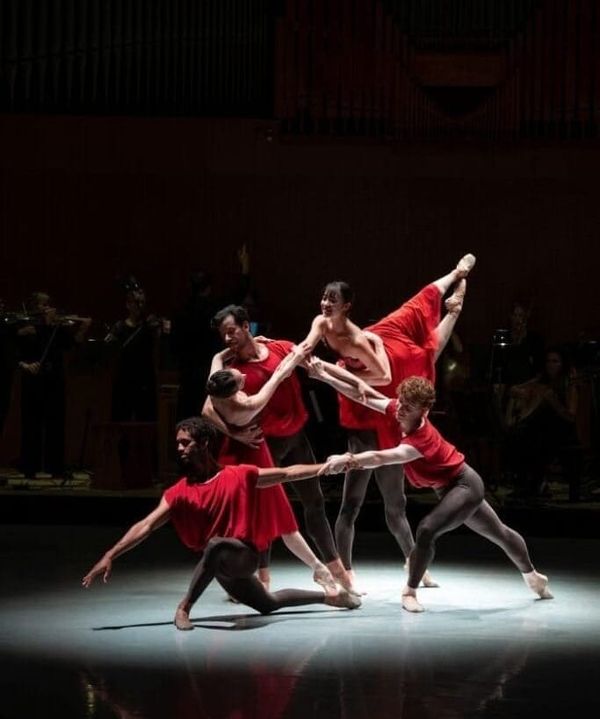
There is nothing pastel about “The Four Temperaments”, whose many debuts looked confident and well-rehearsed. Almost all of the three opening themes were new, and most impressively, each theme had its own distinctive flavor. Ava Sautter and Shane Williams, debuting in the first theme, had an intense but impassive presence and their flowing shapes seemed wedded to the music. In the second theme Mary Thomas MacKinnon (a debut) and Kennard Henson were spikier and moved with a sharpness that looked like the theme foretold Choleric’s fierceness. The third theme had a more lyrical smoothness, and Meghan Dutton-O’Hara, with Oscar Estep, in his debut, were warm yet impersonal; Estep is a tall, elegant and sturdy corps member, who joined the company in 2024, another of the extremely talented dancers NYCB has now.
Taylor Stanley, who danced Melancholic, is an extremely talented dancer who will be retiring this year; his combination of charisma and flexibility is unique. He gave Melancholic a desperate tinge, which was gripping, though in a way his deep, easy backbends changed the effect the piece can have. He seemed to surrender into a ball of pain, not to struggle upwards, but it was a uniquely moving performance.
There was no struggle in Sanguinic, with Mira Nadon and Owen Flacke in their debuts. (Flacke is another young, strong corp member who has a notably gracious presence.) Nadon did seem a bit uncharacteristically careful at times, with a hint of “I am dancing a masterpiece and must be correct”, articulating the hip thrusts with deliberate care. Other than that, she danced with a radiant clarity and strength, tossing off the quick, complicated turns with ease. Her arms, as Flacke slowly lifted her around the stage, seemed to part the air.
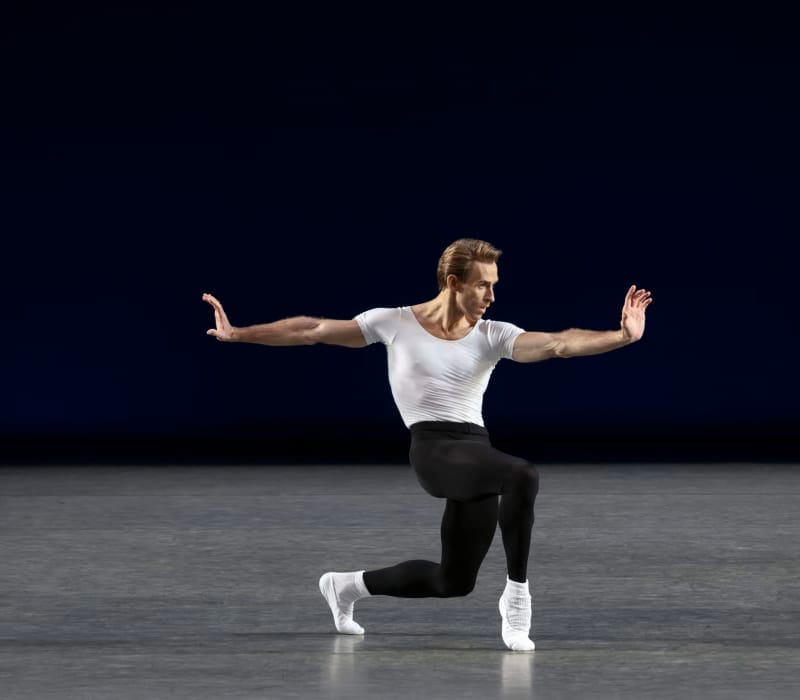
Adrian Danchig-Waring, who is retiring this season, has been dancing Phlegmatic for over ten years; he gave the role a strikingly personal interpretation. He mixed a deadpan calm with a slightly restless searching, reaching up for something with brief, fruitless bursts of energy, and giving the lilting finale slightly awkward hints of nobility as he moved bonelessly through the shapes. He has chosen to program “The Four Temperaments” on his farewell program, a true gift to his final audience.
Ruby Lister is a long way from her final performance, and her Choleric debut had an impressive authority, if not quite as overwhelmingly fierce as her isolated priestess in Robbins’ “Antique Epigraphs”. The simple finale, with the dancers slowing being lifted towards the light, was radiantly uplifting.
There is nothing uplifting about Robbins’ comedy of errors, as “The Concert” skewered a number of pretensions, starting with the on-stage pianist, the overly stately Elaine Chelton, who made even peering at the music seem impressively ridiculous. There were a number of fine debuts—none of the bits of slapstick were overplayed, and the comedy looked fresh. Fortunately the caveman moments—dragging the hat lady off stage after bonking her on the head, carting the corps women on like packages, even the pretend knifing—were given a light touch.
Alexa Maxwell danced the dreamy air head, in love with her love of music and hats, with a pious sincerity that was very funny; she seems to be an instinctive actress who can go from the grotesque horror of “The Cage” to lighthearted satire with ease. Malorie Lundgren and Peter Walker made their debuts as the older couple. Lundgren was an elegant matron, determined to get some culture with a capital “C”, and Peter Walker channelled Groucho Marx’s eyebrows as the put-upon husband out for revenge.
The corps got their time in the spotlight dancing the Mistake waltz with a deadpan grace. The surrealistically lyrical dance, where the cast just walked around lifting and lowering umbrellas, was a calm and oddly beautiful interlude, Robbins at his most imaginative. Using everyday gestures as dance may be an old idea, but it still looks new.
© 2026 Mary Cargill