The Gods Are Smiling
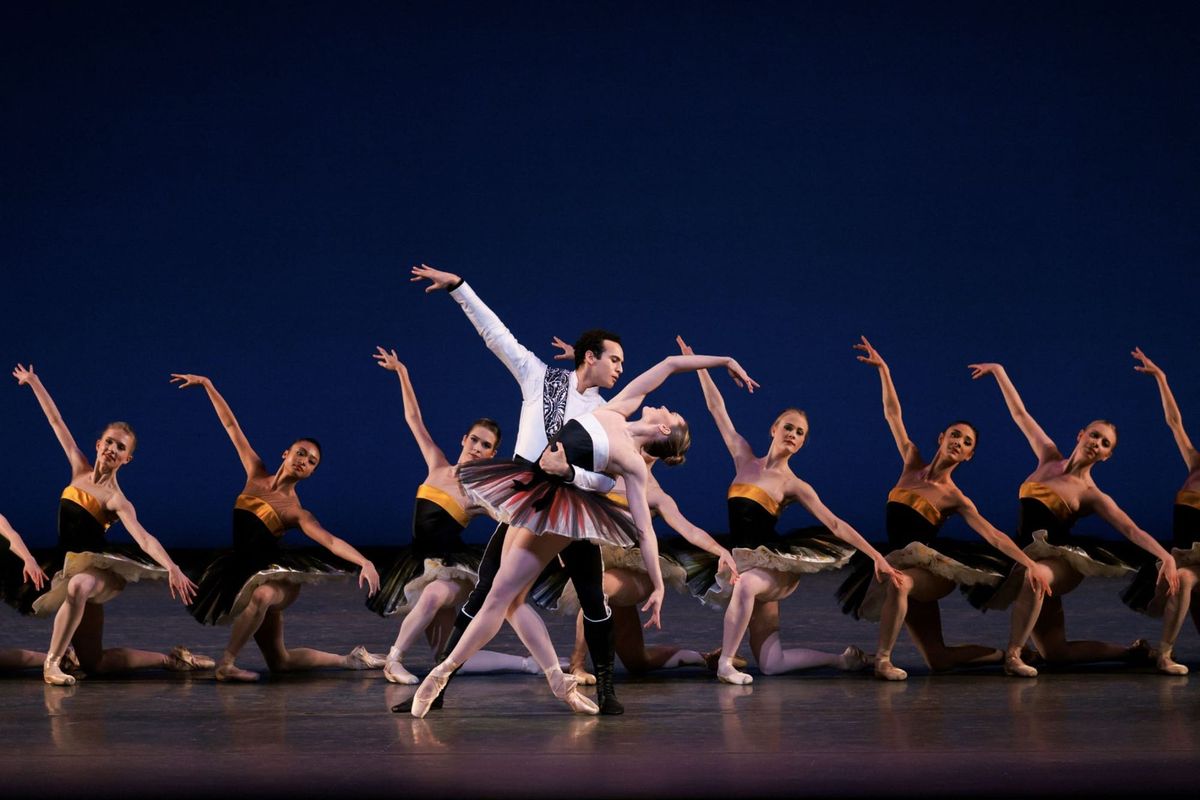
"Serenade", "The Prodigal Son", "Paquita"
New York City Ballet
David H. Koch Theater
New York, NY
January 31, 2026 matinee
The programming gods, who can sometimes be arbitrary, provided an outstanding triple bill, a perfect example of scheduling a complete meal. It opened with “Serenade”, a most luscious appetizer, followed by the dramatic meat of “The Prodigal Son”, and ended with a fine dessert, the Spanish frivolity of Ratmansky’s take on the Grand Pas of Petipa’s “Paquita”.
The casting gods, too, were working overtime on “Serenade”, which received one of the most cohesive and compelling performances I have seen. Mira Nadon (Waltz Girl), Miriam Miller (Dark Angel), and Indiana Woodward (Russian Girl), supported by Peter Walker and Preston Chamblee, created a drama that seemed to emerge from the steps and the music. It may be farfetched, but the ghost of “Giselle” seemed to hover over Nadon’s Waltz Girl. There are certainly faint echoes of the famous ballet in Balanchine’s choreography in the way the corps peels off one after another to disappear into the wings and and in their quick series of arabesques voyagé. Even Nadon’s brief hug of the anonymous corps dancer before she ascends into to light seemed like an echo of Giselle’s farewell to Birthe—in an Instagram post Nadon does refer to the moment as embracing “Mother”.
As she walked slowly through the massed corps, Nadon looked lost and vulnerable, quietly searching for something or someone, until she joined them with her outstretched hand, only to have the corps disappear as Walker entered. Somehow Nadon made it seem as Walker was a memory and she was reliving some past sorrow. His careful and unobtrusive partnering gave their dances an unearthly quality as she floated just out of his reach.
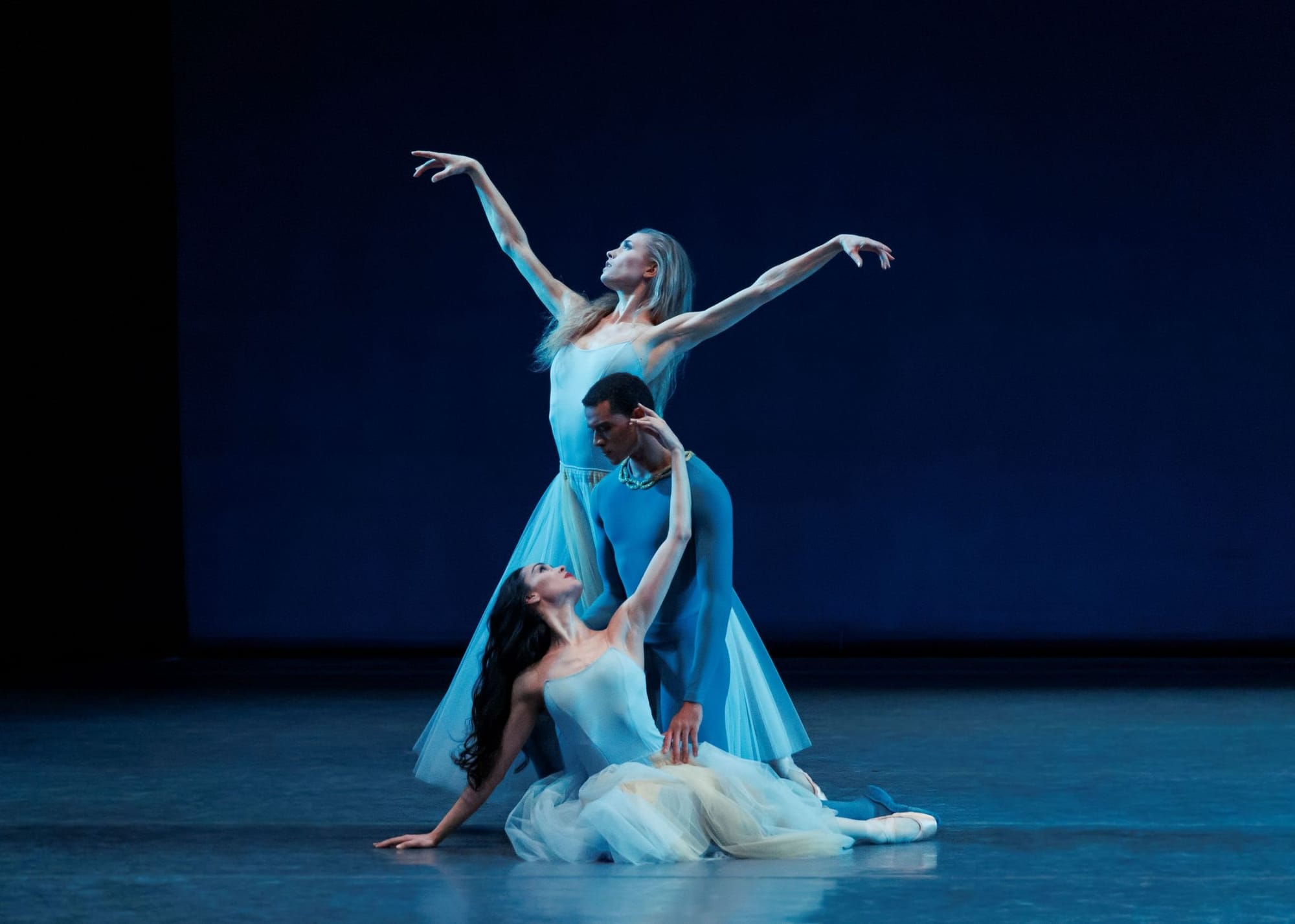
Preston Chamblee gave the fellow who eventually abandoned her a noble reticence and an intense but subtle power, as he seemed to be pulled away despite his guilt and grief, unable to help himself. Chamblee was both personal and universal, individual as well as abstract; it was a strong and moving moment.
Miller, as the Dark Angel, certainly had no regrets. Her cool perfection and regal air made the idea of someone leaving Nadon behind almost believable. Woodward wasn’t involved in the drama, and danced with a lighthearted joy, luxuriating in the companionship her fellow dancers, as she offered the group her hand with a serene confidence. To me, she seemed like the memory of a younger, happier Nadon, and the contrast between her cheerful dancing and elegiac serenity of the final scene made Nadon’s performance all the more powerful. It may be imagination or instinct or some other gift, but Nadon, besides her phenomenal physical gifts, has the uncanny ability to make steps speak, to make the audience feel her presence. It is not just her beauty—there are many other long-stemmed roses at City Ballet now—there is something magnetic about her absorption in whatever she is doing on stage that reaches directly to the audience; it is a privilege to watch her.
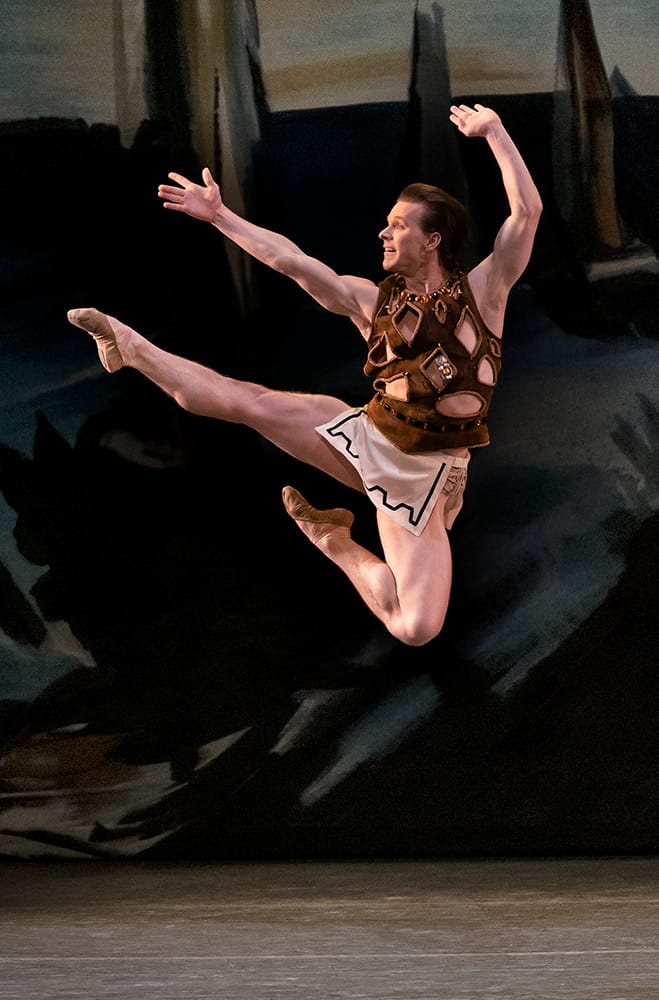
“The Prodigal Son” is one of Balanchine’s rare excursions into narrative territory, though he really had no choice as he was given all the details—the music, the story, the designer, and the star—by Diaghilev. Even though it is nearly 100 years old, the pas de deux looks startlingly modern and the Expressionistic drama can be challenging for NYCB’s dynamic movers. There are few stronger dynamos than Daniel Ulbricht, but his Prodigal is powerful and moving, a theatrical triumph full of details. It also had its share of powerful dancing, as his opening leaps seemed to hover in the air.
He was a fierce Prodigal, eager to break away from his home, jerking his hand away almost angrily as his Father tried to bless him. He was clearly in charge of his companions (Kennard Henson and Sebastián Villarini-Vélez), ordering them around like a little general—that tinge of arrogance made their later treachery more believable that the “we are all pals” approach. Once he reached the tent of doom, however, he was almost shy, greeting the goons and feeling that if he just gave them his inheritance they would be his friends; Ulbricht’s hopeful eagerness had a puppy dog innocence.
He was even more of a puppy dog when the Siren (Sara Mearns) appeared. She moved with a mechanical voluptuousness, swinging her cape around her almost defiantly. The brief moment where she beats her breast had a despairing “Oh no, not again” quality, but she recovered and went after the Prodigal with a seasoned gusto. She was clearly someone who could enjoy her work. Her icy glee as she ripped the medallion from his neck almost dripped with venom.
Ulbricht’s final crawl home was a masterfully understated picture of despair, with heavy, exhausted limbs, almost too tired to move. He let the soaring intensity of the Prokofiev music emphasize his struggle and his shame, until he could finally relax in his Father’s arms. There was nothing melodramatic or overdone in his performance, and he gave the Prodigal a searing individuality.
There are hints of individuality in “Paquita”, as the Grand Pas was originally the wedding celebratin of a Spanish gypsy Paquita (Isabella LaFreniere” and aFrench officer Lucien d’Hervilly (Ryan Tomash), but it is basically a dance extravaganza, full of corps patterns, soloists, and pas de deux, set to some wonderfully faux-Spanish tunes by Ludwig Minkus, with additional contributions by other 19th century ballet composers.
Ratmansky based the choreography on notations of the original Petipa ballet, though the setting, such as it is, is definitely in the NYCB minimalist vein. I do think the completely bare stage diminishes the effect of the multifaceted choreography—even the brightest diamonds look better in an elegant setting. The slightly messy hair of the first season seems to have been rethought, though the dancers still lack proper headpieces—even Balanchine gave his “Raymonda Variations” dancers elegant little headdresses.
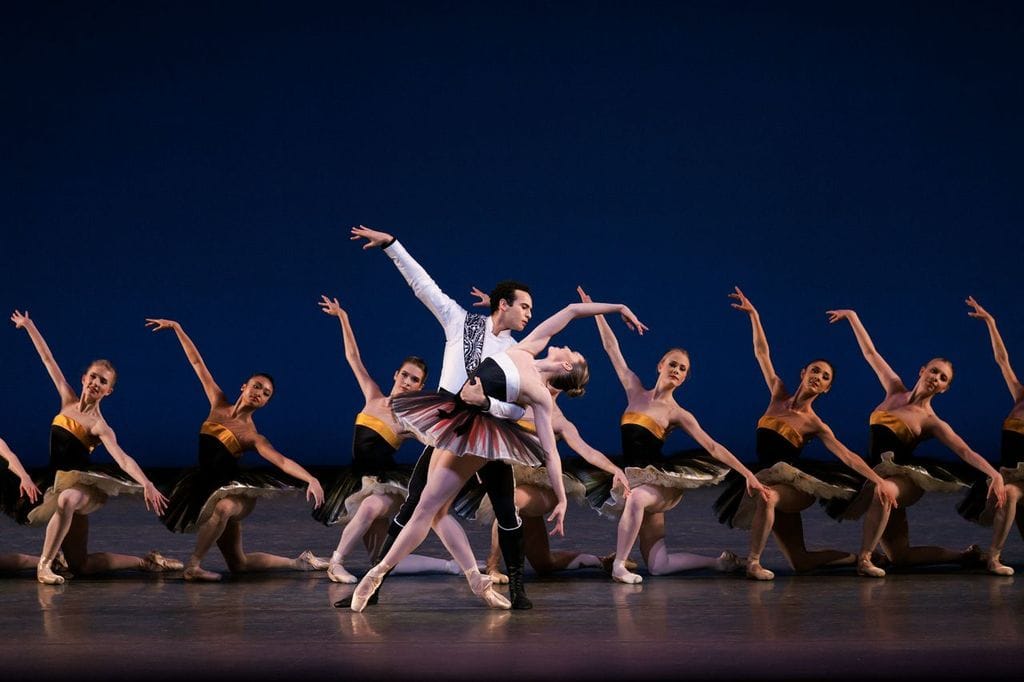
LaFreniere and Tomash were an elegant couple, dancing with a straightforward sincerity; theirs was a real love story. Tomash was a devoted partner, watching her every move with pride and joy. I was especially struck by the soft confidence LaFreniere showed leaning her head against his shoulder. Tomash’s dancing was strong and elegant, and he made the quick little jumps and changes of direction look natural; his final turns a la seconde seemed to fly. LaFreniere was steady and secure, though the little Spanish flourishes looked a bit studied. Emily Kikta’s fourth variation, with her sparkling entrechats and fast turns into a rich backbend, was full of flair. The corps seemed much more consistent than last week, and bent into the moves with more upper body freedom. Their final gallop was completely exhilarating and seemed to leave the audience asking the gods for more.
© 2026 Mary Cargill



