The Celebration Continues
"The Four Temperaments", "Pas de Trois (Glinka)", "Pas de Deux from Agon", "Divertimento No. 15"
The Joffrey Ballet, Miami City Ballet, Paris Opera Ballet, San Francisco Ballet
Balanchine: The City Center Years
New York City Center
New York, New York
November 3, 2018, matinee
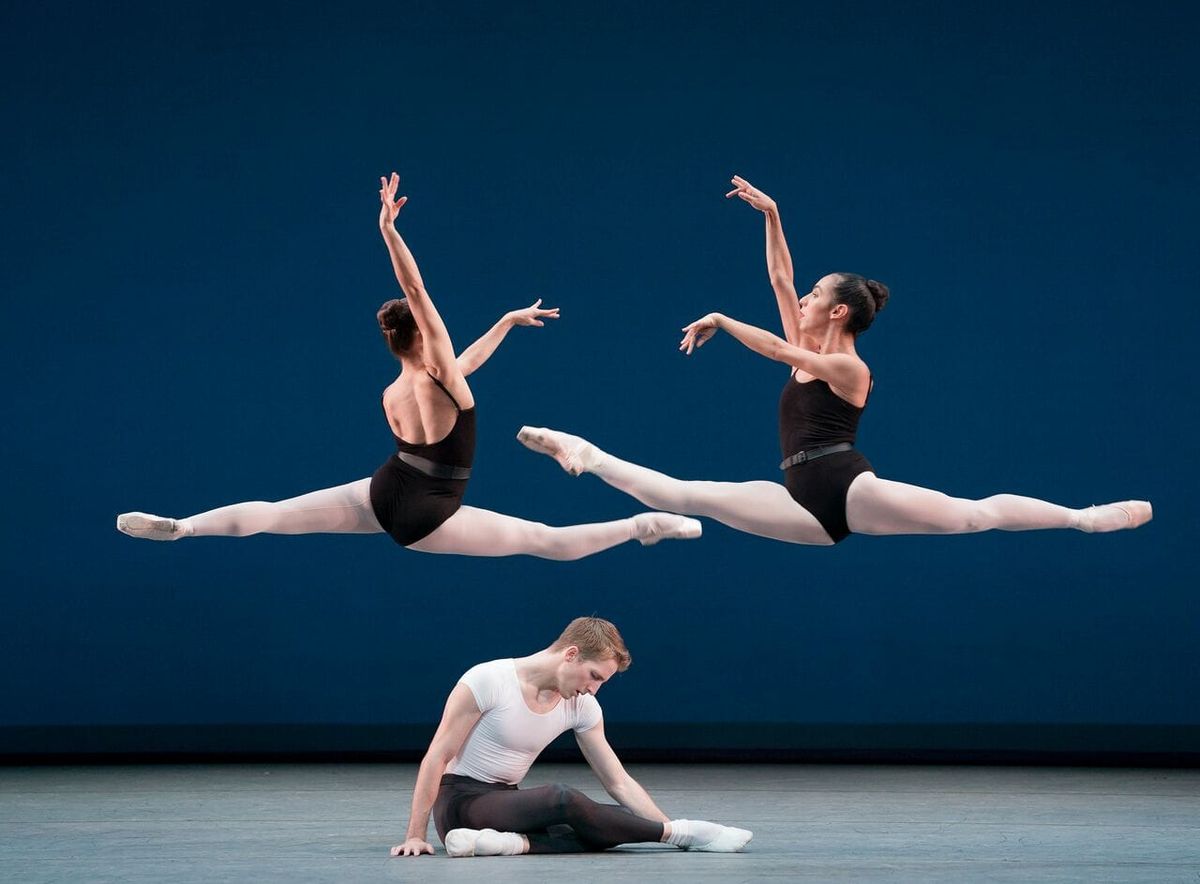
The City Center's brief Balanchine celebration made the wide appeal of Balanchine's choreography clear on this Saturday matinee as the varied program had no performances by Balanchine's own company. These performances had different accents, some thicker than others, but the companies all met the challenges with enthusiasm and care. The Joffrey's "The Four Temperaments" was on the careful side (the company has only recently acquired it), but was scrupulously clear; the choreography was blazingly vivid, if not always as sharply accented as it can be at NYCB.
Stefan Goncalvez was a fluid Melancholic, with flowing arms and a back that could almost bend in half, which he used expressively, not gymnastically. His body, not his face, set the mood, so there was a universal, almost impersonal, air of sorrow; this was a poem, not a melodrama. Rory Hohenstein, too, didn't over play Phlegmatic, and his nonchalant balances were rock solid. Victoria Jaiani was a blazing Choleric, but was equally powerful in the quieter moments as she made the simple act of lowering her arms in the finale a potent symbol of absolute control.
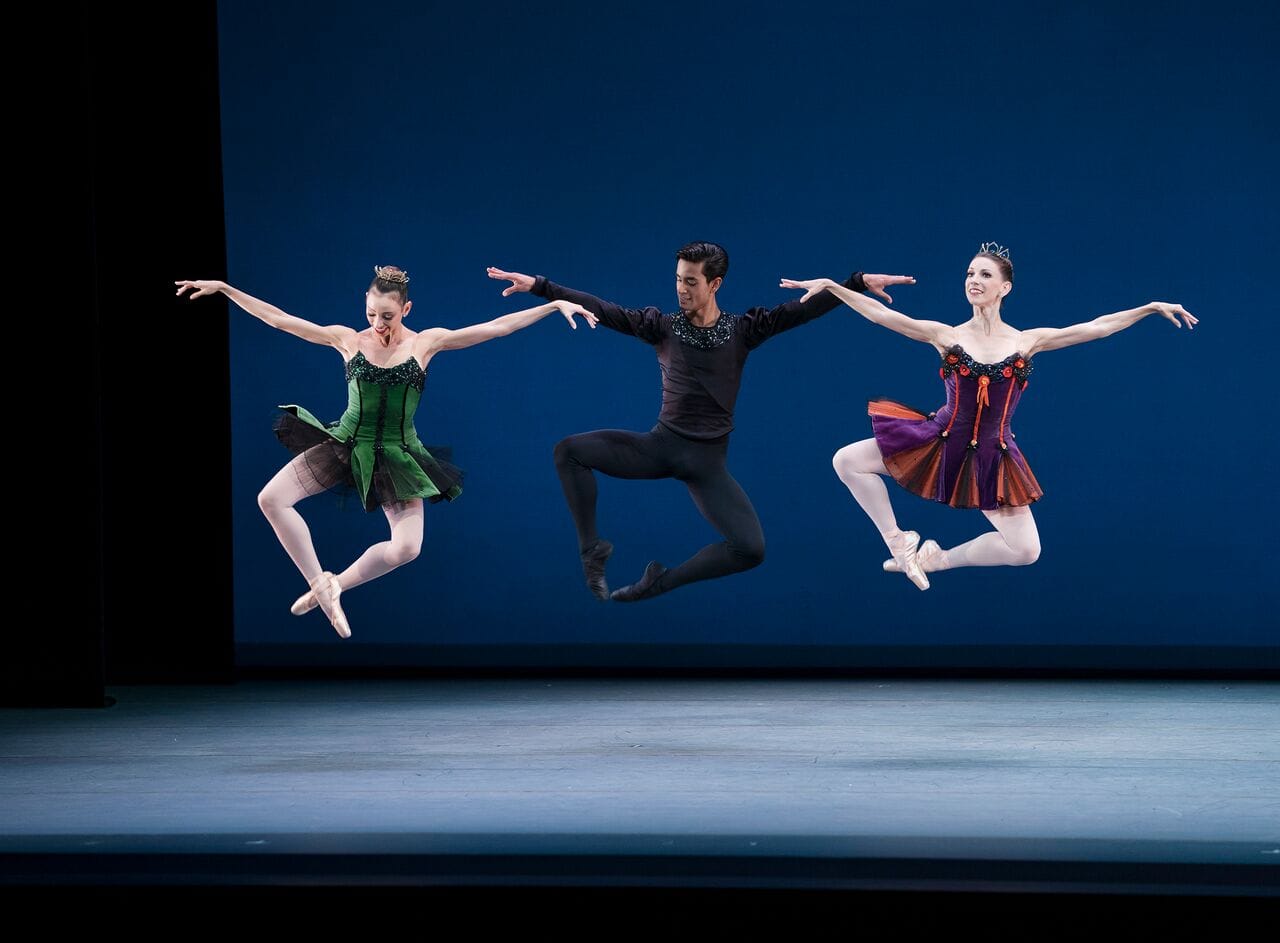
Miami City Ballet brought the rarely seen "Glinka Pas de Trois", an explosion of steps set as a formal exercise -- adagio, variations, and coda. Natalie Arja, Ashley Knox, and Kleber Rebello seemed to enjoy the challenge, and challenge it was. The opening adagio was full of balances, as the two girls swapped hands with Rebello, often while on one leg. (Knox did have one mishap as she fell off point, but she calmly and professionally rejoined the fun.)
The solos were full of soaring jumps and beaten steps with unexpected and witty accents. Rebello was especially impressive as he tossed off a series of double tours into arabesques with amazing aplomb and control. It is hard to understand why this joyful explosion is not performed more frequently (though its astounding technical challenges may be the explanation) and the audience roared its gratitude at the Miami performers for the chance to see it.
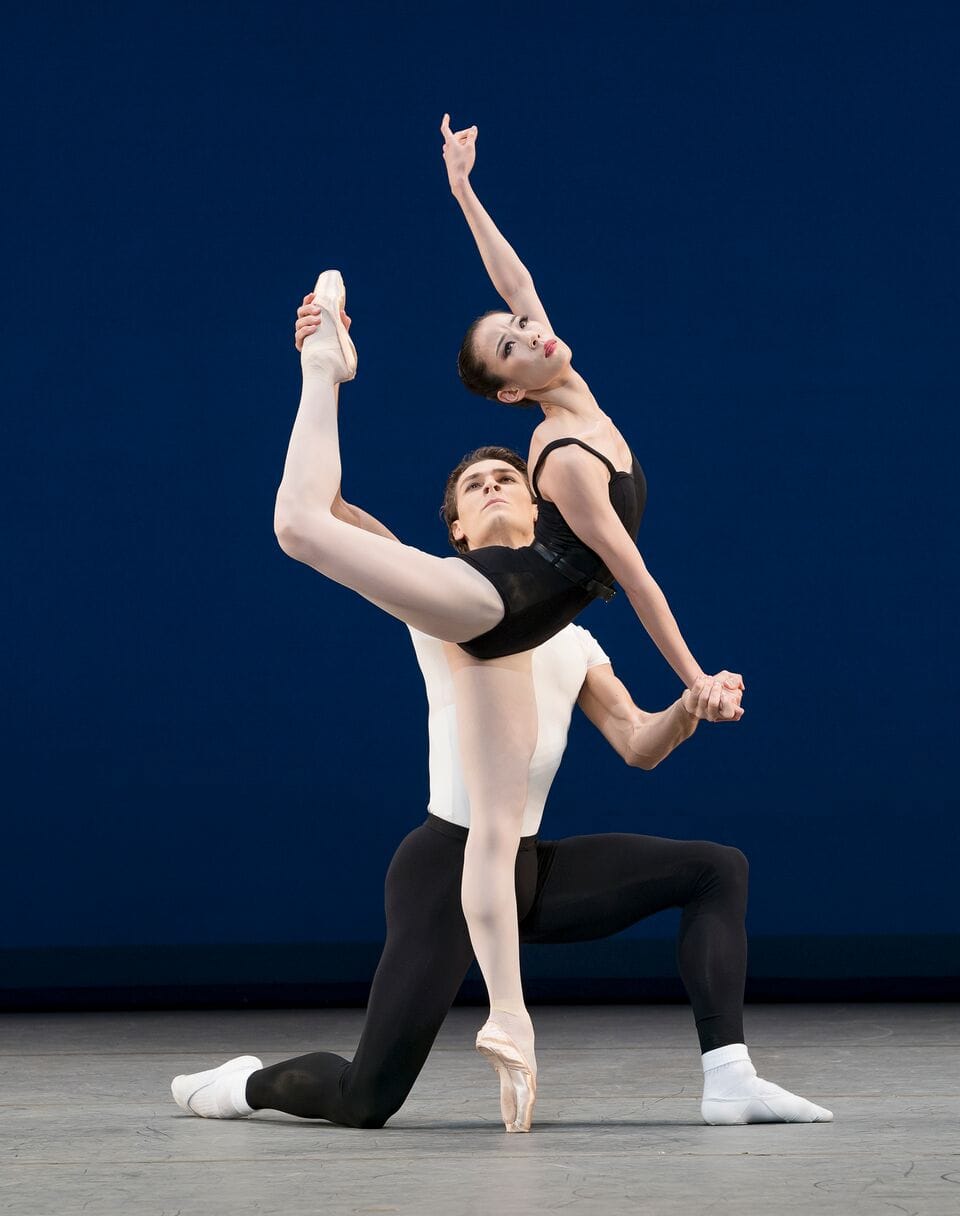
The pas de deux from "Agon" is certainly no novelty, though the Paris Opera Ballet's performance, by Sae-Eun Park and Hugo Marchand, did have an unusual accent. The pas de deux was not meant to stand alone and the abrupt shift of mood from the sparkling bravura of the Glinka to the spiky, impersonal modernism of "Agon" was a bit disconcerting. Park is a small, slight dancer with extravagant and effortless extensions, and the tall, muscular Marchand towered over her. Diana Adams, the original woman, was a glamorous Amazon with, I have heard Arthur Mitchell (her original partner) say, limited flexibility, and he manipulated her legs into position as she seemed to rest passively against him, which gave the role an unusual dynamic. Park moved easily from position to position, with Marchand acting as her protector. Their occasional soulful glances made it seem more of a quirky love story and a hypnotically jagged but interconnected set of movements; Balanchine with a French accent.
"Divertimento No. 15" is Balanchine with an Austrian-American accent, as Mozart's music and Karinska's Austrian shade costumes combine with American speed and daring. The San Francisco Ballet's fearless yet detailed dancing honored the filigreed, ornate choreography; San Francisco's women were smaller and more compact than most at New York City Ballet, which made it easier to show off their fastidious footwork.
Ana Sophia Scheller, a former NYCB principal, was especially gracious in the second solo, and Wona Park, in the fourth solo, had impressively solid turns. Sasha De Sola, as the first among equals, was more of a princess than a queen, but the sunny ease of her upper body and sparkling feet were irresistible. Angelo Greco danced the male solo with steady jumps and solid, silent landings; his two comrades, Benjamin Fremantle and Lonnie Weeks, were equally dignified and gracious in their brief pas de deux. It was an elegant and uplifting performance, which sums up the entire celebration.
Copyright © 2018 by Mary Cargill



