The 21st Century, Twice
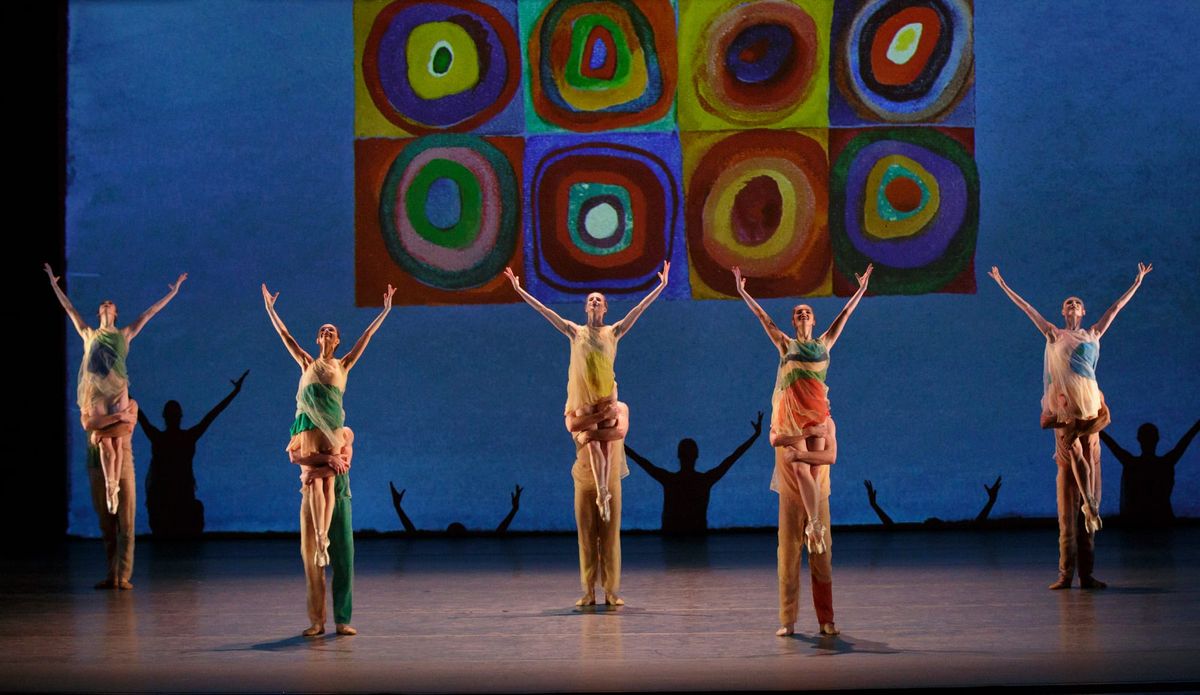
"Pictures at an Exhibition," "Oltremare," "Rodeo: Four Dance Episodes"
New York City Ballet
David H. Koch Theater
Lincoln Center
New York, New York
April 25 and 26, 2019
No Balanchine. No Robbins. For the first week of its spring 2019 season, the New York City Ballet looked not to its bedrock repertory but to works of this century, made long after Balanchine and Robbins were gone: Alexei Ratmansky's "Pictures at an Exhibition", Mauro Bigonzetti's "Oltremare" and Justin Peck's "Rodeo: Four Dance Episodes". The initial reason to see the same program twice was a flurry of debuts. But for injuries to Tiler Peck and Abi Stafford, "Pictures at an Exhibition" and "Rodeo: Four Dance Episodes" would have had two completely different casts. Another reason presented itself: how these ballets stood the test of time, not only since their creation (2008-2015) but also being seen twice in twenty-seven hours.
All three stood up surprisingly well and for similar reasons. Each opened with an image that did not simply set the scene but revealed a world, from wandering dancers in the dusk infused cobalt light of "Pictures at an Exhibition", to the deliberate, weighted procession of the cast in clothes straight from Ellis Island and each methodically carrying suitcase across the width of the Koch Theater stage, to the men of "Rodeo", crouched stage right, primed, eager for the starting gun to go off. It was obvious, three times in one night, that the choreographer knew what he was doing, that each world had its own internal logic and language which drew the audience in, curiosity whetted.
Standing the test of time also means that a ballet survives, even flourishes, despite changes in casting. There were only two debuts in the "Oltremare" but both "Pictures at an Exhibition and "Rodeo: Four Dance Episodes were put through a stress test, with ten debuts among them.
Lauren Lovette and Adrian Danchig-Waring danced the most prominent couple in Ratmansky's work (made on Tyler Angle and Wendy Whelan) for the first time on their home stage. In spite of a bobble or two, both looked comfortable together, with Lovette, usually a refreshingly serene presence, finding something creaturely in her part -- hands, arms and elbows, sharp-edged and ready to strike. In the alternate cast, Sterling Hyltin was eerily removed, so light as to be wraith-like, with her partner, Tyler Angle, demonstrating all the virtues of experience.
Lauren King took on Abi Stafford's part. Like Stafford, she's a sunny presence on stage. with a slightly softer edge -- she glows rather than shines -- and fit right in to the ensemble. So, too, did Andrew Scordato in Danchig-Waring's original role, quietly elegant. Unlike Scordato, Roman Mejia does not physically resemble Joseph Gordon who originated his role (and alternated in it this week). He's short and buoyant, a demi-caractère dancer, while Gordon is being groomed for more princely parts (next up: "Scotch Symphony"). But with his joy in movement and ballon Mejia made the part work on his terms. Similarly, Sara Means and Georgina Pazcoguin, veterans of 'The Gnome' solo, danced it very differently but with equal validity. It's a study in anger and its flip side fear. Mearns used everything in her arsenal -- grand scale, speed, attack -- to fight off the menace, like a body under siege by illness. Electric charges seemed to flow from her limbs.In response to the threat, Pazcoguin pulled in, her eyes unceasingly on her adversary, tensed and ready to react, always in search of a tactical advantage. Only Daniel Ulbricht seemed out of place among the debutants. His solo, 'Baba Yaga' shows a man attempting to flee a villainous, female, supernatural presence. It is perhaps the strongest demonstration of the vein of pressure, repression and resistance that runs through "Pictures at an Exhibition". Ulbricht is just too extroverted a presence to lose himself in such an inner struggle. Nor did seem at ease with the ballet's partnering.
Brittany Pollack stepped into Tiler Peck's role in "Oltremare" for the first time, a young girl, alternately insouciant and scared of leaving home for the unknown. Pollack caught the fear and the fervor, the lightness, speed and intensity of the part, far more at home as a dramatic dancer here than in the dutiful performance of the duet in "Rodeo" which followed. But the heart of "Oltremare" remains the pas de deux made for, and still danced by Tyler Angle and Maria Kowroski. Back in the day Kowroski seemed overwhelming, her long outstretched limbs like a trap, a praying mantis about to consume her prey. More than a decade on, the reach of Kowroski's limbs is still amazing but the duet is softer in tone, a duet of mutual discovery and rediscovery, as this couple sails into the unknown, with Angle and full partner, both literally and figuratively, in the voyage.
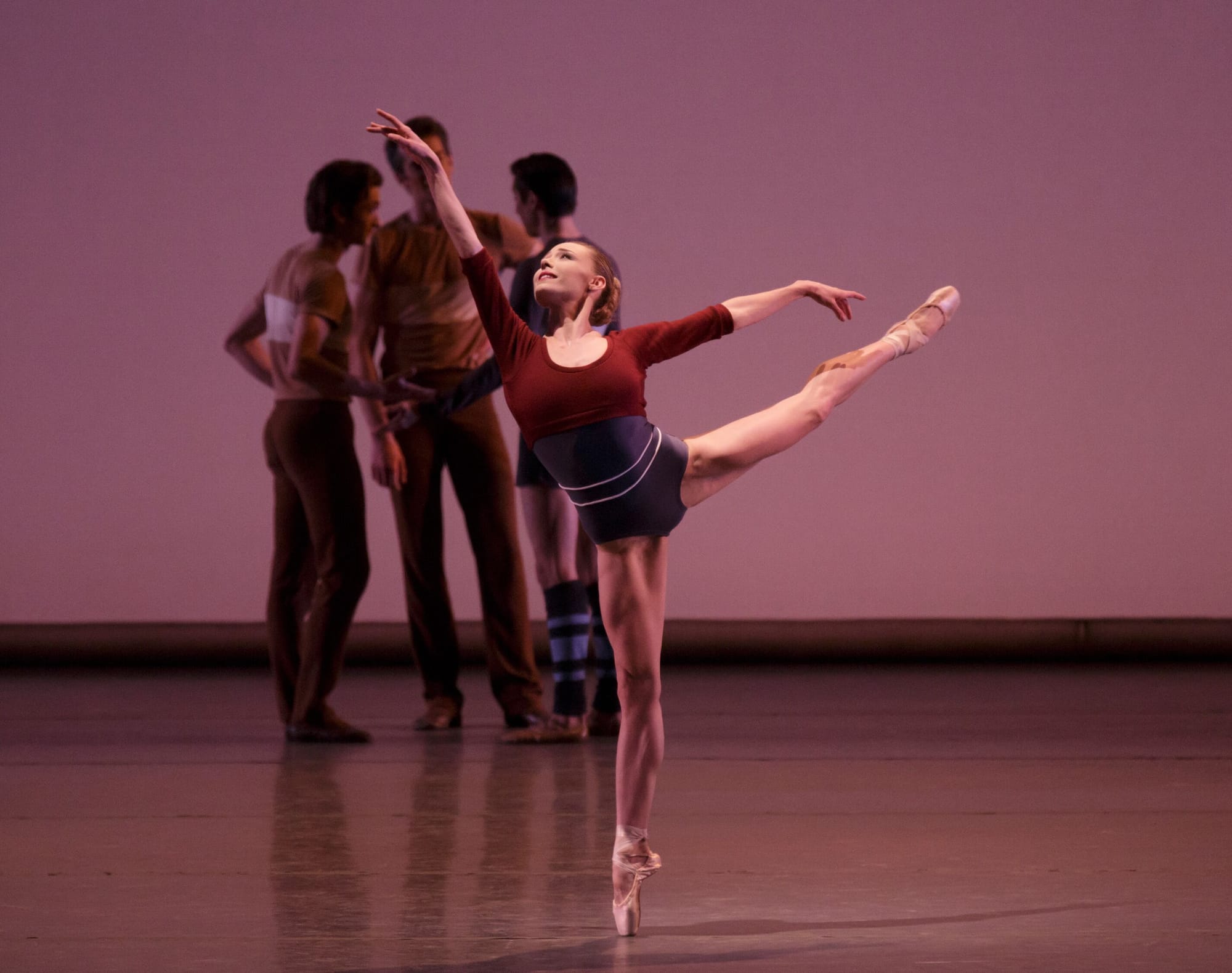
Both Russell Janzen and Taylor Stanley gave their first performances in the pas de deux of "Rodeo" and with their debuts, the heart of the ballet shifted. Inspired by Janzen, Sara Mearns, who has spent her career exulting in the wide open space that is the stage, claimed her place in two jumps but then, turning to her partner, calmed down, bringing out the intimacy and tenderness of the duet, perhaps never before so overtly revealed. Stanley was just fine in his new role, but more deeply missed in his old original part, the linchpin of the second movement's male quintet. Without him, it looked unfocused and muddy.
Both Anthony Huxley and Andrew Veyette, new recruits to the trio of bounding young men whose presence punctuate "Rodeo" were immediately at home in it. Here Huxley shed the tension which sometimes seems to be the price paid for his enviable technique and beautiful line, just happy to be out dancing with the guys. The rangy American twang of "Rodeo" comes naturally to Veyette's way of moving, which should become even clearer when his third appearance of the night is not a last minute affair, announced from the stage right before the curtain rose and Copeland rang out.
copyright © 2019 by Carol Pardo



