Tables Are Turned
“Onegin”
The National Ballet of Canada
Four Seasons Centre for the Performing Arts
Toronto, Canada
November 22, 2023
John Cranko’s “Onegin” is a touchstone for the National Ballet of Canada, performed consistently since its company premiere in 1984. It is a well-rounded production with Pushkin’s engaging storytelling, Cranko's interesting and challenging choreography and an evocative arrangement of musical works by Tchaikovsky. It has all the elements for a timeless full length ballet that is both accessible to the casual ballet goer and rewarding for the balletomane. The NBoC last performed “Onegin” in 2016, so it was due to be brought back to the stage, this time with some exciting debuts.
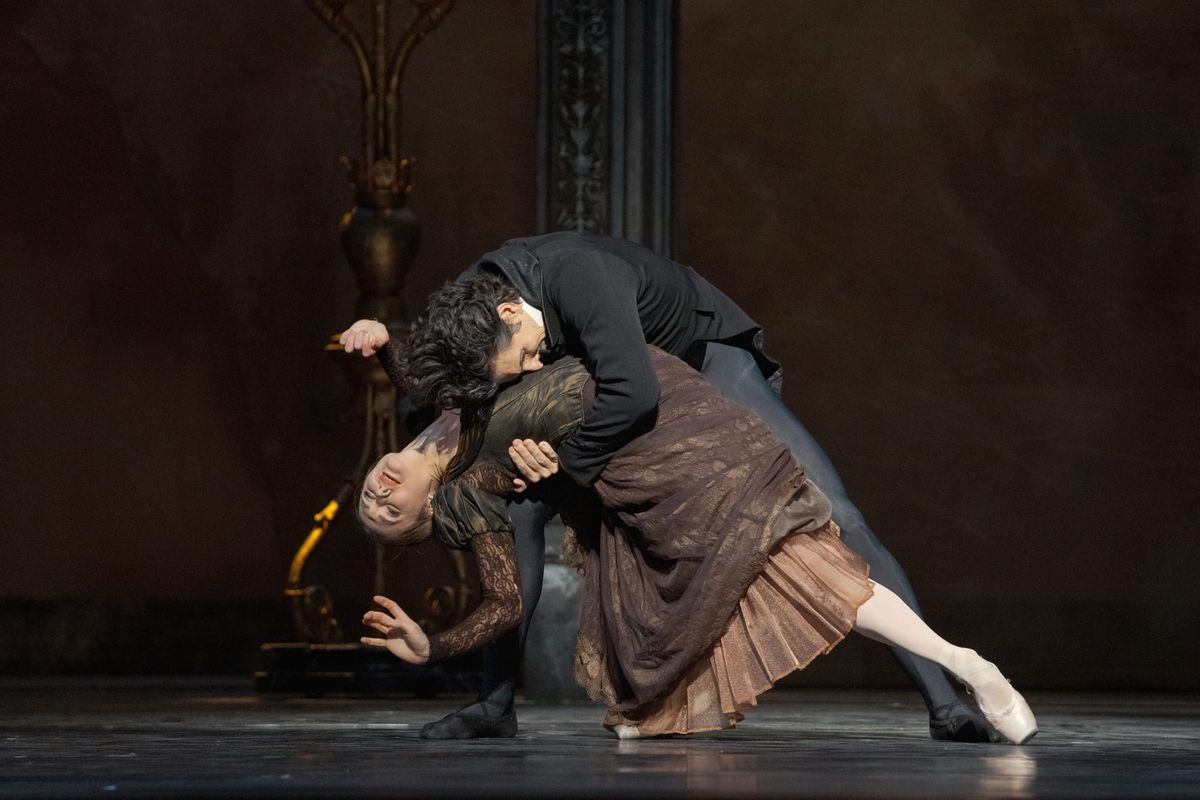
At last, Jurgita Dronina, one of the company’s most seasoned principal dancers got her opportunity to tackle the role of Tatiana. It is easy to see why Tatiana is somewhat of a “bucket list” role for many leading dancers. It is a rich and nuanced role with room for different interpretations in addition to a compelling character development arch and glorious dancing. She performed the role of Olga with the Royal Swedish Ballet as well as the NBoC, but at 37, she is now at the perfect stage in her career to dive deep into the complexity of Tatiana’s inner world. She particularly brings the necessary maturity to the third act when Tatiana is a devoted wife and dignified princess. Her performance was believable and gut wrenching. In the first act, she falls so hard for Onegin, one can see in her facial expression how she jumps ahead and is already envisioning their future together. The great love stories of her favourite novels literally leap off the page and into her teenage imagination. The mirror pas de deux with its rapturous lifts and swooping glides perfectly represents her romantic ideals. Her utter humiliation when Onegin rejects her is palpable. Her ideals are already shaken by Onegin’s cruel treatment and by the time Lensky is killed in the duel, she has lost all her youthful innocence. By the third act, she is a different person. She does love Prince Gremin and they share some tender moments, but she also rejects Onegin and stays with Gremin for pragmatic reasons. When he reappears in her life, she cannot deny that her feelings for him have come flooding back. Nonetheless, she now has many other factors to consider, as much as it pains her to dismiss him. Dronina took the audience on a journey, so that each step of Tatiana’s development unfolded on stage. She is also an extremely strong technical dancer, but her technical brilliance remains always in service of the narrative.
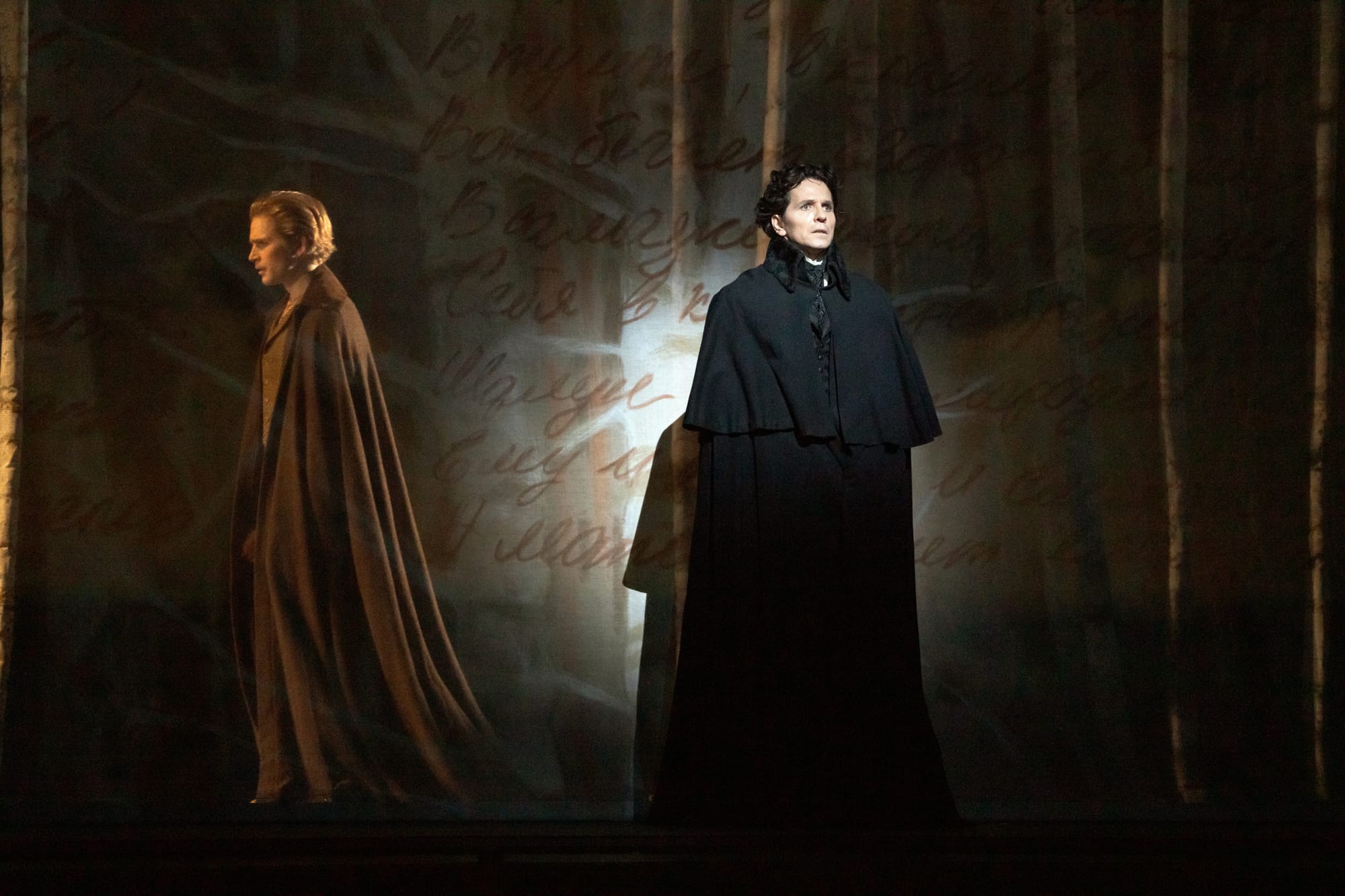
Her Onegin was Guillaume Côté. The company announced this would be his final run dancing this role. Similarly, last year, the NBoC publicized that Côté would be making his final appearances in the role of Romeo in Alexei Ratmansky's "Romeo and Juliet". It seems perhaps to be a tactic to sell more tickets or a way to signal he might be retiring soon, but not quite yet. In any case, he has danced this role several times and has found a way to make it work for him. In temperament, he seems more naturally suited to the role of Lensky. It has taken him time to embody darker characters such as Onegin, conveying that darkness without overcompensating and going over the top. Côté's Onegin is not terribly likeable. He is, at his core, self-centred and pretentious. He goes to the country when he is bored of city life, expecting his new friends to entertain him. He rolls his eyes at Tatiana's books. He judges her quickly and as a result, has no interest in forming any kind of meaningful connection with her, even before she gives him the letter. Her declaration of love that took her so much courage to write, is simply annoying to him. After he returns it to her and rips it up, he is exasperated by her tears. He storms off but pauses, briefly considering giving her an explanation or perhaps some kind words. But thinking only of himself, he opts not to, waving his hand in the air as if to say "what's the point?" He flirts with Olga at the ball and we see his ability to use his charm to get what he wants. He mainly dances with her because he is bored and she just happens to be there, with no consideration of the effect it would have on Lensky. In the duel scene, he is a reluctant participant but has a jaded, nihilistic view of the world that also accepts it. By act 3, he regrets turning down Tatiana all those years ago, but he does not seem to have changed much. It is still all about him and what he wants. However, one does feel a bit sorry for him and the misery he has created for himself. As he desperately begs Tatiana to be with him, we see him come to a stark realization – she has changed, and he has not. Côté presents a coherent characterization of Onegin and is consistent throughout the ballet. He partnered Dronina well, especially in the mirror pas de deux. His movements portrayed a weariness and a heaviness that added to the narrative. Although his arabesque is a bit lower and his jumps are not as buoyant as before, he continues to dance with a commanding presence.
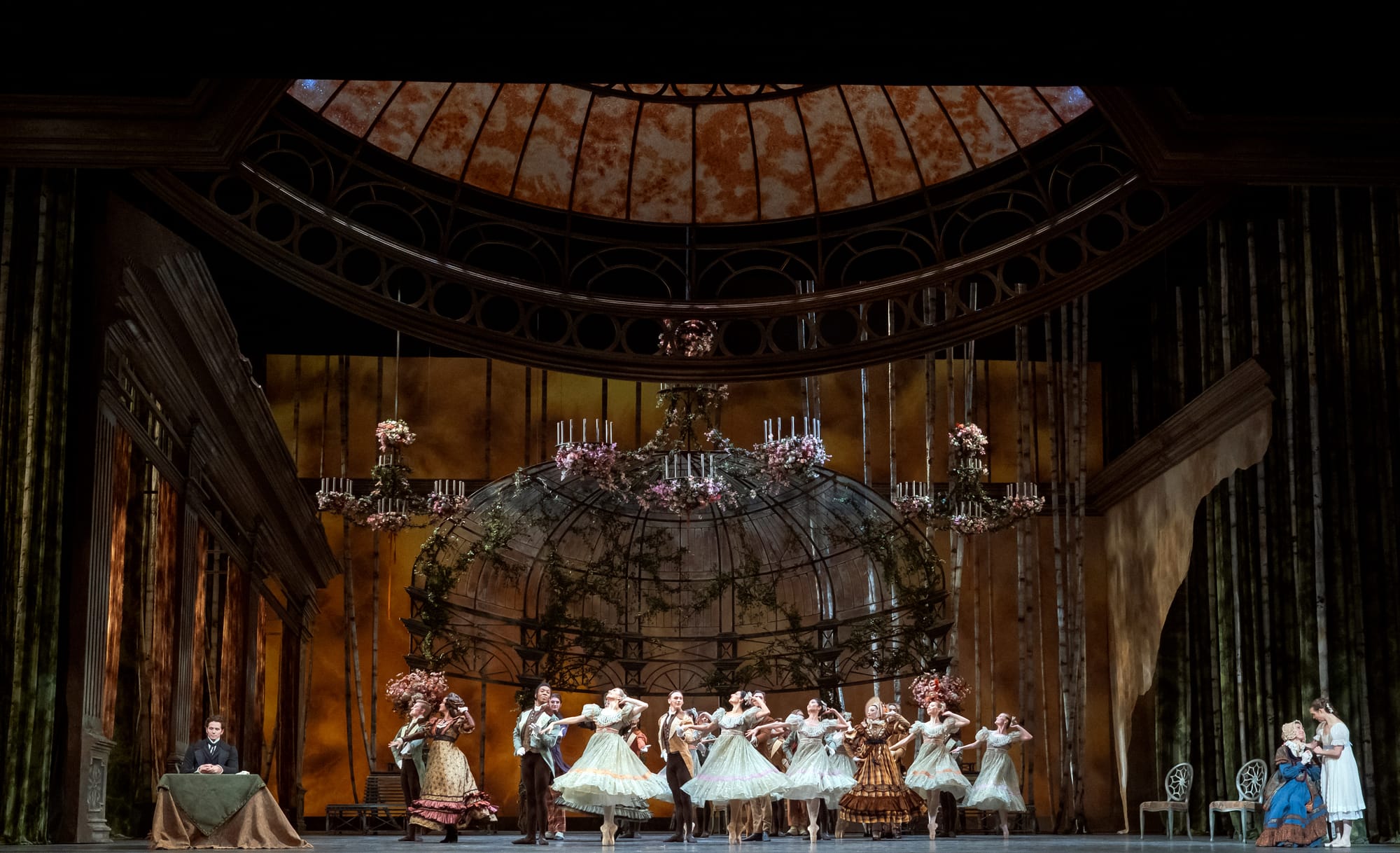
Tina Pereira made her debut as Olga, a role beautifully suited to her. She made her Olga sweet and optimistic without being totally vapid. She is the opposite of her sister, vibrant and extroverted rather than bookish and introspective. But in small moments Pereira showed Olga's closeness with and affection for Tatiana, which was very endearing. Pereira typically excels in soubrette roles and this was no exception. She is extremely light on her feet with precise foot work and soft, quiet landings.
Possibly the greatest highlight of this performance, however, was Harrison James' Lensky. Whenever he was on stage, one's eye would be drawn to him. He was fully committed to the character of this earnest and gentle man. Like Tatiana, he has romantic ideals that he holds quite firmly. When Olga dances with Onegin at the ball, he experiences this as a total betrayal and is willing to die for honour. If anything, his tragic flaw is being too rigid. Once he has decided on the duel, he is determined to see it through, even though Onegin tries to persuade him to call it off. His soulful solo just before his death is one of the most achingly beautiful yet heartbreaking moments in the entire ballet. He accepts his fate with a heavy heart. His dancing here is expressive and shows remarkable control. The intricate sequences of turns flowed smoothly into one another and he played with the musical phrasing to render certain movements even more powerful. For instance, in the kneeling position when he arches his back, arms outstretched, he waits a split second longer before crumbling to the floor, as if hanging on to that moment which he knows may be his last.
Finally, Ben Rudisin made the most of his appearance as Prince Gremin. In his short time on stage, he dances with elegance and a quiet dignity. While his pas de deux with Tatiana lacks passion, it shows a marriage that is marked by stability, loyalty and care. After the ball, his affection and tenderness give Tatiana the strength she later needs to turn Onegin away.
It is rewarding to see NBoC dancers make their debuts in and later revisit these leading roles in "Onegin". There is so much dramatic depth here that it is one of the most interesting ballets to watch and rewatch. This opening night cast was certainly one of the strongest and most memorable of recent years.
copyright © 2023 by Denise Sum



