Symphonic Variations
"Onegin" excerpt, "Cortège", "Le Corsaire" pas de deux, "Symphony #9", "Sylvia" hunt scene, "Apothéose", "The Sleeping Beauty" Act III pas de deux, "Symphony in C"
American Ballet Theatre
Spring Gala
Metropolitan Opera House
Lincoln Center
New York, New York
ABT's Spring gala was more substantial than the usual parade of pas de deux, clocking in at almost three hours, with one intermission, and including two complete works, the new Ratmansky "Symphony #9" and the old Balanchine "Symphony in C". Both of these have gala-friendly casting, allowing many principals to dance in roles that show them off. The other principal dancers (with the exception of Natalia Osipova, who was injured and replaced by Xiomara Reyes in her scheduled "Corsaire" and Irina Dvorovenko, who was hoofing it in the Encores production of "Slaughter on Tenth Avenue", got their chance in various excerpts.
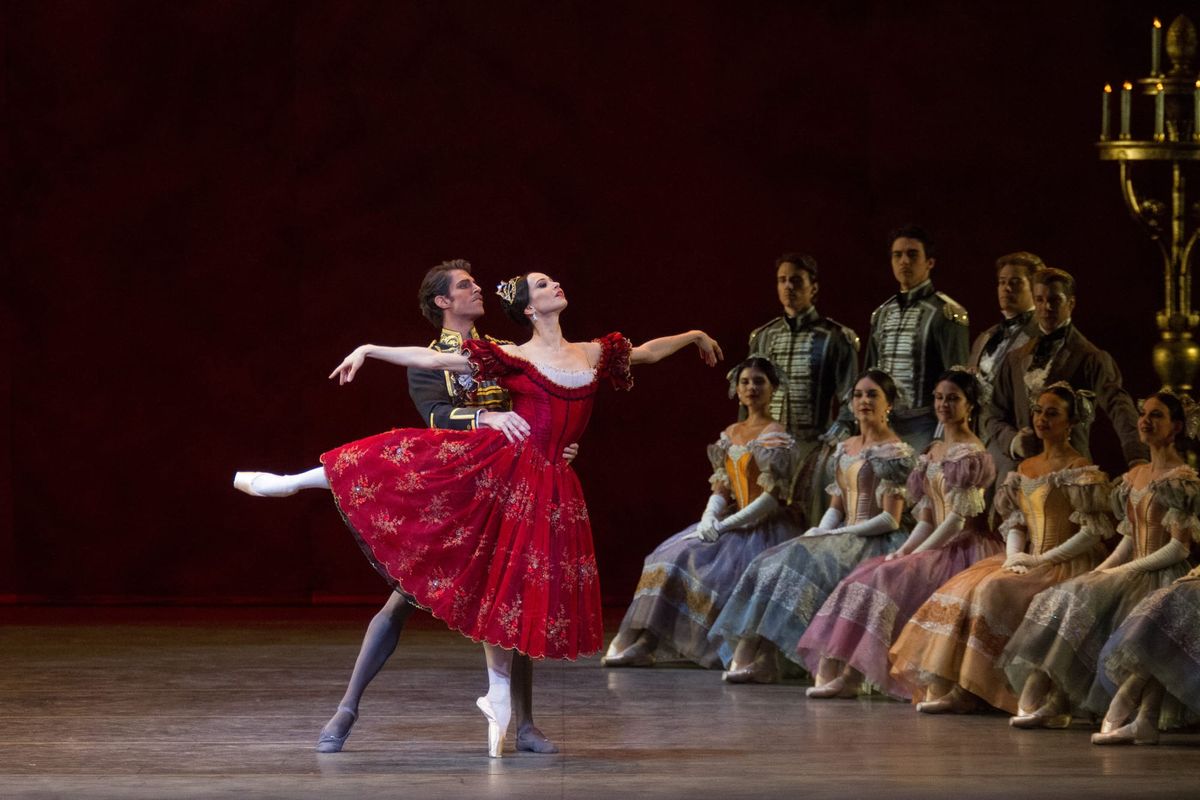
The evening opened with the ballroom scene from John Cranko's "Onegin", with lovely costumes, lots of dancers, and unfortunately, fussy, dull, and shapeless choreography. Diana Vishneva and James Whiteside (a new soloist, formerly with the Boston Ballet) danced Titania and Prince Gremin's pas de deux, an intriguing selection for a gala, since it conveys security and contentment, not the applause-generating grand passion of the dances between Titania and Onegin, with their heavy breathing and extravagant lifts. Whiteside was a generous, dignified and gracious partner, and a fine actor. He made Gremin a bit stiff and stodgy, happy to show off his beautiful wife and bask in her subdued happiness. Vishneva looked ravishing in her red dress (a pity it blends so well with the red background), and danced with a calm security, which was, for me, makes this pas de deux one of the most moving sections of the ballet.
"Cortège" was equally as moving in its own way, as it featured dancers from the ABT Studio Company and from the upper level of ABT's JKO school. It was a formal exercise set to infectious music by Rimsky-Korsakov by Raymond Lukens, a teacher at the JKO school. The choreography was, in sociological terms, "age-appropriate"--this was not an audition for "Dancing with the Stars". The dancers were clear, clean, and elegant (though one girl took an unfortunate tumble). The choreography was more of a class demonstration than a real musical exploration, but it was fun to watch.
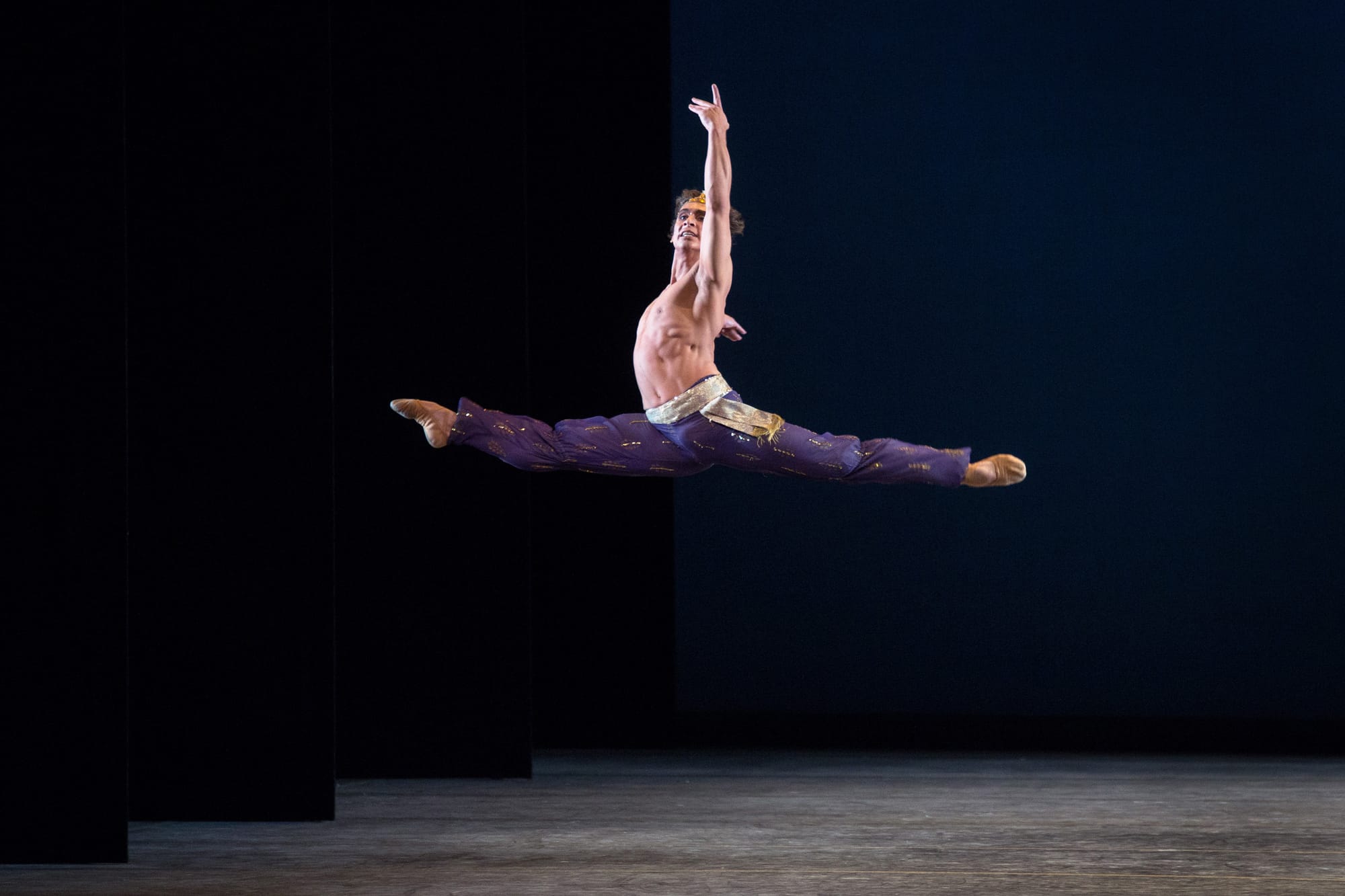
The real fun began with the "Corsaire" pas de deux, with the Russian phenom Ivan Vasiliev in purple harem pants (the redesigned "Corsaire" has apparently dropped the turquoise). There was probably little rehearsal time with Reyes, since it was a last minute announcement, and Vasiliev proved an eager and courteous partner, even though some of the pirouettes were a bit off-center. In the opening adagio, Vasiliev showed off his strength, going up on his one-footed demi point while carrying Reyes over his head, but he didn't linger inordinately. The pure physicality of his dancing is breathtaking, but he has added more character, and combined servility with prowess, deferring to his ballerina.
Presumably to save time, the solos were eliminated, and after the adagio, the dancers tore into the fouettes and turns a la seconde. Reyes showed off her beautifully centered turns, throwing in doubles at will, and Vasiliev seemed to make up his whirly turns as he went along, much to the delight of the audience.
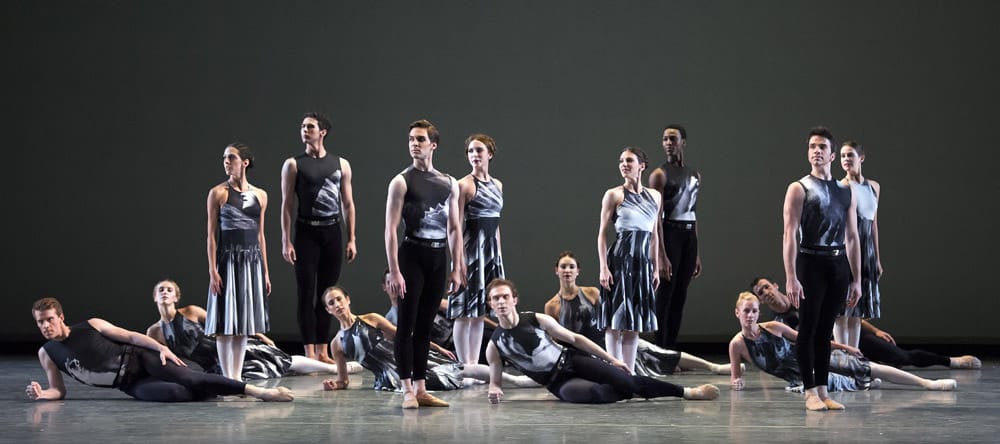
Ratmansky's "Symphony #9" isn't typical gala fare, since it is dark, enigmatic, and dense. It is also a profoundly moving work, rich and haunting. Simone Messmer and Craig Salstein, two of ABT's most dynamic soloists, danced the opening couple. Salstein seemed to be a Till Eulenspiegel figure, disrupting the dancers as he flew around. He danced with a grounded power and fierce commitment, and has rarely looked better. He and Messmer seemed to have a secret language as they gestured to each other; the ballet has oblique references to military measures, but, like the symphony, its references to war are oblique.
Polina Semionova and Marcelo Gomes danced the main couple, and her prehensile limbs gave an eerie tone to their pas de deux, as if she were some strange bird. The fifth principal, Herman Cornejo, appeared late in the ballet, as a sort of a guiding angel, tossing off some of the most musical entrechants ever seen. Fine as the principals were, the corps was really the heart of the ballet, moving with an uneasy mystery and an organic precision, like underwater plants swaying in the current.
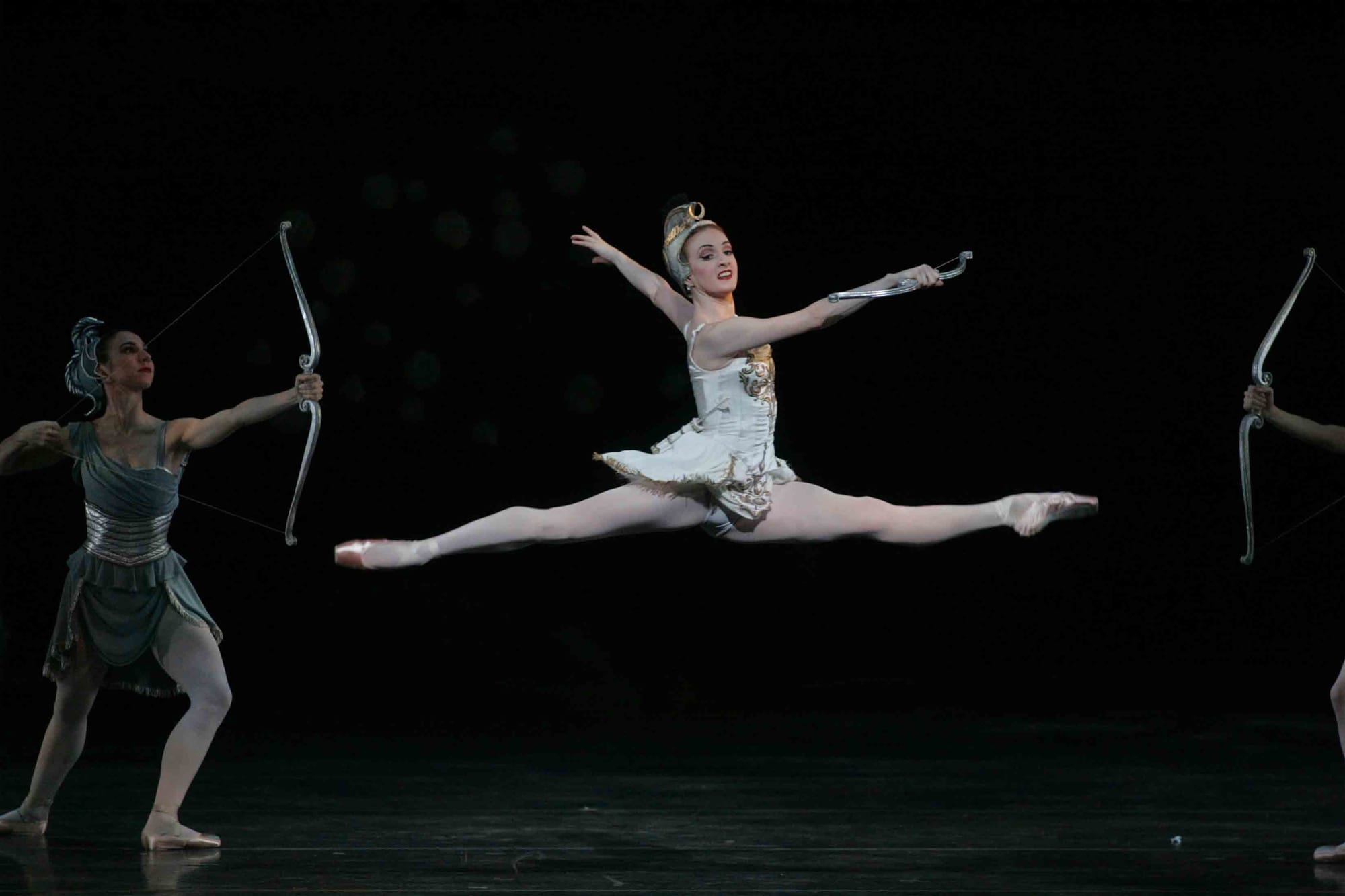
The corps has a lot of dancing in the excerpt from Sir Frederick Ashton's "Sylvia", as they prance and turn energetically holding hunting bows--though it looks natural, it must be quite tricky to balance without using their arms. Gillian Murphy was thrilling as the chaste huntress, a tantalizing glimpse of the complete ballet's welcome return.
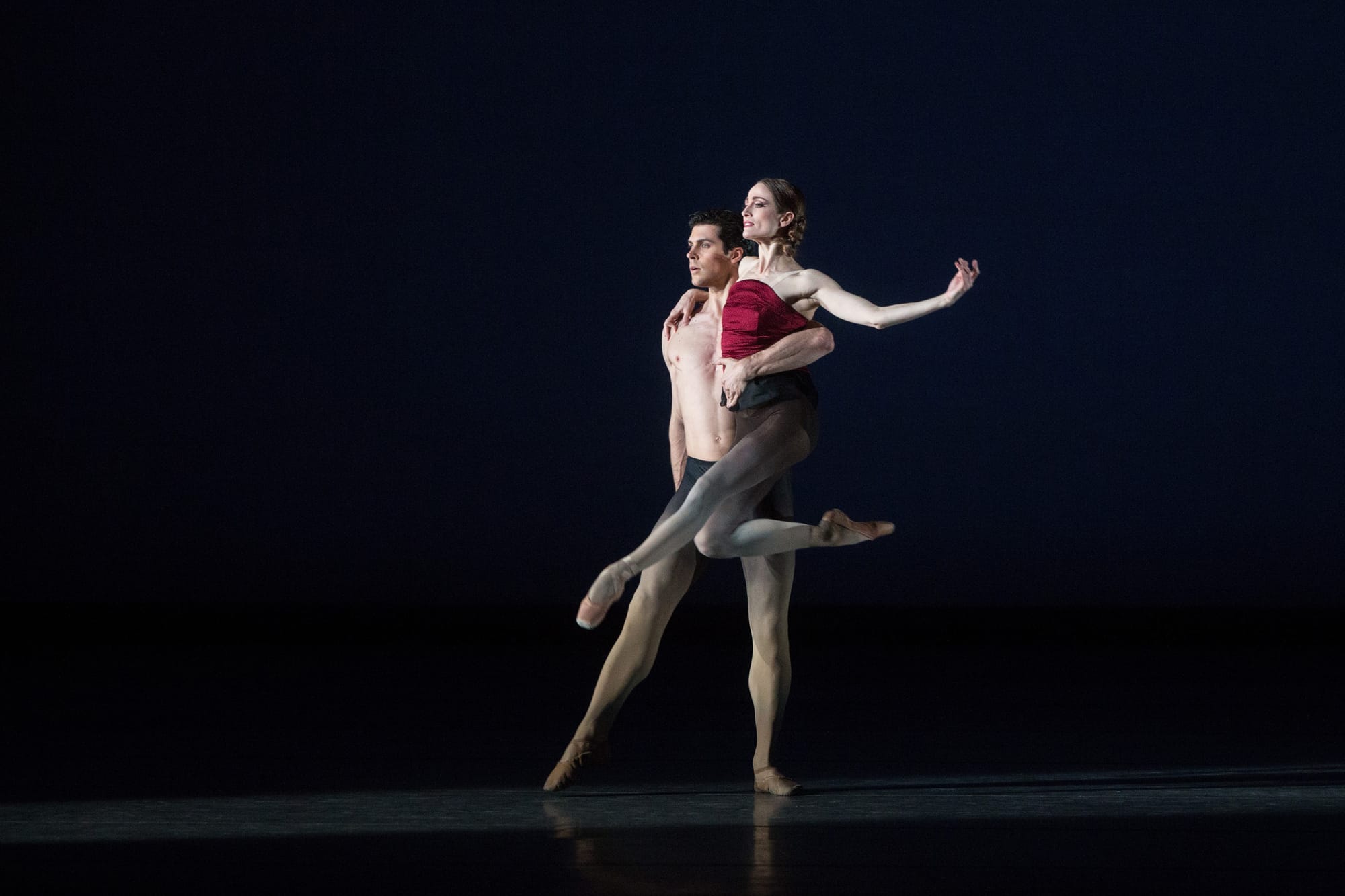
"Apothéose", a pas de deux for Julie Kent and Roberto Bolle by Marcelo Gomes to the probably overly familiar second movement of Beethoven's Seventh Symphony, was a premiere, and probably won't be seen often. Gomes is, so deservedly, revered as a dancer, but his choreography is routine. Kent was womanly and gracious, wading through the plangent music, and Bolle looked wonderful without his shirt.
The final pas de deux from "The Sleeping Beauty" has monumentally beautiful choreography, and Hee Seo and David Hallberg were elegant, if a bit restrained; the fishdives went without a hitch, but were a bit careful. Again, the solos were eliminated, a greater loss than the "Corsaire" ones, because the music is so sublime, but the evening was getting long. The gala closed with "Symphony in C", Balanchine's scintillating vision of black and white formality. Paloma Herrera set the table in the first movement, accompanied by James Whiteside. Veronika Part and Cory Stearns flowed through the second movement; his partnering looked especially secure. ABT's version is more overtly dramatic than NYCB's, though since the second movement was originally choreographed for Tamara Toumanova, is probably can't be over-souled, and I, along with the audience (judging by the awed silence of the unusually restive gala attendees), was completely swept away.
Isabella Boylston replaced Xiomara Reyes as Daniil Simkin's partner in the third movement, so probably got little rehearsal. There were some partnering irregularities, but Boylston's soaring jump works well in this role. For some reason, though, she tends to let her head bobble, which is distracting. Simkin, a clean and clear dancer, gave a fine rendition of the choreography, with some extra fillips which the audience enjoyed. The fourth movement often seems like an afterthought, but Sarah Lane gave a fine, crisp performance of the difficult turns. It was a long evening, but with so many substantial performances, a very rewarding one.
copyright © 2013 by Mary Cargill



