Swimming With the Muses
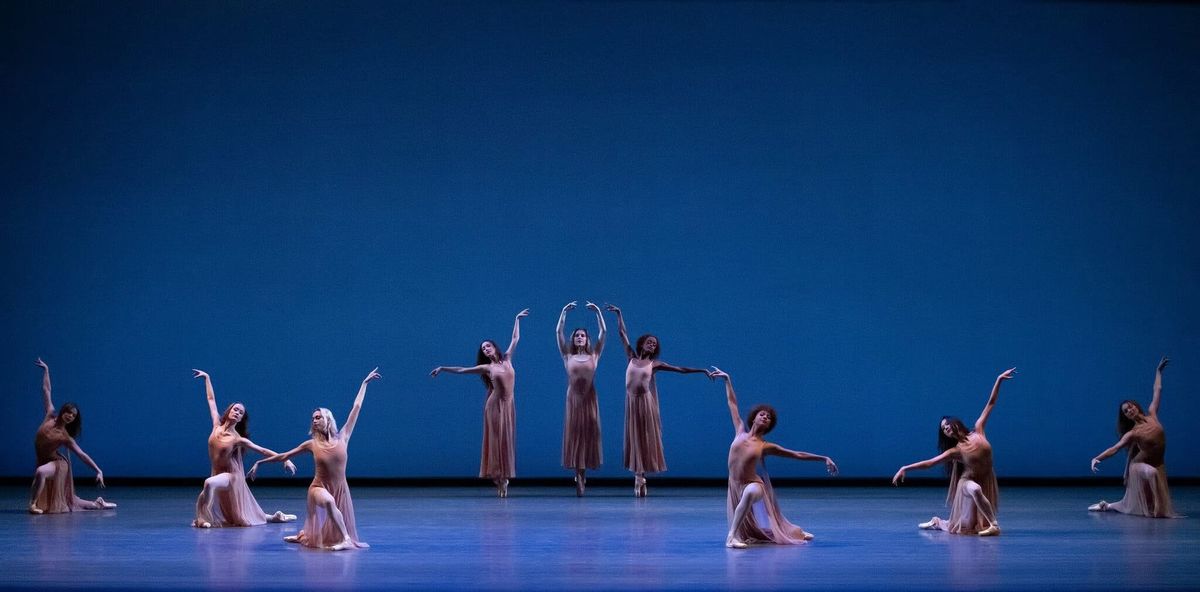
Swimming with the Muses
"Apollo", "Ballo della Regina", "Tschaikovsky Pas de Deux", "Chaconne"
New York City Ballet
David H. Koch Theater
Lincoln Center
New York, New York
April 23, 2025
It may have been a coincidence, but there were references to swimming in three of the ballets on view in the glorious all-Balanchine program )“Apollo”, “Ballo della Regina”, and “Chaconne”), and three of the ballets have indelible echoes of their originators— Merrill Ashley in “Ballo” Violette Verdy in “Tschaikovsky Pas de Deux”, and Suzanne Farrell in “Chaconne”. But ballets of course, are not frozen in time, and each dancers must find her own way through these gems; the dancers in this program (Tiler Peck in “Ballo”, Indiana Woodward in Tschaikovsky Pas de Deux”, and, in a strong return from injury, Isabella LaFreniere in “Chaconne”) glowed.
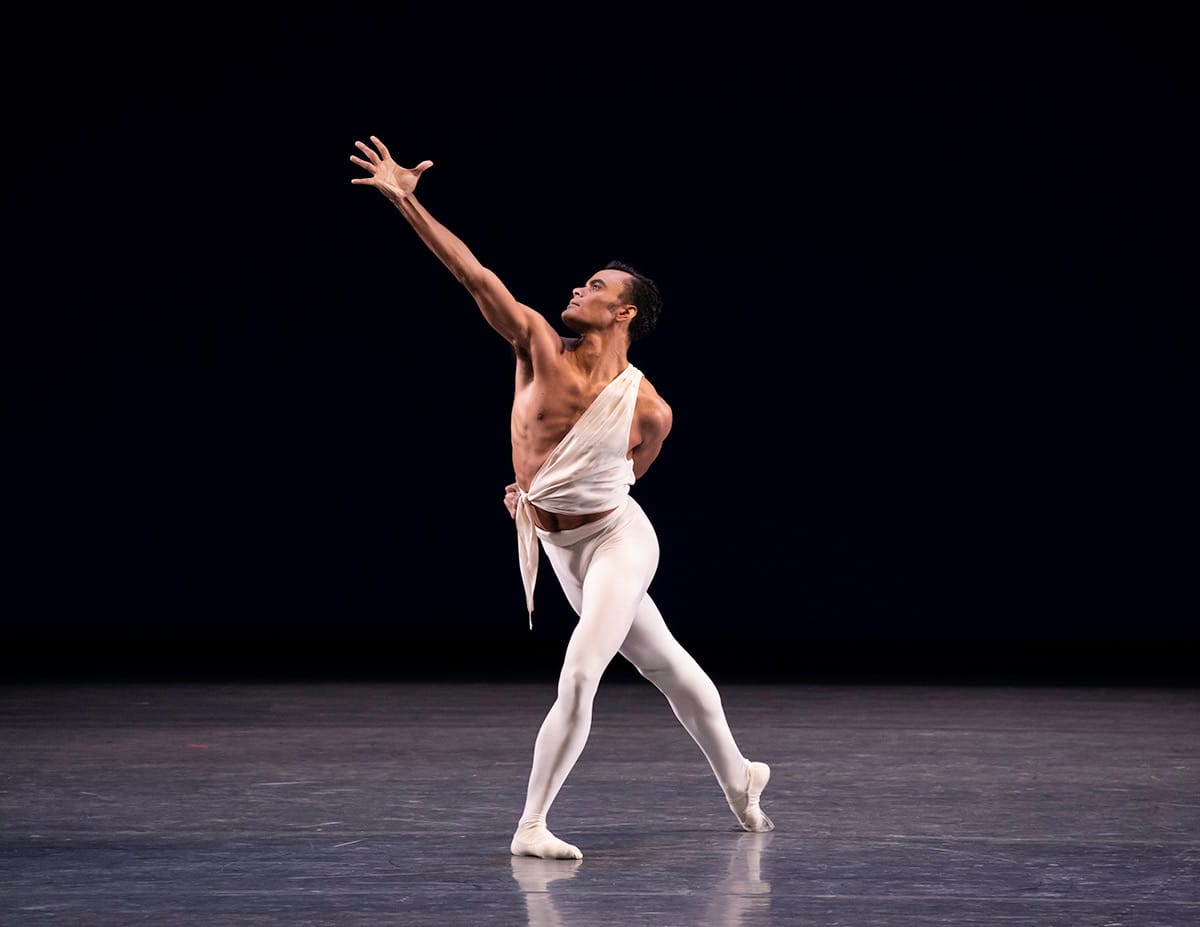
Other than some photographs of Serge Lifar, “Apollo” has lost its connection (as well as its prologue) with its original dancer, and, though there are many references to Balanchine describing it as a demi-caractère role, the exalted nobility of the Peter Martins’ approach has become a standard interpretation. Taylor Stanley’s “Apollo” was by no means standard, as he used his light, fluid movements to create an unique god, almost pagan in his wildness--I thought of Pan, romping in his forest glade. His was a thoughtful, deliberative approach, with moments of powerful stillness and a slight, underlying melancholy—he was a youth who did not want to leave his companions. He reacted to the summons to Olympus with surprise, almost jerking his head up, and walking across the stage with an awed, almost resigned, reluctance.
His Terpsichore, Unity Phelan, had moments of melting beauty as she skimmed across the stage and her controlled coolness emphasized that she was a companion, not a lover. She had an understated playfulness with no fixed grins in sight; there was a brief struggle with the balance in the swimming motif, but they smoothed it over. For me, though, she could have used more authority, and she did tend to fade into the other muses. Dominika Afanasenkov and Ashley Hod made their debuts as Calliope and Polyhymnia (the names were reversed in the program, a surprising oversight).
Afanasenkov was sharp and precise as Calliope, with piquant little hops. She didn’t over do the agony of creation, keeping the sometimes too literal shudders an abstract stylization. Hod controlled her long legs to whip through those difficult turns with her left index finger on her lips. Their duet had a jazzy swing, and it was certainly understandable that Apollo would be sorry to leave them behind.
No one is left behind in “Ballo della Regina”, Balanchine’s lilting salute to Merrill Ashley’s diamond sharp technique, set to Verdi’s ballet music for “Don Carlos”. This ballet within the opera, deleted in current productions, tells the story of a peasant looking for a pearl under the water; Balanchine’s version has no peasants, but plenty of bouncing, flouncing pearl-like dancers, swimming through some of Verdi’s most infectious melodies. Tiler Peck, with Joseph Gordon as the lone man, were the lead couple. The ballet has some of the fastest, neatest footwork in ballet, but Balanchine let the excitement build, and the soft, lyrical opening, where Gordon seems to be looking for something, sets off the later fireworks.
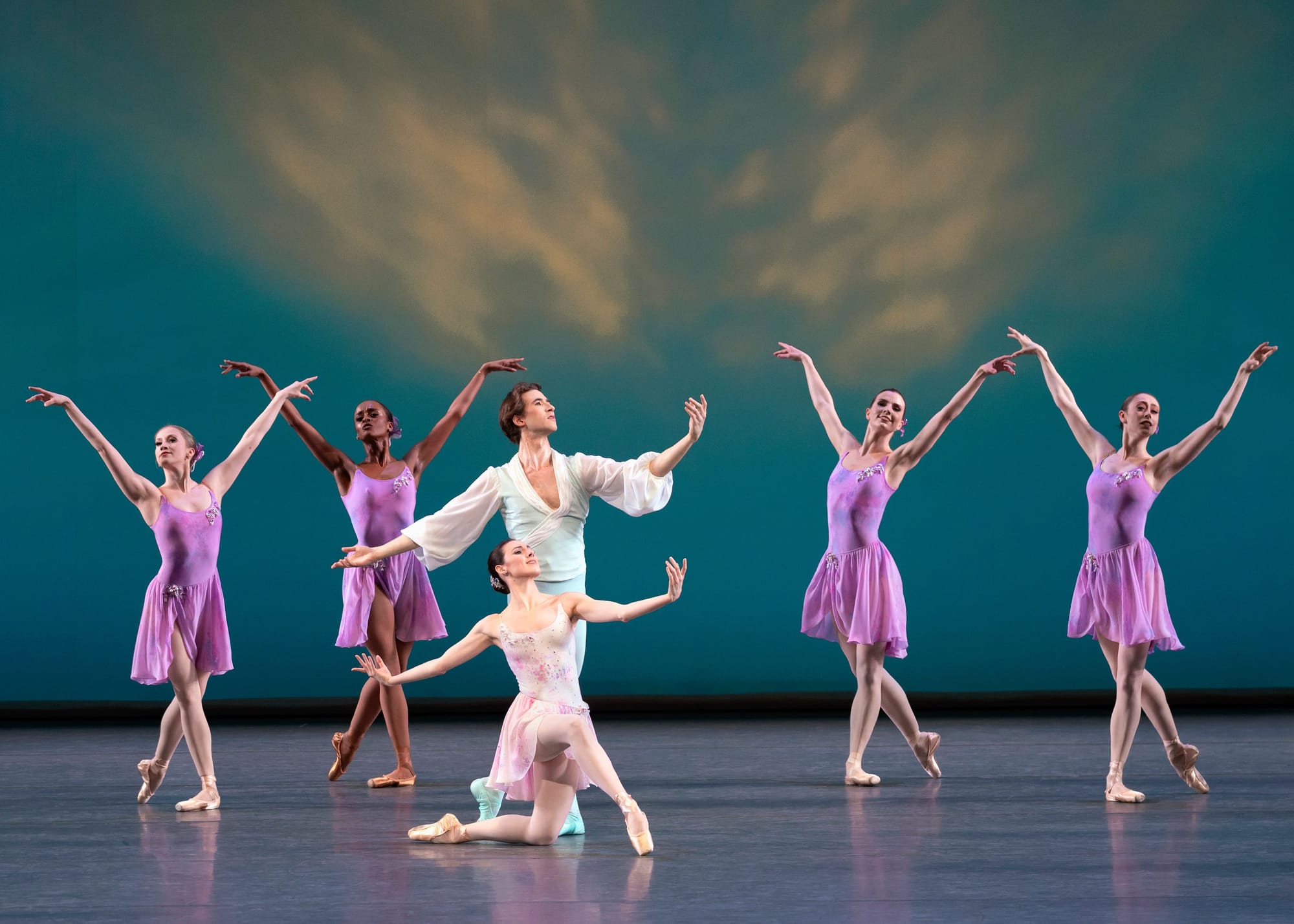
Peck, despite an uncharacteristic slip, danced with a dynamic lyricism and unmannered clarity. She was gently moving in the adagio opening, letting the plangent melody seem to ripple through her body. Her arms seemed to float effortlessly as her feet zipped through the impossibly filigreed allegro with a cheerful ease. The ballet, for all its underwater elements, is pure sunshine. Gordon was a gracious cavalier, dancing with a slightly reticent elegance, tossing off the choreography as if was a joy to dance; his fast footwork, stylish landings, and multiple pirouettes were thrilling.
So too was Mary Thomas MacKinnon as she swept through the second of the four brief solos, flashing her long legs with those quick changes of direction, pushed by the lovely, lilting melody. The corps, too, deserves thanks, dancing with a quick and piquant charm, especially in the final explosion of emboîtés; the old Maryinsky dancers were said to have made lace with their feet, and it seems that Ballo’s dancers made whipped cream with their legs.
There was more whipped cream in “Tschaikovsky Pas de Deux”, danced to the music Tchaikovsky originally wrote as a cut and paste option for the Act III pas de deux in the original Moscow version of “Swan Lake”. The music was rediscovered in the 1950’s, and Balanchine used it for a stand alone pas de deux in 1960 for Violette Verdy and Conrad Ludlow. I did see Verdy dance it once, and have never forgotten her warm sparkle and glorious musicality—even her dress seemed to move in time to the luscious music.
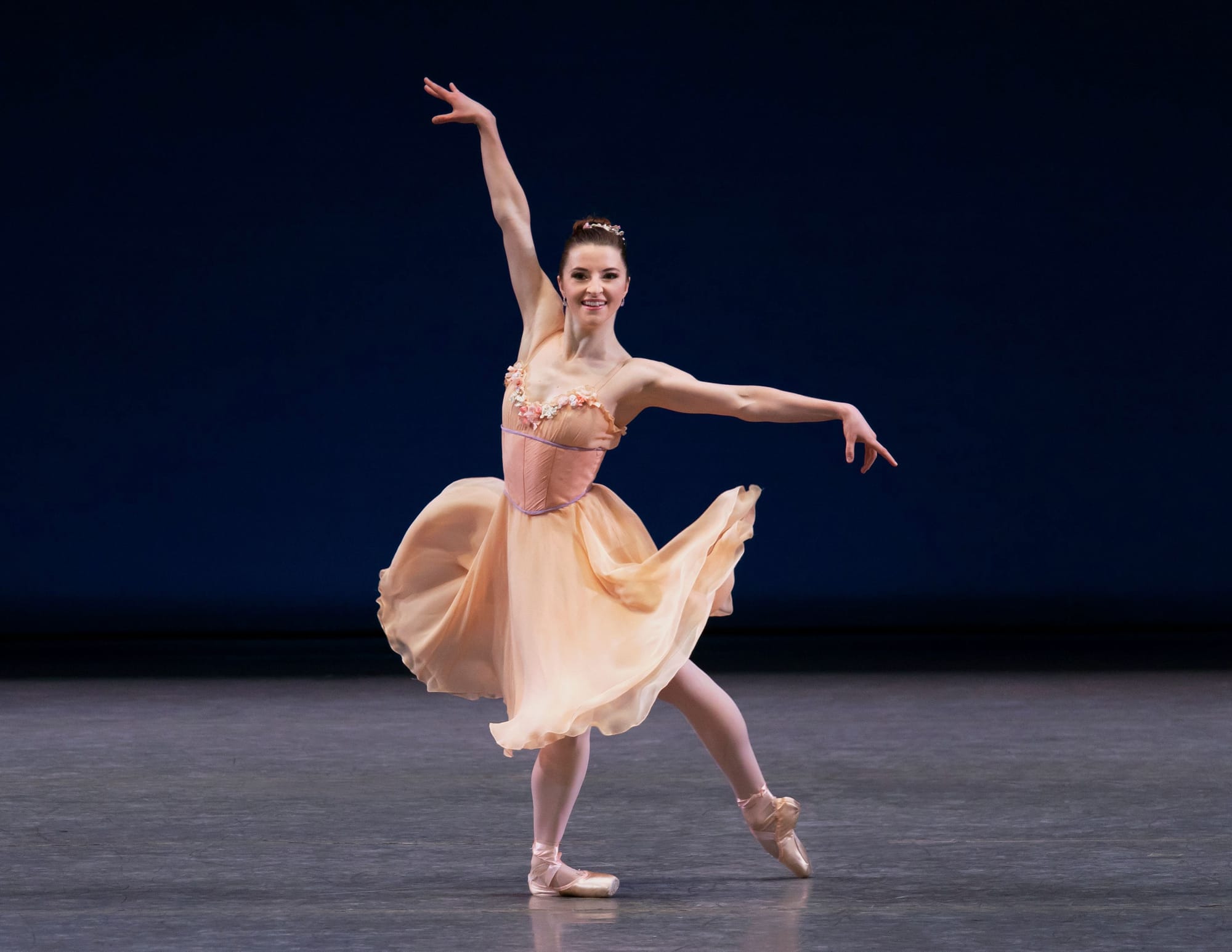
Indiana Woodward, with Andrew Veyette, was a fine successor, dancing with an openhearted joy and musical finesse; she never seemed to pause, letting the music ripple through her body in a constant, subtle, elegant and unexaggerated stream. There was nothing flashy or pushed about her dancing, her turns seemed to flow naturally, building in speed almost without effort.
At this stage in his career, Veyette’s dancing was not completely effortless but his turns were fast and accurate, his landings secure, and his partnering strong; this unexpected performance (he replace the injured Jovani Furlan) was a chance to acknowledge and relish his consummate professionalism, his style, and his vibrant dancing.
Style also sums up Isabella LaFreniere’s return from injury to the stage in “Chaconne”, Balanchine’s exploration of Gluck’s dance music for the opera “Orphée et Euridice”, another of his hymns to Suzanne Farrell. It is an odd work, a serene vision of Elysium in the first half, and a sprightly and witty dancing dialog in the second, but the music and the choreography sweeps aside any need for narrative logic.
The flute-filled opening Dance of the Blessed Spirits, with the gently moving statue-like corps, cast it haunting spell. Peter Walker, in his debut, entered with his head tilted down, wandering among the group as if lost in a dream, looking for someone. He wasn’t “acting” Orpheus, he was embodying Orpheus’ emotions, both an abstraction and a feeling.
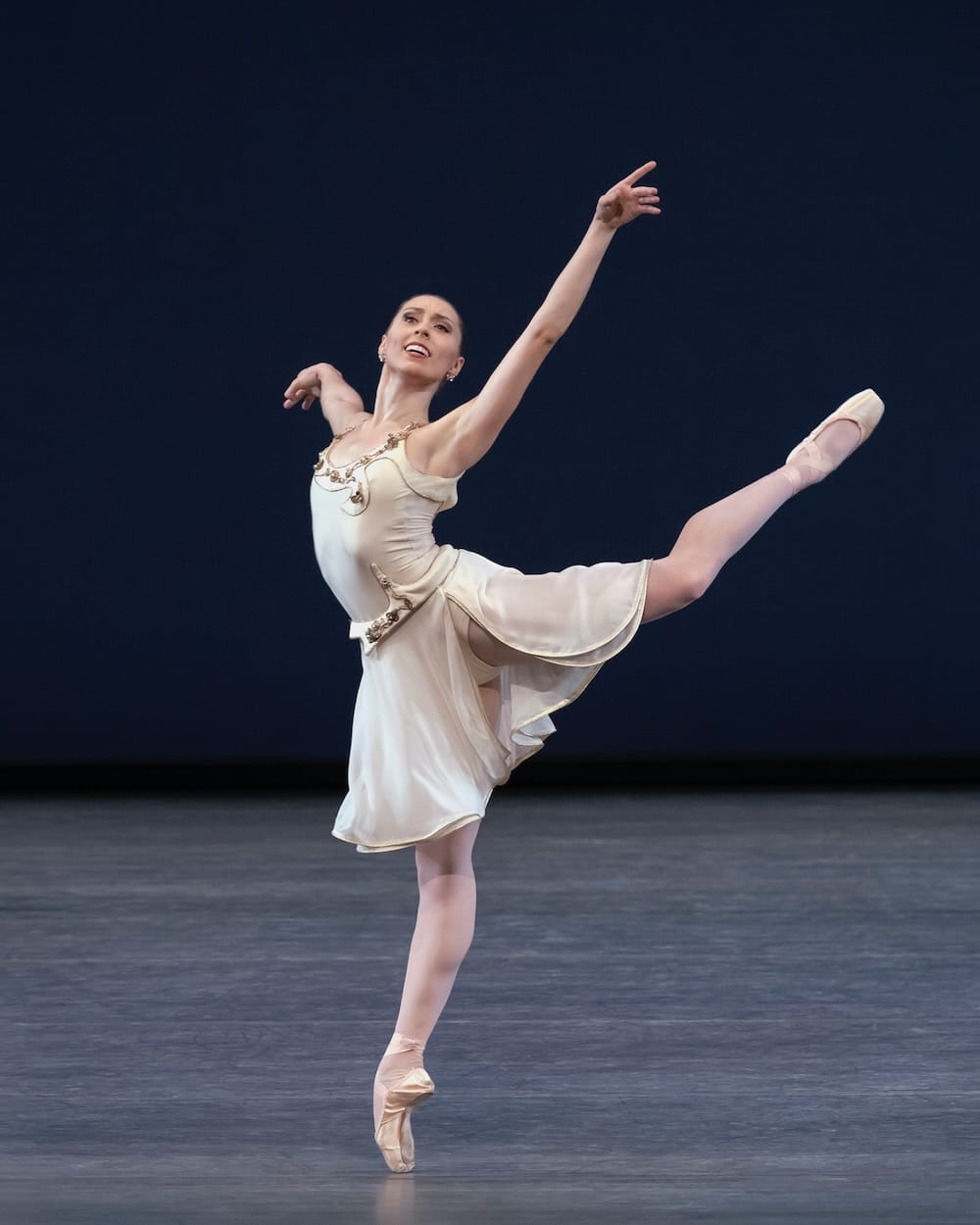
LaFreniere seemed to float on, moving with a majestic stillness that was simple and expansive, letting the music connect her with Walker, until he lifted her as she seemed to swim through the air off the stage. Apparently she swam off to a sun-drenched Elysium, populated by stately and formal beings who dance for joy. The couple got a series of sprightly solos which they danced with a bright and stately warmth, seeming to toss ideas back and forth, graciously ceding the spotlight to each other. LaFreniere dove into the off-balance steps with ease and grace, dancing with a warm majesty and Walker negotiated with fast quick jumps and turns with apparent ease; it was a fine debut.
The lute trio, Malorie Lundgren, Ava Sautter, and Alec Knight, were also making their debuts. Knight had the difficult job of dancing the quick, formal steps while holding his invisible lute with his left hand in the air—he kept his balance well, though his strumming hand did occasionally look like he was patting his stomach after a good meal. Baily Jones and Kennard Henson danced the frisky little pas de deux, with its bent knee poses and quick changes of direction, with an admirable warm formality and complete lack of cuteness.
© 2025 Mary Cargill



